
Forestry Mulching Cost in Tremonton, UT (2026)
Cut Brush Team · October 12, 2026 · 6 min read

Forestry mulching around Tremonton, Utah costs $1,500 to $4,000 per acre. That is land clearing, not landscaping: a tracked machine grinds standing brush, tamarisk, Russian olive and small trees into chips where they grow. Bark mulch for flower beds is a different product, sold by the cubic yard, and its prices tell you nothing about clearing land. Here is what moves the per-acre figure in the Bear River Valley: how dense the growth is, how long it takes, and whether the job is a field or a ditch bank.
Forestry Mulching Is Not Bark Mulch
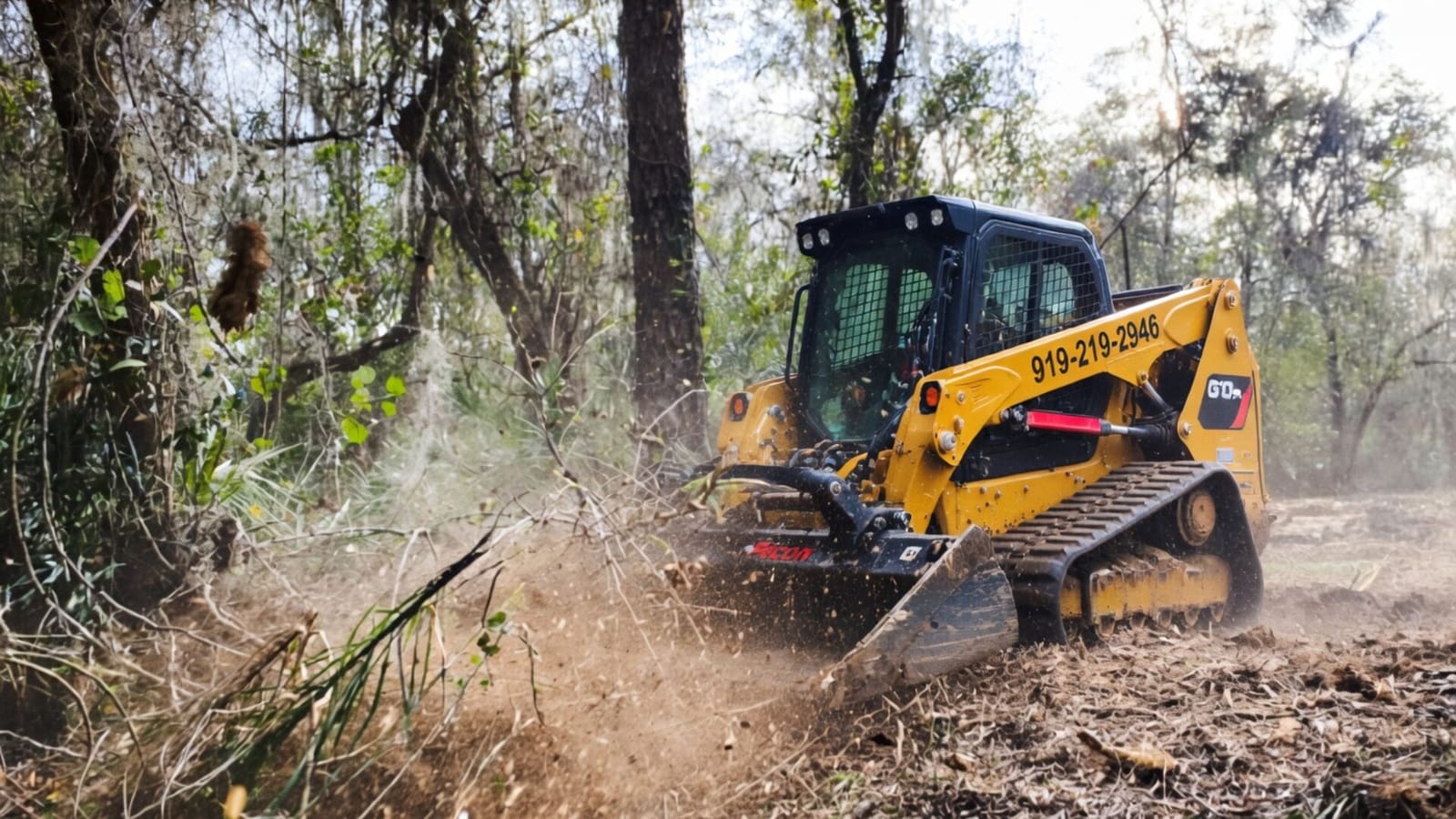
Search for mulching prices around Tremonton and most of what comes back is bark and landscape mulch, priced by the cubic yard and delivered by truck. That is material you buy and spread. Forestry mulching is a service: a machine with a spinning, toothed drum feeds into growth that is already standing and leaves it on the ground as a chip layer. Nothing is bought, delivered or hauled away.
The two get priced in different units for a simple reason. Bark mulch is priced by how much you need. Forestry mulching is priced by how much ground the machine has to cover and how much is growing on it, which is why the unit is the acre. A quote that compares one with the other will mislead you in both directions.
Mulching Prices Per Acre Around Tremonton
| Ground and growth | Typical range | Why it lands there |
|---|---|---|
| Scattered brush and young regrowth on a dry field edge | $1,500 – $2,000 / acre | Good footing, one quick pass |
| Tamarisk or Russian olive along a ditch, with trees kept | $2,000 – $3,000 / acre | Narrow strip, careful lines around trunks |
| Old, dense stand on a soft river bottom | $3,000 – $4,000 / acre | Thick trunks, slow ground, repeat passes |
| Full clearing to a stated finish | $1,500 – $4,500 / acre | A wider scope, set out under what the price includes |
The first three rows split the $1,500 to $4,000 mulching row on the Tremonton pricing guide by ground and growth; they are not separate prices. The last row is that page’s land clearing row. A ditch-bank strip with nothing kept and young growth can also fall in the pricing page’s $1,500 to $2,500 tamarisk and Russian olive row.
Bringing a tracked mulcher to a bank near Garland costs the same for a short morning as for a full day, so $1,500 is the minimum charge for a project. It is a floor, not a fee added on top.
How Long an Acre Takes
Time is what you are really paying for, and growth sets the pace. Light, scattered brush on open, dry ground can take a few hours an acre. A dense, old stand of tamarisk on soft ground near the river can take a full day or more, because every trunk has to go through the head and the machine has to move carefully where the footing is poor.
Tamarisk grows big enough to matter. Utah State University Extension describes saltcedar at 6 to 26 feet, growing along floodplains, riverbanks and irrigation ditches in Utah’s arid valleys. A stand at the low end of that range is quick work. A stand at the high end, grown into a wall along a bank, is slow work, and the price follows.
If you receive an hourly quote, divide the job total by the acres before setting it beside a per-acre figure. An hourly rate that looks low can still add up to more per acre on a dense stand.
Ditch Banks Against Open Fields
Most of the dense clearing around Tremonton grows along water. On the lower Bear River, a state restoration project found the bottoms “largely overrun” by Russian olive and tamarisk. Irrigation ditches and canal banks carry the same plants across the farm country around Garland, Elwood and Bear River City.
A ditch bank prices differently from a field for three reasons.
- Shape. A strip 20 feet wide and about 2,200 feet long is roughly one acre. The machine spends more time turning and repositioning on a long, thin strip than on a square field.
- Footing. Soft ground at the water’s edge has to be worked when it will carry the machine, and sometimes from one side only.
- What stays. Cottonwoods, willows, head gates, culverts and fences along a bank all need room, and working around them is slower than running straight through.
Short strips often fall under the project minimum. Adding the next stretch of ditch, or a neighbour’s bank on the same canal, spreads one trip across more ground.
What the Price Includes
Forestry mulching grinds brush, small trees and stumps into mulch on site. Stumps are left flush with the ground, the chips stay as a layer over the soil, and nothing is hauled away. Full stump removal below grade and cut-and-haul for very large trees are discussed and priced in the quote. Grading and build pads are not part of our price: we clear to the ground so a builder can grade.
Two things sit outside our price on tamarisk and Russian olive. Both sprout back from what is left in the ground, so a stump treatment by your licensed applicator, arranged by you, is what keeps a bank clear. And a check the next season catches anything that comes back. Our tamarisk removal guide sets out the order.
Burning is the other way to deal with cut brush, and a narrow one. Utah Code 65A-8-211 makes June 1 to October 31 a closed fire season, when burning a brush pile needs a written permit from the state forester and a call to dispatch. A mulching job leaves no pile.
Frequently Asked Questions
What does one acre of forestry mulching cost near Tremonton?
Between $1,500 and $4,000. Scattered brush on a dry field edge is the low end; an old, dense tamarisk stand on a soft river bottom is the high end. The $1,500 minimum is the floor for jobs smaller than an acre.
Why is bark mulch so much cheaper?
It is a different thing. Bark mulch is material sold by the cubic yard for beds and landscaping. Forestry mulching is a machine clearing standing growth, priced by the acre.
Does mulching kill tamarisk?
No. It brings the stand down and opens the bank, but the stumps sprout back unless a licensed applicator treats them.
Get a Number for Your Tremonton Land
Request a free quote and we’ll contact you to discuss your property, access and the clearing you need. Our crew puts the scope and price on paper before work starts.
Read more: the local ground and offices on our Tremonton land clearing page, and statewide figures in our Utah land clearing cost guide.
More from the Cut Brush Blog
Keep reading for more tips and guides on land clearing.
 Guide
Tamarisk (Saltcedar) Removal in Utah: A Plan That Lasts
Why tamarisk takes over Utah ditches and river bottoms, why cutting alone never kills it, and the cut, stump treatment and follow-up plan that keeps banks open.
 Cost Guide
Land Clearing Cost Per Acre in Utah (2026 Guide)
Land clearing in Utah runs $1,500 to $4,500 an acre with our crew. How Gambel oak, juniper, rock and the state's burn rules move the price on your land.
Let's Get Started on Your Land
Request a free quote. We'll contact you to discuss your property, access, and the clearing you need.
Get a Free QuoteOr call us directly: (919) 525-3950