
Underbrush Removal Cost in Virginia (2026 Guide)
Cut Brush Team · November 9, 2026 · 9 min read
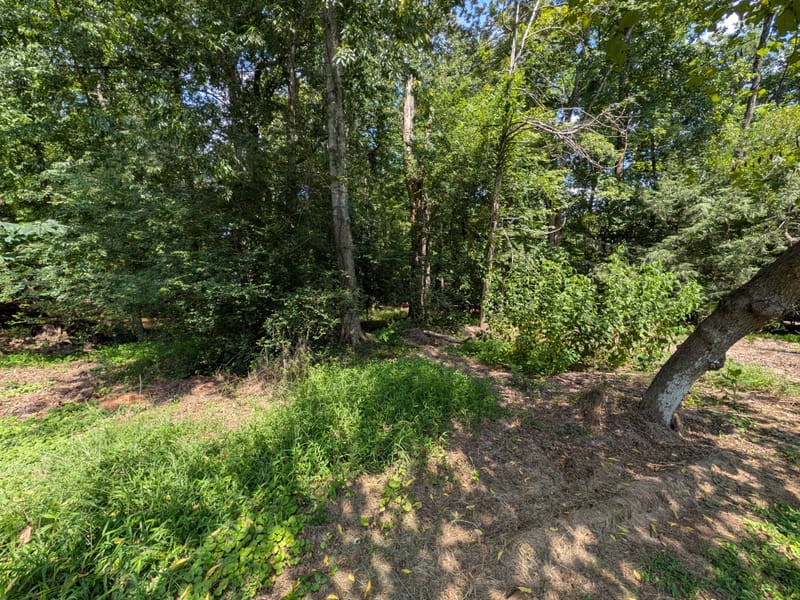
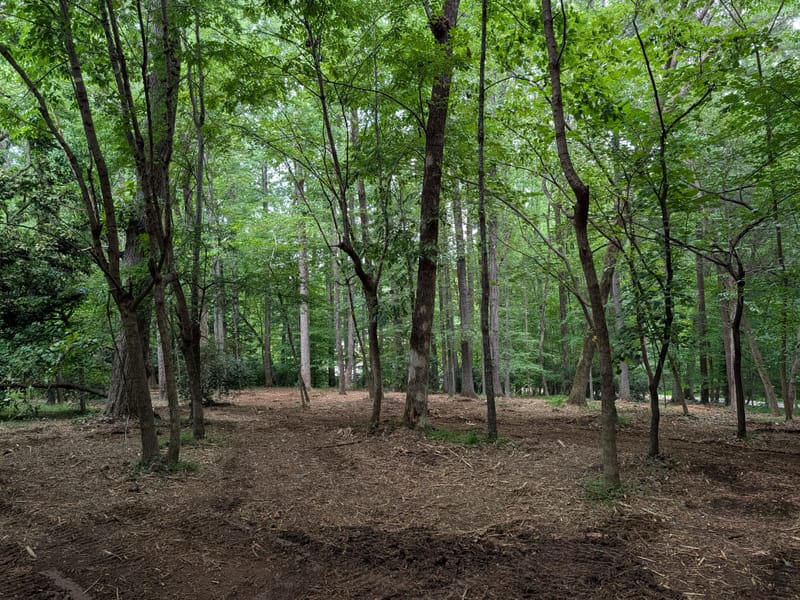
You bought wooded land in Virginia for the trees, and now you cannot see past the first row of them for the honeysuckle, briars and saplings in between. Clearing the underbrush beneath trees you keep costs $1,500 to $2,500 an acre with Cut Brush in Virginia, and all ten of our Virginia markets publish that same band. What changes across the state is the growth filling the woods, so each pricing page gives the row a local name.
At a glance:
- Brush, vines and saplings under kept trees: $1,500 to $2,500 an acre
- Understory grown into a stand of young trees: forestry mulching, $1,500 to $4,000 an acre
- A small patch: a minimum charge of about $1,500, the whole bill rather than a fee on top
- Smith Mountain Lake: inside the 800-foot contour, nothing half an inch across or larger comes out without Appalachian Power’s Vegetation Removal Permit
- Tidewater: in the 100-foot Bay Act buffer, the locality approves what vegetation comes out
Our crews work all ten Virginia areas: Hopewell, Smithfield, King George, Rocky Mount and Smith Mountain Lake, Buena Vista, Luray, Hillsville, Emporia, South Boston and Warrenton.
How Much Does Underbrush Removal Cost in Virginia?
Underbrush removal means grinding the shrubs, vines and saplings below a canopy you keep, so the woods open up and the trees stay standing. We price it by what is growing under them:
| What is under your trees | Our price per acre | What it looks like |
|---|---|---|
| Light brush and vines, keepers widely spaced | $1,500 – $2,500, low in the band | Japanese honeysuckle across the ground, scattered seedlings |
| Dense shrubs and saplings, keepers close together | $1,500 – $2,500, high in the band | Privet filling a creek bottom, autumn olive packed along the wood line |
| Saplings grown into a stand of their own | $1,500 – $4,000 (forestry mulching) | Young pine, cedar or tree-of-heaven closing every gap |
| Open ground, nothing past 2 to 3 inches | $75 – $400 (brush hogging) | An overgrown field with no canopy to work around |
| A patch too small to reach the acre rate | About $1,500 minimum | A fence row, or the strip between yard and woods |
Where these numbers come from. They are the bands on our ten Virginia pricing pages, where the understory row is named for the local growth: Cedar, Briar & Privet Clearing on the Rocky Mount pricing page, Old-Field & Mimosa Regrowth in Hopewell, Bamboo & Field-Edge Brush in Smithfield, Wisteria & Vine Thickets in King George, Bittersweet & Fencerow Brush in Buena Vista, Tree of Heaven & Old-Field Clearing in Luray, Autumn Olive & Pasture Brush in Hillsville, Kudzu & Bottomland Brush in Emporia, Pear Thickets & Old-Field Regrowth in South Boston, and Bush Honeysuckle & Forest Edges in Warrenton. Same price, different plants. Field mowing is in our Virginia brush hogging guide, and taking a whole tract down is in the Virginia land clearing cost guide.
What Moves an Understory Price in Virginia
Which saplings come out. Most hardwood saplings we grind sprout again from the stump unless something kills the roots. Pines are different: shortleaf aside, most of Virginia’s pines do not come back from a cut stump, and their stumps rot away in three to five years. Young pine is a one-pass job; young sweetgum, maple and oak are the start of a plan.
How much light you let in. Japanese honeysuckle is thickest in Piedmont and Coastal Plain woods, and vines held back by shade grow fast once it lifts. Japanese stiltgrass grows in every Virginia county, gets by on 5 percent of full sun, and spreads after mowing or other disturbance. Where either is already on the ground, we price the return trip with the first pass.
What the clearing is for. A Firewise yard in Virginia keeps a short green lawn for 30 feet around the house, thins the woods out to 100 feet, and limbs the remaining trees up 6 to 10 feet. A 100-foot ring around a home is about three quarters of an acre, so that job often prices near the $1,500 minimum.
Where the line stops. Lake, creek and tidal ground carries its own rules, covered below, and the line usually stops short of the bank. The rate stays the same; a smaller cleared area means a smaller bill.
Will the Underbrush Come Back? Virginia Plants That Need a Second Visit
Some of it will. A mulching pass takes every stem to the ground, but several plants filling Virginia woods grow back from roots and stumps that stay alive:
- Autumn olive, ranked High on Virginia’s invasive plant list. On larger plants, cutting alone brings back thicker, denser growth.
- Tree-of-heaven, also High. It resprouts from the roots. Two cuttings a year, one early in the growing season and one late, stop it seeding and wear it down over several years.
- Chinese privet, High. It suckers from a shallow, spreading root system, and cutting with nothing after it tends to bring more sprouts. Our Virginia Chinese privet guide lays out the visits.
- Callery pear, ranked Medium. A vigorous stump sprouter: one cut pear sends up a ring of shoots.
The first pass is the $1,500 to $2,500 band. Every return trip is written as its own line, so you see a season of follow-up before you agree to it and choose how many to book. Herbicide on stumps or sprouts is a licensed applicator’s work and a separate decision; if you hire one, ask that our return trips be timed around theirs.
Pro tip: Book the first return trip for late summer. Tree-of-heaven takes its second cut of the year late in the growing season, and Japanese stiltgrass cut before it sets seed adds nothing to a seed bank that already lasts three to five years in Virginia soil.
Underbrush Costs Across Virginia
Rocky Mount, Franklin County and Smith Mountain Lake. Privet in the creek bottoms is the usual reason for a return trip here. On a lake lot, the ground inside the 800-foot contour is within the Smith Mountain Project boundary, and any plant half an inch across or larger there needs Appalachian Power’s Vegetation Removal Permit, so our quote stops at the contour unless you hold one. Away from the lake, Franklin County requires its own permit for disturbing 3,000 square feet or more within 200 feet of surface water.
Tidewater: Smithfield, King George and Hopewell. Isle of Wight, King George and Prince George counties and the city of Hopewell are Tidewater localities under the Bay Act. A 100-foot buffer runs landward of tidal shores, tidal wetlands and streams that flow all year, and existing vegetation there comes out only with local approval, for sight lines, access paths, woodlot management or erosion control. Dead or dying shrubs and noxious weeds such as kudzu and multiflora rose may be removed. Ground outside the buffer is priced as normal, as on the King George pricing page.
The Shenandoah Valley and the Blue Ridge: Luray, Buena Vista and Hillsville. Luray’s row covers fence rows, pasture edges and tree-of-heaven still at sprout size; Hillsville’s covers autumn olive in hayfields and fence rows. Both regrow, so a return trip belongs in most plans here. See the Luray pricing page and our Virginia tree-of-heaven guide.
Southside and the northern Piedmont: South Boston, Emporia and Warrenton. Around South Boston, old fields and woods edges fill with Callery pear, and every pear stump will try to sprout. For a pear near the house, Virginia’s Callery Pear Exchange gives a native tree for each pear removed, up to three per household; check for the next pickup event. Emporia’s row covers kudzu and bottomland brush, and Warrenton’s covers bush honeysuckle walls along wood lines, where Amur and Morrow’s honeysuckle are both ranked High. Rates are on the South Boston pricing page.
Permits and Burning for Underbrush Work in Virginia
Virginia counts clearing as land-disturbing activity. Erosion and sediment control approval starts at 10,000 square feet of disturbance, or 2,500 square feet in a Chesapeake Bay Preservation Area, and a locality can set either line lower. Minor work, including home landscaping and maintenance, is exempt, and so is managing agricultural or forest crops.
A mulching pass under standing trees moves no dirt and leaves the roots in place, but the law does not name it either way, and whether your job counts is the locality’s call. On several wooded acres, or near water, ask the county’s erosion and sediment control office before the machine arrives. We do not file permits.
Mulching leaves no brush pile, so burning rules matter only if you burn what you cut yourself. From February 15 through April 30, no open burning before 4 p.m. within 300 feet of woods or dry grass. From May 1 through September 30, burning land clearing debris is banned in Virginia’s five emissions control areas, which take in Hopewell, Prince George, Isle of Wight, Suffolk, Roanoke County, Roanoke and Salem, but not Franklin County, Henry County or Martinsville. For heavier growth, our Virginia forestry mulching cost guide has the prices.
Frequently Asked Questions
How much does it cost to clear underbrush on one acre in Virginia?
$1,500 to $2,500 under trees you keep, in every Virginia market we serve. Widely spaced hardwoods over honeysuckle price low; a privet or autumn olive thicket between close trunks prices high. Once saplings form a stand of their own, it is forestry mulching at $1,500 to $4,000 an acre.
Do you charge by the hour, the acre or the day?
By the acre, as one written price for the area we walk and agree on. A patch whose acre rate comes to less than $1,500 is billed the $1,500 minimum, and that is the whole charge. A slow afternoon in a tight stand of trunks does not change your bill.
Will it be clean enough to bush hog afterward?
In open ground, yes: with stumps ground flush and nothing past 2 to 3 inches, a rotary mower can keep it, at $75 to $150 an acre for a field mowed within the past year. Under a kept canopy a mower only goes where the trunks leave room, so wooded ground is kept open with return trips for the sprouts instead.
Do I need a permit to clear underbrush on my own land in Virginia?
Not for most home landscaping and maintenance. Past that, the state line is 10,000 square feet (2,500 in a Bay Act area), and localities can go lower: Franklin County requires a permit for 3,000 square feet or more within 200 feet of surface water. Near the lake contour or a Tidewater shore, settle the permit question before the price.
Get an Underbrush Quote in Virginia
Request a free quote and our crew will contact you to discuss the property, the access and the clearing you need under your trees. Pick the nearest of our ten Virginia areas below.
Sources
- Code of Virginia § 62.1-44.15:34: erosion and sediment control thresholds and exemptions
- Franklin County, Erosion & Stormwater Management: the county’s permit line near surface water
More from the Cut Brush Blog
Keep reading for more tips and guides on land clearing.
 Cost Guide
Forestry Mulching Cost in Rocky Mount, VA (2026)
Forestry mulching in Rocky Mount, VA costs $1,500 to $4,000 an acre. See what a day of mulching clears, how a day-rate bid converts and what privet adds.
 Guide
Chinese Privet Removal in Virginia: Plan and Cost per Acre
Chinese privet removal in Virginia: $1,500 to $2,500 an acre for most thickets, with return cuts for the sprouts. How to spot it and plan it. Get a free quote.
 Cost Guide
Land Clearing Cost Per Acre in Virginia (2026 Guide)
Land clearing cost per acre in Virginia runs $1,500 to $4,500. How terrain, Bay Act disturbance limits and the burn calendar move a quote, region by region.
Comparing states? See land clearing costs by state.
Let's Get Started on Your Land
Request a free quote. We'll contact you to discuss your property, access, and the clearing you need.
Get a Free QuoteOr call us directly: (571) 520-9081
 Quick answers from Cut Brush