
Forestry Mulching Cost in Wisconsin (2026 Guide)
Cut Brush Team · November 9, 2026 · 9 min read
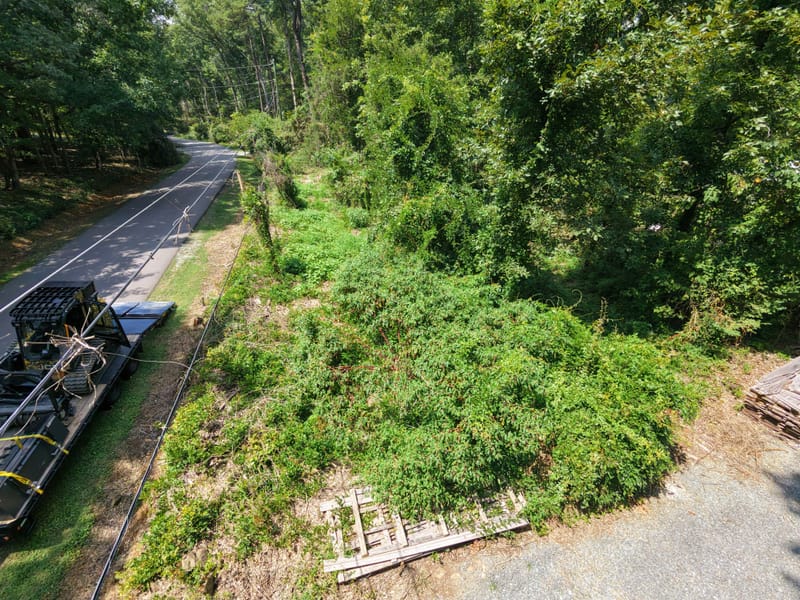
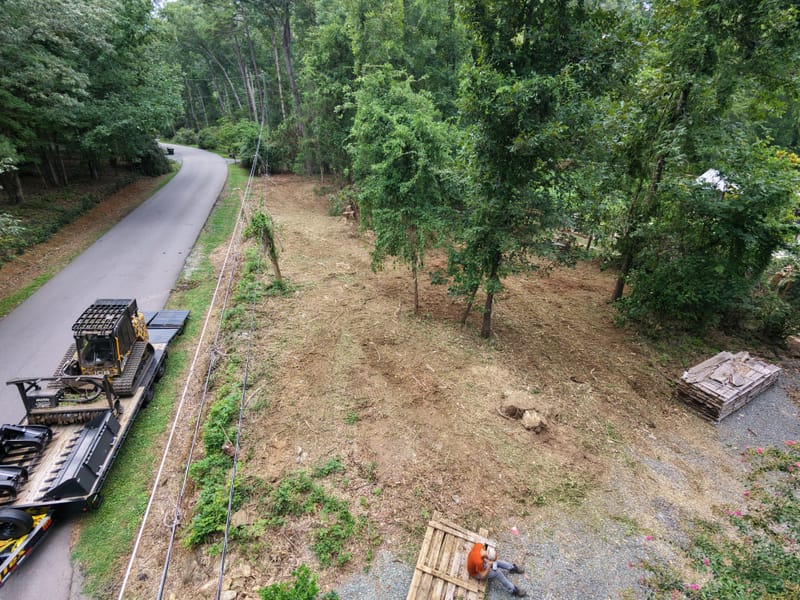
Forestry mulching in Wisconsin costs $1,500 to $4,000 an acre with our crews, and taking buckthorn or honeysuckle out from under trees you are keeping costs $1,500 to $2,500 an acre. Across much of Wisconsin the woods hold exactly that: a thorny shrub layer closed in beneath oaks and maples, often on ground that only carries a machine once it freezes.
At a glance:
- Mulching band: $1,500 to $4,000 an acre in both our Wisconsin markets
- Small jobs: a minimum charge of about $1,500, where small jobs start, never a fee stacked on the acre rate
- Oak wilt: in a county with oak wilt, or within 6 miles of one, avoid cutting near oaks from April 1 (South Zone) or April 15 (North Zone) through July 15
- Cost share: the DNR Forest Landowner Grant pays back up to 50 percent of eligible practices on 10 to 500 forested acres, and work done before the award letter does not count
Our Wisconsin crews run from two markets: Ellsworth, serving Pierce, St. Croix and Pepin counties in the west, and Weston, serving Greater Wausau across Marathon, Lincoln, Langlade and Portage counties.
How Much Does Forestry Mulching Cost in Wisconsin?
One tracked machine grinds standing brush and young trees into chips where they grew; nothing is piled, loaded or burned. The price follows what is standing and what the ground will bear.
| What is standing | Our price per acre | Where you see it in Wisconsin |
|---|---|---|
| Buckthorn or honeysuckle beneath oaks, maples or basswood you keep | $1,500 – $2,500 | Woodlots near Ellsworth, river woods by Wausau |
| A hay field or fence line with a few seasons of saplings | $1,500 – $4,000, near the bottom | Marathon County fields going back to woods |
| Old pasture, aspen and scrub oak, or a red pine planting grown shut | $1,500 – $4,000 | Sand country around Stevens Point |
| A closed thicket on a coulee side or a soggy woodlot | $1,500 – $4,000, toward the top | Pierce County coulees, Eau Claire River bottoms |
| A cabin or house site opened in the woods | $1,500 – $4,500 per acre equivalent | Northern hardwoods near Merrill or Antigo |
What one acre’s price covers. Brush, small trees and stumps ground to mulch on site, with stumps flush with the ground and nothing hauled away. Pulling stumps below grade and cutting and hauling very large trees are discussed and priced in the quote. Grading and the building pad belong to your excavating contractor, and any stump treatment is a licensed applicator’s work, not ours.
Where these numbers come from. They are the bands on our Weston pricing page and our Ellsworth pricing page. Both publish the same figures; only the understory row’s name differs (honeysuckle around Wausau, buckthorn around Ellsworth). Wisconsin mulching prices you see quoted can differ several times over, mostly because each counts different things: the trip, a floor for small jobs, next summer’s sprout visit. Our quote lists each in writing. For an hourly bid, our Ellsworth mulching cost guide shows how to convert it to a per-acre number.
What Changes the Price of a Wisconsin Mulching Job
Buckthorn’s stems and thorns. Common buckthorn grows into a small tree 20 to 25 feet tall, often with several stems rising from one base, and its twigs often end in stout thorns. Every extra stem is more grinding, so an old buckthorn stand prices well above saplings of the same height.
Frozen ground or a spring start. About 18 percent of the land around Weston is woody wetland, and across the north, peat and muck fill the poorly drained lowlands. A loaded machine on saturated muck ruts it and crawls; on ground frozen hard it runs. The band does not change by season, but a start date that can wait for a solid freeze keeps a wet acre from sliding to the top of it.
Coulee slopes in the west. Part of Pierce and St. Croix counties, and most or all of Pepin County, sit in Driftless coulee country the last glaciers missed, cut into steep-walled valleys and ridges. A ridge-top field mulches in long straight runs; the coulee side below it takes short passes across the grade, and that time shows up in the price.
Oaks and the July 15 line. Oak wilt reaches fresh wounds through sap-feeding beetles, then travels between oaks through grafted roots, and an infected red oak can drop most of its leaves and die in about a month. Booking the oak edges after July 15 costs nothing extra. If a cut on a keeper oak happens anyway, spray or paint wound sealer on it right away.
The sprout visits. Buckthorn cut without further treatment readily resprouts from the stump, and honeysuckle cut in winter but left untreated can come back vigorously. So the first pass is priced by the acre, and each return visit for sprouts is its own line you can accept or skip.
Forestry Mulching Costs Across Wisconsin
Ellsworth and Pierce County. Fence lines, grown-up pasture and buckthorn woodlots are the usual work around Ellsworth, Prescott, Elmwood, Plum City and Baldwin. Ridge fields price low; the same growth down a coulee prices high. Our Wisconsin buckthorn removal guide covers the follow-up plan.
Weston, Wausau and the river towns. The Eau Claire River meets the Wisconsin River at Weston. On Barker-Stewart Island in Wausau, buckthorn and honeysuckle spread far enough that the city brings in goats for about two weeks each summer. On a river lot, county shoreland rules, not the acreage, often decide how much goes into the quote. Our Weston mulching cost guide covers wet woods and river frontage around Wausau.
Stevens Point and the Central Sands. Portage and Wood counties lie in the Central Sand Plains: nearly level, deep sand that drains fast, with oak, pine and aspen as the main forest and red pine plantings common in some areas. Soft ground seldom slows a machine there, so density sets the price. A pine planting grown up with oak and aspen beneath it is a packed, even stand, while a sand field gone back to scrub oak and jack pine is patchier and lands lower.
Merrill, Antigo and the northern hardwoods. Lincoln and Langlade counties reach into the North Central Forest, where the growing season averages 115 days, the shortest in the state, and sugar maple, basswood and red maple dominate the uplands. The hardwood ridges carry a machine most of the year; the peat and muck lowlands between them are winter work. For honeysuckle under the maples, our Wisconsin bush honeysuckle removal guide covers the visits it needs.
Can the DNR Help Pay for Forestry Mulching?
The Forest Landowner Grant reimburses non-industrial private woodland owners up to 50 percent of the cost of eligible practices. To qualify you need at least 10 contiguous acres of forest and no more than 500, plus a forest stewardship plan already in place or one you apply to have written through the program. Only noncommercial practices are cost-shared.
Its priority practices include forest health improvement, tree planting, soil and water protection and wildlife habitat, but none names forestry mulching or brush clearing, so whether a mulching job counts is your local DNR forester’s call. Ask before you book anything.
Work completed before the award letter is not eligible, and awards go out several times a year as funds allow, so check the current window with the forester. The order is forester, plan, application, award letter, then the mulcher. Payment is typically half of the paid invoices and receipts, so keep our written quote and the paid invoice together.
Pro tip: If a grant is even possible on your woods, call the DNR forester before you ask us for a start date. Get the quote early if you like, but the machine waits for the award letter.
Permits and Burning When You Mulch in Wisconsin
Mulching leaves the brush on the ground as chips, so there is no pile to burn. That matters here: burning a brush pile inside DNR forest fire protection areas takes a free permit whenever the ground is not completely snow-covered, cities, villages and some towns set their own rules, and land clearing piles over the size limit need a special permit from the local DNR ranger station.
Two other rules can touch a mulching job. If the clearing is the first step toward building on an acre or more, construction stormwater coverage applies, with the whole project counted even when it is done in phases. Within 1,000 feet of a lake or 300 feet of a river (or out to the floodplain’s landward edge, if farther), county shoreland rules govern what vegetation comes out. Our Wisconsin land clearing cost guide sets out both. We never file permits or grade; the land clearing and grading guide shows who does each phase.
Frequently Asked Questions
How much does forestry mulching cost per hour in Wisconsin?
We price mulching by the acre, inside the bands above, not by the hour. A slow coulee-side buckthorn thicket lands higher in the band, and the price is set in writing before the machine starts.
How many acres can a forestry mulcher clear in a day?
It depends on what is standing and underneath. A sapling fence line across a frozen hay field goes quickly; a closed honeysuckle stand on soft river bottom can take a whole day for a small piece. That spread is why we quote the acre.
Will buckthorn come back after forestry mulching?
Yes, unless the stumps are treated. Mulching grinds the top; the stump sends up new shoots. Cut-stump treatment in late fall, or basal bark treatment from late fall through winter, is a licensed applicator’s work; we price the mulching and each sprout visit, and our buckthorn and honeysuckle guides lay out the plan.
Do I need a permit for forestry mulching in Wisconsin?
You need no burning permit for the brush, because nothing is burned. Construction stormwater coverage can apply when the clearing is part of building on an acre or more, and county shoreland rules apply near lakes and rivers. Inside a city or village, ask its zoning office.
Can forestry mulching be done in winter in Wisconsin?
Often, and on wet woods it is the better season: frozen ground carries the machine without rutting, and oak work falls outside the oak wilt window. Deep snow and the way in set the limits.
Get a Forestry Mulching Quote in Wisconsin
Request a free quote and our crew will contact you to discuss your property, access and the clearing you need. Pick the nearest area below: Ellsworth for Pierce, St. Croix and Pepin counties, or Weston for Marathon, Lincoln, Langlade and Portage counties. The acre price, any sprout visit and the finish come in writing before work starts.
A field that only needs mowing is a brush hogging job; for the shrub layer alone under kept trees, see underbrush removal cost in Wisconsin.
Sources
- Wisconsin DNR, Wisconsin Forest Landowner Grant Program
- Wisconsin Administrative Code, chapter NR 115, shoreland protection
More from the Cut Brush Blog
Keep reading for more tips and guides on land clearing.
 Cost Guide
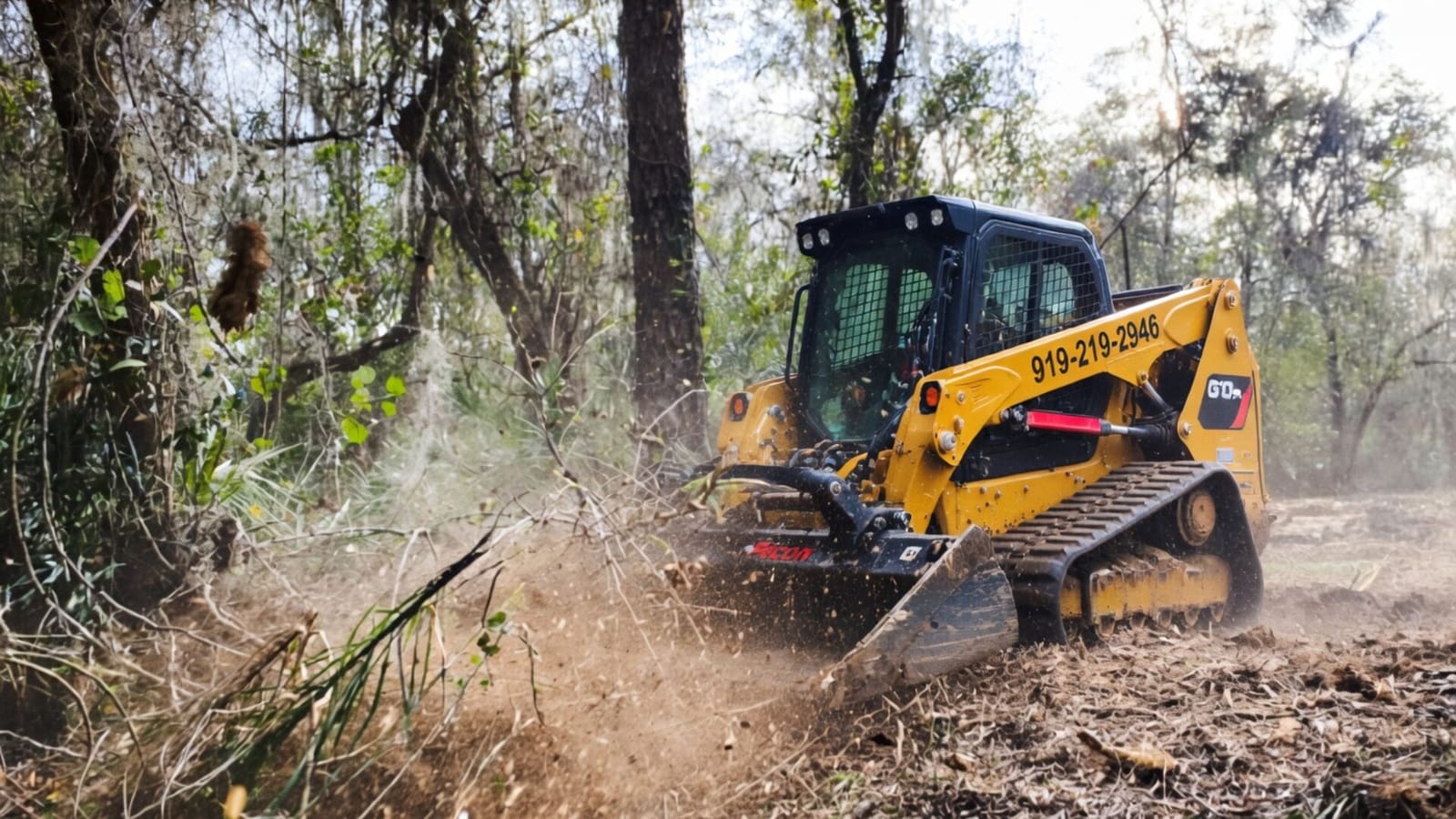
Forestry Mulching Cost in Weston, WI (2026)
Forestry mulching cost in Weston and Wausau, WI: $1,500 to $4,000 an acre. What a quote lists, plus wet-ground timing. Request a free quote.
 Cost Guide
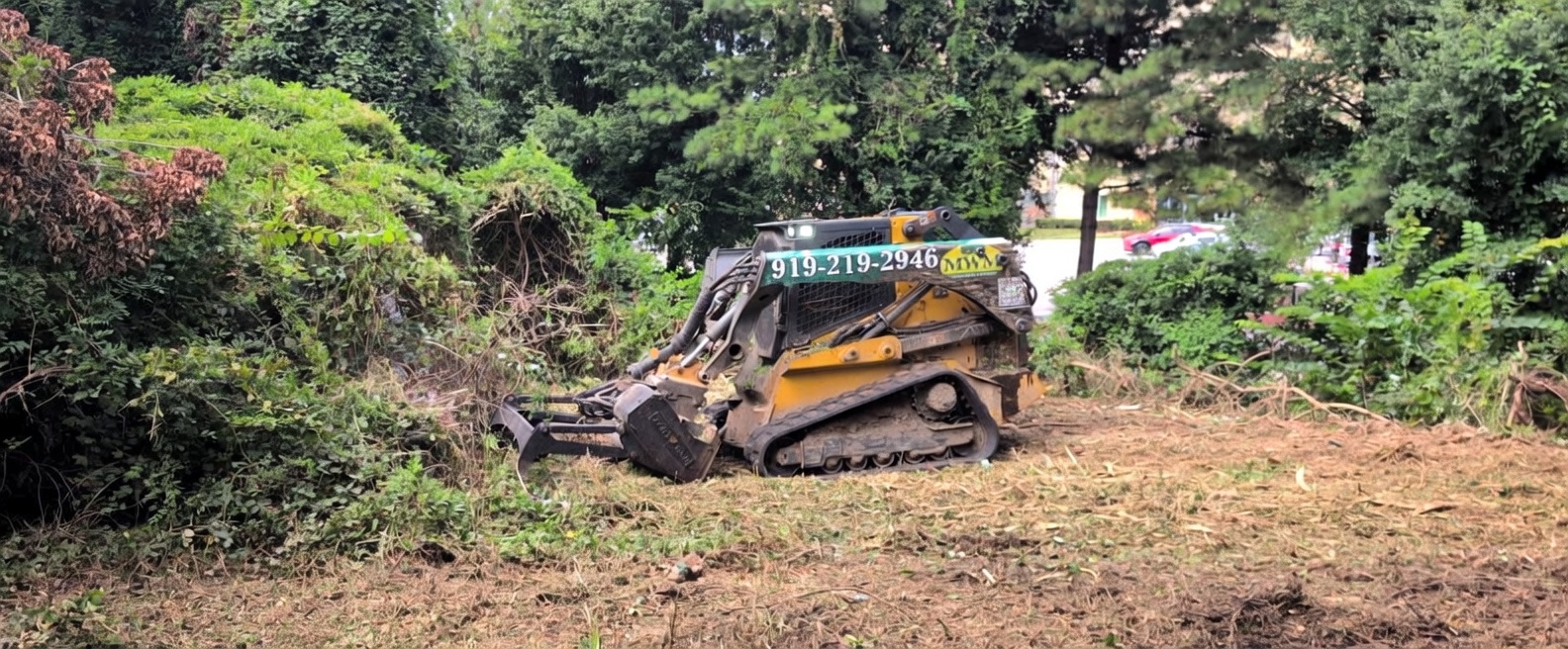
Underbrush Removal Cost in Wisconsin (2026 Guide)
Underbrush removal in Wisconsin runs $1,500 to $2,500 an acre under trees you keep. How buckthorn sprouts, honeysuckle rules and wet woods move the price.
 Cost Guide
Brush Hogging Cost Per Acre in Wisconsin (2026 Guide)
Brush hogging in Wisconsin costs $75 to $400 an acre by field condition, with a $250 to $500 minimum. How parsnip, buckthorn and CRP rules shape the price.
Comparing states? See land clearing costs by state.
Let's Get Started on Your Land
Request a free quote. We'll contact you to discuss your property, access, and the clearing you need.
Get a Free QuoteOr call us directly: (919) 525-3950
 Quick answers from Cut Brush