
Underbrush Removal Cost in Wisconsin (2026 Guide)
Cut Brush Team · November 9, 2026 · 9 min read
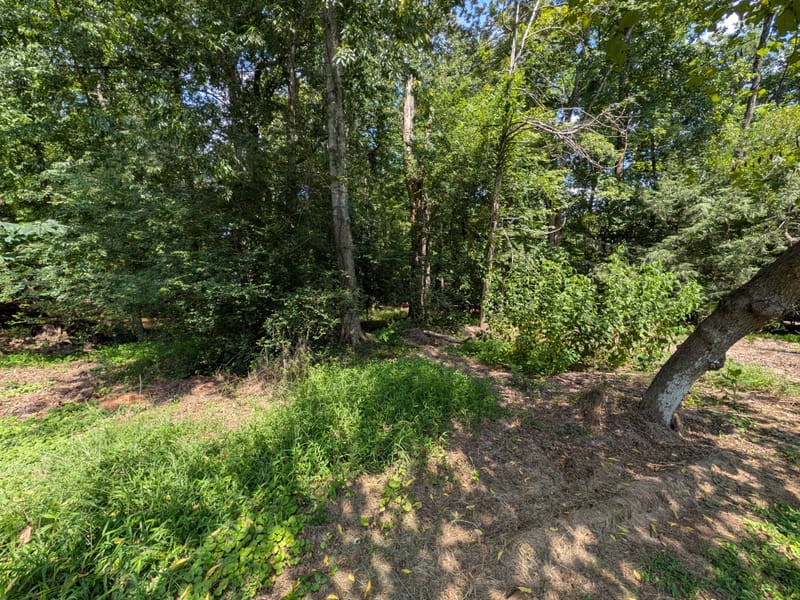
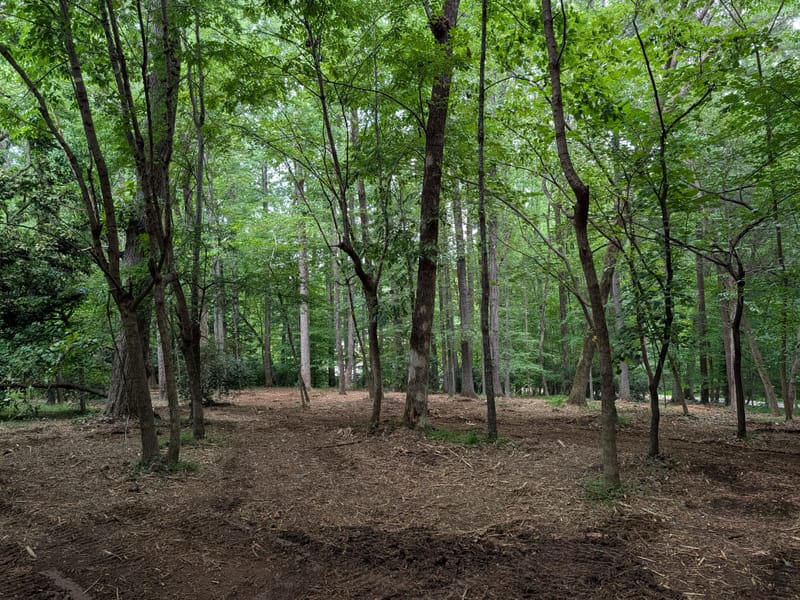
You want the woods under your oaks and maples open again without losing a tree. Underbrush removal in Wisconsin costs $1,500 to $2,500 an acre with Cut Brush: buckthorn, bush honeysuckle, brush and saplings ground up beneath the trees that stay. An old buckthorn or honeysuckle thicket with heavy stems is priced as forestry mulching instead, at $1,500 to $4,000 an acre.
These prices cover standing understory ground in place; a pile someone already cut is a hauling job.
At a glance:
- Brush and saplings under trees you keep: $1,500 to $2,500 an acre, the same band in both Wisconsin markets
- A tall, closed thicket of thick stems: $1,500 to $4,000 an acre, the mulching band
- Smallest job: a minimum charge of about $1,500, where small jobs start rather than a fee on top
- Sprouts: each return visit is its own line on the quote, so you decide visit by visit
- Honeysuckle rule: Amur honeysuckle is Prohibited in Marathon, Lincoln, Langlade, Portage and Pierce counties, so hauling it away for disposal means reporting where it came from to the DNR within 30 days
Our crews work Wisconsin out of two markets: Weston, covering Greater Wausau across Marathon, Lincoln, Langlade and Portage counties, and Ellsworth in Pierce County, reaching into St. Croix and Pepin counties.
How Much Does It Cost to Clear Underbrush Per Acre in Wisconsin?
“Underbrush removal” gets used for at least five different jobs: hand-cutting a small patch with loppers, cutting brush into piles, hauling a pile away, grinding the understory where it stands, and clearing a whole parcel. Each has its own price, which is why two numbers for the “same” work can sit thousands of dollars apart. We price the fourth: a mulching head turns what grows under the canopy into chips on the floor.
| What is standing under your trees | Our price per acre | What you see after |
|---|---|---|
| Buckthorn or bush honeysuckle with brush and saplings, under oaks, maples or aspen you keep, or along a fence line | $1,500 – $2,500 | Keepers standing on open, chip-covered ground |
| An old buckthorn thicket or a tall, closed honeysuckle stand with heavy stems | $1,500 – $4,000 | Ground down to the soil and mulched |
| A brushy field or woodlot opened up to a finish you choose | $1,500 – $4,500 | The finish written in the quote |
| One hedge or a backyard patch | About $1,500 minimum | Billed in place of an acre rate |
Where these numbers come from. They are the rows on our Weston pricing page, where the understory row is called Honeysuckle & Understory Clearing, and our Ellsworth pricing page, where the same $1,500 to $2,500 row is Buckthorn & Understory Clearing. The two markets carry one band, so nothing is averaged. Brush, saplings and stumps are ground on site, stumps flush, nothing hauled. Pulling stumps out below grade is a separate line, stump treatment is a licensed applicator’s work, and grading is never part of it.
Want the trees gone too? The Wisconsin forestry mulching cost guide prices that, and a lot headed for a builder is in the land clearing and grading guide.
Is One Pass Enough, or Will Buckthorn and Honeysuckle Come Back?
Plan on more than one visit. Cut buckthorn readily resprouts from the stump unless it gets further treatment, and bush honeysuckle cut in winter and left untreated can resprout vigorously. A mulching head takes every stem down at once and shatters the stump, but the root underneath is as alive as it would be after a chainsaw.
On Governor Knowles State Forest, along the St. Croix in Polk County, buckthorn had taken over the understory of aspen and red oak, and blocks were worked with herbicide, a mulching head, a roller chopper and goats. No single method or single attempt got rid of it, and combining methods held up best, at least in the short term.
What that means for the money:
- The first pass is the big line. It takes every woody stem down in one visit.
- Sprout visits are their own lines. Cutting sprouts while short also keeps them from fruiting: common buckthorn berries ripen in late summer and hang on into winter, which is how birds plant the next crop.
- Stump treatment is a separate trade. If you want it, a licensed applicator does it and picks the product. Tell us before the first pass so their visit can follow ours while the cuts are fresh.
- No splintered stubs. A saw pass leaves sharp stubs a few inches high; the mulching head grinds stumps flush, so the floor is easy to walk later.
Our Wisconsin buckthorn removal guide and bush honeysuckle removal guide set out the visit plan for each shrub.
Pro tip: If your woods sit near Stevens Point, check which side of the county line they are on. Amur honeysuckle is Prohibited in Portage County but Restricted in Adams, Waushara and Waupaca counties next door, and that changes what you may do with the cut brush.
What Moves the Price on a Wisconsin Woodlot
Stems per acre, more than acres. Common buckthorn grows into a small tree 20 to 25 feet tall, often with several stems from one base. A few years of seedlings under a maple stand sits at the bottom of the understory band; a thicket left for decades, thorny and tangled, moves into the mulching band.
Oaks you are keeping. The operator keeps the head off oak bark, and the calendar matters: from April 1 in the South Zone, or April 15 in the North Zone, through July 15, sap-feeding beetles carry oak wilt spores to fresh wounds. We book oak woodlots outside that window, and any bark nicked inside it gets wound sealer right away.
Wet woods by the rivers. Woody wetland covers close to a fifth of the land around Weston, where the Eau Claire River meets the Wisconsin. A saturated woodlot ruts, so it waits for a hard freeze or a dry stretch, and a frozen field is often the easiest way in for the trailer. The band stays the same; only the date moves.
Coulee sides. Around Ellsworth the same overgrown acre can sit on a level ridge-top field or halfway down a coulee. An old buckthorn and pole-timber thicket on a coulee side works toward $4,000 in the mulching band, while seedlings along a level pasture edge start near $1,500.
Where the Brush Goes: Hauling and Burning Rules in Wisconsin
Brush ground where it grew never goes on the road, which on most Wisconsin woodlots is the cheapest way to stay inside the rules. Wisconsin’s wood-waste guidance ranks the choices for land clearing brush: leave it on site to break down, chip it for mulch if it must move, and burn clean wood on the property where it grew only when neither works.
Moving it. Common and glossy buckthorn, and Morrow’s, Tartarian and Bell’s honeysuckle, are Restricted statewide under NR 40. You may transport them for control or disposal without a permit, provided no viable plants or propagules escape. Amur honeysuckle is Prohibited in Marathon, Lincoln, Langlade, Portage and Pierce counties, as well as St. Croix and Pepin. There you may transport, possess or give it away for identification or disposal without a permit only if you report the location it came from to the DNR within 30 days and nothing escapes.
Burning it. Ground brush leaves no pile to burn. If you burn cut brush yourself, inside DNR forest fire protection areas you need a free permit whenever the ground is not completely snow-covered, checking the day’s restrictions after 9 a.m. Incorporated cities and villages set their own rules, and land clearing piles over the size limit need a special permit after a DNR inspection. The Wisconsin land clearing cost guide covers burning, stormwater and shoreland rules.
Underbrush Work Across Wisconsin
Weston and Greater Wausau. From Weston, Wausau, Rothschild, Schofield and Kronenwetter out to Mosinee, Merrill, Antigo and Stevens Point, the understory is mostly bush honeysuckle and buckthorn under hardwoods. Amur honeysuckle is Prohibited in all four counties, so grinding in place saves a reporting step as well as a haul. Wausau has put goats on Barker-Stewart Island in the Wisconsin River to hold back buckthorn, honeysuckle and tansy. See land clearing around Weston for the towns and permit offices.
Ellsworth and Pierce County. Around Ellsworth, Prescott, Elmwood, Plum City and Bay City, and over into Baldwin, Hammond and Roberts in St. Croix County, buckthorn under oaks and maples and along fence lines is the usual job. Amur honeysuckle is Prohibited in Pierce, St. Croix and Pepin counties, yet Restricted across the line in Buffalo County, south of Pepin. See land clearing around Ellsworth.
The southern counties. In Dane, Waukesha, Sauk, La Crosse, Vernon and the other counties where Amur honeysuckle is Restricted, it can be hauled for disposal with no report, as long as nothing viable gets loose.
Frequently Asked Questions
How much does it cost to clear underbrush per acre in Wisconsin?
$1,500 to $2,500 an acre for brush, saplings and invasive shrubs under trees you keep, in both our Weston and Ellsworth markets. An old thicket prices as mulching at $1,500 to $4,000, and small jobs start at a minimum of about $1,500.
Is bush honeysuckle invasive in Wisconsin?
Yes. Amur, Morrow’s, Tartarian and Bell’s honeysuckle are all regulated under NR 40. Amur is Restricted in 37 named counties and Prohibited everywhere else, and the other three are Restricted statewide.
Will buckthorn grow back after mulching?
From the stump, yes, unless it gets further treatment. Plan sprout visits after the first pass. Fall shows what came back, because invasive shrubs stay green after native trees drop their leaves.
Can I keep the sprouts down with a brush hog instead?
On open ground, mowing sprouts a couple of times a summer keeps them short and cuts them before the berries ripen, but the root stays alive, so it holds the line rather than ending it. Under a canopy, a tractor and mower seldom fit between trunks. Our Wisconsin brush hogging cost guide prices mowing on open ground.
What herbicide kills bush honeysuckle?
That is a licensed applicator’s choice; our part is the cutting and grinding. Winter treatment works well on freshly cut stumps as long as snow does not cover the cut, so book the applicator for right after our pass.
Get an Underbrush Removal Quote in Wisconsin
Request a free quote and our crew will contact you to talk through the property, the access and the clearing you need under your trees. Pick the area nearest your land below: Weston for Greater Wausau, Ellsworth for Pierce County and the St. Croix side. The quote lists the first pass and each sprout visit on separate lines, so you see the whole plan first.
Sources
- Wisconsin Administrative Code, chapter NR 40, invasive species classification and transport rules
- Wisconsin DNR, burning permits
More from the Cut Brush Blog
Keep reading for more tips and guides on land clearing.
 Cost Guide
Forestry Mulching Cost in Weston, WI (2026)
Forestry mulching cost in Weston and Wausau, WI: $1,500 to $4,000 an acre. What a quote lists, plus wet-ground timing. Request a free quote.
Cost Guide Forestry Mulching Cost in Wisconsin (2026 Guide)
Forestry mulching in Wisconsin costs $1,500 to $4,000 an acre. How buckthorn, frozen ground and the DNR landowner grant shape it. Request a free quote.
Cost Guide Land Clearing Cost Per Acre in Wisconsin (2026 Guide)
Land clearing in Wisconsin: $1,500 to $4,500 an acre. See how buckthorn, oaks and lakeshore rules move the price. Request a free quote today for your land.
Comparing states? See land clearing costs by state.
Let's Get Started on Your Land
Request a free quote. We'll contact you to discuss your property, access, and the clearing you need.
Get a Free QuoteOr call us directly: (919) 525-3950
 Quick answers from Cut Brush