
Land Clearing and Grading Cost in Delaware (2026 Guide)
Cut Brush Team · November 9, 2026 · 9 min read

You have a wooded lot near Millsboro or Middletown, a house plan, and two questions that never get answered together: what it costs to get the trees off, and what it costs to shape the ground. Our crew clears a Delaware homesite for $1,500 to $4,500 per acre equivalent, and the grading after it is a separate quote from your excavating contractor. In Delaware the paperwork comes before either machine, because clearing counts as land disturbance.
At a glance:
- Clearing the house footprint, drive and utility route (our crew): $1,500 to $4,500 per acre equivalent, with a minimum charge of about $1,500 for the whole job
- Grading, fill and the pad (your excavating contractor): priced by them, once the lot is cleared
- The plan rule: 5,000 square feet or more of disturbance, clearing included, needs an approved sediment and stormwater plan before work starts; small pieces that add up past 5,000 are not exempt
- Sussex County: no building permit without a Conservation District plan; the Residential Standard Plan costs $100 and is typically approved in 24 to 48 hours
- Bare ground has a clock: cleared or graded areas must be stabilized within 14 calendar days
Our crews work Delaware from two markets: Bear, for Northern Delaware in New Castle and Kent counties, and Millsboro, for Southern Delaware in Sussex and Kent counties.
How Much Does Land Clearing and Grading Cost in Delaware?
A Delaware homesite is bought in phases, from different hands, in roughly this order.
| Phase | Who does it | How it is priced | Cost |
|---|---|---|---|
| Sediment and stormwater plan approved, with its silt fence and stabilized entrance | You or your builder; the Conservation District or county reviewer approves | A review fee set by each reviewer | $100 for a Sussex Residential Standard Plan |
| House footprint, drive and utility route cleared | Cut Brush | Per acre equivalent | $1,500 – $4,500 |
| Woods and regrowth outside the footprint | Cut Brush | Per acre | $1,500 – $4,000 mulched in place; $1,500 – $2,500 for shrubs and saplings under trees you keep |
| Rough grading, fill and the pad | Your excavating contractor | Set by them | Their quote |
| Seed, straw or other cover on graded ground | Your excavating contractor or builder | Set by them | Their quote, done within 14 days |
| Lot Grading Certificate, on Sussex lots in subdivisions approved with bulk grading data | The professional who drew your lot grading plan | Their fee | Needed before the certificate of occupancy |
Where these numbers come from. Our rows are the bands on our Millsboro pricing page and our Bear pricing page, the same in both markets. Millsboro calls the $1,500 to $2,500 row autumn olive and regrowth clearing; Bear calls it Callery pear and understory clearing. The $100 is Sussex County’s standard plan fee; Kent and New Castle reviewers set their own. The grading rows carry no figure because your excavating contractor sets them.
To add the two halves on a typical lot: say the footprint, drive and septic route come to half an acre of woods. At the homesite band that is $750 to $2,250, and where that falls under the minimum, the job is charged the minimum of about $1,500 in place of the acre rate, with nothing added on top. The excavator’s number then goes beside it. Ask for it split into machine hours, loads of fill, the pad and the cover crop, so two grading bids line up row for row. What puts an acre high or low in its band is in our Delaware land clearing cost per acre guide.
What Moves the Number on a Delaware Homesite
Clearing counts, so the plan comes first. Delaware’s sediment rules list clearing alongside grading, excavating, moving and filling as land disturbance. On a lot where the footprint, drive and septic area pass 5,000 square feet, we schedule the clearing after the plan is approved, not before. That also tells you how much to clear: the limits drawn on the plan, and no more.
Wet flats from winter into May. Fallsington soils sit on the flats, swales and depressions of the Delaware Coastal Plain, with the water table 0 to 12 inches down from December to May; Othello soils hold it within 10 inches from January to May. A tracked mulcher on that ground in March leaves ruts the excavator then has to cut out, and a pad graded there in April is shaped with groundwater within a foot of the blade. Late summer suits both trades on the same lot.
Sand that works in any month. Evesboro soils on the knolls and old dunes of the Delaware Coastal Plain are excessively drained sand, the water table deeper than six feet. On that ground the calendar barely matters to either machine. What matters is holding loose sand in place once it is bare, which is why the cover crop belongs in the excavator’s price.
The 14-day clock on bare ground. Disturbed and graded areas are stabilized within 14 calendar days. A lot cleared to bare ground in May and left for a dirt crew booked into July has to be covered in the meantime and again after grading. Time the clearing to your excavator’s start date so you pay for cover once.
No burn pile, so every stem has a route. Residential burning may not be used on land clearing material in Delaware, so on a house lot the wood is ground on site or trucked off. On the pad and drive, stumps come out below grade, a separate line in our quote; everywhere else they are ground flush and the chips stay. Hauling very large trees is priced in the quote as well.
Pro tip: Get the approved plan in hand, then book our clearing and your excavator inside the same two weeks. The 14-day stabilization clock then runs once, not twice, and the lot never sits bare between trades.
Where in Delaware Is Your Lot?
Sussex County: Millsboro, Georgetown, Milton and the Inland Bays. The Sussex Conservation District reviews the plan, and the county issues no building permit without it. Its $100 standard plan commits you to silt fence, a stabilized construction entrance, good practice during construction and stabilizing the lot once grading is done. In a subdivision whose site plan carried bulk grading data, the county also wants an Individual Lot Grading Plan with the building permit and a Lot Grading Certificate before the certificate of occupancy, drawn by a professional qualified to prepare detailed sediment plans. Our Millsboro forestry mulching cost guide works an idle field through to a price, and covers what changes when a house is coming.
Kent County: Dover, Smyrna and Clayton. A Kent County house permit needs a soil conservation permit from the Kent Conservation District, applied for on its Residential Standard Plan form, before the county issues. Inside a town, the town’s zoning official signs off as well. Both of our markets cover Kent.
New Castle County: Bear, Middletown and Newark. The plan’s reviewer depends on the address. Outside town limits it is the county’s Department of Land Use; in most towns the New Castle Conservation District; and Newark, Wilmington and Middletown review their own. Find the right desk before you set a clearing date, since our start waits on its approval. Our Bear forestry mulching cost guide compares March and September on the Fallsington flats there.
Permits, Plans and Burning for a Delaware Homesite
Under 5,000 square feet is exempt, unless several small disturbances add up past it; the reviewer decides that case by case.
5,000 square feet up to 1 acre on a single lot. A standard plan fits if total disturbance on the lot stays at 1.0 acre or less and the project creates no common land, common open space or public street.
1 acre or more. The project files a Notice of Intent under the Construction General Permit before the plan is approved, and the owner certifies that the people running the job have completed the state’s contractor training program before work starts.
Farm and forest exceptions. Farmland under a soil and water conservation plan, and commercial timber harvests that meet the Department of Agriculture’s rules, are exempt. A lot cleared for a house is neither.
Water and fill. Fill in tidal wetlands, or in tidal and nontidal waters, needs DNREC Wetlands and Waterways authorization. Fill is the grading half of the job, so settle it with DNREC before the excavator brings in a load near a ditch, pond or tidal edge.
Burning. Clearing debris cannot go on a residential fire; the farm exception and summer ban are in the per acre guide.
Frequently Asked Questions
Do I need a permit to clear and grade a lot in Delaware?
Yes, once the work reaches 5,000 square feet, and clearing counts toward it. The sediment and stormwater plan is approved by the reviewer for your address before any machine starts, and in Sussex it also unlocks the building permit.
Does land clearing leave a smooth lot, or is that done during the build?
Clearing stops at ground level. We take the growth down, grind stumps flush and take the pad’s stumps out below grade where your quote says so. Smoothing, cutting and filling the pad and the finish grade for a lawn are your excavating contractor’s work.
What is a reasonable hourly rate for grading in Delaware?
We do not grade, so we do not set that rate. Ask each excavating contractor to split the bid the same way, machine time, fill, the pad and cover, so you can compare them row for row, and ask whether a wet flat changes the fill they expect.
What happens to the trees and stumps if I cannot burn them?
They are ground into chips where they fall or hauled off. Grinding in place adds no disposal line, which is why we mulch everything outside the pad and drive; our Delaware forestry mulching cost guide covers that work. Only the pad and drive need bare ground.
When is the best time of year to clear and grade in Delaware?
On the wet flats, from early summer into fall, after the water table drops away from the surface; it sits within a foot of it from December to May. On deep sand any month works. Either way, book clearing to end just before the excavator starts, so the ground is not left bare past 14 days.
Get a Clearing Quote Before You Book the Excavator
Request a free quote and pick the nearest area below; our crew will contact you to discuss the property, access and the clearing needed, then set our start against your plan approval and your excavator’s date. Underbrush under trees you keep is covered in our Delaware underbrush removal cost guide.
Sources
- Delaware Sediment and Stormwater Regulations, 7 DE Admin. Code 5101
- Sussex County, Residential Standard Plan
More from the Cut Brush Blog
Keep reading for more tips and guides on land clearing.
 Cost Guide
Forestry Mulching Cost in Delaware (2026 Guide)
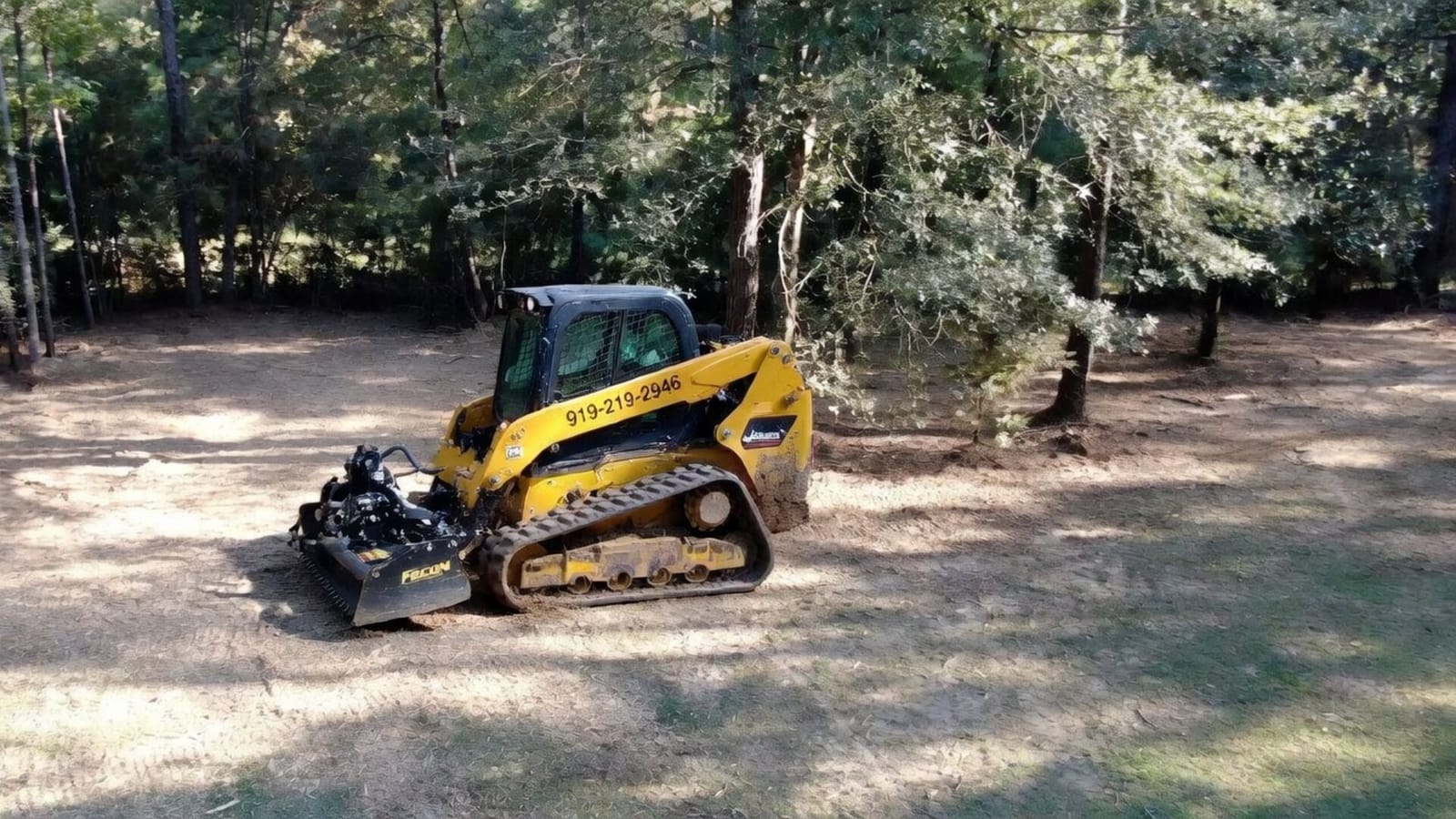
Forestry mulching in Delaware costs $1,500 to $4,000 an acre. Why clearing brush can't go in a burn pile, what the lanternfly quarantine means for hauling.
Cost Guide Forestry Mulching Cost in Millsboro, DE (2026)
Forestry mulching in Millsboro, DE costs $1,500 to $4,000 an acre. Why it is not bed mulch, how to read an hourly bid, and what wet ground adds.
 Cost Guide
Land Clearing Cost Per Acre in Delaware (2026 Guide)
$1,500 to $4,500 an acre to clear Delaware land, the rates our crew charges around Bear. How wet winter flats and the no-burn rule for house lots move it.
Comparing states? See land clearing costs by state.
Let's Get Started on Your Land
Request a free quote. We'll contact you to discuss your property, access, and the clearing you need.
Get a Free QuoteOr call us directly: (919) 525-3950
 Quick answers from Cut Brush