
Forestry Mulching Cost in Delaware (2026 Guide)
Cut Brush Team · November 9, 2026 · 8 min read
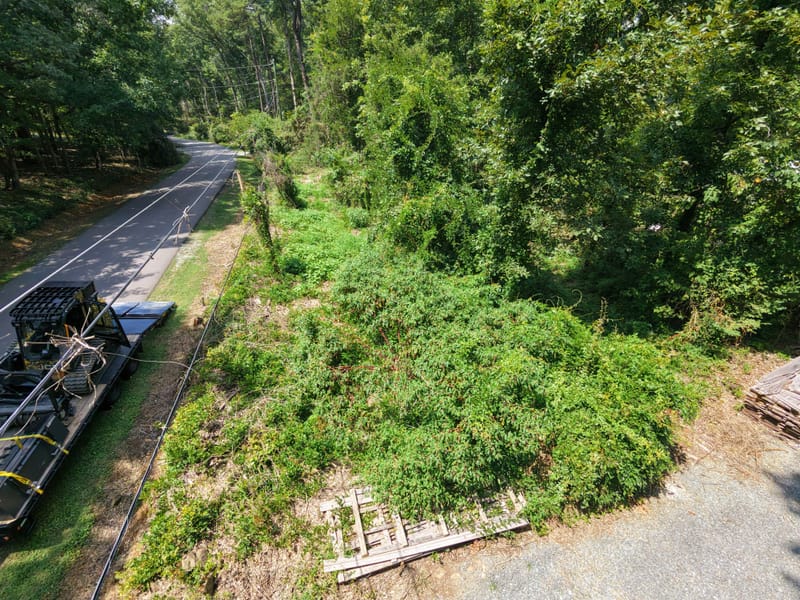
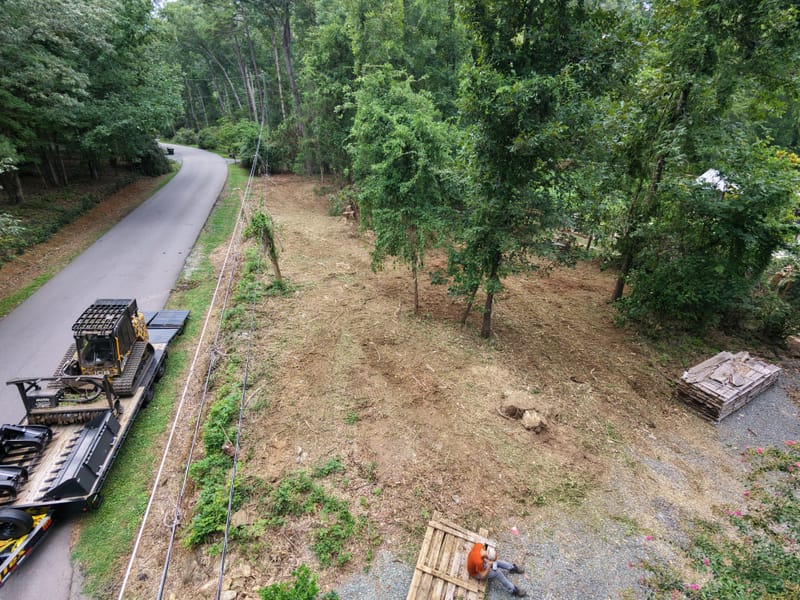
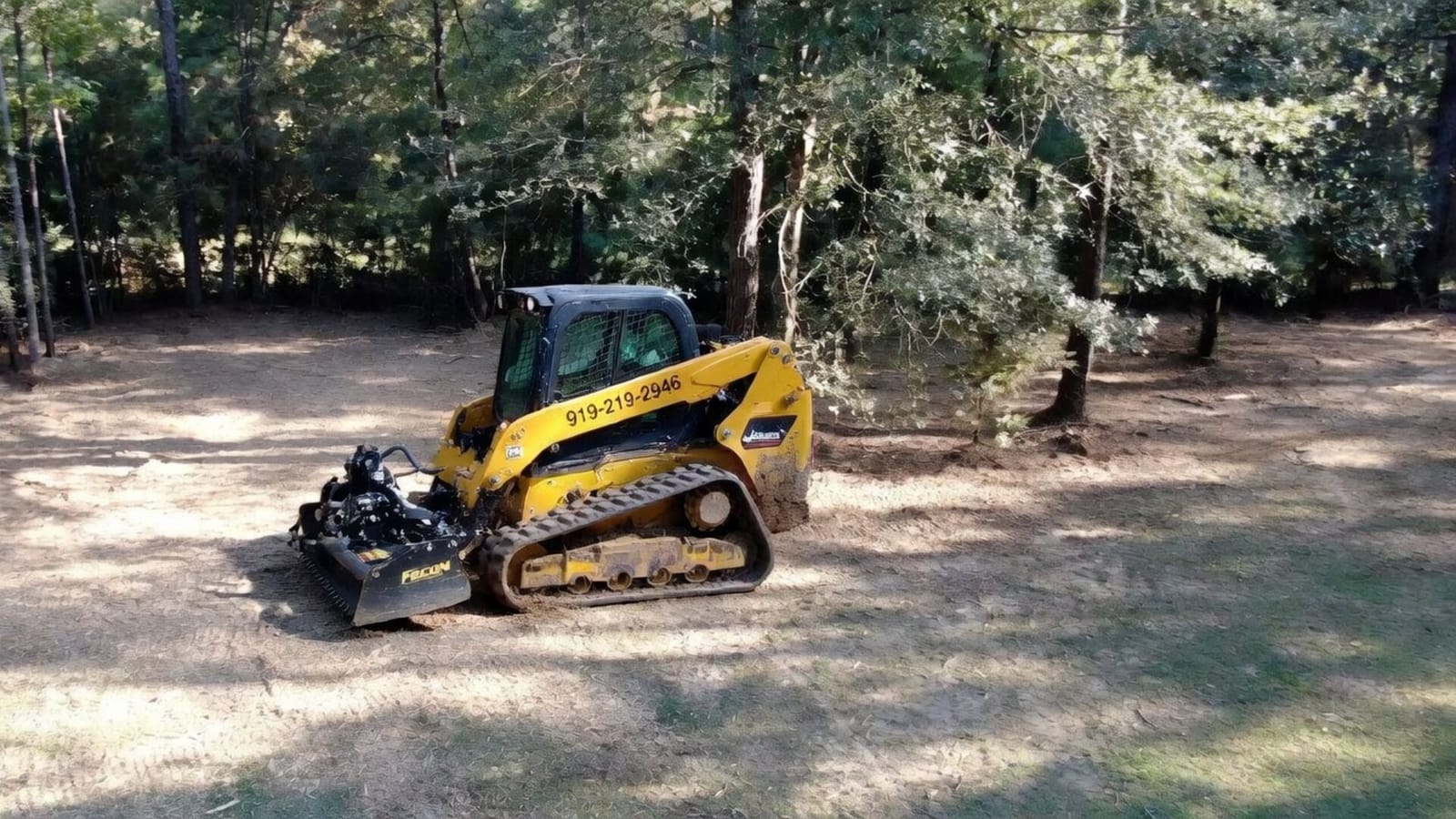
Forestry mulching in Delaware costs $1,500 to $4,000 an acre at our published rates, and a small job starts at a minimum charge of about $1,500 for the whole job. That buys one tracked machine grinding autumn olive, Callery pear, briars and young loblolly into a mat where they stand. In this state that matters more than most: brush from clearing land cannot go into a backyard burn pile in any month, and every log, stump and load of chips that leaves a Delaware property falls under the statewide spotted lanternfly quarantine.
At a glance:
- Forestry mulching: $1,500 to $4,000 an acre, the same band around Millsboro and around Bear
- Understory and hedgerows under trees you keep: $1,500 to $2,500 an acre
- Smallest job: about $1,500, which is the whole bill, not a fee on top of an acre rate
- Burning: residential burning, allowed 1 October to 30 April, may not be used for land-clearing material
- Moving wood: logs, stumps, branches, chips and bark are regulated articles under the lanternfly quarantine, which covers all three counties
- Plans: disturbing 5,000 square feet or more for construction needs an approved sediment and stormwater plan
Our crews work Delaware from two markets: Millsboro and Southern Delaware, covering Sussex and Kent counties, and Bear and Northern Delaware, covering New Castle and Kent.
How Much Does Forestry Mulching Cost in Delaware?
What is standing on the acre decides where it lands in the band. Here is how our Delaware bands line up against the ground across the state.
| What is standing on the land | Our price per acre | Where you see it in Delaware |
|---|---|---|
| Briars, multiflora rose and saplings under trees you keep | $1,500 – $2,500 | Hedgerows between Kent crop fields; pear seedlings under oak and sweetgum near Glasgow |
| A field idle a few seasons: shrubs, sapling pines, young pear | $1,500 – $4,000, lower half | Old Sussex farm ground behind a house, mulched back to open field |
| A field left for years: closed thicket, trunks as thick as a wrist | $1,500 – $4,000, upper half | Autumn olive and loblolly stands around Millsboro and Georgetown |
| A wooded lot opened for a house, drive and septic area | $1,500 – $4,500 per acre equivalent | Building lots cut from woods in both markets, priced as one job |
Where these numbers come from. Both Delaware markets publish the same bands, on the Millsboro pricing page and the Bear pricing page. Only the name of the understory row changes: “Autumn Olive & Regrowth Clearing” in the south, “Callery Pear & Understory Clearing” in the north. At those rates stumps are ground flush and nothing leaves the property. Taking stumps out below grade, or cutting and hauling very large trees, is priced in the quote, and grading stays with your builder.
If the field only needs mowing, see our Delaware brush hogging cost guide; if the trees stay and only the growth beneath them goes, the Delaware underbrush removal cost guide prices that work.
What Changes the Price of a Delaware Mulching Job
There is no free burn pile to compare against. Delaware’s residential burning season runs 1 October to 30 April, but it covers branches and shrubbery cut on your own property, 27 cubic feet at a time, and it may not be used to burn land-clearing material. Outside farm operations, brush from clearing an acre is mulched in place or loaded and trucked. That makes the real comparison in Delaware mulch against haul, and hauling adds loading time, truck time and a place to tip the load.
The lanternfly rules ride with every load. The spotted lanternfly quarantine now covers the entire state. Under it, logs, stumps, roots, branches, mulch, chips and bark are regulated articles. A business moving them needs a permit, with trained staff, an inspection for egg masses before every move and covered loads; a homeowner moving them needs the state’s checklist. Wood ground where it grew never goes on a truck, so none of that lands on your bill. Tree of heaven, the lanternfly’s favoured host, comes down in that same pass.
The plants on the state list cannot travel either. Autumn olive, Callery pear, multiflora rose, tree of heaven, mile-a-minute and Japanese stiltgrass are on Delaware’s invasive plant list, and no viable part of them, seeds included, may be transported without the Secretary of Agriculture’s written approval for disposal or control. A pear thicket hauled out in fruit is a load of seed. Mulched in place, it stays on your ground. Autumn olive and pear still sprout from the stump, so a return cut is its own line in our quote, and spraying is a licensed applicator’s work.
The month you book. Poorly drained Fallsington soils sit on flats, swales and depressions across Delaware’s Coastal Plain, with water 0 to 12 inches down from December to May. A tracked mulcher on that ground in March cuts slowly and leaves ruts; the same acre in September is firm. On the deep Evesboro sands of inland Sussex, excessively drained with nothing harder than small quartz pebbles, the machine moves at its best pace almost any month.
Three acres of woods and a cost share. If the job is invasive plants in woodland rather than a house site, the Delaware Forest Resiliency Fund may share the cost: most of its payments run at 90 percent, projects must be at least 3 acres and in forest, and invasive species work is capped at $10,000 per landowner. Its terms do not say whether mulching or other machine removal qualifies, so confirm eligibility with the Delaware Forest Service before you count on it. Applications are taken first come, first served, as funding allows.
Pro tip: The fund pays you back only after the work is done and proven, and the paperwork comes first: a Delaware W-9, registration as a state supplier and a UEI number from SAM.gov. Start those before you book the machine, so the mulching date never waits on a form.
Forestry Mulching Costs Across Delaware
Sussex County: Millsboro, Georgetown, Seaford and Lewes. Much of the land here is farm ground left idle and taken over by autumn olive, briars and seedling loblolly. Sandy inland ground mulches fast; the wet Fallsington flats between the sandy knolls wait for late summer. Plans for building lots go to the Sussex Conservation District. Our Millsboro forestry mulching cost guide works one field through the arithmetic.
Kent County: Dover, Smyrna, Milford and Clayton. Both markets reach Kent, and its fields are broken by hedgerows and woodlots that price in the understory row when the bigger trees stay. Ground still in farming is the one case where burning cleared brush is possible at all, with written approval. The Kent Conservation District reviews plans across the whole county.
New Castle County: Bear, Glasgow, Middletown and Newark. Callery pear fills idle fields here, and the farther north you go, the more the Piedmont’s stony ground near Hockessin pushes an acre up its band. Plans go to the county’s Department of Land Use outside town limits, to the New Castle Conservation District in most towns, and to Newark, Wilmington or Middletown inside their own limits. See our Bear forestry mulching cost guide for why fall beats spring on those flats.
Burning, Plans and Permits for Delaware Mulching
Burning. Where a burn is allowed at all, it is 8 a.m. to 4 p.m., never between 1 May and 30 September, never on an Air Quality Action Day, and only after you call the county fire board: New Castle 302-571-7331, Kent 302-734-6040, Sussex 302-856-6306. The full rule on clearing debris, with its farm exception, is in our Delaware land clearing cost guide.
Sediment and stormwater. Construction that disturbs 5,000 square feet or more needs an approved Sediment and Stormwater Management Plan; smaller pieces that add up past that line count together. An acre is 43,560 square feet, so a wooded homesite crosses it easily. Where DNREC approves the plan, its fee cannot exceed $80 per disturbed acre; the delegated agencies set their own. The plan is filed by you, your builder or your engineer, not by the mulching crew. Our Delaware land clearing and grading cost guide shows who does each phase.
Frequently Asked Questions
How much does forestry mulching cost per acre in Delaware?
Plan on $1,500 to $4,000 an acre. A field a few seasons idle sits in the lower half; a closed thicket of autumn olive or pear with wrist-thick trunks sits in the upper half. Under an acre, the minimum charge of about $1,500 usually sets the price.
Can I just burn the brush instead of mulching it in Delaware?
Not on a residential burn. Delaware’s homeowner burning covers branches cut on your own property, 27 cubic feet at a time from October through April, and land-clearing material is excluded. That leaves mulching in place or hauling, and hauling costs more.
Do I need a permit to mulch my land in Delaware?
If the clearing is for construction and disturbs 5,000 square feet or more, an approved sediment and stormwater plan comes first, through DNREC or the delegated agency for your parcel. Your builder or the county will tell you which. Mulching an idle field you are keeping as open ground is a question to put to that same office before you book.
Will Delaware pay part of the cost to mulch out invasive plants?
Possibly, through the Delaware Forest Resiliency Fund. It covers invasive species removal in forest on projects of 3 acres or more, up to $10,000 per landowner, and pays back after the work is proven. Ask the Delaware Forest Service whether a mulching pass is eligible and whether money is left before you count on it.
How long does it take to mulch an acre in Delaware?
It depends on trunk size and water more than acreage. Sapling growth on dry Sussex sand goes quickly; a closed pear thicket on a Fallsington flat in March goes slowly. Ask for the schedule in writing with the price.
Get a Forestry Mulching Quote in Delaware
The band is for budgeting; the number you pay comes from what stands on your acre, how wet it is and how a tracked machine gets in. Request a free quote and pick the area nearest your land below, and our crew will contact you to discuss the property, the access and the mulching you need. Both pricing pages list every band in full.
Sources
- DNREC, residential open burning
- Delaware Department of Agriculture, Delaware Forest Resiliency Fund
More from the Cut Brush Blog
Keep reading for more tips and guides on land clearing.
 Cost Guide
Forestry Mulching Cost in Millsboro, DE (2026)
Forestry mulching in Millsboro, DE costs $1,500 to $4,000 an acre. Why it is not bed mulch, how to read an hourly bid, and what wet ground adds.
 Cost Guide
Land Clearing and Grading Cost in Delaware (2026 Guide)
$1,500 to $4,500 an acre to clear a Delaware homesite, then a separate grading quote. Who does each phase, and the sediment plan Sussex and Kent want first.
Cost Guide Land Clearing Cost Per Acre in Delaware (2026 Guide)
$1,500 to $4,500 an acre to clear Delaware land, the rates our crew charges around Bear. How wet winter flats and the no-burn rule for house lots move it.
Comparing states? See land clearing costs by state.
Let's Get Started on Your Land
Request a free quote. We'll contact you to discuss your property, access, and the clearing you need.
Get a Free QuoteOr call us directly: (919) 525-3950
 Quick answers from Cut Brush