
Underbrush Removal Cost in Delaware (2026 Guide)
Cut Brush Team · November 9, 2026 · 9 min read
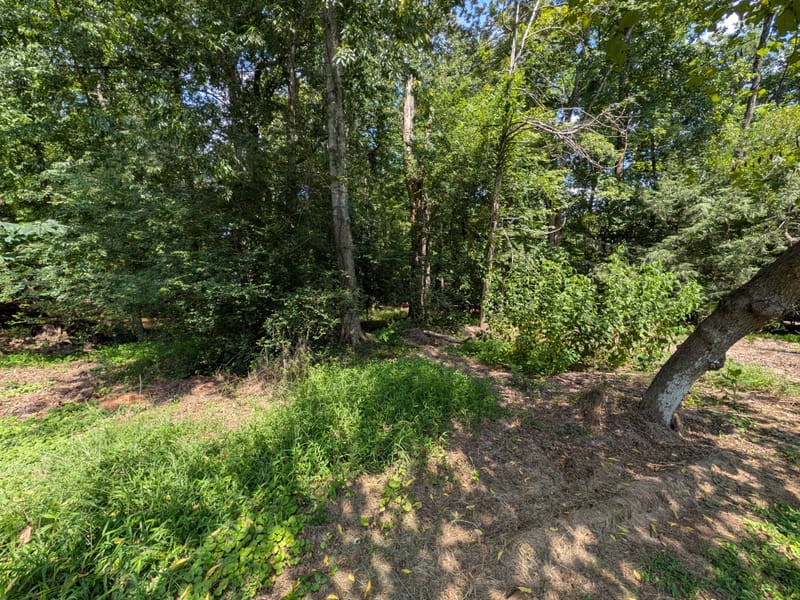
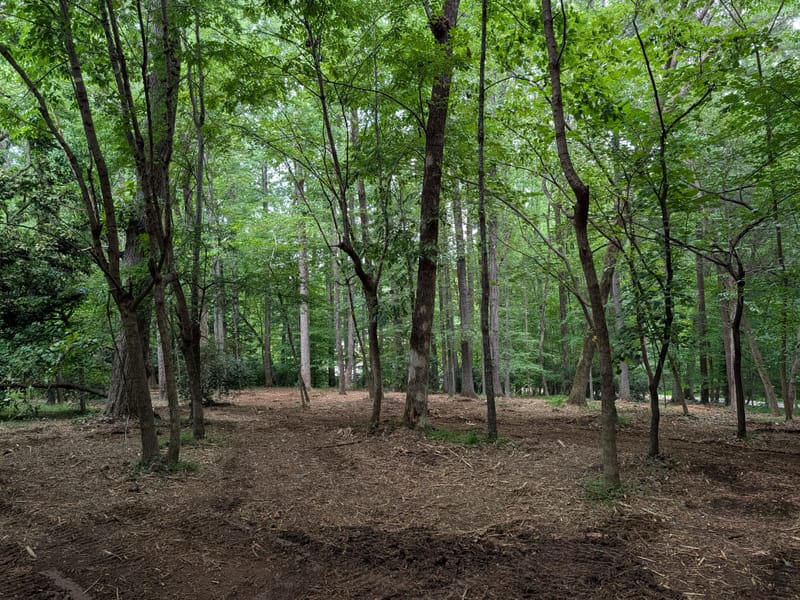
Behind plenty of Delaware houses sits a strip of woods nobody walks into anymore: multiflora rose arching between the oaks, wineberry canes along the edge, Japanese honeysuckle climbing whatever stands still. Our crews take that growth out from under the trees you keep for $1,500 to $2,500 an acre, the same understory band in both of our Delaware markets. The trees stay, the brush is ground into the forest floor, and nothing is hauled or burned.
At a glance:
- Understory under trees you keep: $1,500 to $2,500 an acre, around Bear and around Millsboro alike
- Rose or autumn olive grown into a closed thicket: priced as forestry mulching, $1,500 to $4,000 an acre
- Smallest job: a minimum charge of about $1,500 for the whole visit, never stacked on top of an acre rate
- Burning: material from land clearing may not be burned in Delaware except in agricultural operations, and most open burning is banned from May 1 through September 30
- Cost share: the Delaware Forest Resiliency Fund shares the cost of invasive plant removal on 3 acres or more of forest, up to $10,000 per landowner; confirm with the Delaware Forest Service that a machine pass qualifies
- Timing: hedgerows are best cleared September through March, outside nesting season
Our Delaware crews work from two markets: Bear and Northern Delaware, covering New Castle and Kent counties, and Millsboro and Southern Delaware, covering Sussex and Kent.
How Much Does Underbrush Removal Cost in Delaware?
Underbrush removal takes the shrubs, briars, vines and saplings out from beneath a canopy that stays: a mulching head works between the trunks and grinds that layer where it stands.
| What is under your trees | Our price per acre | Where you see it in Delaware |
|---|---|---|
| Wineberry, Japanese honeysuckle and briars under open oak or pine | $1,500 – $2,500 | Woodlot edges behind homes, north and south |
| Young Callery pear, multiflora rose, holly and saplings under oak, sweetgum or pine | $1,500 – $2,500 | Idle field edges around Bear, Glasgow and Middletown |
| Autumn olive, briars and shrubs in hedgerows and along fence lines | $1,500 – $2,500, a strip priced by its share of an acre | Field margins across Sussex |
| Rose or autumn olive grown into a closed thicket, trunks as thick as a wrist | $1,500 – $4,000 | Fields left alone ten years or more |
Where these numbers come from. They are the understory rows of our two Delaware pricing pages. The Bear pricing page calls the row Callery Pear & Understory Clearing; the Millsboro pricing page calls it Autumn Olive & Regrowth Clearing. Both publish $1,500 to $2,500 an acre. A stand too dense to work around moves to the forestry mulching row, covered in our Delaware forestry mulching cost guide.
Strips are where the minimum shows up. A fence line 600 feet long and 30 feet wide is about 0.41 of an acre, roughly $620 to $1,030 at the understory rate, so it is charged the minimum of about $1,500 instead.
What Changes the Price of Delaware Underbrush Work
Which hollies stay. American holly is Delaware’s state tree, and it can grow right in the layer being cleared, among the young pear and rose. Decide which hollies are keepers before the job is priced: every holly, oak or pine left standing is a trunk the head works around rather than through.
Thorn and cane. Multiflora rose throws arching thorny stems up to 13 feet tall and roots wherever a cane tip rests on the ground, so an old patch is a wall of stems. Stem count, not acreage, puts a job low or high in the band.
Rock north of Newark. Southern New Castle and Kent are mostly sandy loam with no stone, where the head runs low and quick. Around Hockessin and Pike Creek, schist hills bring rock and steeper ground, and the same understory takes more machine time.
Spring water on the flats. Low ground around Bear, Glasgow and Middletown holds water within a foot of the surface from December to May. Tracks rut, passes slow, and an understory job booked for late summer or fall usually lands lower in its band than the same job in March.
Nests in the hedgerow. Hedgerows and tangles of rose and honeysuckle often hold nesting birds, so the time to clear them is September through March. Put that beside the wet spring and the best window for most Delaware understory work is September to November: the nests are empty, the ground is firm, and autumn olive is easy to pick out by its red fruit.
Will Delaware Underbrush Grow Back After It Is Cleared?
Some of it will, and a good quote says what happens next. The plants that fill Delaware’s understory mostly come back from what is left behind:
- Multiflora rose returns from its crown and roots, and from seed already in the soil.
- Autumn olive sprouts from the cut trunk. Killing an old plant takes herbicide on the fresh-cut stump, then on the new sprouts as they show.
- Japanese stiltgrass is an annual grass that lives on its seed. Cut it in August or September while it flowers, before the seed sets; it spreads fastest where soil has been disturbed.
- Japanese honeysuckle is held back by mowing twice a year, in July and September.
What works on all of them is cutting the new growth again: keep knocking the shoots back and, in most cases, the roots run out of reserves. The first pass opens the woods; the follow-up is a smaller, separate line. Our Delaware quotes list each return visit for sprouts on its own, so you can accept it or skip it. Herbicide is a licensed applicator’s work, priced by them.
Mulching also leaves the ground covered in chips instead of bare, and bare, disturbed soil is where stiltgrass and rose seedlings take hold first. Cover any bare patch with salt hay rather than straw, which carries weed seed.
Pro tip: Walk the woods in early fall with a roll of flagging tape. Autumn olive stands out then, with silvery leaf undersides and red fruit ripening in September and October, and every holly or oak you mark is one we work around. A flagged lot gets a quote that matches what you want kept.
Underbrush Costs Across Delaware
Bear, Glasgow and Middletown. Sandy loam and quick work once the flats firm up. Idle field edges here fill with young Callery pear, which is why the Bear row carries its name. See understory and clearing work around Bear, and our Delaware Bradford pear removal guide for pear that keeps sprouting.
Kent County: Smyrna, Clayton and Dover. Farm woodlots and long hedgerows between fields, served from both of our markets. One fence line here often lands on the minimum.
Sussex County: Millsboro, Georgetown and Milton. Old fields and woods edges filling with autumn olive and young loblolly pine; the Millsboro row is named for the olive. See clearing around Millsboro and our Delaware autumn olive removal guide for the return cuts it needs.
Burning, Permits and the Forest Resiliency Fund
Where the brush goes. Delaware leaves no burn pile for clearing work: material generated from land clearing may not be burned except in agricultural operations, which need written approval first. A homeowner may burn cut or fallen branches, limbs or shrubbery from their own residence after notifying the county fire board (New Castle 302-571-7331, Kent 302-734-6040, Sussex 302-856-6306), but not from May 1 through September 30 and never on an Air Quality Action Day. Do not count on burning what a clearing machine cuts. Our understory price grinds everything in place; hauling, if you want it, is priced in the quote.
Permits. Understory work under standing trees is not grading. If it is part of a building project, though, the sediment and stormwater thresholds apply, and our Delaware land clearing cost guide sets them out.
The Forest Resiliency Fund. This Delaware Forest Service fund pays for removal or control of plants on the Delaware Invasive Species Council list, which includes multiflora rose, autumn olive, Japanese stiltgrass, wineberry, Japanese honeysuckle and Callery pear. The terms:
- 90 percent cost share, or 100 percent for owners who have held Delaware forestland 10 years or less in total, land in priority areas, limited resource producers, and veterans honorably discharged in the prior 10 years
- projects of at least 3 acres, in woods that meet the U.S. Forest Service definition of forest, so a yard or a lone hedgerow may not qualify
- three bids from qualified contractors
- up to $10,000 per landowner, paid once proof of the work is received, with records kept for three years
The fund’s page does not say whether it pays toward mulching or other machine removal, or which parts of a bill it counts, so do not budget on the 90 percent until the Delaware Forest Service confirms that your project and the work in it are eligible. Applications are approved first come, first served as funding allows, so also check that money remains in the current round.
Frequently Asked Questions
How much does it cost to clear underbrush from one acre in Delaware?
$1,500 to $2,500 around Bear and around Millsboro. On a single acre the low end equals the minimum charge of about $1,500. Dense rose or autumn olive under closely spaced hollies sits near the top, and a thicket too dense to work around prices as forestry mulching.
Will a bush hog get rid of multiflora rose?
Not under trees, and not in one pass: a mower cannot work beneath a canopy, and rose comes back from crown, roots and seed. In an open field, repeated mowing wears it down; our Delaware brush hogging cost guide prices that work.
Can I burn the brush after clearing underbrush in Delaware?
Not material from land clearing, unless it comes from an agricultural operation with written approval. Our understory price grinds the growth in place, so there is nothing left to burn.
Will Delaware pay part of the cost to remove invasive underbrush?
Possibly, through the Forest Resiliency Fund, on 3 acres or more of forest, up to $10,000 per landowner. Confirm with the Delaware Forest Service that machine clearing is eligible and that the current round still has money before you book.
Will clearing the underbrush leave my lot ready to build on?
No. Understory work leaves the trees standing and a layer of chips on the ground. Smoothing a lot or building a pad is grading, done by your builder’s excavating contractor once we finish clearing; our Delaware land clearing and grading cost guide shows who does each phase.
Get an Underbrush Removal Quote in Delaware
Request a free quote and our crew will contact you to discuss the property, the access and the understory you want gone. Pick the nearer of our two areas below: Bear and Northern Delaware, or Millsboro and Southern Delaware.
Sources
- Delaware Department of Agriculture, Delaware Forest Resiliency Fund
- DNREC, open burning
- University of Delaware and Plants for a Livable Delaware, Controlling Backyard Invaders (control methods and timing)
More from the Cut Brush Blog
Keep reading for more tips and guides on land clearing.
 Cost Guide
Land Clearing Cost Per Acre in Delaware (2026 Guide)
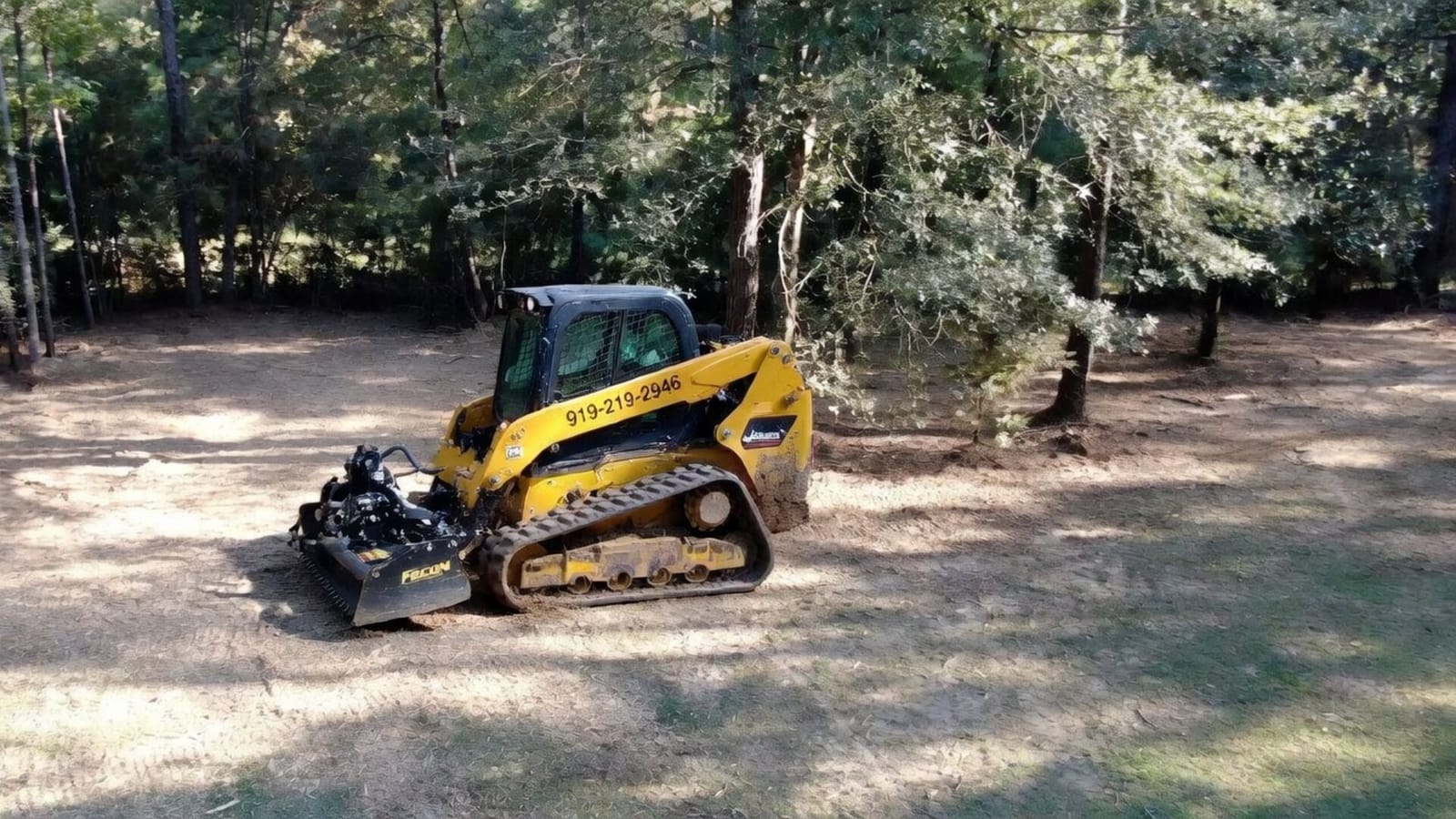
$1,500 to $4,500 an acre to clear Delaware land, the rates our crew charges around Bear. How wet winter flats and the no-burn rule for house lots move it.
 Cost Guide
Brush Hogging Cost Per Acre in Delaware (2026 Guide)
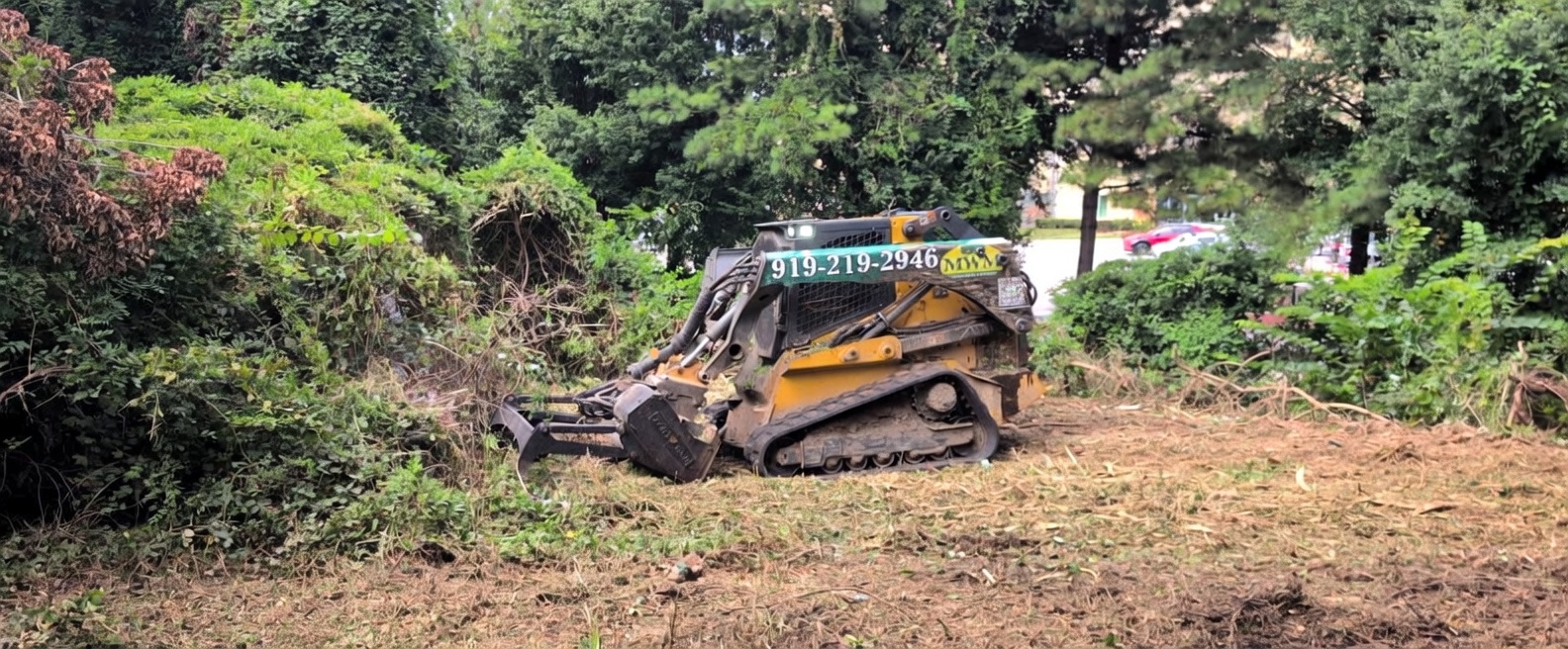
$75 to $400 an acre to brush hog a Delaware field, set by how long since the last cut. The weed law's 24-inch line, tax ditch banks and when saplings need more.
 Guide
Autumn Olive Removal in Delaware: Law, Plan and Cost
Autumn olive removal in Delaware: $1,500 to $2,500 an acre for field and hedgerow shrubs. Why one cutting fails, the state law and the visits it takes.
Comparing states? See land clearing costs by state.
Let's Get Started on Your Land
Request a free quote. We'll contact you to discuss your property, access, and the clearing you need.
Get a Free QuoteOr call us directly: (919) 525-3950
 Quick answers from Cut Brush