Land Clearing Cost Per Acre in Ohio (2026)
Cut Brush Team · September 12, 2026 · 8 min read
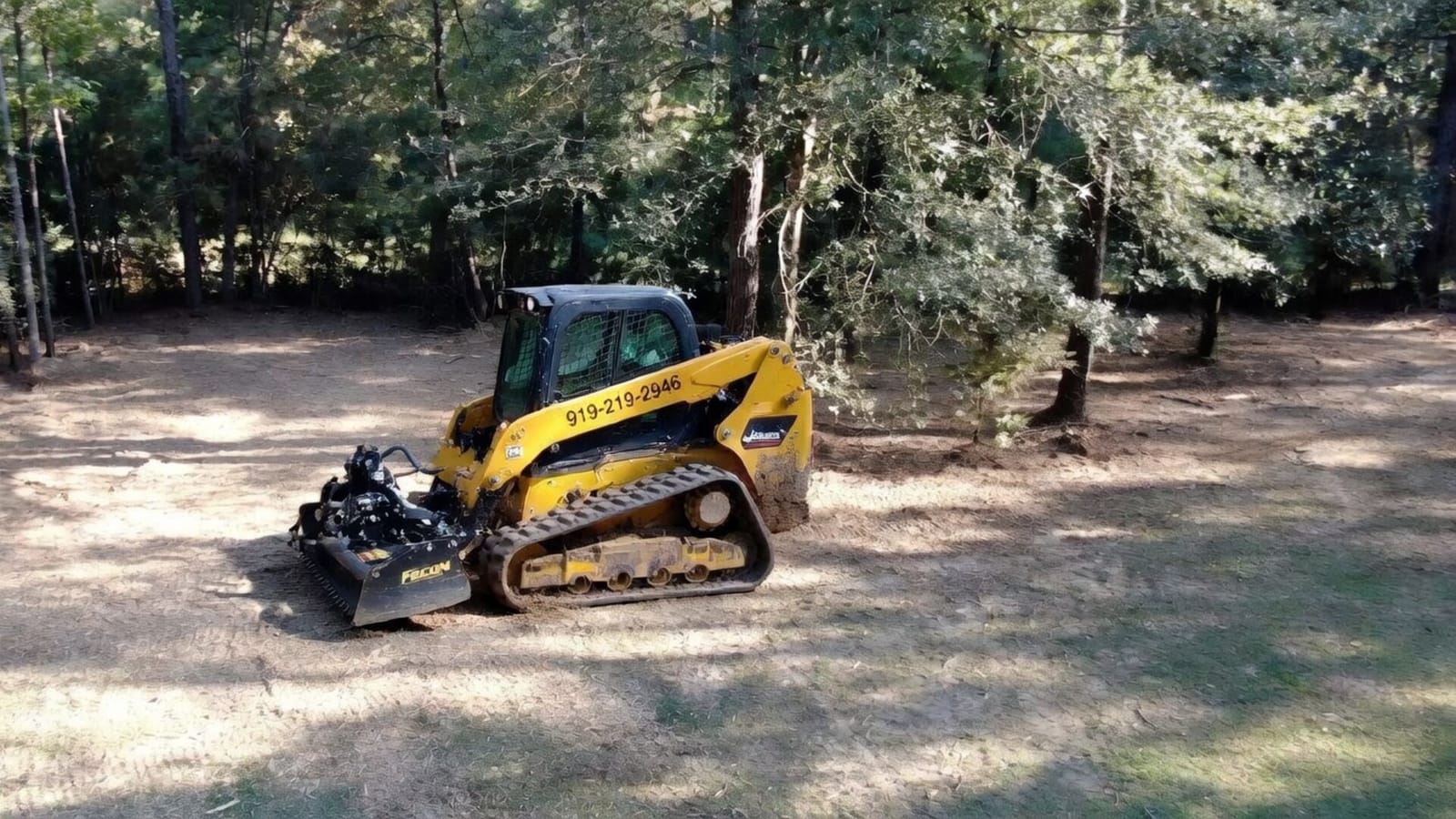
You called three contractors about clearing a few acres in Ohio and the quotes came back thousands of dollars apart. That spread is rarely padding. The land clearing cost per acre in Ohio runs $1,500 to $4,500 for most projects, and where a parcel lands inside that band depends on things a phone call cannot see: what is growing on it, how much of it returns from the roots, how the soil handles water, how a machine gets on the property, and what the law lets you do with the material once it is down.
This guide covers per-acre pricing by vegetation, the Ohio-specific factors that move a number, and why in this state the calendar often matters more than the acreage does.
How Much Does It Cost to Clear Land in Ohio?
Most land clearing in Ohio costs $1,500 to $4,500 per acre in 2026. Vegetation density sets the baseline, because machine hours per acre are most of the price and heavy woody growth means more of them.
| What is growing | Typical cost per acre | Where it shows up |
|---|---|---|
| Overgrown field edges and light brush | $1,500 – $2,200 | Pasture edges and fence lines left unmowed |
| Honeysuckle and buckthorn thickets | $1,500 – $2,500 | Old field corners and shaded property lines |
| Mixed brush with scattered saplings | $2,000 – $3,200 | Acreage left alone for five to ten years |
| Dense understory beneath standing timber | $2,500 – $4,000 | Woodlots being opened for a house |
| Timbered or poorly drained ground | $3,000 – $4,500 | Wet flats, bottoms and benched building sites |
Two more numbers worth knowing before you budget. Mobilising equipment sets a practical minimum near $1,500 per project, even on parcels well under an acre, because hauling a tracked machine costs the same whether it cuts for an hour or a day. And complete homesite packages covering the building envelope, the driveway and the utility corridor typically total $2,000 to $6,000.
Forestry mulching, where the material is chipped in place instead of hauled away, runs $1,500 to $4,000 per acre. Brush and understory work on its own runs $1,500 to $2,500 per acre.
What Moves an Ohio Clearing Quote?
Drainage, regrowth, access and disposal, in roughly that order.
Glacial till and the water it holds. Much of northern and central Ohio sits on soils formed in till, which water does not pass through easily. The Mahoning series, mapped over more than 450,000 acres of northeastern Ohio and northwestern Pennsylvania, is somewhat poorly drained with saturated hydraulic conductivity moderately low in the subsoil, and the USDA records a perched or apparent seasonal high water table 6 to 12 inches below the surface from October through June in most years (USDA NRCS). That single line explains most of Ohio’s scheduling: for much of the year the water is shallower than a boot print, and a machine working that surface is slower and marks it more.
Regrowth. Amur honeysuckle, European buckthorn, autumn olive, multiflora rose and Japanese knotweed all appear on Ohio’s regulated invasive plant list, and the rule that bans selling and distributing them expressly allows removal and control (Ohio Administrative Code 901:5-30-01). What the rule cannot change is that each of them pushes new growth from a cut stem. An honest quote separates the knockdown from the follow-up plan instead of implying one visit settles it. Cut Brush applies no herbicide, so any chemical step is arranged with a licensed applicator.
Access. Long drives, tight gates, culverts of unknown strength, soft field entrances and low limbs over the approach all burn hours before the first stem is cut. In Ohio the approach is often the wettest part of the property, so it also decides whether hauling is realistic at all.
The Five Months You Mostly Cannot Burn It
This is the Ohio factor that catches people out, and it works the opposite way to the southern states.
Ohio Revised Code 1503.18 prohibits kindling a fire in the open air for the purpose of burning wood, brush, weeds, grass or rubbish of any kind during March, April, May, October and November between the hours of 6 a.m. and 6 p.m., and it applies outside the limits of any municipal corporation (Ohio Revised Code 1503.18). Elsewhere the seasonal restriction lands on town lots; here it lands on the rural acreage where most clearing actually happens, for five months a year covering both the spring and autumn shoulders of the building season.
Land clearing waste carries separate conditions on top. Ohio Administrative Code 3745-19-04 requires written Ohio EPA permission, the fire kept no less than one thousand feet from any inhabited building not located on the premises, and an air curtain destructor or another device or method the director finds at least as effective at curtailing air contaminants (Ohio Administrative Code 3745-19-04).
So in Ohio the cheap disposal route is not really open, and the comparison becomes chipping the material in place against loading and hauling it off. Hauling is what moves the number, and on wet till it is also what the weather punishes.
Is Forestry Mulching Cheaper Than Clear and Haul?
For most residential projects, yes, because nothing leaves the site. Mulching runs $1,500 to $4,000 per acre and the chipped vegetation stays put as a mat. No piling, no loading, no dump fees, and no permission letter for a burn.
Full clearing at $1,500 to $4,500 per acre earns its price when the end result has to be clean dirt: a building pad, a driveway cut, a graded yard. Once grubbing and hauling enter the scope, expect the top half of the range.
There is also a practical Ohio argument for mulching first and grubbing later if the build is a year or two out. The chip mat protects a surface that would otherwise sit bare through eight wet months, and roots left in the soil hold the top layer together in the meantime.
Do Ohio Permits Add to the Bill?
They add process and lead time rather than changing a clearing rate, and agency fees stay the owner’s responsibility.
Ohio hangs its thresholds on the acre. Ohio Revised Code 307.79 lets county commissioners require plans governing erosion control, sediment control and water management before clearing, grading, excavating, filling or otherwise wholly or partially disturbing one or more contiguous acres for nonfarm uses, and adds that areas of less than one contiguous acre are not thereby exempt from the rest of the rule (Ohio Revised Code 307.79). Ohio EPA construction stormwater coverage applies at one or more acres, or below an acre where the work is part of a larger common plan of development or sale, and the agency states that local jurisdictions may impose more stringent stormwater requirements than the state’s (Ohio EPA).
Because the county holds the power, the detail is local: the rule in one county is not automatically the rule in the next, and plan review usually sits with the soil and water conservation district. Riparian setback regulations adopted by individual communities can reshape a scope near a stream whatever the acreage.
Requirements vary by parcel, scope and jurisdiction. Cut Brush can flag what commonly applies and help identify the right office. The governing authority makes the determination.
Clearing Around Cleveland and Northeast Ohio?
The five counties around Cleveland are where the state’s till drainage story is at its most pronounced, and they are the part of Ohio Cut Brush covers: Cuyahoga, Lake, Geauga, Medina and Lorain. Everything above applies, with one local emphasis. Here the season does not just affect the finish, it usually decides the hours, so the same acre priced for a dry September and a soft April is not the same job. The other local watch-out is streams, because community riparian setbacks in this corner of the state can run from 25 to 300 feet either side of a watercourse.
Per-acre ranges for mulching, brush work, whole-parcel clearing and homesite prep are on our Cleveland pricing guide, the local conditions and the service area are on the Cleveland land clearing page, and the mulching number specifically is broken down in our Cleveland forestry mulching cost guide. For the permit sequence, including the city plan and the district review, start with our Cleveland and Cuyahoga County permit guide.
Frequently Asked Questions
How much does it cost to clear one acre of land in Ohio?
$1,500 to $4,500 for full clearing, or $1,500 to $4,000 if mulching gets you the finish you need. A dry, accessible acre of light brush sits near the bottom; a timbered acre on poorly drained ground with a graded finish sits near the top. Density, drainage, regrowth and access decide it, not the acre count alone.
Do small jobs really cost $1,500?
Yes, as a practical floor. Mobilisation costs the same whatever the size, so bundling a fence line, a wet corner and a brush patch into one visit is the easiest way to get full value from it.
Is there a cheap season to clear land in Ohio?
No published seasonal discount, but the calendar genuinely matters. Late summer and hard frozen ground are the two windows that behave; the wet months in between buy you less for the same money. If your plan depends on burning the debris, the daytime restriction covers five months outside city limits.
Can I get a number without a site visit?
You can get a rough range from acreage and photos. A firm written quote takes a walk-through, because drainage, regrowth and access are the three things aerial views hide and the three most likely to move the price.
Get a Straight Number on Your Ohio Clearing Project
Understanding the land clearing cost per acre in Ohio starts with your own ground: what is growing on it, what will come back, how the soil handles water, and what the county and the calendar allow you to do with the material.
Compare your project against the ranges on our Cleveland pricing guide, then request a free estimate. We respond within 24 hours, walk the parcel with you, and put every line item in writing so the quote you approve is the price you pay.
More from the Cut Brush Blog
Keep reading for more tips and guides on land clearing.
 Cost Guide
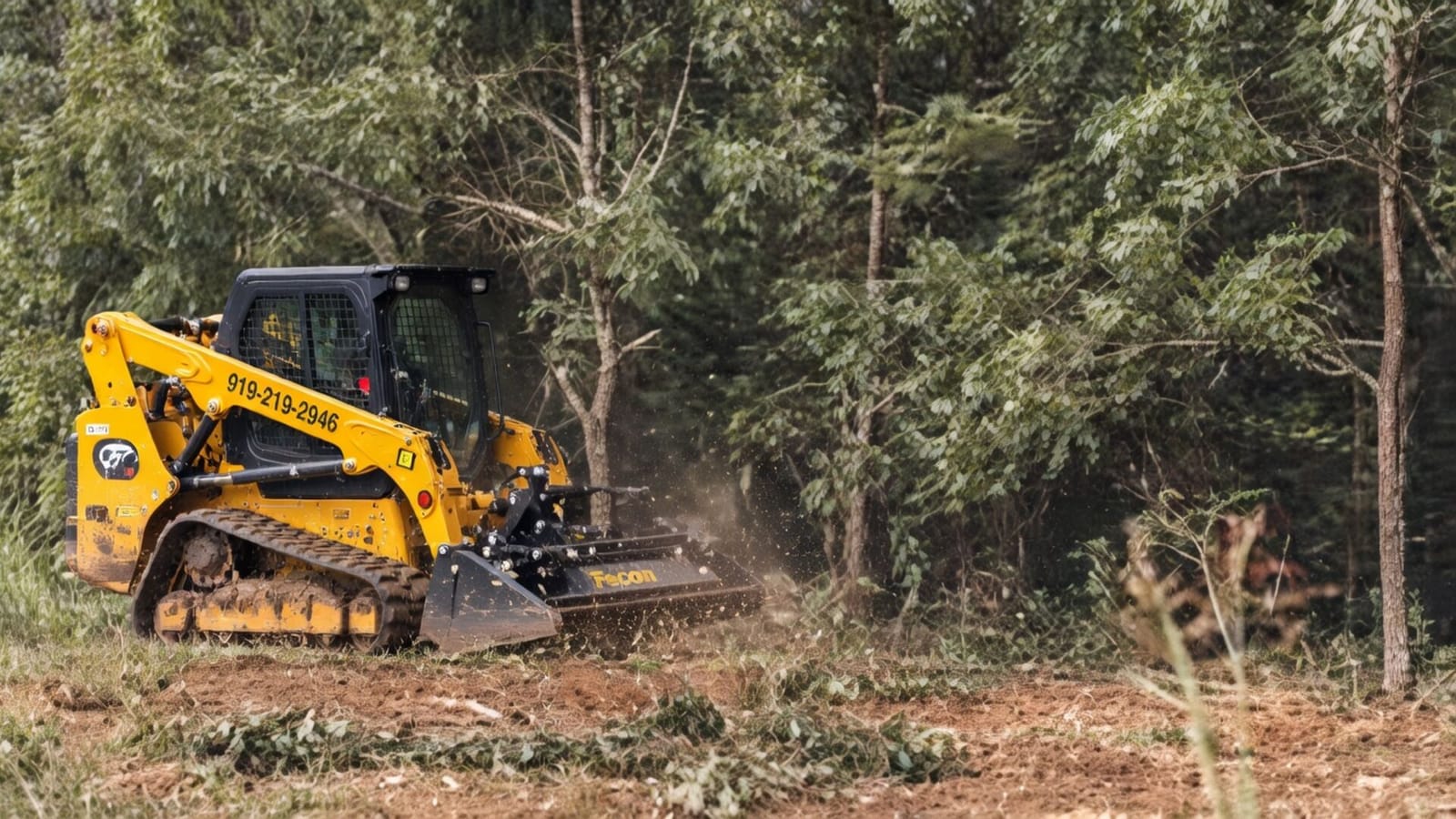
 Forestry Mulching Cost in Cleveland, OH (2026)
Forestry mulching around Cleveland runs $1,500 to $4,000 per acre. See what wet glacial till, stem size and resprouting shrubs do to the hours on your land.
 Guide
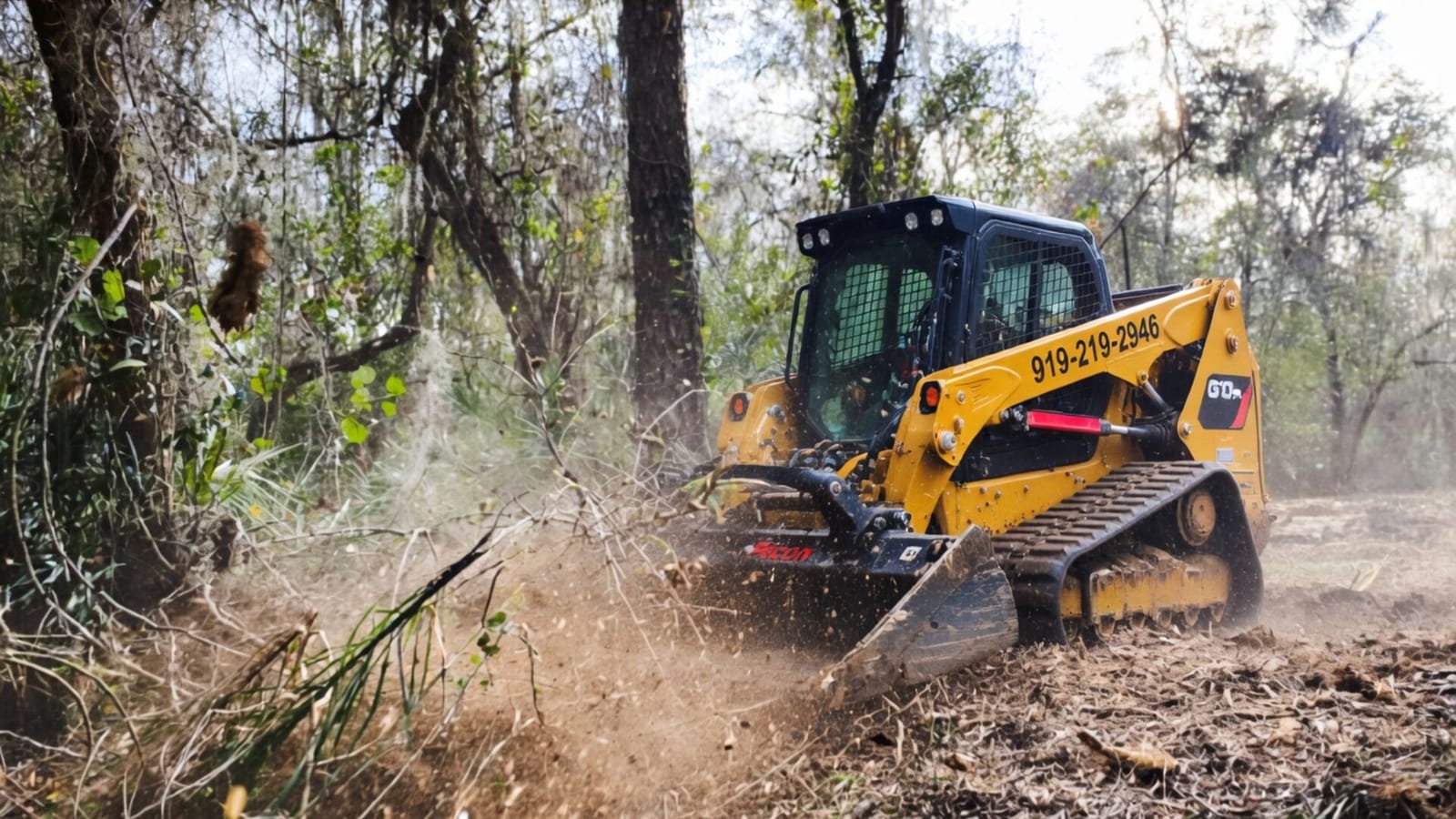
Guide Clearing Wet Ground in Northeast Ohio: When to Book the Work
Northeast Ohio soils perch water inches under the surface from October to June. Here is how that sets the clearing calendar and what it does to your parcel.
County Guide Land Clearing Permits in Cleveland & Cuyahoga County (2026)
Do you need a permit to clear land in Cleveland? The acre is the line. Here are the city, county, state and stream rules with each official source.
Ready to Get Started on Your Land?
Get a free, no-obligation estimate for property in Cleveland & Northeast Ohio.
Get Your Free QuoteOr call us directly: (919) 525-3950