
Montgomery County Land Clearing Permits: Yes, You Need One
Cut Brush Team · September 3, 2026 · 5 min read

There is a widespread assumption that rural Texas means no rules. In Montgomery County that assumption is expensive.
The county requires a development permit for all proposed development within unincorporated areas, and it defines development broadly enough that clearing your own land falls inside it. Separately, a clearing permit is required before a site can be cleared or altered.
Meanwhile the City of Conroe has no zoning ordinance at all. Those two facts sit side by side and confuse a lot of landowners, so here is how they actually fit together.
Before we start: Cut Brush clears land. We are not a permitting office and cannot make a determination for your parcel. What follows is what commonly applies, with sources, so you know who to call.
The County Permit Covers Clearing
Montgomery County’s permitting guidance is explicit. A Development Permit is required for all proposed development within the unincorporated areas of the county, with development defined as any man-made change to improved and unimproved real estate, including constructing buildings, grading, dredging, clearing, or filling.
And: a clearing permit is required before a site can be cleared or altered.
Source: the county’s Environmental Health permitting FAQ.
That is a meaningfully different starting point from counties elsewhere in Texas where clearing simply is not addressed. Here it is named.
No Zoning Is Not the Same as No Permit
The City of Conroe does not have a Zoning Ordinance, although several land use guidelines and controls have been adopted by City Council for residential and commercial developments within certain geographical areas. Source: the City of Conroe land use and area plans page.
This is where people get tripped up. Zoning governs what you may use land for. Permitting governs disturbing the ground. The absence of the first does not remove the second, and in Montgomery County the second is where clearing lives.
Which Office Handles Your Address
Three different authorities, and the right one depends entirely on where the property sits:
| Location | Who handles it |
|---|---|
| Unincorporated county | Montgomery County permits |
| A Woodlands address | The Woodlands Township |
| A Conroe address | City of Conroe |
Permit rules change depending on whether a property is in an unincorporated area or inside city limits, and a lot near Conroe may follow city permitting rules rather than county procedure. Source: this Montgomery County permit guide. The City of Montgomery maintains its own subdivision regulations separately again.
The county’s own recommendation is the sensible first move: contact the engineering or permitting office and explain what you want to do.
Burning Is a Separate Question
Texas counties issue burn bans through the commissioners court for unincorporated areas, and Texas A&M Forest Service maintains the statewide burn ban map. Status changes with conditions, so check it rather than assuming.
The way to make that question irrelevant is not to create a pile in the first place. Forestry mulching processes material where it stands and leaves it as ground cover, so there is nothing stacked waiting on a burn window, nothing to truck, and no disposal fee.
The Other Thing That Decides Whether the Work Lasts
Permits govern whether you can start. Yaupon holly governs whether the result holds.
Yaupon is the dominant understory brush species across the Post Oak Savanna and East Texas Pineywoods transition zone. As its density increases it shades out the grass and native groundcover beneath it, and open, grazeable woodland closes over as the yaupon reaches eight to twelve feet and the canopy seals. Productive open timber becomes impenetrable thicket.
Critically, yaupon resprouts aggressively from its root system after cutting and will come right back if you do not plan for it. The approaches that actually hold are planning at the time of clearing: over-seeding with competitive grass species while light reaches the ground, follow-up herbicide treatment, or a scheduled mulching maintenance programme. All produce far better long-term results than clearing and walking away, and regular prescribed burns and herbicide are the conventional forestry controls for the same reason. Sources: Texas A&M Forest Service on the Pineywoods and practical East Texas guidance on yaupon.
Our yaupon guide goes into what each option involves.
A Practical Sequence
- Work out which authority your address answers to. County, city, or township. Everything follows from this.
- Assume clearing is covered, because in the unincorporated county it is named explicitly.
- Contact the permitting office early and describe the work. The county recommends exactly this.
- Decide the debris method before clearing, so a burn ban cannot strand a pile on your property.
- Plan the yaupon regrowth, or budget to do this again sooner than you would like.
Why So Many People Are Asking
Montgomery County added more than 30,000 residents between July 2024 and July 2025 and ranked among the top ten counties nationwide for both numeric and percentage growth. It grew 18.1% between 2019 and 2023, well ahead of Harris County, and its 2026 population is estimated near 811,205. Conroe has gone from a little over 50,000 residents in 2010 to more than 100,000 today.
A lot of ground that sat as unmanaged timber for two decades is suddenly being looked at, and the permit question is the first thing every one of those owners runs into.
Most clearing here runs $1,500 to $4,500 per acre, with understory work beneath standing pine near the bottom of the band. Our Conroe pricing guide covers the ranges, and the walk-through is free if you would rather have someone look at the tract and tell you which rules touch it.
Related Services
Learn more about the services mentioned in this article.


More from the Cut Brush Blog
Keep reading for more tips and guides on land clearing.
 Cost Guide
 Forestry Mulching Cost in Conroe and Montgomery County (2026)
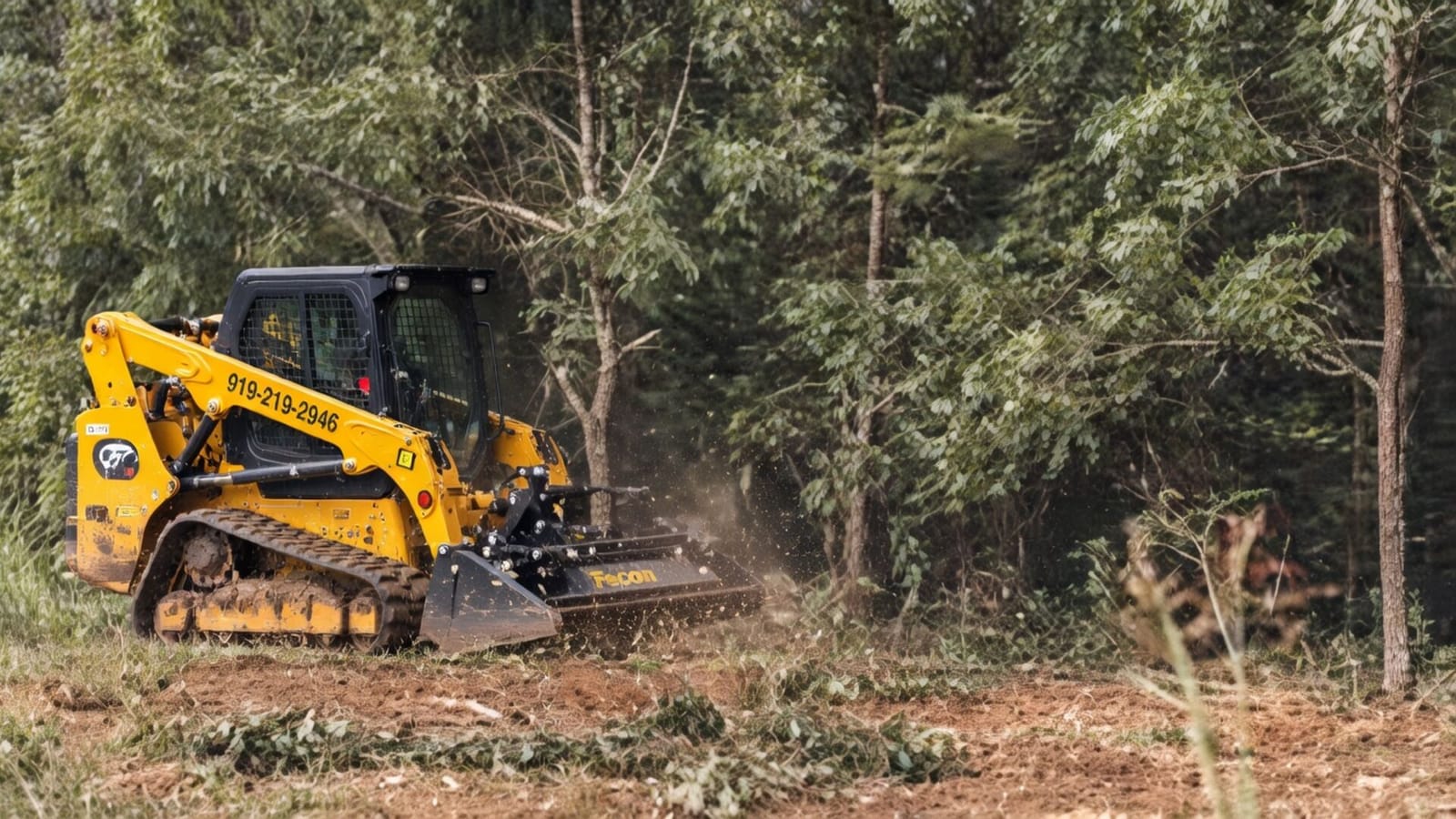
Forestry mulching cost around Conroe runs $1,500 to $4,000 per acre. Why understory work under pine prices lowest, and why two yaupon quotes differ so much.
 Services
 Yaupon Holly Removal in East Texas: What Actually Holds
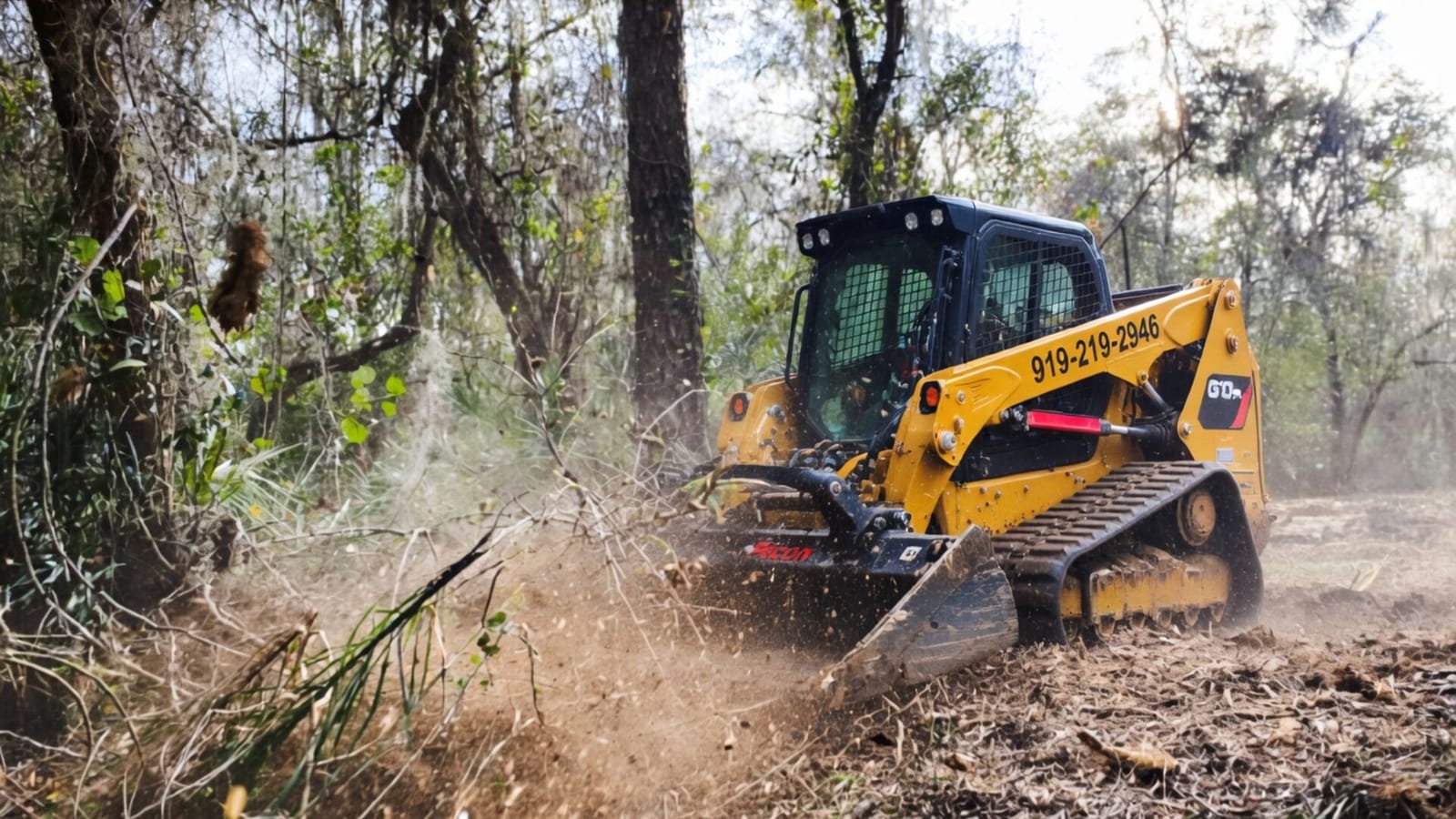
Yaupon resprouts hard from the root system, so cutting alone brings it back. What it does to timber ground, what removal costs, and the follow-through that works.
 Cost Guide
 Land Clearing Cost Per Acre in Texas (2026 Guide)
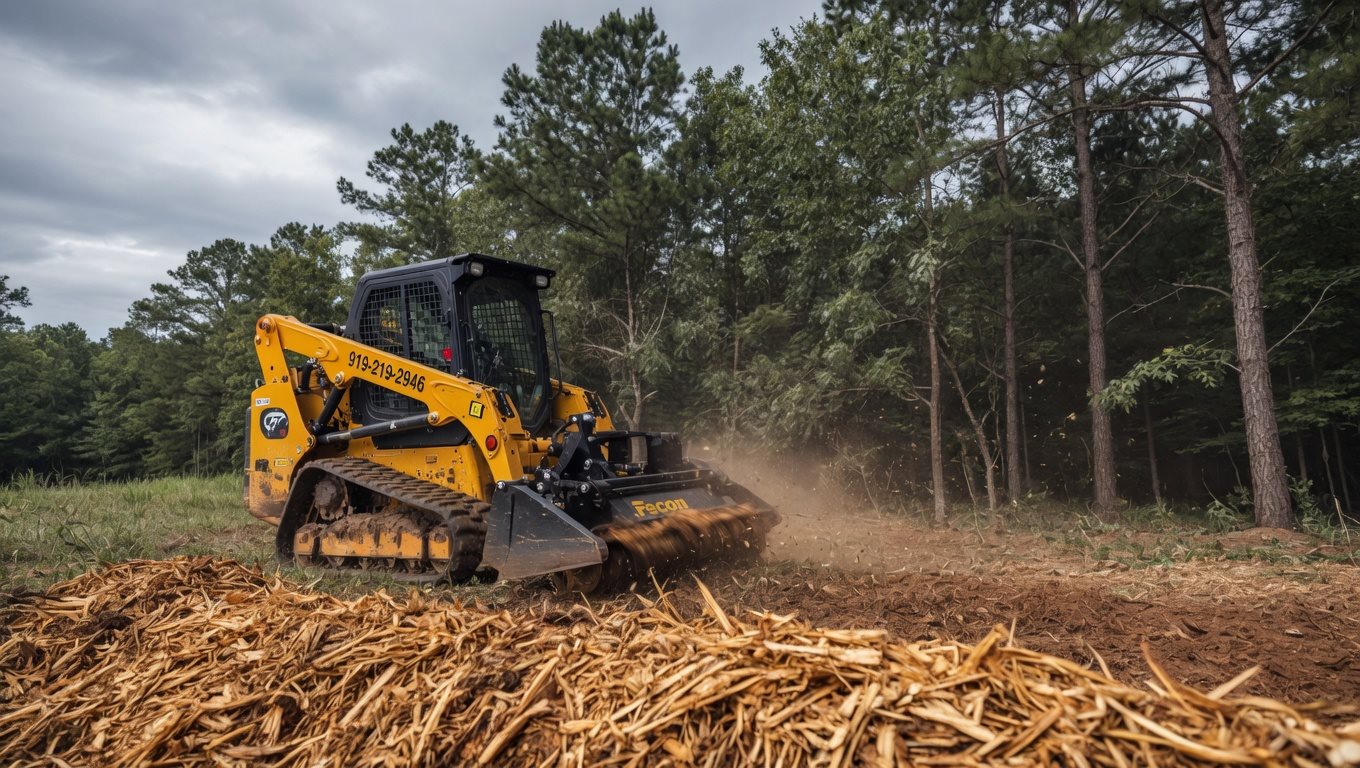
Land clearing cost per acre in Texas runs $1,500 to $4,500. See what cedar density, rock, and access do to a quote, with real Hill Country ranges by vegetation type.
Let's Get Started on Your Land
Request a free quote. We'll contact you to discuss your property, access, and the clearing you need.
Get a Free QuoteOr call us directly: (919) 525-3950