
Yaupon Holly Removal in East Texas: What Actually Holds
Cut Brush Team · September 3, 2026 · 4 min read

Every landowner in Montgomery County who has cleared yaupon once has the same story. The place looked open. Two or three years later it was closing back in, and now the regrowth was thicker and lower than the original stand.
That is not bad workmanship. It is what yaupon does, and understanding it is the difference between buying an opening and buying a result.
Why Yaupon Runs This Landscape
Yaupon holly is the dominant understory brush species across the Post Oak Savanna and East Texas Pineywoods transition zone. It is not an import; it belongs here. What has changed is how much of it there is and how thick it gets without fire or grazing to check it.
The mechanism is straightforward and slow enough that most owners miss it happening. As yaupon density increases, it shades out the grass and native groundcover beneath it. Open, grazeable woodland that once carried cattle or wildlife through the understory closes over as the yaupon reaches eight to twelve feet and the canopy seals. What was productive open timber becomes impenetrable thicket. Source: practical East Texas guidance on yaupon removal.
It is not alone down there either. The Pineywoods understory carries waxmyrtle, American hornbeam, and rusty blackhaw viburnum alongside it, per Texas A&M Forest Service. But yaupon is the one that decides whether clearing lasts.
Research on managing it in the Post Oak Savannah is published by Texas Tech if you want the depth.
The Thing That Makes It Different
Yaupon resprouts aggressively from its root system after cutting and will come right back if you do not plan for it.
That single sentence is the whole reason this article exists. A mulching pass, a bush hog, a chainsaw crew: all of them remove what you can see and leave the part that regenerates. The plant treats it roughly the way a shrub treats a hard prune.
So there are two honest ways to buy this work.
Option 1: The Single Pass
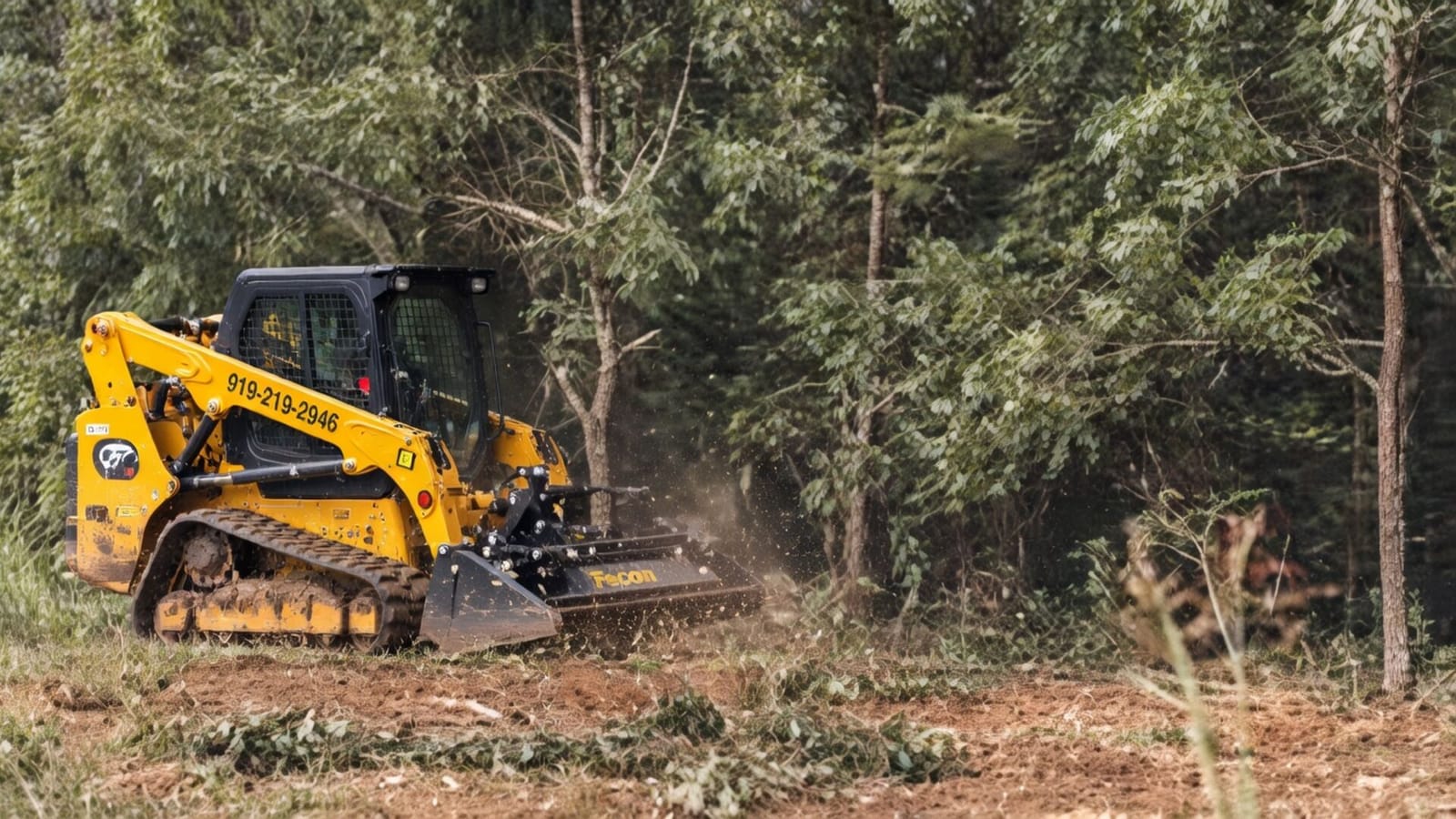
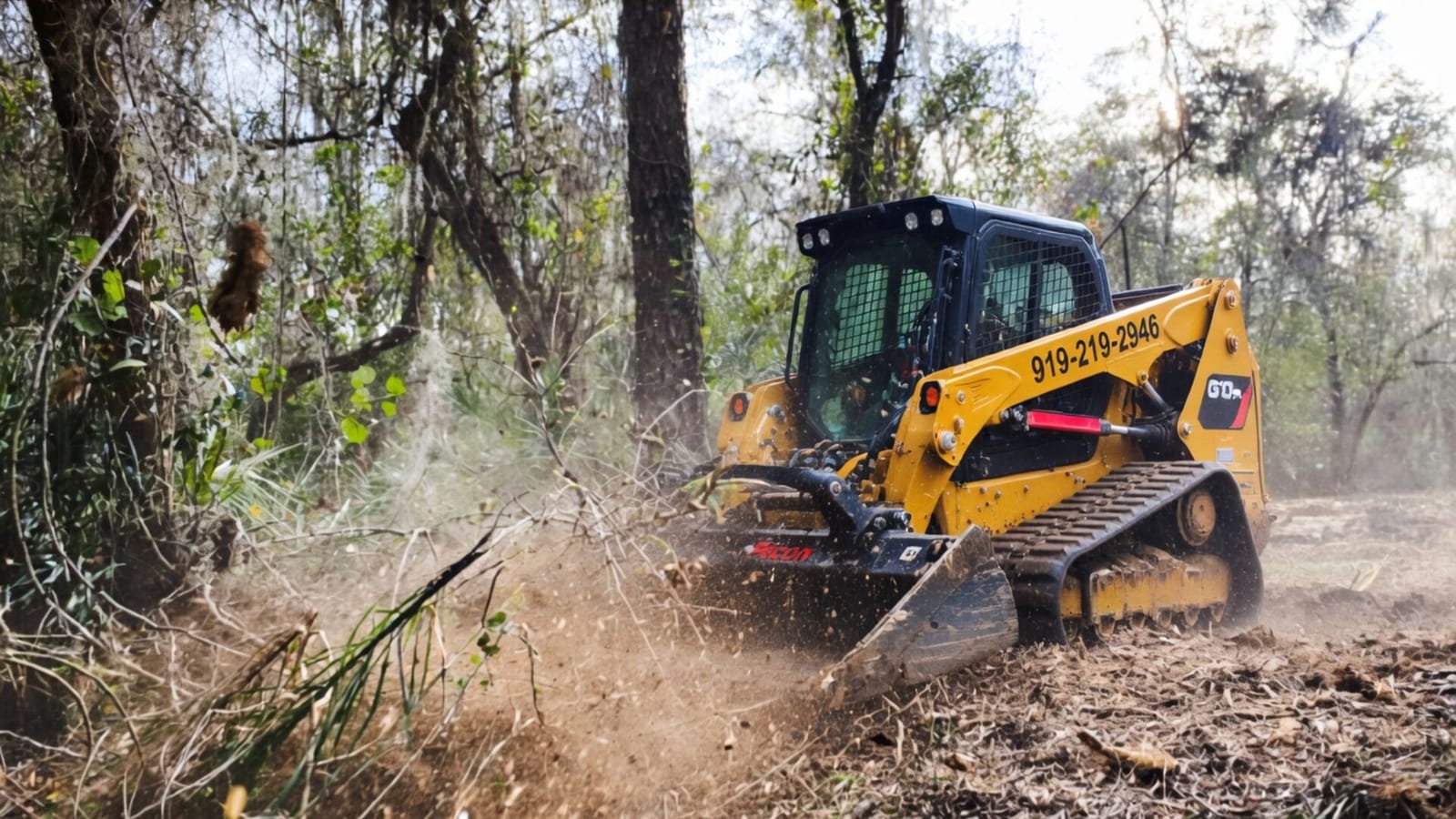
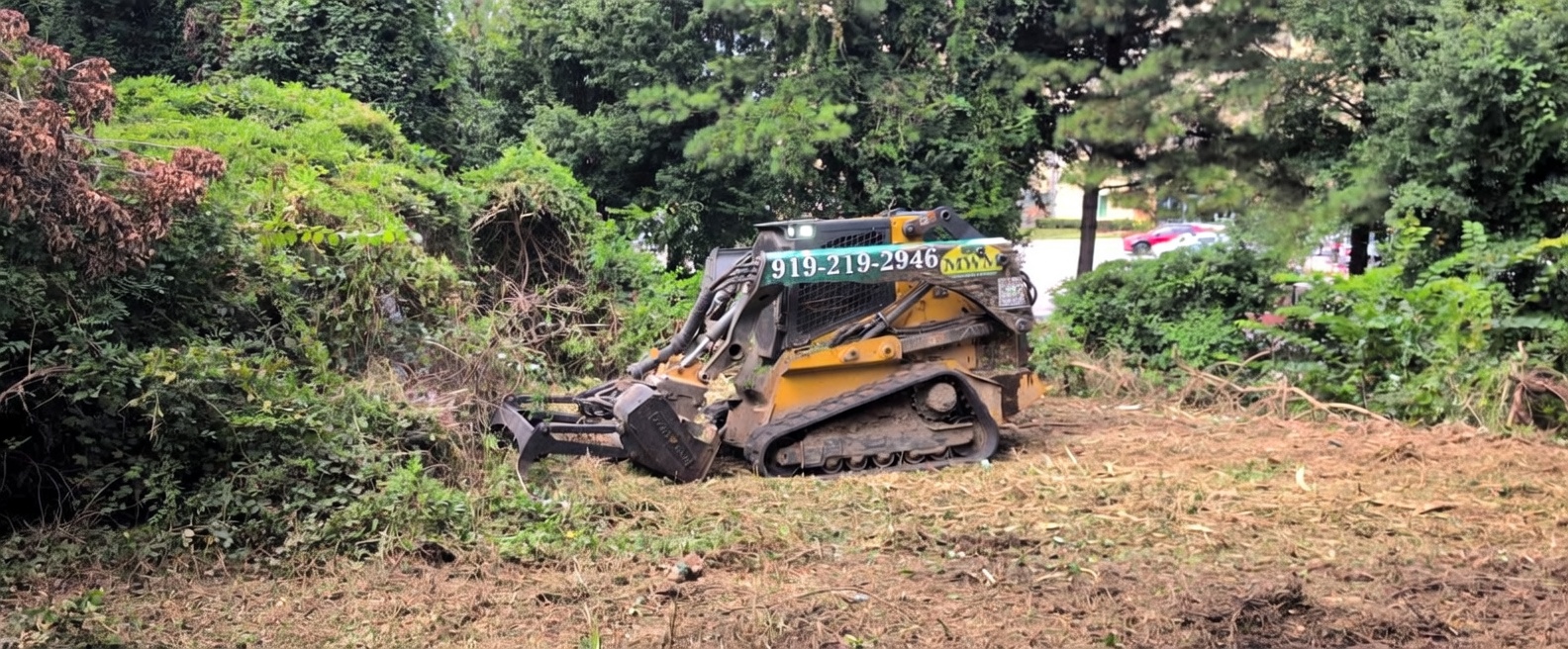
A forestry mulching head takes the understory in one pass and leaves it as a mat on the forest floor, with the overstory untouched. Around Conroe that runs $1,500 to $2,500 per acre for understory and yaupon work.
What you get: open, walkable timber immediately. Light back on the floor. A property you can hunt, fence, walk, or plan around.
What you do not get: an end to the yaupon. The clock starts the day we leave.
This is a completely legitimate purchase as long as you know that is what it is. Plenty of owners want the ground usable now and are content to revisit it.
Option 2: The Pass Plus a Plan
The approaches that actually hold, per the same East Texas guidance, are decided at the time of clearing rather than afterwards:
- Over-seeding with competitive grass species while the ground is open and light is reaching it, so something else occupies the space first.
- Follow-up herbicide treatment on the resprouts.
- A forestry mulching maintenance programme on a set interval.
Any of those produce far better long-term results than clearing and walking away. In broader forestry practice, regular prescribed burns and herbicide treatments are the conventional controls for exactly this reason.
The common thread is that the second step is planned while the first is happening. Deciding afterwards means paying to open the ground twice.
What the Mat Does While You Decide
Material processed in place stays on the tract as ground cover. There is nothing stacked waiting on a burn window, nothing to truck, and no disposal fee. The layer also suppresses some of the light-hungry regrowth for a while, which is a modest head start on whatever maintenance interval you settle on.
Depth follows the material: a light pass leaves a scattering, a sealed yaupon thicket leaves a substantial mat.
Do Not Skip the Permit
Montgomery County requires a development permit for all proposed development in unincorporated areas, with development defined broadly enough to include clearing, and a clearing permit is required before a site can be cleared or altered. Which office applies depends on the address, since the county, the City of Conroe, and The Woodlands Township each handle their own. Our Montgomery County permit guide covers it.
A Realistic Plan
- Decide the goal. Usable ground this season, or ground that stays open for years. Different budgets.
- Match the method. Single pass for the first, pass plus a programme for the second.
- Plan step two while step one is happening. Over-seeding only works while the ground is open.
- Settle the permit before scheduling, because in this county clearing is named in it.
- Budget the interval, not just the job. A maintenance pass costs a fraction of the original.
What We Will Tell You
If you call us about a yaupon-choked tract, we will walk it and say plainly which of these two you are looking at, and quote them separately so you can see the difference rather than discovering it in year three.
Ranges are on the Conroe pricing guide, and the walk-through is free anywhere around Conroe, The Woodlands, Magnolia, Willis, or Huntsville in Walker County.
Related Services
Learn more about the services mentioned in this article.


More from the Cut Brush Blog
Keep reading for more tips and guides on land clearing.
 Cost Guide
 Forestry Mulching Cost in Conroe and Montgomery County (2026)
Forestry mulching cost around Conroe runs $1,500 to $4,000 per acre. Why understory work under pine prices lowest, and why two yaupon quotes differ so much.
 Cost Guide
 Underbrush Removal Cost in Texas (2026 Pricing)
Underbrush removal in Texas runs $1,500 to $2,500 an acre, up to $3,500 in East Texas. See what yaupon, privet, keeper trees and cost-share programs change.
 Cost Guide
 Brush Hogging Cost Per Acre in Texas (2026)
Brush hogging in Texas averages about $47 an acre in AgriLife's 2026 survey. See regional rates, why small tracts cost more, and when shredding is not enough.
Let's Get Started on Your Land
Request a free quote. We'll contact you to discuss your property, access, and the clearing you need.
Get a Free QuoteOr call us directly: (919) 525-3950