Clearing River-Bottom Land Around Palestine, TX
Cut Brush Team · October 1, 2026 · 5 min read
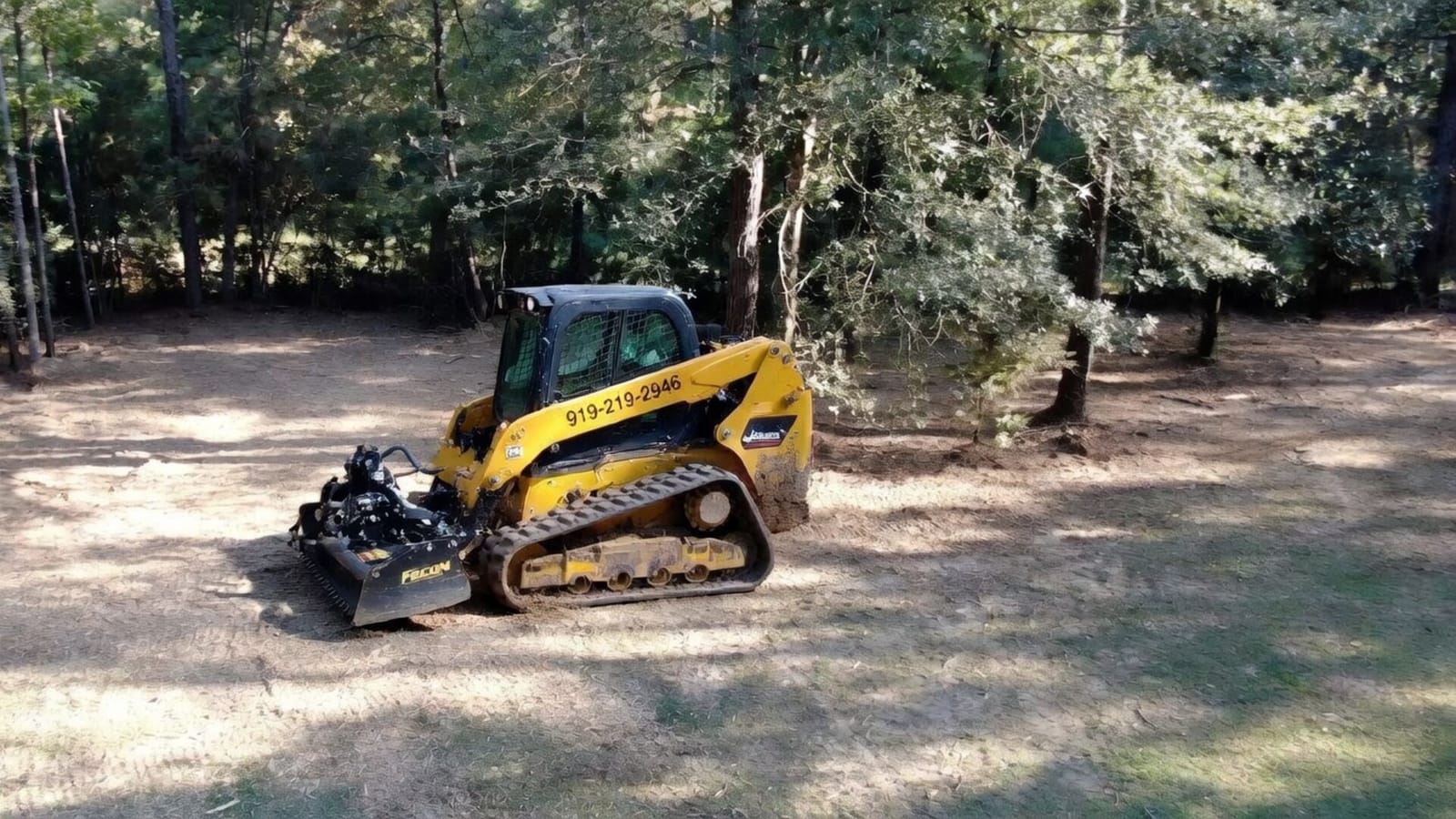
River-bottom land around Palestine can be cleared well, but it has to be planned as a separate job from the hill above it. The uplands are sand that drains fast; the bottoms along creeks feeding the Trinity and the Neches are clay that holds water, grows bigger hardwoods and often sits on a flood map. Clear the high ground first, reach the bottom in a dry spell, leave chips on the soil, and check the flood map before any dirt moves.
Two Soils on One Deed
Anderson County sits between the Trinity and the Neches, and the Texas State Historical Association counts about 40.5 inches of rain a year there (TSHA, Anderson County). Texas Parks and Wildlife describes what that rain falls on across the Post Oak Savannah: “Sands and sandy loams are predominantly found on upland sites, while clay or clay loams are typically associated with bottomlands. A dense clay pan, that is almost impervious to water, underlies all soil types” (TPWD, Post Oak Savannah).
The Gus Engeling Wildlife Management Area, 21 miles northwest of Palestine, shows the contrast on one property. TPWD describes its upland soils as “light-colored, deep, rapidly permeable sands and sandy loams” and its bottomland soils as “mostly mixed alluvial, clays and clay loams.” About 2,000 acres of that bottomland drain to Catfish Creek, a Trinity tributary named a National Natural Landmark (TPWD, Gus Engeling WMA).
Many private tracts in Anderson, Houston and Leon counties have the same layout in miniature: a sandy rise where the house or the deer stand would go, sloping down to a branch or creek with a strip of heavier ground along it.
What Grows in the Bottom
The vegetation follows the soil. On the Gus Engeling uplands TPWD lists oak, hickory, elm and gum over yaupon, greenbriar, farkleberry and possumhaw. In its bottoms “oak trees, mostly water and willow oak, are the dominant tree species.” At Keechi Creek WMA in northeastern Leon County, at the meeting of Keechi and Buffalo creeks, TPWD describes mostly bottomland hardwood forest of willow oak, water oak, overcup oak and post oak, with yaupon and farkleberry below (TPWD, Keechi Creek WMA).
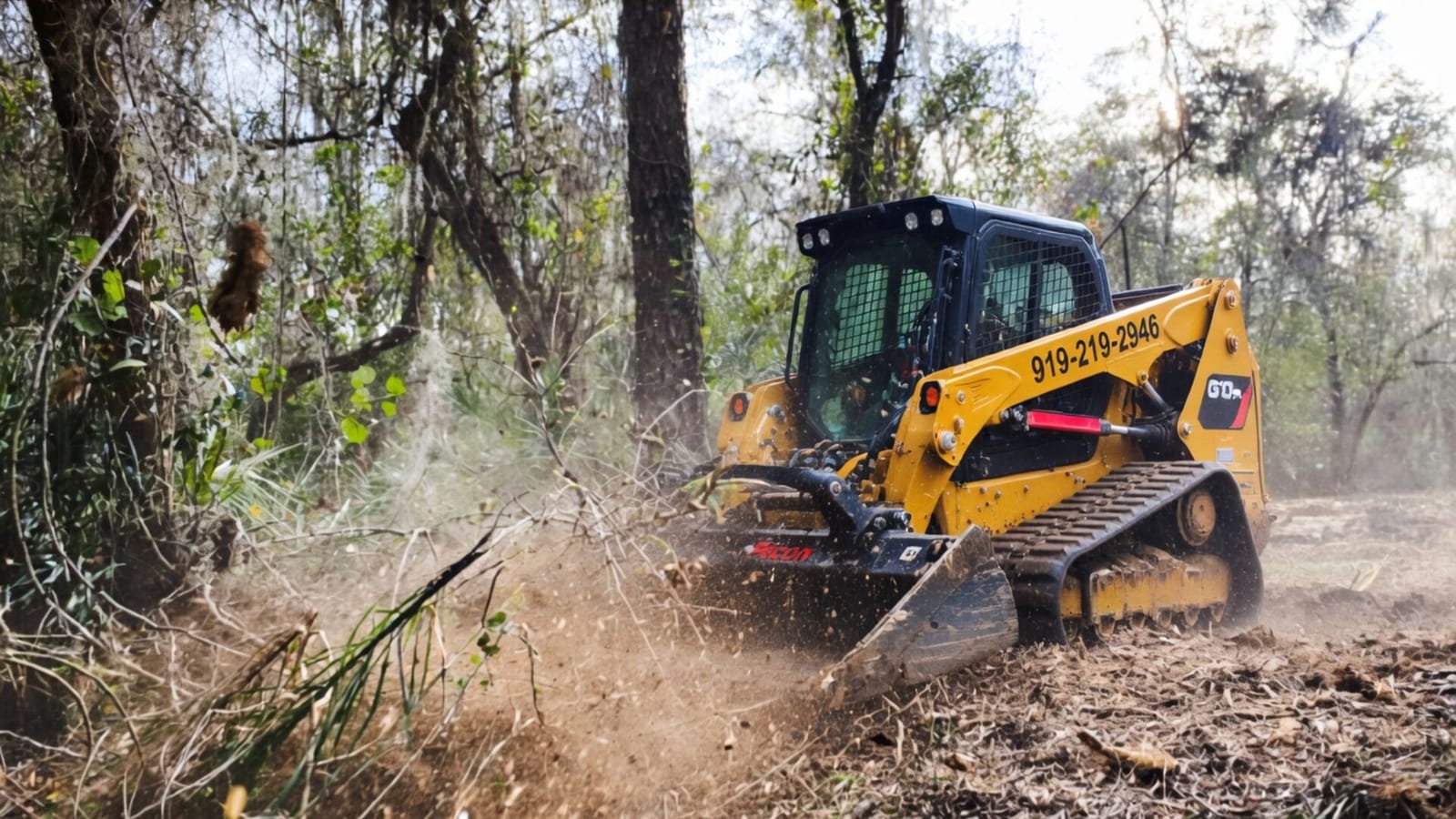
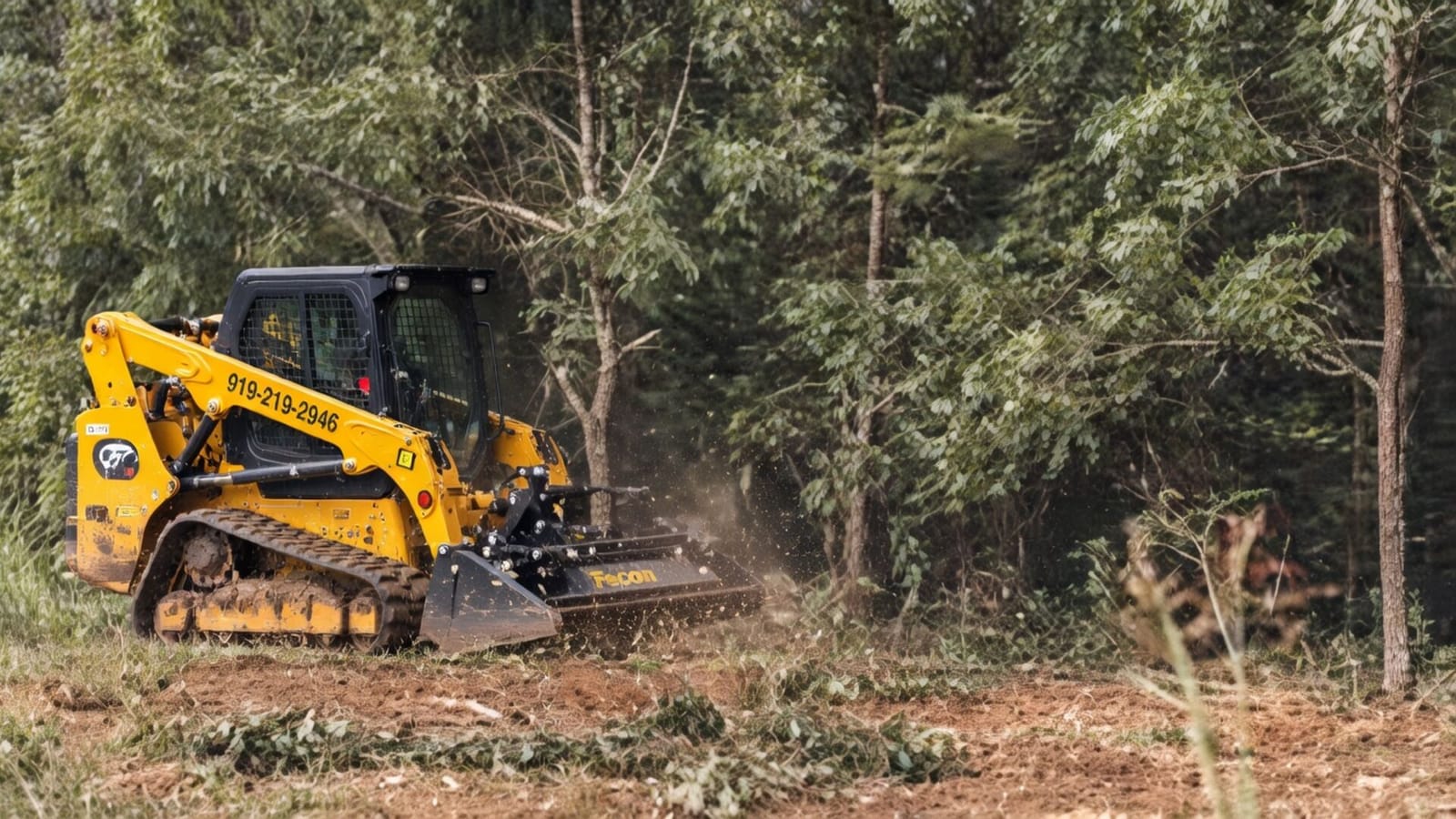
For a clearing job that means larger stems, closer together, on softer ground. An upland acre of yaupon and sapling oak is fast work for a mulching head. A bottom acre often has more trees worth keeping, more stems too big to feed straight in, and less room to turn.
Timing the Bottom
That clay pan is the reason a bottom stays soft long after the hill has dried. A tracked mulcher spreads its weight well, but driven across saturated clay it still leaves ruts, compacts the soil and tears the shallow roots of the water oaks and pecans you meant to keep.
The practical plan has three parts:
- Work the high ground first. The sandy rises can usually be cleared soon after rain, so the machine is never idle waiting on the bottom.
- Save the bottom for a dry spell. The window is whenever the clay firms up after a run of dry weeks, which is also when county burn bans tend to go up.
- Leave the chips. On bare clay, a chip mat slows runoff and holds the surface; on bare sand it keeps the soil from washing downhill into the creek.
If a strip right along the channel is wet nearly all year, it is usually better left wooded as a buffer than forced open.
The Flood Map Comes Before the Dirt Work
Grinding brush without moving soil is one thing. Pulling stumps, shaping the ground or bringing in fill in a bottom is another, and that is where the paperwork starts.
Anderson County’s flood damage prevention ordinance, filed on 14 August 2023, applies to all areas of special flood hazard in the county’s jurisdiction and adopts the county’s FEMA flood maps dated 3 February 2010. It requires a floodplain development permit, and it defines development to include “dredging, filling, grading, paving, excavation or drilling operations.” The county’s Emergency Management Coordinator serves as floodplain administrator and is also charged with checking that any Section 404 federal approvals are in hand. Inside Palestine, the city’s grading and excavation permit covers filling, grading or excavating, and asks for a FEMA conditional letter of map revision where a project encroaches on a floodplain.
Requirements vary by parcel, scope and jurisdiction, and the governing authority makes the determination. Our Palestine and Anderson County permit guide sets out each office and what it asks for.
What Happens to the Cut Material
Burning in a bottom is rarely a good plan. Brush piled near a creek can float in the next high water, and around Palestine county burn bans are frequent, so check the Texas A&M Forest Service burn ban map for the current status before planning a fire. Hauling out of a soft bottom means loaded trucks on wet ground. Mulching leaves the material where it fell, as cover, and moves nothing heavy across the clay.
Frequently Asked Questions
Can you clear a bottom that floods every spring?
Yes, in the dry part of the year, as long as the ground will carry the machine. Stretches that are wet nearly year round are often better left as a wooded buffer.
Do I need a permit to mulch brush in a creek bottom?
Mulching without moving soil is different from grading or fill, which is what the county ordinance names. Ask the county floodplain administrator before any dirt work in a mapped area.
Should I keep the big trees in the bottom?
Usually. Water oaks, willow oaks and pecans hold the bank and shade out regrowth. Taking only the understory is often cheaper as well.
Plan Your Bottomland Clearing
Price the work on the Palestine pricing guide, see how the uplands and bottoms are handled on our Palestine land clearing page, then request a free quote. We will confirm whether we can take work in your area; where we can, a site walk shows where the sand ends and the clay begins.
More from the Cut Brush Blog
Keep reading for more tips and guides on land clearing.
 Guide
Guide Land Clearing Permits in Palestine & Anderson County, TX
When clearing land in Palestine or Anderson County, TX needs a grading or floodplain permit, how state stormwater rules apply, and how burn bans limit burning.
 Cost Guide
 Forestry Mulching Cost in Palestine, TX (2026)
Forestry mulching around Palestine, TX runs $1,500 to $4,000 per acre. How yaupon density, sandy uplands, clay creek bottoms and burn bans move the price.
Cost Guide Underbrush Removal Cost in Texas (2026 Pricing)
Underbrush removal in Texas runs $1,500 to $2,500 an acre, up to $3,500 in East Texas. See what yaupon, privet, keeper trees and cost-share programs change.
Ready to Get Started on Your Land?
Get a free, no-obligation estimate for property in Palestine & the Post Oak Savannah.
Get Your Free QuoteOr call us directly: (919) 525-3950