Underbrush Removal Cost in Texas (2026 Pricing)
Cut Brush Team · October 1, 2026 · 6 min read
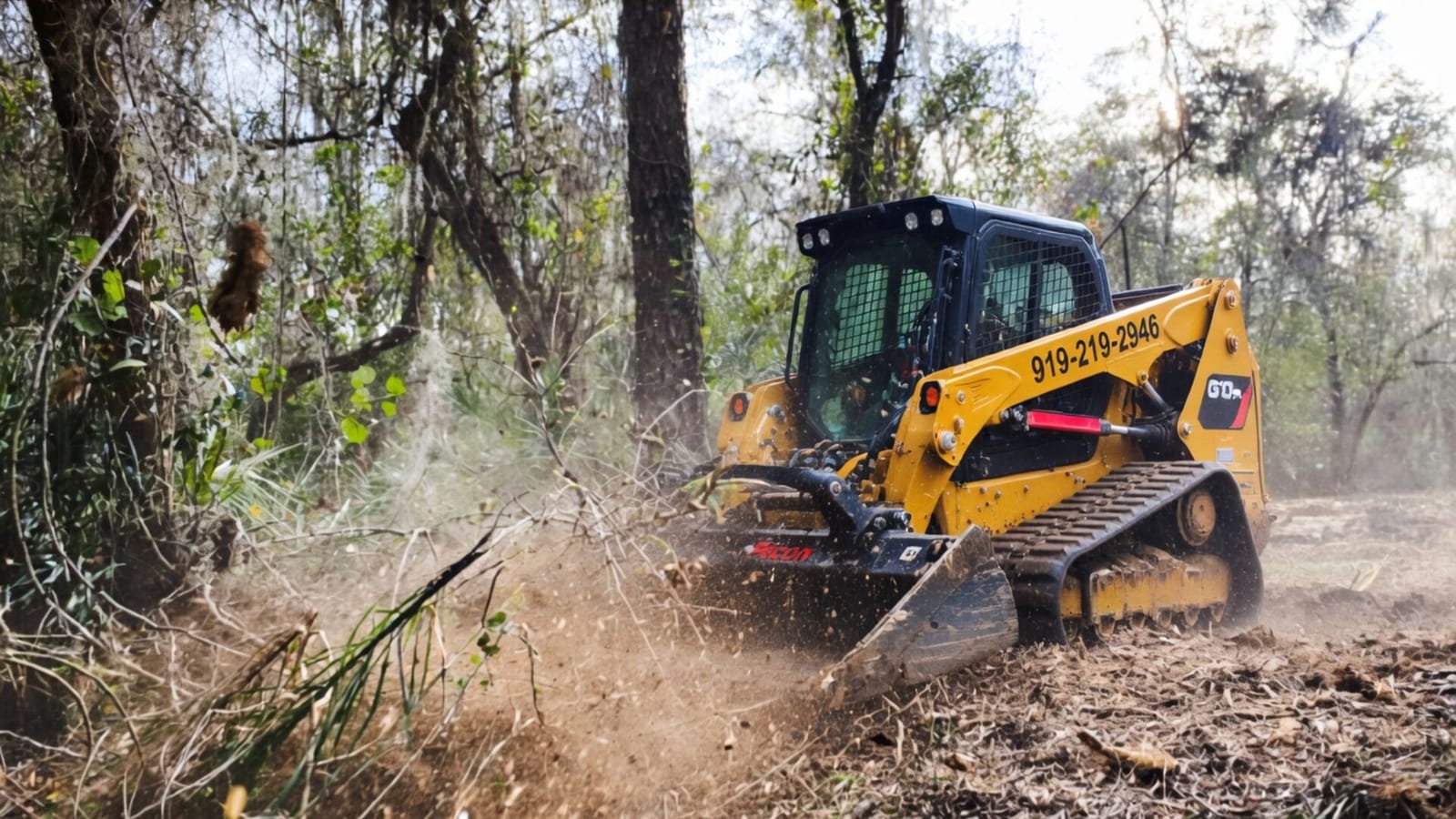
You bought the wooded lot for the trees. Now you cannot see 20 feet past the porch, because yaupon, privet and greenbrier have filled every gap between the trunks. Underbrush removal in Texas runs $1,500 to $2,500 an acre in most of our markets, and up to $3,500 an acre around Tyler, where East Texas privet thickets grow the densest.
That is the price to take out what is growing under your trees while every tree you want stays standing. This guide covers what sets the number, why the work is slower than clearing an open acre, what grows back, and the Texas cost-share money that can pay for part of it.
How Much Does Underbrush Removal Cost Per Acre in Texas?
Underbrushing means clearing the shrubs, vines, saplings and small trees beneath a canopy you keep, usually with a forestry mulcher that grinds the growth into a mat on the forest floor. Here are our published ranges by market:
| Market | Underbrush range | What usually fills the understory |
|---|---|---|
| Conroe and Montgomery County | $1,500 – $2,500 / acre | Yaupon under loblolly pine |
| Houston and the Gulf Coast | $1,500 – $2,500 / acre | Chinese tallow saplings, yaupon, vines |
| Tyler and East Texas | $1,500 – $3,500 / acre | Chinese privet, yaupon, sweetgum regrowth |
| Austin and San Antonio | $1,500 – $2,500 / acre | Cedar regrowth under oaks |
| Dallas and Fort Worth | $1,500 – $2,500 / acre | Privet, mesquite and regrowth in the Cross Timbers |
Small jobs carry a practical floor near $1,500, because getting a tracked machine to your gate costs the same whether the job is a half acre or two. The Conroe pricing guide and Tyler pricing guide have the full local breakdowns.
Why Underbrushing Costs More Per Acre Than Open Ground
An acre of brush under trees takes longer than an acre of brush in the open. The machine is the same, but the operator is working around every trunk you are keeping.
Keeper trees set the pace
Every pine, oak or pecan that stays is something the mulching head has to work around rather than through. A stand of widely spaced pines moves fast. A tight hardwood bottom with a keeper every 15 feet moves slowly, and that is where the top of the range comes from.
The roots matter as much as the trunks. Texas A&M Forest Service names soil compaction from equipment as one of the three main causes of tree death around construction, and recommends protecting roughly one foot of radius for every inch of trunk diameter. We stay light inside that zone on the trees you care most about, and the mulch mat we leave behind helps cushion the ground.
How sealed the understory is
Scattered seedlings you can walk through price at the bottom of the band. Yaupon or privet grown into a wall 8 to 12 feet tall, with greenbrier tying it together, prices near the top. Stem count and trunk size, not acreage, are what we look at on the walk-through.
Water and access
In the Piney Woods there is no rock to slow the machine, but sandy loam that has held a week of rain will. A lot reachable straight off the road prices lower than one where the machine has to thread past a house, a septic field and a fence.
Will the Understory Grow Back?
Mostly, yes, unless it gets a follow-up. The US Forest Service species review for yaupon records that it reproduces by root sprouting, and Chinese privet and tallow resprout the same way. Texas A&M Forest Service guidance on mulching is that an herbicide treatment after mulching helps control that regrowth.
So we quote a first pass and a follow-up plan separately, and you choose. Many owners mulch once, then have the resprouts treated or knocked back again in a year or two, which costs far less than the first pass. Our yaupon removal guide covers that plan in detail.
Pro tip: If your understory is mostly Chinese privet or Chinese tallow, ask about cost-share before you book. Those are invasive species, and the program below can pay for a large share of removing them. Yaupon is native, so it does not qualify.
Texas Programs That Can Pay for Part of It
The Texas Invasive Plant Solutions program pays 75% of treatment or removal costs, up to $7,000 per landowner. Texas A&M Forest Service opened applications on 1 September 2026, with work to be finished by 1 June 2027, and mechanical control is an eligible method. A forester has to approve the plan before work starts, so apply first and schedule second. Our Chinese privet removal guide walks through how it works.
For wildfire risk, the Forest Service runs a Mechanical Fuel Reduction Grant that has paid up to $2,000 an acre for heavy-equipment work such as mulching, capped at $20,000 per landowner. It covers program counties in Central, South, West and Northwest Texas, and the 2026 window closed in July. Watch for the 2027 round if you are in those counties.
Fire, Ticks and Sightlines: Why Owners Clear the Understory
Fire. Understory brush is ladder fuel that lets a ground fire climb into the canopy. Texas A&M Forest Service fire-resistant landscaping guidance is to remove vegetation under trees within 5 to 30 feet of the house, and to keep thinning out to 100 feet. That is exactly the work underbrushing does.
Ticks. AgriLife entomologist Sonja Swiger’s advice for Texas homeowners is to keep brushy areas around the home trimmed, because that removes the cover ticks and their hosts use.
Sightlines and use. Most of all, owners want to see and walk their land again. A mulched forest floor under a high canopy is the look most people picture when they buy wooded acreage.
Frequently Asked Questions
How much does it cost to clear underbrush on one acre in Texas?
Usually $1,500 to $2,500, or up to $3,500 around Tyler. On a single acre the practical floor near $1,500 often sets the price, and dense privet or yaupon under tightly spaced keeper trees pushes it toward the top.
Can you clear underbrush without hurting the trees?
Yes, if the operator works around the root zones. The risk comes from compacting soil and scraping bark, not from removing the brush. We flag the trees you care most about at the walk-through and stay light near them. Around Austin and San Antonio, wounds on oaks get painted right away, and oak work waits until after June.
Do I need a permit to clear underbrush in Texas?
Rarely for the understory itself, but tree rules can apply. Inside Austin, the city protects trees 19 inches and larger. In The Woodlands, township covenants require approval before removing a living tree over 6 inches and encourage keeping some understory. Our Montgomery County permits guide covers the county side.
Is underbrushing the same as brush hogging?
No. A brush hog mows grass and saplings in open fields and cannot work under a canopy. Underbrushing uses a mulcher to grind thicker growth beneath trees that stay. If your ground is open pasture, our Texas brush hogging cost guide is the better fit. If you want everything gone, see our Texas forestry mulching cost guide.
How long does underbrush removal take?
Most residential lots of an acre or two take a day. Bigger tracts with widely spaced pines can move at a few acres a day, while dense privet under closely spaced hardwoods moves much slower.
Get an Underbrush Removal Quote in Texas
Underbrush removal cost in Texas comes down to what is growing, how many trees stay and how wet the ground is. Pick your region below, and we will walk your property for free, mark the keeper trees with you and put a written underbrush clearing price in your hands, usually within a day.
Related Services
Learn more about the services mentioned in this article.


More from the Cut Brush Blog
Keep reading for more tips and guides on land clearing.
 Cost Guide
 Forestry Mulching Cost in Conroe and Montgomery County (2026)
Forestry mulching cost around Conroe runs $1,500 to $4,000 per acre. Why understory work under pine prices lowest, and why two yaupon quotes differ so much.
Services Yaupon Holly Removal in East Texas: What Actually Holds
Yaupon resprouts hard from the root system, so cutting alone brings it back. What it does to timber ground, what removal costs, and the follow-through that works.
Cost Guide Forestry Mulching Cost in Texas (2026 Per-Acre Guide)
Forestry mulching in Texas runs $1,500 to $4,000 an acre. See why cedar and rock, Blackland clay, yaupon and burn rules move a quote in each part of the state.
Where is your property?
Cut Brush runs 14 service areas in TX. Pick the one nearest you and the quote form comes to the right crew.
Ready to Get Started on Your Land?
Get a free, no-obligation estimate for property in Conroe & Montgomery County.
Get Your Free QuoteOr call us directly: (919) 525-3950