
Russian Olive Removal in Colorado: Clear, Treat, Then Watch the Sprouts
Cut Brush Team · October 31, 2026 · 8 min read

Russian olive in Colorado comes out in three moves: cut or mulch the trees, have a licensed applicator treat the stumps, and walk the ground every season to catch the sprouts. Cutting by itself does not finish it. A forestry mulcher brings a ditch bank or river-bottom stand down in one pass, and the treatment and the follow-up are what keep it down. Clearing Russian olive from a bank, pasture edge or bottom corner typically costs $1,500 to $2,500 an acre.
This guide covers why the tree takes hold along Colorado water, how to tell it apart, why one cutting fails, a plan that lasts, notes for Eagle, Garfield and Larimer counties, and what the work costs.
Why Russian Olive Is a Weed You Have to Manage in Colorado
Russian olive is a List B noxious weed in Colorado, and counties such as Eagle have adopted the state’s noxious weed lists and methods of control. It arrived as a tool: it was planted for erosion control, windbreaks and ornament. Since then it has moved into riparian areas and formed dense, impenetrable thickets on many river bottoms, where it crowds out the native cottonwoods and willows.
Birds are the delivery system. They eat the berries and carry the seed, so one tree can start new ones a long way off, and a single untreated stand upstream keeps restocking the ground below it. On a ranch or an acreage that means the ditch that feeds a pasture, the bank along a lane and the wet corner below a homesite.
How to Recognize It
Russian olive is a hardy, fast-growing tree that stands 10 to 25 feet tall, carries thorns and looks silver because of the scales on its leaves. The leaves are narrow, alternate along the twig and 2 to 3 inches long, and the thorns run 1 to 2 inches. Against the darker green of a cottonwood or willow on the same bank, a stand reads almost gray from a distance.
Tamarisk grows on the same wet ground and gets the same treatment, but it is feathery, thornless and pink in bloom. Our Colorado tamarisk removal guide covers it. If you are not sure which you have, your county weed office can tell you from a photo or a sample before the work is planned.
Why One Cutting Fails
Saw a row of Russian olive off a pasture ditch in October and the stumps answer by June with a ring of thorny shoots, often more stems than the tree had.
Cutting, bulldozing and fire are only temporarily effective on Russian olive, because the stump and the roots send up new growth and that growth has to be treated. Plants also regrow from stem and root fragments, and twigs left lying on the ground can sprout. Seed already in the soil keeps germinating on top of that.
None of this makes machine work pointless. It makes the machine step one, not the whole job; the treatment and the seasons of follow-up are what finish it.
A Plan That Holds: Clear, Treat, Watch
- Walk the ground and flag the keepers. Mark every cottonwood, willow or other tree you want left, and note where the thorny stems are thickest. Our crew steers around each flag.
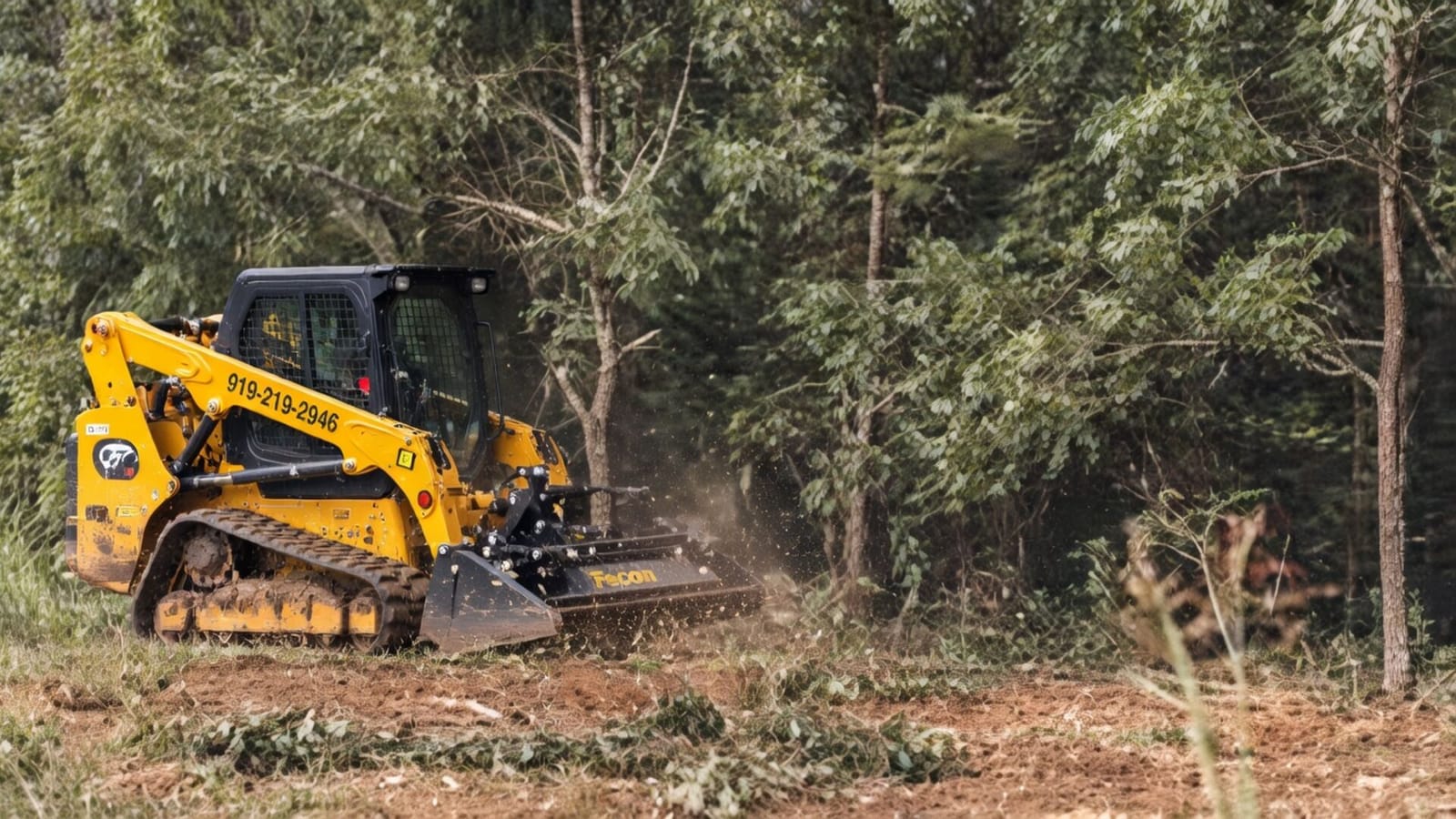
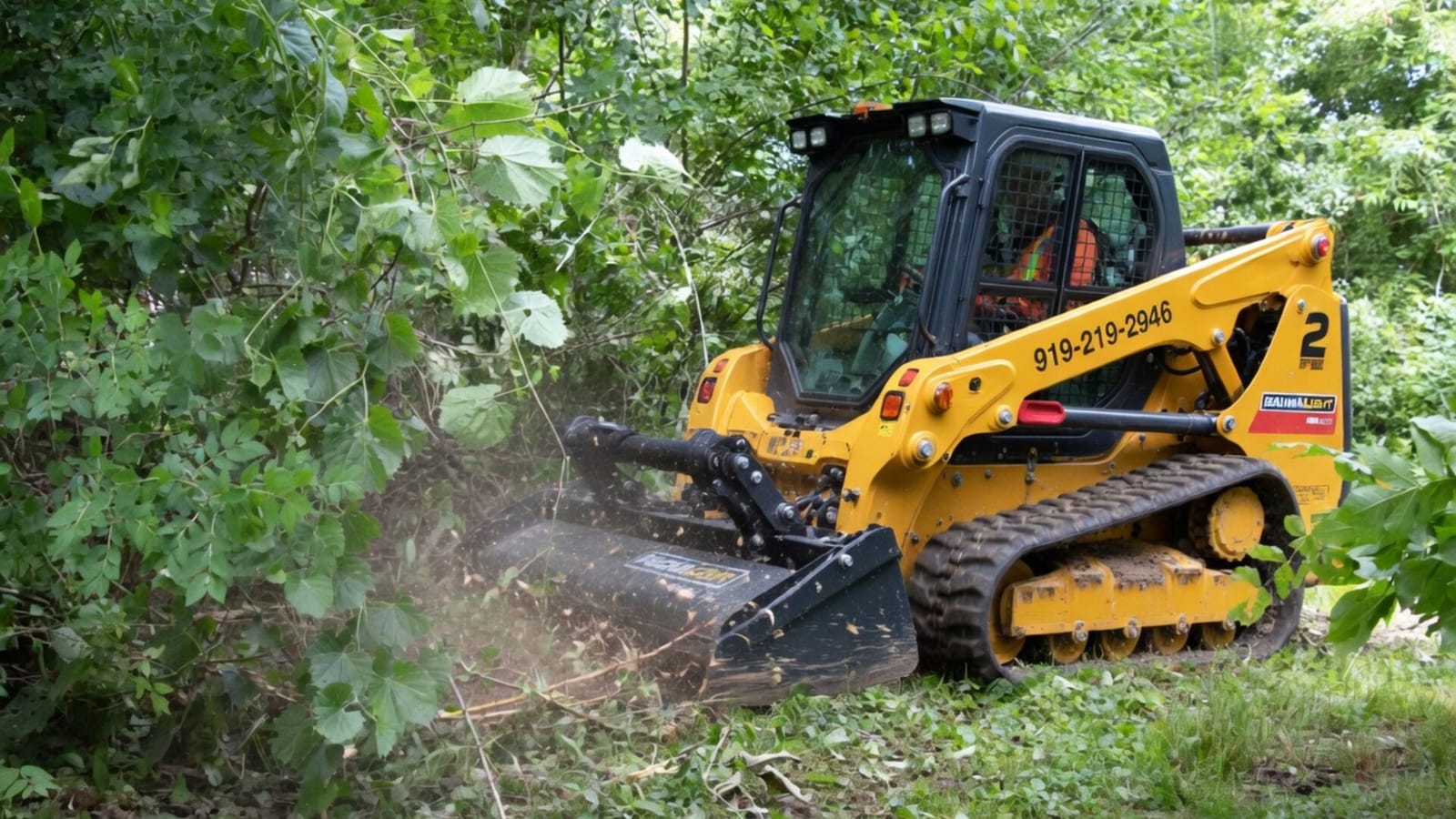
- Bring the stand down. A tracked forestry mulcher grinds the trees, thorns and all, into a chip layer where they stood. Nothing is piled, so there is no pile to burn and no thorny brush to drag out. Stumps are left low and reachable. Soft ground by the water is worked when it will carry the machine.
- Treat the stumps. The herbicide is a licensed applicator’s work, arranged by you and applied following the label; our crew does not apply it. Line the applicator up before the cut so the stumps get treated while they are fresh, and ask for the treatment quoted as its own line so you see the whole plan.
- Watch the ground. Walk it every season for a few years. Cut or pull young shoots while they are small, treat anything green, and look through the chip layer as well, since pieces left on the ground can sprout. On a long bank, a light second mulching pass can cost less than dealing with hundreds of shoots one at a time.
- Put something back and work with the neighbors. Grass seed and native willow or cottonwood cuttings leave less room for new seedlings. If a ditch runs through several properties, clearing the whole run at once spreads the trip charge and cuts the reseeding from upstream.
Russian Olive by County: Eagle, Garfield and Larimer
Eagle County, Gypsum and the Eagle River Valley
Eagle County manages noxious weeds under the state lists, so a Russian olive stand on a ditch or river bottom here is one to plan for. Our crew works from Gypsum through Eagle, Edwards and Avon and down the Roaring Fork. The tree also grows in the Roaring Fork Valley, along the river and in pastures near the Catherine Store area. The local picture, towns and permit offices are on our Gypsum land clearing page.
Garfield County, Silt and Rifle
Russian olive is very common in western Garfield County, especially along the Colorado River and the drainages between Silt and Rifle. That makes a river-bottom thicket the usual job there. Garfield County also runs a noxious weed cost-share program that names Russian olive and reimburses part of a landowner’s contractor costs, with a county site visit required before work begins. Call Garfield County Vegetation Management before the machine arrives, not after (as of 31 October 2026). Our Rifle land clearing page covers western Garfield County and the towns around it.
Larimer County and Timnath
Russian olive is on Larimer County’s troublesome weeds list, and the point worth knowing on the Front Range plains is where the seed comes from: a suburban backyard tree can seed natural areas miles away. A parcel near Timnath with a single tree on it can feed the ditch and the bottom downstream, so the plan treats the whole property, and the neighbors’ trees count too. Large trees there are handled by cutting at the base and treating the stump right away. Our Timnath land clearing page covers Larimer County and the towns around it.
Elsewhere in Colorado
The method holds across the state: clear, treat, watch. Burning rules, stormwater permits and prices for the rest of Colorado are in our Colorado land clearing cost guide.
What Russian Olive Removal Costs
Clearing Russian olive from a ditch bank, pasture edge or fence line, with the trees you are keeping left standing, falls in Cut Brush’s $1,500 to $2,500 per acre band. Bank work is narrow, so it is priced by the acreage the strip adds up to; a strip 20 feet wide and 2,178 feet long is one acre. A dense, old stand across a wide river bottom moves into forestry mulching at up to $4,000 per acre. Where an acre lands depends on how thick the stand is and how big the trunks are. $1,500 is the minimum charge for a project, a floor and not a fee added on top.
| Russian olive work | Cost | How it is priced |
|---|---|---|
| Trees along a ditch bank, pasture edge or fence line | $1,500 – $2,500 per acre | By the ground the strip covers |
| Thick stand across a river bottom | $1,500 – $4,000 per acre | The forestry mulching band |
| A whole parcel to an agreed finish, with larger trees | $1,500 – $4,500 per acre | The land clearing band |
| A few trees or one short run | Minimum charge of about $1,500 | The floor for any project |
| Return visits to cut sprouts | Listed on separate lines | You decide whether to book |
| Stump and sprout treatment | Priced by the applicator | Herbicide is not our work |
The mulching price grinds the trees and stumps into mulch on site, with stumps flush with the ground and nothing hauled away. Full stump removal below grade and cut-and-haul for very large trees are discussed and priced in the quote. Grading and build pads are not part of our price. See how a job lands inside its band in our Gypsum forestry mulching cost guide, and the rows themselves on the Gypsum pricing page.
Frequently Asked Questions
Will Russian olive come back after I cut it?
Yes, unless the stumps are treated. The stump and roots send up new shoots, so plan on treatment by a licensed applicator and a walk along the ground each season for a few years.
Will mulching alone clear Russian olive?
It clears the trees and opens the ground. It does not kill the roots, so mulching is the first step of the plan rather than all of it.
Is Russian olive a noxious weed in Colorado?
Yes. It is a List B species, and counties choose how it is managed on their ground. Your county weed office can tell you what applies to your parcel.
Who treats the stumps?
A licensed applicator that you hire, following the product label. Our crew cuts, grinds and returns for sprouts, and the quote keeps the applicator’s work on its own line.
Request Your Colorado Russian Olive Quote
If Russian olive has taken a river bottom, a ditch or a pasture edge, request a free quote. We’ll contact you to discuss your property, access and the clearing you need, and our crew puts the scope on paper, including what is and is not treated.
More from the Cut Brush Blog
Keep reading for more tips and guides on land clearing.
 Cost Guide
Forestry Mulching Cost in Gypsum, CO (2026)
Forestry mulching in Gypsum, CO: $1,500 to $4,000 an acre. How day, hourly and per-acre quotes compare, how long an acre takes, and Russian olive costs.
 Guide
Tamarisk (Saltcedar) Removal in Colorado: A Plan That Holds
How to clear tamarisk from Colorado river bottoms and ditch banks: why one cutting fails, the clear, treat and check plan, and what it costs.
Let's Get Started on Your Land
Request a free quote. We'll contact you to discuss your property, access, and the clearing you need.
Get a Free QuoteOr call us directly: (919) 525-3950