Land Clearing Permits in Tuscaloosa & Tuscaloosa County
Cut Brush Team · September 24, 2026 · 6 min read
Whether clearing land around Tuscaloosa needs a permit depends on three things more than on acreage: what kind of property it is, whether it sits on or drains to Lake Tuscaloosa, and whether the work reaches one acre. Inside the city, commercial ground and lake-adjacent property need a Land Development Permit. Lake watershed building sites need a stabilization plan. The one-acre figure most people have heard of is the state stormwater layer, and it applies everywhere.
Each layer below carries its official source.
Inside the City: the Land Development Permit
The City of Tuscaloosa’s Engineering Department lists the work that needs a Land Development Permit. At the top of that list is clearing, grading, excavating or otherwise disturbing soil on a commercial property or on properties directly adjacent to Lake Tuscaloosa. Expanding a residential driveway, installing a grease removal device and extending sanitary, storm or water lines are on it too (City of Tuscaloosa, Land Development Permits).
Read that first item closely. Clearing is named, and the trigger is the type and location of the property, not a number of acres. A half-acre commercial pad needs the permit; so does a lake-adjacent residential lot.
The process is set out on the same page:
- You receive comments within 14 business days of submitting an application.
- After approval you have 18 months to begin work, or the permit expires.
- Depending on the project, the submission may include drawings stamped by an engineer licensed in Alabama, the property deed, an Authorized Agent Form, performance or maintenance bonds, a business license and drainage reports.
The page does not publish a fee schedule, so ask the Engineering Department for the current figure when you apply.
Lake Watersheds: the Site Stabilization Plan
Tuscaloosa draws its drinking water from Lake Tuscaloosa, with Lake Nicol as backup, and the city protects the ground that drains into them. The City Engineer’s Site Stabilization Plan Guideline, issued April 2023, states that a Site Stabilization Plan is required for building permits with land disturbance within the watersheds of Lake Tuscaloosa, Lake Nicol and Harris Lake, submitted with the building permit application and reviewed by the Office of the City Engineer (City of Tuscaloosa, Site Stabilization Plan Guideline).
The plan is a marked-up plot plan showing the disturbed area, drainage features, slopes steeper than 4:1 and the controls: perimeter silt fence or wattles, a construction exit pad, inlet protection and ditch check dams. Controls follow the Alabama Erosion Control Handbook, and failing to install and maintain them brings a Stop Work Order. Properties adjacent to the Lake Tuscaloosa Acquisition Line need a Lakes Land Development Permit instead of the plan.
Below that Acquisition Line the land belongs to the city, and cutting trees there takes a city permit of its own. That situation is covered in detail in our guide to clearing a lot on Lake Tuscaloosa.
Unincorporated Tuscaloosa County
Outside the municipalities, Tuscaloosa County Public Works regulates the subdivision of property, and its Subdivision Coordinator can be reached at (205) 345-6600. The county publishes its subdivision regulations and a map of the planning jurisdictions and city and town limits alongside that contact (Tuscaloosa County Public Works).
Two points matter for clearing. First, some unincorporated land sits inside the City of Tuscaloosa’s planning jurisdiction, where subdivision goes through city review even though there is no city zoning. Second, we have not found a county permit aimed at clearing a single parcel with no subdivision or construction attached, and we do not claim one either way. If you are dividing land, building, or working near a stream, call Public Works before work starts and let the county make the call.
Where the One-Acre Rule Actually Lives
The acre most people have read about is the state stormwater permit. ADEM’s construction general permit covers land disturbance of one acre or more, and also work under an acre when it is part of a common plan of development or sale that reaches one acre (ADEM, Construction General Permit). It applies inside the city and out in the county alike, on top of any local permit.
Put simply: a half-acre commercial lot inside Tuscaloosa can need the city permit without ADEM coverage, and three acres of cutover out past Coker can need ADEM coverage with no city involvement at all. Work out which layers apply to your parcel before anyone prices equipment. Requirements vary by parcel, scope and jurisdiction, and the governing authority makes the determination.
Burning the Debris: Distance, Hours and a Permit
Burning is where Tuscaloosa County differs most from Birmingham. ADEM closes land-clearing burns from May 1 to October 31 in twelve counties, including Jefferson and Shelby, and Tuscaloosa, Pickens, Hale, Greene and Fayette are not among them. Everywhere, though, ADEM allows a land-clearing burn only when the pile is clean vegetation, burned on the property it came from, at least 500 feet from the nearest occupied dwelling and far enough from roads to avoid smoke problems, and lit between 8 a.m. and 3 p.m. with nothing added after 3 p.m. (ADEM, land clearing vegetation disposal).
On top of that, the Alabama Forestry Commission requires a burn permit before burning any woodland, grassland, field or new ground over a quarter acre or within 25 feet of woods or grass, and permits are free (Alabama Forestry Commission). Both rules are current as of September 2026. Local rules inside city or town limits can be stricter, so check with the local fire department too.
Contractor licensing is a separate question, and Alabama’s general contractor threshold for site work is covered in our Alabama land clearing cost guide.
Frequently Asked Questions
Do I need a permit to clear my residential lot in Tuscaloosa?
Not always. The city’s Land Development Permit list names commercial property and property directly adjacent to Lake Tuscaloosa. A residential lot in a lake watershed picks up a Site Stabilization Plan when it goes with a building permit, and one acre or more brings ADEM coverage. The reviewing office makes the final call.
Does forestry mulching need a permit?
That depends on how the office holding your address classifies the work, not on the name of the method. Grinding in place leaves the root mat intact and disturbs less soil than grubbing, which can matter. Below the Acquisition Line, any tree removal needs the city’s permit.
Who pulls the permit, me or the contractor?
The city’s list of documents includes an Authorized Agent Form, so an agent can apply for the owner. Settle who does it in the contract before work starts. Cut Brush can flag what commonly applies and point you at the right office.
What does all this add to the price?
Permit fees and required erosion controls can add to the project total, and approval adds time to the schedule. The bands are on our Tuscaloosa pricing guide.
Get the Permit Question Settled Before You Price the Work
Start with the property type and the lake, then the acre, then the burn question.
Local conditions are on our Tuscaloosa land clearing page, and when you are ready, request a free quote. We walk the parcel, put the scope in writing, and say which office we think you need.
More from the Cut Brush Blog
Keep reading for more tips and guides on land clearing.
Guide Clearing a Lot on Lake Tuscaloosa: What the Rules Allow
The shoreline below Lake Tuscaloosa's Acquisition Line is city land. Here is what that means for clearing a lake lot, the permits involved and the view.
 Cost Guide
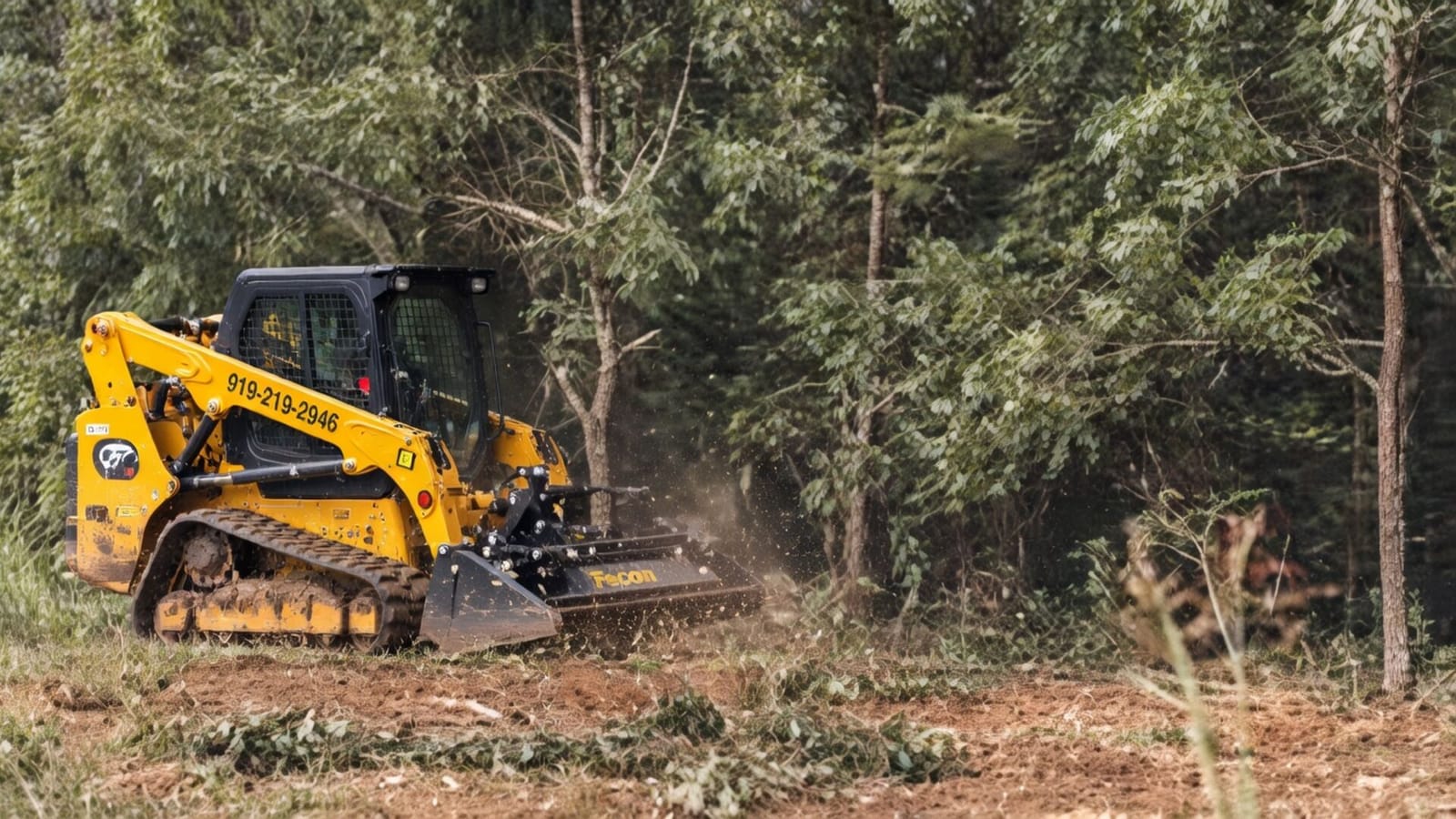
 Forestry Mulching Cost in Tuscaloosa, AL (2026)
Forestry mulching around Tuscaloosa runs $1,500 to $4,000 per acre. Here is what the fall line, lake watershed rules and burn distance do to your number.
 Guide
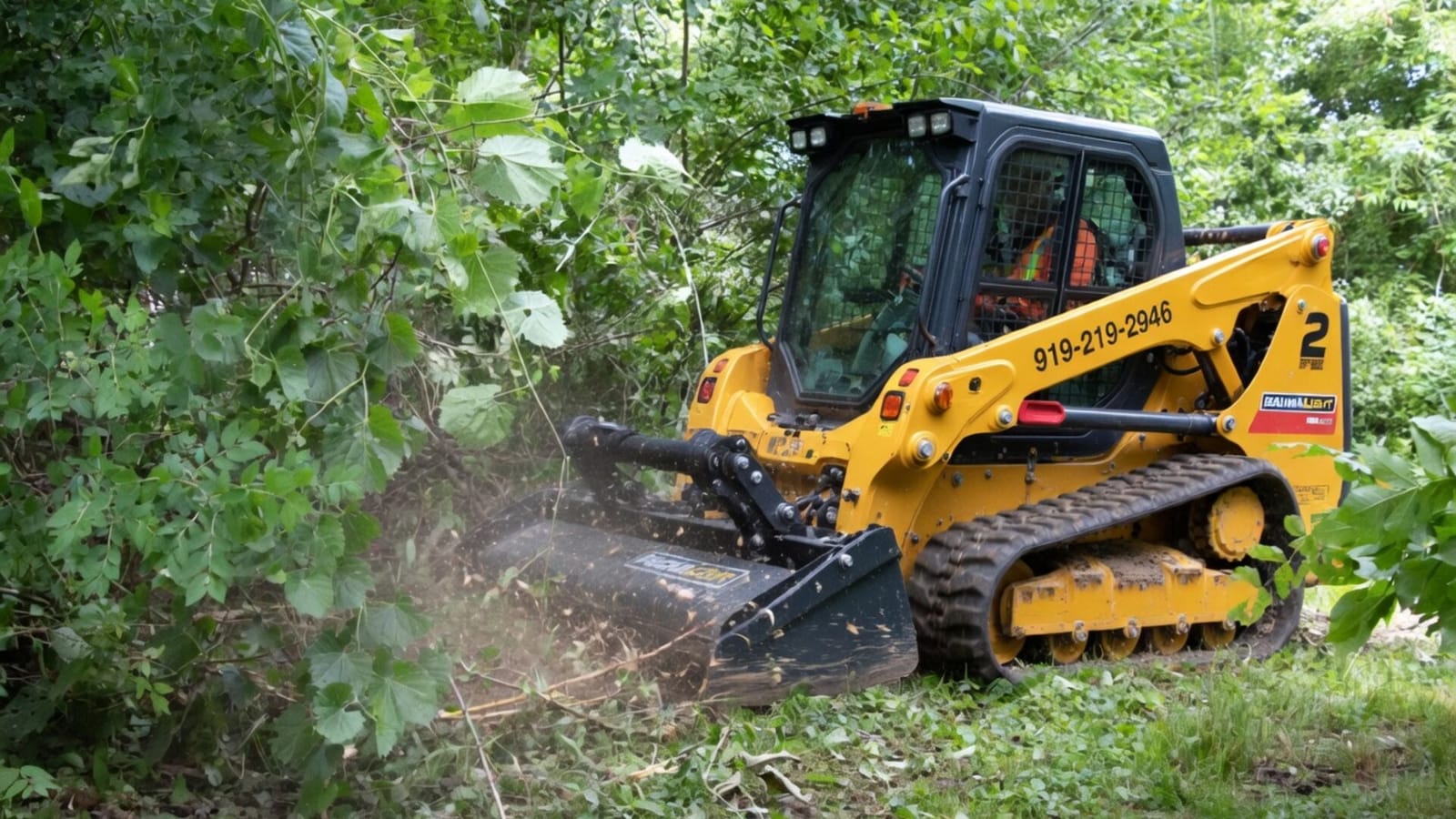
Guide Kudzu Removal in Alabama: Cost and a Plan That Lasts
Kudzu removal in Alabama takes more than one cutting. See why it regrows, the multi-visit plan that drains the root crowns, and what it costs per acre.
Ready to Get Started on Your Land?
Get a free, no-obligation estimate for property in Tuscaloosa & West Alabama.
Get Your Free QuoteOr call us directly: (919) 525-3950