
Clearing Land on Yazoo Clay Around Jackson, MS
Cut Brush Team · September 25, 2026 · 5 min read
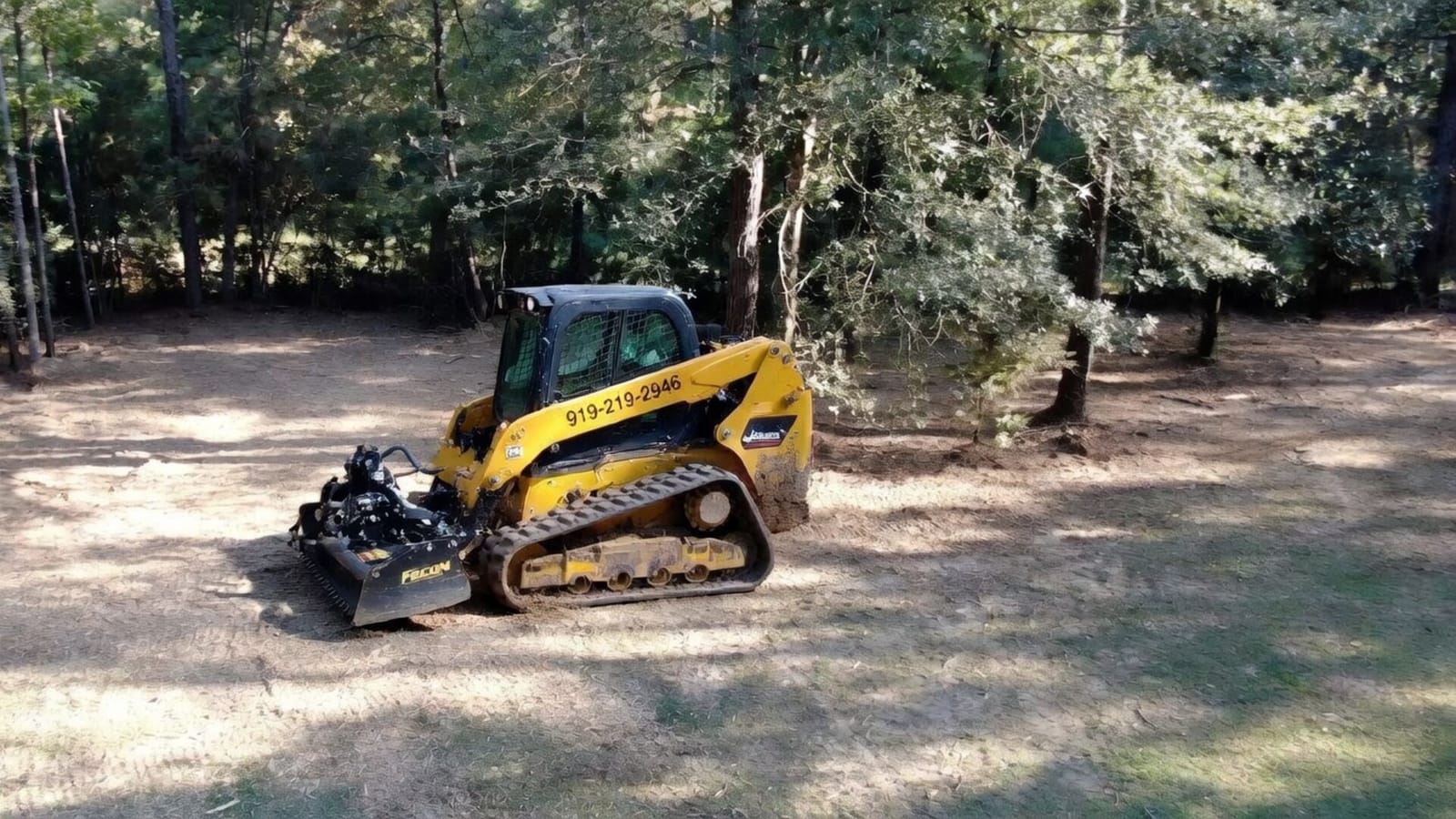
Clearing land on Yazoo clay is ordinary work with two extra questions: which big trees sit close to a foundation, and how wet the ground is on the day. The clay swells when it takes on water and shrinks as it dries, and trees draw moisture out of it. Taking brush off a lot does not change the clay, but taking large trees away from beside a slab can change how the soil under it behaves. On a new homesite, what the pad needs is a question for the builder’s engineer.
What Yazoo Clay Is and Where It Runs
The Mississippi Office of Geology’s circular on the subject describes the Yazoo Clay as a fairly uniform blue-green to blue-gray clay that crops out in a belt across central Mississippi, covering parts of eleven counties, among them Hinds, Madison and Rankin. Where the whole formation is present it is 400 to 500 feet thick (MDEQ Office of Geology, Yazoo Clay circular).
The same circular says foundation and structural damage in the Yazoo Clay belt, “especially in the Jackson area,” is caused primarily by the expansive nature of the clay. It absorbs large amounts of water in long wet spells and swells, then shrinks as it dries, and its weathered upper zone carries desiccation cracks that are often one to two inches wide at the surface.
For a landowner, the point is that it is a belt rather than a blanket. Copiah and Simpson counties are not among the eleven the circular lists, and within the belt the depth to clay varies. Whether your parcel sits on it is something a soil test or a geotechnical report answers, not a map on a web page.
Why Big Trees Near a House Deserve a Second Look
The circular names the everyday causes of uneven foundation movement on expansive clay: leaking outside faucets, gutter drainage, heavy watering of beds beside the house, leaking plumbing, and tree root transpiration. It also advises planting trees far enough from a foundation that they do not draw soil moisture from around and under it.
A large tree beside a house has been pulling water from the clay near that foundation for decades. Take it out, and the soil moisture on that side of the house changes. Whether the change matters depends on the tree, the distance, the foundation design and the parcel. We are not engineers, and nobody should promise you an outcome either way.
What that means in practice:
- Brush, privet and small trees around a house are ordinary clearing and are not what this concern is about.
- Large trees close to an existing slab are worth a conversation with a foundation professional before they come down.
- Trees you keep should have their root zones protected. Equipment staying off the ground under the canopy protects the tree and avoids compacting the soil around it.
At the walk-through we flag big trees near structures so the question gets asked before the work is scheduled.
Homesites: Clearing Is Not Pad Work
On a lot bound for a new house, clearing and site preparation are separate jobs, and on Yazoo clay the separation matters more. The circular’s ways of building on expansive clay are all foundation and soil decisions: designing the structure to withstand the movement, keeping soil moisture constant, treating the soil, or replacing it.
None of those is something a clearing contractor decides. What Cut Brush can do is leave the ground in the condition the builder asks for, whether that is chips left down on a lot that will sit for a while, or open dirt with stumps out for the earthwork contractor, and quote exactly that.
Wet Weather and Machine Work
Clay-rich ground changes character with the weather. Dry, it is firm and a tracked machine moves across it well. After a long wet spell, heavy clay turns slick and soft, machines slow, and ruts are easy to leave and slow to fix. The circular also shows slides along drainage ditches cut in the clay.
So timing is part of the plan. A flexible start date lets the work wait for a dry stretch. Where the ground is sloped or a ditch runs through the tract, leaving a mulch mat on the surface rather than bare soil keeps it covered while grass comes back. On regulated development sites in unincorporated Hinds County, the county’s stormwater ordinance goes further: clearing may not begin until sediment controls are installed and stabilized (Hinds County Storm Water Quality Management Ordinance). Our Jackson forestry mulching cost guide shows how wet ground and growth age move the price.
What It Means for Cost
Yazoo clay does not change our rates. Forestry mulching is $1,500 to $4,000 an acre and privet or understory work $1,500 to $2,500, as set out on the Jackson pricing guide. What it changes is scheduling and which questions get asked first.
Frequently Asked Questions
Does clearing land cause Yazoo clay problems?
Clearing brush does not change the clay. Removing large trees close to an existing foundation can change the soil moisture beside it, which is why those trees deserve a professional opinion first.
Is my lot on Yazoo clay?
It may be if it is in parts of Hinds, Madison or Rankin counties, but it varies by parcel. A soil test or a geotechnical report is the way to know.
Can you clear a lot after heavy rain?
Often, but it may not be wise. Wet clay is slick and ruts easily. Waiting for a dry stretch usually protects the ground and shortens the job.
Get a Plan for Your Jackson Land
If you have big trees near a house or a lot bound for a build, say so when you ask for a quote and we will flag them at the walk-through. What makes clearing here different is on our Jackson land clearing page, and the fastest route to a written plan is to request a free quote.
More from the Cut Brush Blog
Keep reading for more tips and guides on land clearing.
Guide Land Clearing Permits in Jackson & Hinds County, MS
When clearing land in Jackson or Hinds County needs a permit, what the county clearing permit costs, the stormwater rules, Reservoir tree rules and burning.
 Guide
Guide Kudzu Removal in Mississippi: Cost and Control Plan
Kudzu removal in Mississippi needs more than a mowing. See why the vine comes back, the multi-visit plan that kills the crowns, and the cost per acre.
 Cost Guide
 Forestry Mulching Cost in Jackson, MS (2026)
Forestry mulching around Jackson, MS runs $1,500 to $4,000 per acre. How privet, wet Yazoo clay and the 500-yard burn buffer shape a Central Mississippi quote.
Ready to Get Started on Your Land?
Get a free, no-obligation estimate for property in Jackson & Central Mississippi.
Get Your Free QuoteOr call us directly: (919) 525-3950