What to Know Before Clearing Land Around New Ipswich
Slope and stone set the pace. New Ipswich has ground steeper than 15 percent and soils with bedrock within about a meter of the surface, and several of its summits top 1,800 feet. The soil is a loamy layer over dense, stony till on glaciated uplands, and only the farmed fields were ever cleared of trees and stones. A mulching head slows
over rock it cannot see, so slope and stone move an acre within its band.
The town protects wetland edges and steep ground. New Ipswich's zoning keeps a 25-foot
natural woodland buffer beside wetlands larger than 10,000 square feet and along surface water. Trees
there are thinned under a point system adapted from the state shoreland law, and no fill or excavation
is allowed. Requests on slopes over 15 percent need a sediment and erosion control plan. Over the line
in Massachusetts, work near a wetland or river starts with the town conservation commission.
Requirements vary by parcel, scope and jurisdiction, and the governing authority makes the
determination.
Barberry is a prohibited plant here. New Hampshire's invasive species rule lists
Japanese barberry, bars moving any living part of it and requires disposal that leaves it nonliving
and nonviable. It has been reported in Hillsborough County and every other county in the
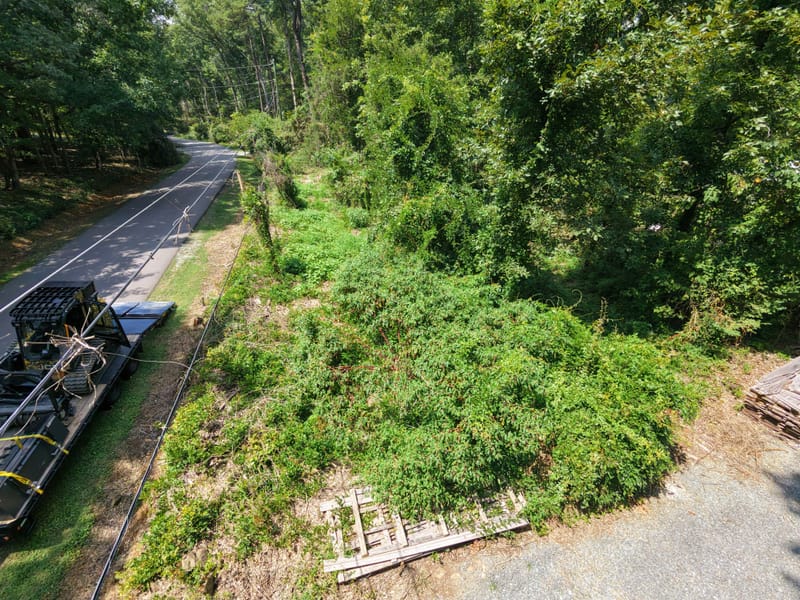
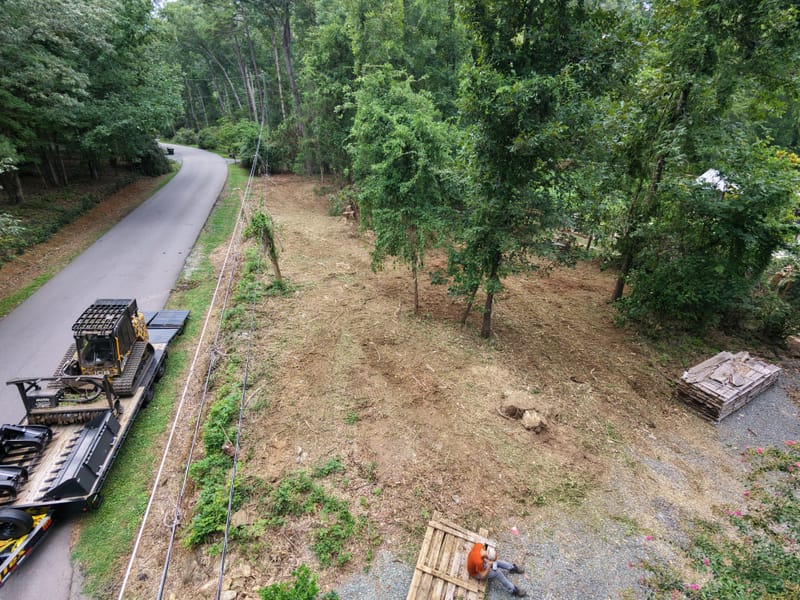
state. Grinding it where it grows fits that rule, and our
New Hampshire Japanese barberry removal guide
covers the follow-up that keeps it from returning.