
Land Clearing Permits in Austin and Travis County
Cut Brush Team · September 11, 2026 · 8 min read
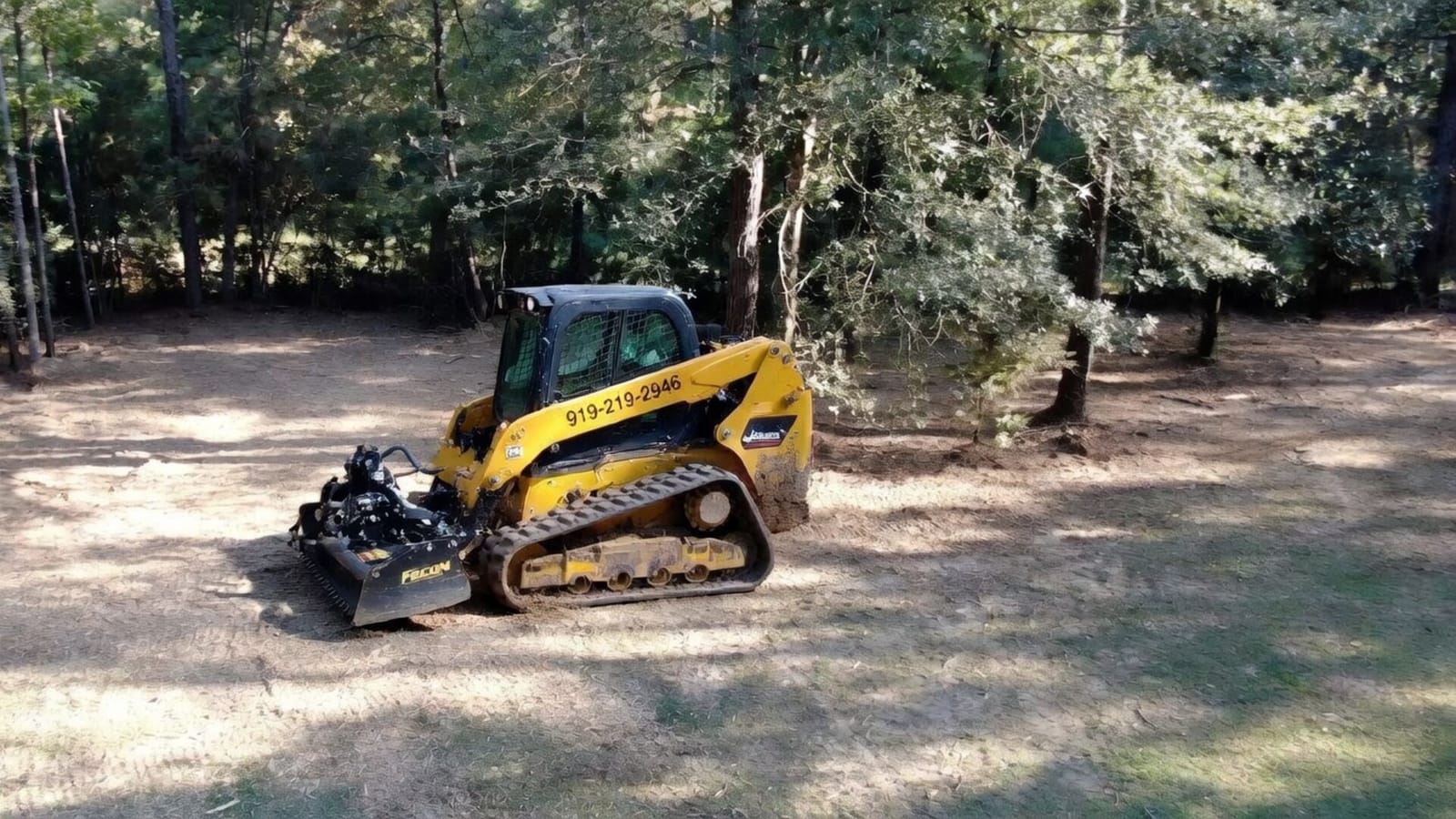
In unincorporated Travis County, the permit trigger is the machine, not the acreage. The county puts it in one sentence: “Clearing that requires no grading and only hand tools does not require a permit, but clearing utilizing machinery does.” There is no small-tract exemption underneath that. If a skid steer, a mulcher or an excavator is going to touch your property, you are in permit territory regardless of whether it is half an acre or fifty.
That single fact is the one most often missed. Several pages currently ranking for Austin clearing permits state the opposite, that routine brush clearing needs no permit. For the unincorporated county, that is wrong.
Here is the full sequence, in the order you actually hit it.
Step 1: Work Out Which Jurisdiction You Are In
Everything downstream depends on this, and around Austin the answer is genuinely not obvious. The same road can carry parcels in the city’s full purpose jurisdiction, its limited purpose jurisdiction, its extraterritorial jurisdiction, and unincorporated county.
- Unincorporated Travis County is where the machinery trigger and the county clearing permit apply.
- Inside Austin city limits the city’s tree ordinance applies.
- Austin’s extraterritorial jurisdiction is a gap: the tree ordinance does not apply in the ETJ. Since Senate Bill 2038 took effect on 1 September 2023, ETJ landowners can also petition out of the city’s reach entirely.
- Williamson County has no zoning authority and no residential building code. Work is gated through subdivision regulations, floodplain certification and city ETJ rules instead.
Requirements vary by parcel, scope and jurisdiction. Cut Brush can flag what commonly applies and help identify the right office. The governing authority makes the determination.
Step 2: The Travis County Clearing Permit
If you are unincorporated and using machinery, this is your permit. The county clearing permit page is the authority, and it is worth reading before you book anyone.
The application asks for:
- the address and the legal description from the Travis Central Appraisal District (property ID, lot, block, phase or section)
- a proposed construction start date and an estimated construction cost
- a site plan showing the area to be cleared and the methods
- an erosion and sedimentation control plan
- a stabilization plan
One distinction on that page is easy to skim past and expensive to miss: clearing “does not include grading or any other form of earth moving, such as pushing trees.” Pushing trees over with a dozer is earth moving. Grinding them where they stand is not. That is a different permitting conversation as well as a different job, which is part of why mulching is the default method here.
Applications go through the county’s online permitting portal, reached from that page. The portal has been renamed at least once, so start from the county page rather than bookmarking a login.
Travis County TNR Permit Center: 700 Lavaca, Suite 540, Austin, TX 78701, (512) 854-4215, open Monday to Thursday, 9:00 AM to 2:00 PM. Construction or subdivision work also needs a development permit.
Permit fees were not verified for this guide. Ask the permit centre for the current figure rather than budgeting from a number found online.
Step 3: Trees, If You Are Inside the City
Austin’s tree ordinance runs on two thresholds, and conflating them is the most common error in local write-ups.
A protected tree has “a diameter of 19 inches or more, at a point measured 4.5 feet above the ground.” Removing one inside city limits requires a permit from the City Arborist, with limited exceptions.
A heritage tree has a diameter of 24 inches or more and belongs to a listed species: Texas ash, bald cypress, American and cedar elm, Texas madrone, bigtooth maple, all oaks, pecan, and Arizona and eastern black walnut. Removal of a heritage tree “is prohibited, except as provided under” the code, meaning a variance under City Code section 25-8-641.
The part that matters for your schedule is that the variance route is tiered. A heritage tree between 24 and 30 inches can be handled administratively. One of 30 inches or more must go through a public process. That is weeks, not an afternoon, and it needs to be discovered at the planning stage rather than on the morning the machine arrives.
Note that Ashe juniper, the tree most often being cleared around here, is not on the heritage list. The oaks standing next to it are.
Step 4: Habitat, and the Season That Closes Half the Year
This is the rule that makes Austin unlike anywhere else, and it belongs in your plan long before it belongs in your paperwork.
Travis County runs the Balcones Canyonlands Conservation Plan, a regional incidental take permit that landowners can buy into per acre. The county publishes participation costs: $5,500 per acre in confirmed golden-cheeked warbler habitat (Zone 1), $2,750 per acre in unconfirmed habitat (Zone 2), and $1,000 per acre in the karst zone. Black-capped vireo is $0 since the species was delisted in 2018. These are county habitat figures, not clearing prices.
There is a residential route that is easy to miss. Participation covers either an individual lot recorded before May 4, 1990 with disturbance limited to 0.75 acre (about 32,670 square feet), or a tract of 100 acres or less that existed as a legal tract before that date, at one home per 15 acres.
Then the timing rule. Clearing “may not be conducted from March 1 through August 31 on properties containing golden-cheeked warbler habitat,” and the county states elsewhere that no one, not even permit holders, can disturb the habitat during nesting season. September through February is the outside-nesting-season window.
Add the oak wilt window, February 1 through June 30, when oaks should not be cut and every wound has to be painted immediately, and the workable season on the western limestone is roughly September through February.
Whether a specific parcel contains habitat is a determination the governing authority makes, never the contractor. Travis County Natural Resources can be reached on (512) 854-7213 and the habitat programme on (512) 854-9437.
Step 5: Watershed Overlays
If the property is in the Barton Springs Zone, the Save Our Springs ordinance applies and caps impervious cover at 15 to 25 percent of net site area, the city’s most restrictive water quality rules. Single family and duplex work on lots that existed on 1 November 1991 is exempted. County development permits also carry stormwater review through Travis County Environmental Quality.
Whether a parcel sits in that zone is, again, a determination for the governing authority.
Step 6: Do Not Plan on Burning
Texas prohibits open burning statewide except where 30 TAC 111 Subchapter B allows it. Burning plant growth from land clearing on the same property is one of the allowed cases, so it is not a flat prohibition. It is just not something you can schedule around.
Inside Austin city limits, open burning of trash, limbs, leaves and trimmings is prohibited, and permits are issued only for prescribed burns. County burn bans are frequent and long. A Williamson County ban explicitly covers burning vegetation such as trees, stumps and shrubs for land clearing purposes, and a violation is a Class C misdemeanour punishable by a fine of up to $500.
Check the current position with the Travis County Fire Marshal or Williamson County. Cut Brush does not offer burning as a disposal method in this market. Mulching leaves the material down as a mat and does not depend on a ban being lifted.
Frequently Asked Questions
Do I need a permit to clear my own land in Travis County?
If the property is in the unincorporated county and machinery is involved, yes. Hand tools without grading do not require one. There is no acreage threshold in the rule, which is what catches owners of small tracts.
Does Austin’s tree ordinance apply to my property outside the city?
Not in the extraterritorial jurisdiction. The city states the ordinance does not apply there; it governs only the full purpose and limited purpose jurisdictions. Which category your address falls in is a determination the city makes.
Can I clear in spring?
East of Interstate 35, outside warbler habitat, generally yes. On property containing golden-cheeked warbler habitat, clearing may not be conducted from March 1 through August 31, and the oak wilt window adds February through June for work around oaks. On the western limestone that leaves roughly September through February.
How long does the permitting take?
Not verified here, and it varies with scope and season. The permit centre is open Monday to Thursday, 9:00 AM to 2:00 PM, and a pre-application meeting with environmental staff can be part of the process. Build in more time than you expect, particularly if a heritage tree of 30 inches or more is involved.
Will Cut Brush pull the permit for me?
We flag what commonly applies, help identify the right office, and work to the permit the owner holds. We do not promise a permit outcome and we do not make the determination. That belongs to the county or the city.
What does the clearing itself cost once the paperwork is sorted?
Most work quotes between $1,500 and $4,500 an acre. The Austin pricing guide sets out every range and what moves it, and the Texas land clearing cost per acre guide gives the statewide picture.
Getting a Land Clearing Permit Sorted in Austin
The order is what saves time: jurisdiction first, then the county clearing permit if machinery is involved, then trees if you are inside the city, then habitat and the calendar, then watershed overlays. Burning is the last thing to plan on.
Most of that can be settled in a walk-through before anything is booked. Ours are free anywhere in Travis, Williamson, Hays, Bastrop or Caldwell County. See the ranges on the Austin pricing guide, read the mulching number in detail in our Austin forestry mulching cost guide, or request a free quote and we will walk the sequence with you.
More from the Cut Brush Blog
Keep reading for more tips and guides on land clearing.
 Guide
Guide Ashe Juniper Removal in Austin: What Grows Back
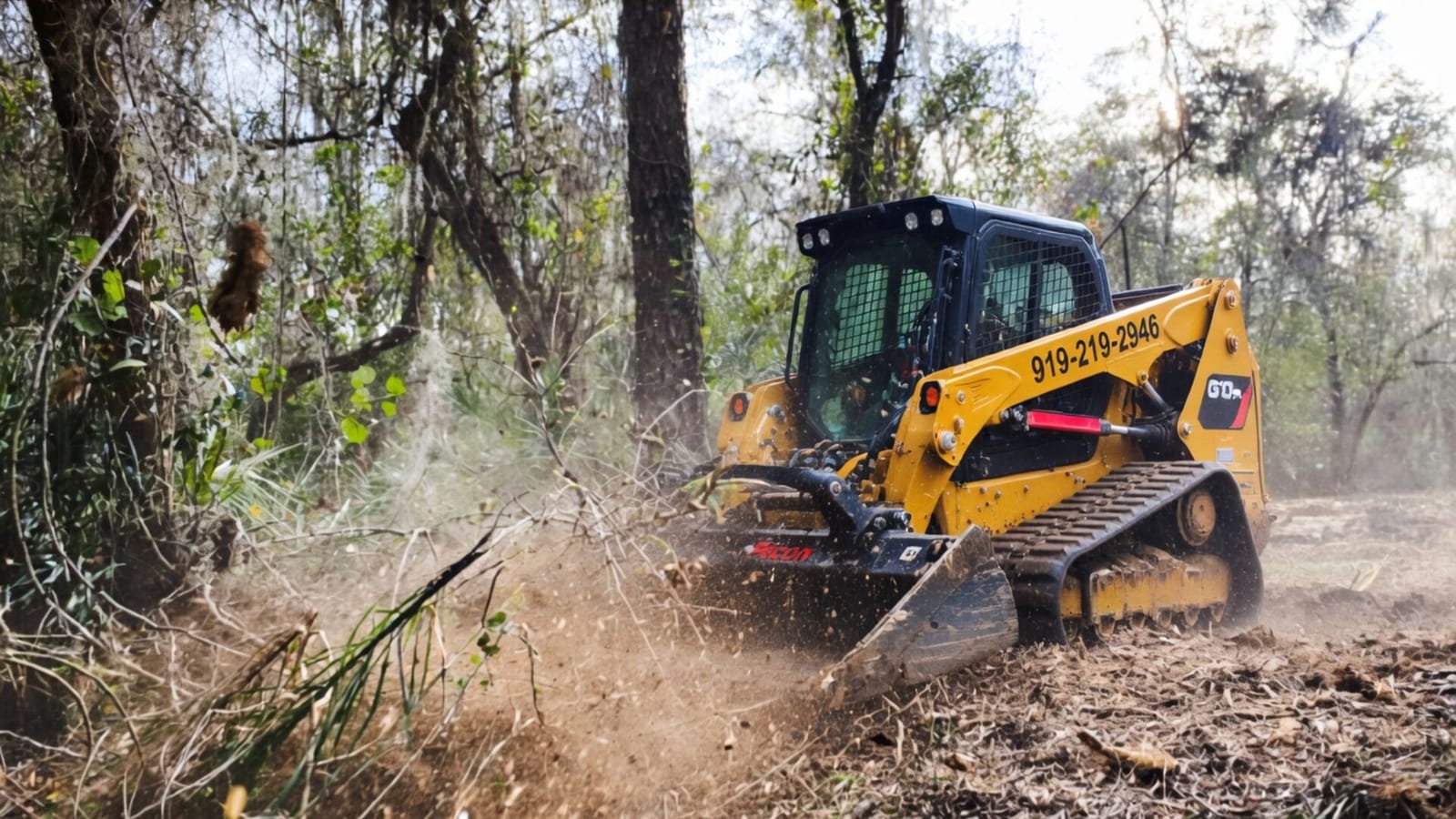
Cedar does not resprout from the stump. What that means for clearing Ashe juniper around Austin, what actually returns, and the season the work has to fit in.
 Cost Guide
 Forestry Mulching Cost in Austin, TX (2026)
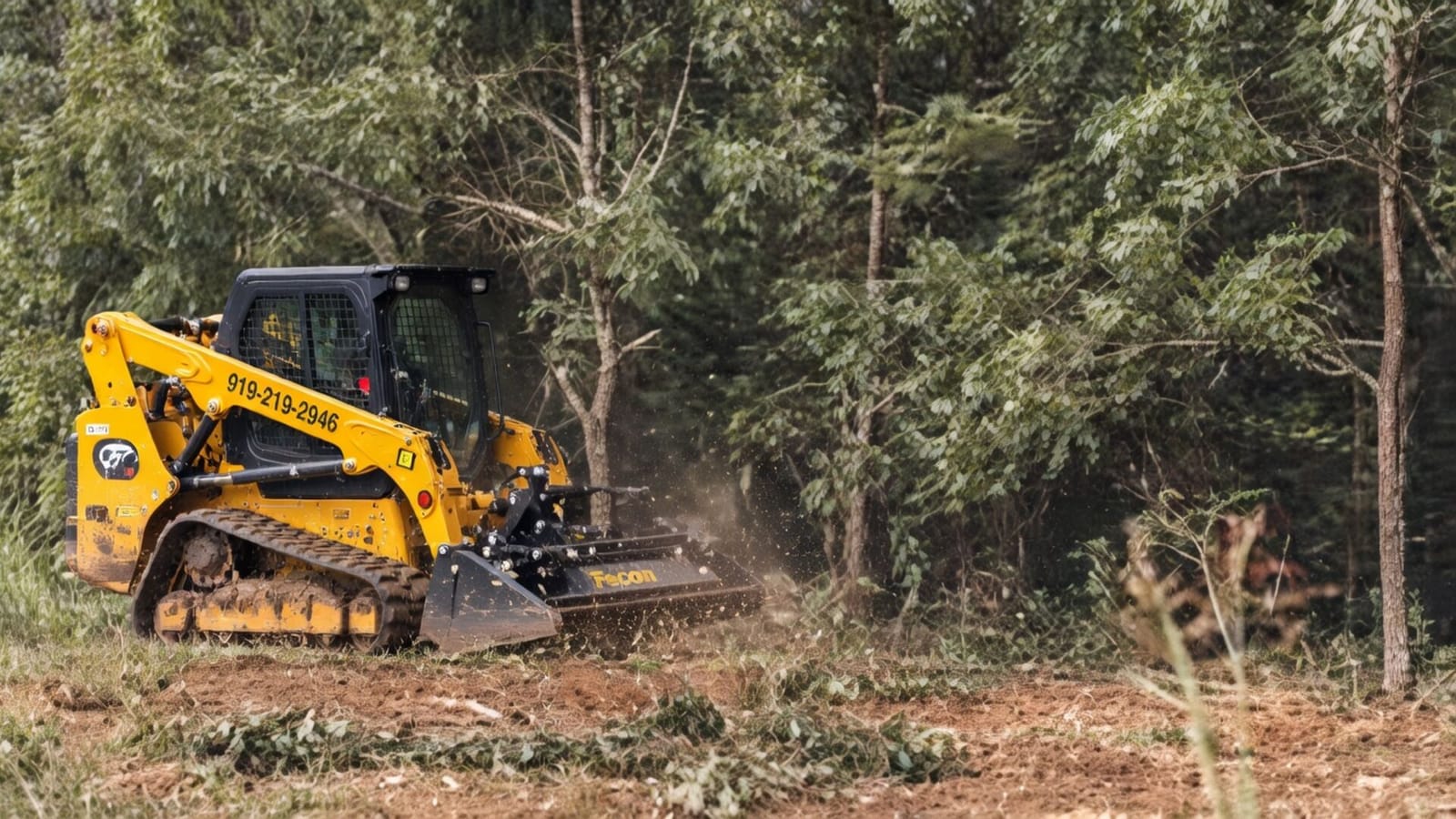
Forestry mulching around Austin runs $1,500 to $4,000 an acre. What limestone, Blackland clay and the clearing season do to the price, and what is left out.
Guide What Is Forestry Mulching? A Complete Guide
What is forestry mulching? See how a forestry mulcher grinds trees and brush into mulch in one pass, what it handles, and when to use it. Get a free estimate.
Ready to Get Started on Your Land?
Get a free, no-obligation estimate for property in Austin & Central Texas.
Get Your Free QuoteOr call us directly: (919) 525-3950