
Forestry Mulching Cost in Austin, TX (2026)
Cut Brush Team · September 11, 2026 · 7 min read
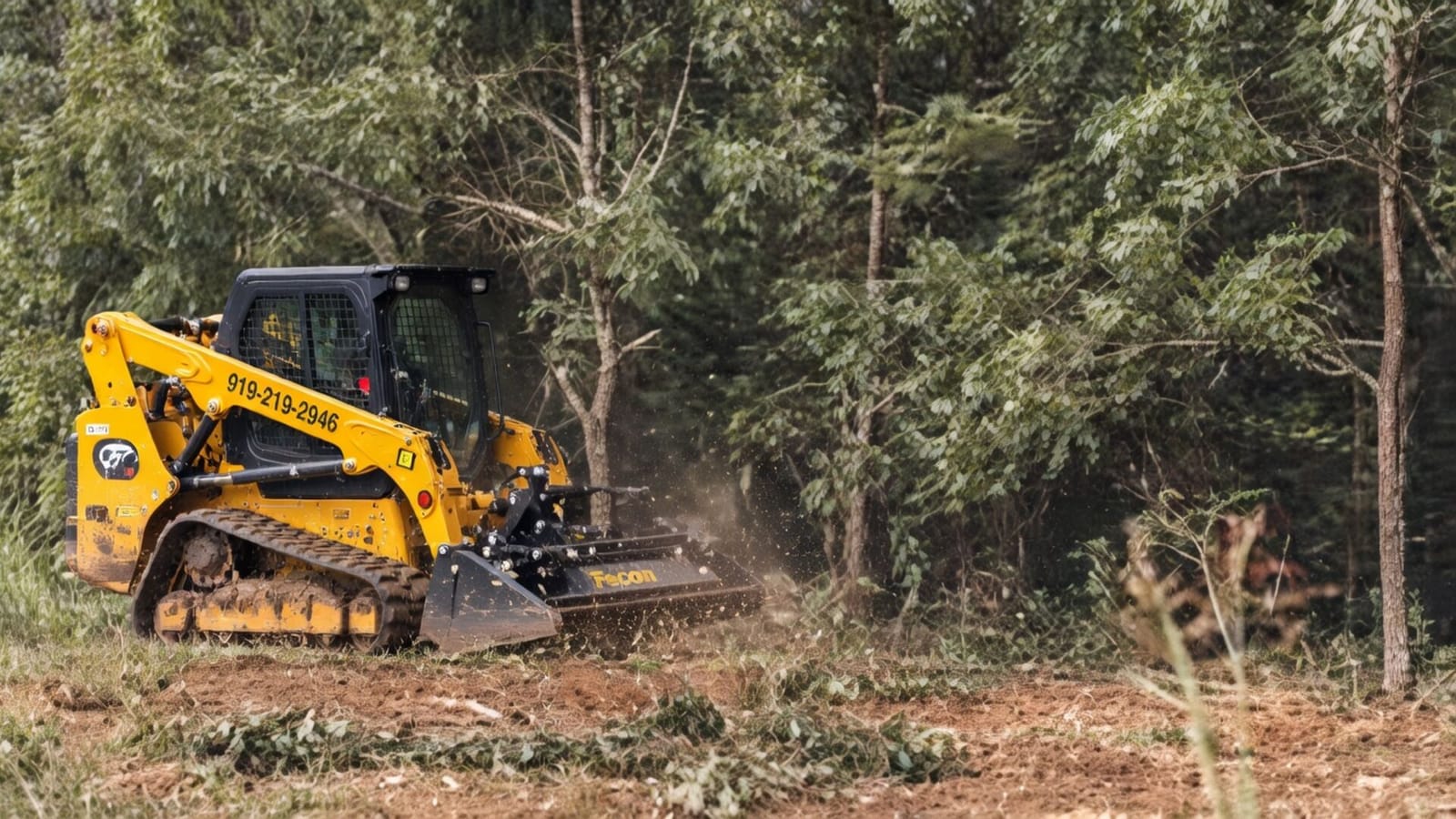
Forestry mulching around Austin runs $1,500 to $4,000 per acre. Light, scattered growth sits near the floor. A closed Ashe juniper canopy on thin soil over rock sits near the ceiling. Where your parcel lands inside that band comes down to three things that are specific to Central Texas: how much material is standing, which side of Interstate 35 you are on, and what month you are asking in. That last one can decide whether the job is possible at all.
What the Band Actually Covers
Forestry mulching is one tracked machine with a grinding head, working through standing brush and small trees where they stand. Stumps are ground flush rather than pulled. The material stays on the ground as a mat. The ground is not graded and it is not build ready when the machine leaves.
That definition matters for the price because it is what separates this number from a land clearing number. Cut Brush quotes four kinds of work around Austin, and the full set of ranges is on the Austin pricing guide:
| Work | Range |
|---|---|
| Forestry mulching | $1,500 – $4,000 / acre |
| Cedar and understory clearing | $1,500 – $2,500 / acre |
| Land clearing | $1,500 – $4,500 / acre |
| Lot and homesite prep | $1,500 – $4,500 / acre equivalent |
Small tracts carry a practical floor near $1,500. That covers getting equipment to the property, and it does not shrink just because the parcel does.
Why Does the Same Acre Cost Different Amounts East and West of Interstate 35?
Because it is not the same acre. Travis County splits down the middle at the interstate, and the two halves are different ground.
West of it you are on Edwards Plateau limestone: thin soil over rock. The vegetation that dominates is Ashe juniper, and it grows on slopes. A mulching head on that ground is working close to stone, wear is higher, and the number is driven by how much material is standing on how little dirt there is to stand in.
East of it you are in Blackland Prairie. Houston Black soil here runs 40 to 60 percent clay. It shrinks and swells with the weather, cracks wide open in summer, and sticks to every tool on the machine when it is wet. Manor sits squarely in this. Mulching is generally the better method on clay precisely because it does not require dragging material across ground that will rut.
A quote that never mentions which side you are on has not looked at your property. Several pages ranking for Austin clearing costs describe the whole metro as clay, which is simply wrong for the western half.
When Can the Work Actually Be Done?
This is the question that separates an Austin budget from a Texas budget, and it is worth settling before you compare any two numbers.
On property containing golden-cheeked warbler habitat, Travis County states that clearing “may not be conducted from March 1 through August 31,” and adds plainly that no one, not even permit holders, can disturb that habitat during nesting season. Stack on the oak wilt window, which runs February 1 through June 30, when oaks should not be cut and every wound must be painted immediately, and the practical working season on the western limestone is roughly September through February.
East of the interstate, outside that habitat, spring and summer work is normal.
Whether your particular parcel contains habitat is a determination the governing authority makes. Requirements vary by parcel, scope and jurisdiction. Cut Brush can flag what commonly applies and help identify the right office, and the crew works to the permit the owner holds. The sequence is laid out in full in our Austin and Travis County permit guide.
What Moves the Number Inside the Band
Density and stem size, more than acreage. Ten open acres with scattered brush is a faster job than two acres of sealed juniper. Per-acre rates fall as tracts get larger, because the machine spends proportionally less time on setup.
Whether the growth resprouts. Ashe juniper does not sprout from the stump; the US Forest Service species review classifies it as a tree without an adventitious-bud root crown and states it does not reproduce asexually. Mesquite and yaupon do the opposite. On a juniper acre you are usually buying one job. On a mesquite acre you are buying a pass and a follow-up plan, and those should be quoted separately.
Slope and access. A tract a trailer can reach off a county road prices lower than one behind a gate and a mile of two-track. Slope costs more on the western side than most owners expect.
What has to leave. Cut Brush does not offer burning as a disposal method in this market, for reasons covered below. Anything that cannot be mulched in place is hauled, and hauling is a separate line rather than something folded quietly into a per-acre figure.
What the Price Does Not Include
Three kinds of cost are real around Austin and are not Cut Brush charges. They are paid to a government body, and they never sit inside our per-acre band.
- A Travis County clearing permit where machinery is used in the unincorporated county. The fee was not verified for this guide; the county permit page is the place to check.
- Habitat participation. Travis County publishes per-acre costs for its regional habitat permit: $5,500 an acre in confirmed golden-cheeked warbler habitat, $2,750 in unconfirmed habitat, and $1,000 in the karst zone. Black-capped vireo is $0 since the species was delisted in 2018. These are county habitat figures, not clearing prices, and they apply only where habitat is present.
- City of Austin tree permits inside city limits, where a protected tree is 19 inches or more in diameter at 4.5 feet.
For context on land itself rather than clearing: Texas rural land averaged $5,218 an acre in the second quarter of 2026, with development-stage land at $10,200. Again, land prices, not clearing prices.
Can I Just Burn the Brush Instead?
Plan on mulching. Texas prohibits open burning statewide except where 30 TAC 111 allows it, and burning plant growth from clearing on the same property is one of the allowed cases, so it is not a flat no. The problem is that you cannot plan around it. Inside Austin city limits, open burning of limbs, leaves and trimmings is prohibited and permits are issued only for prescribed burns. County bans are frequent, and a Williamson County ban explicitly covers burning trees, stumps and shrubs for land clearing purposes, with a violation carrying a fine of up to $500. Check current status with the Travis County Fire Marshal or Williamson County.
Mulching leaves the material down as a mat and does not depend on a ban being lifted, which is most of why it is the default method here.
Frequently Asked Questions
How much does it cost to clear one acre near Austin?
Most clearing work quotes between $1,500 and $4,500 an acre. Mulching specifically runs $1,500 to $4,000. Understory and cedar work beneath trees that stay is the cheapest thing we do; whole-tract clearing with a graded finish is the most expensive.
Is mulching cheaper than having a dozer push everything?
Usually, once you count the whole job. Mulching is a single machine and a single pass with no hauling, no burn piles and no stump pulling. It is also the safer method on Blackland clay, where dragging material across wet ground creates ruts you then pay to fix. What it does not give you is graded, build-ready dirt. If that is what you need, you are buying land clearing, not mulching.
Does the mulch left behind cause problems?
Not usually. The mat holds soil in place, which matters on the sloped limestone side, and it breaks down over a season or two. Where a pad or a drive is going, the mat is moved as part of that scope.
Will one pass be enough?
On juniper, generally yes for a long time, because it does not resprout and its seedlings are slow. On mesquite or yaupon, no. Those push new stems from the root system and the acre needs a plan rather than just a pass. Our Ashe juniper removal guide works through what returns and how fast.
How does this compare to the rest of Texas?
Central Texas sits in the middle of the statewide picture, with the season and the rock as the local complications. Our Texas land clearing cost per acre guide covers the state-level ranges.
Getting a Forestry Mulching Quote in Austin
Ranges are for budgeting. The number for your parcel comes from walking it, and that walk-through is free anywhere in Travis, Williamson, Hays, Bastrop or Caldwell County.
Bring the date you want the work done, because around Austin that is not a scheduling detail, it is part of the scope. Compare the full set of ranges on the Austin pricing guide, then request a free quote and we will tell you which side of the band your ground sits on and why.
More from the Cut Brush Blog
Keep reading for more tips and guides on land clearing.
 Guide
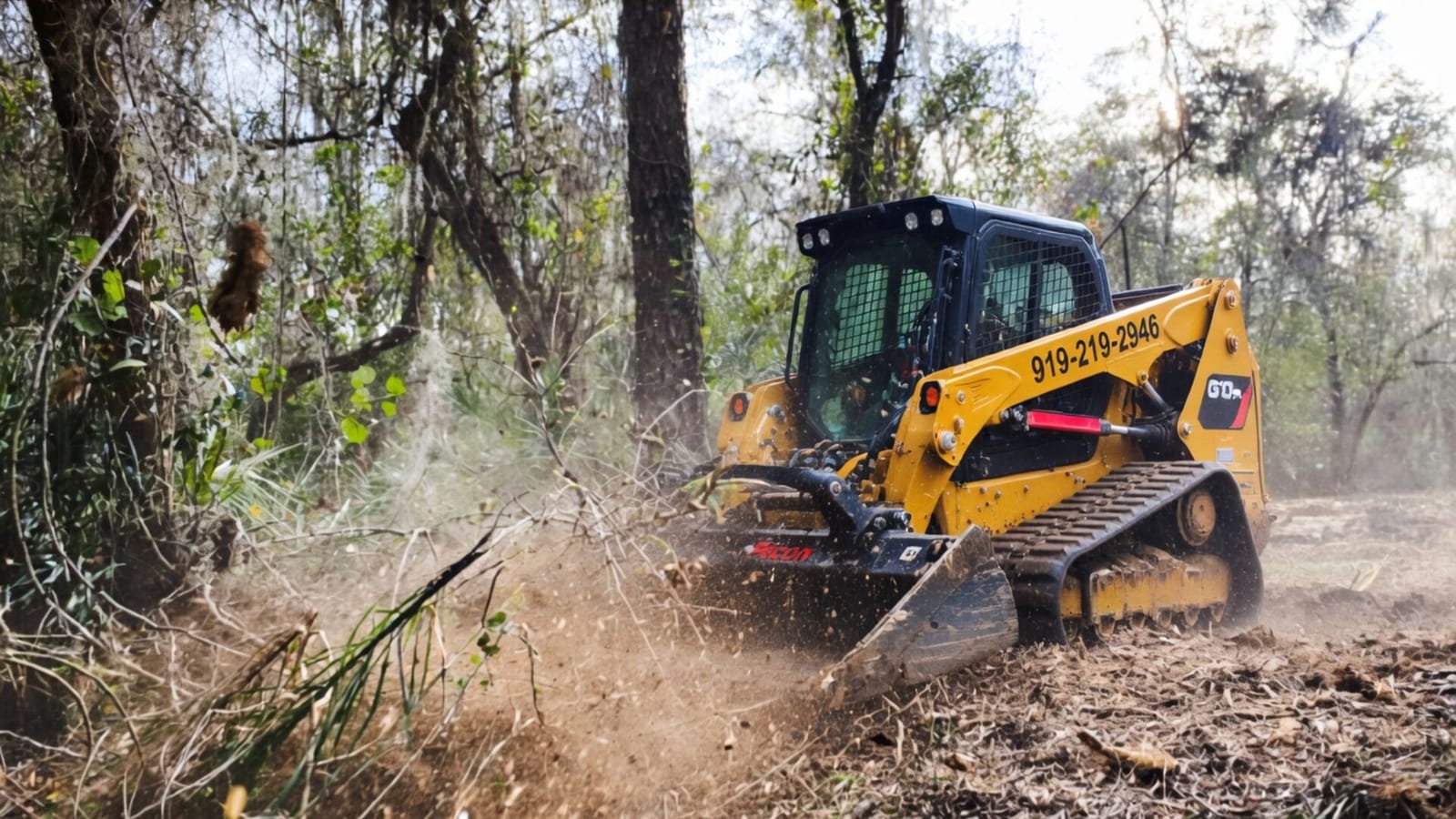
Guide Ashe Juniper Removal in Austin: What Grows Back
Cedar does not resprout from the stump. What that means for clearing Ashe juniper around Austin, what actually returns, and the season the work has to fit in.
 Guide
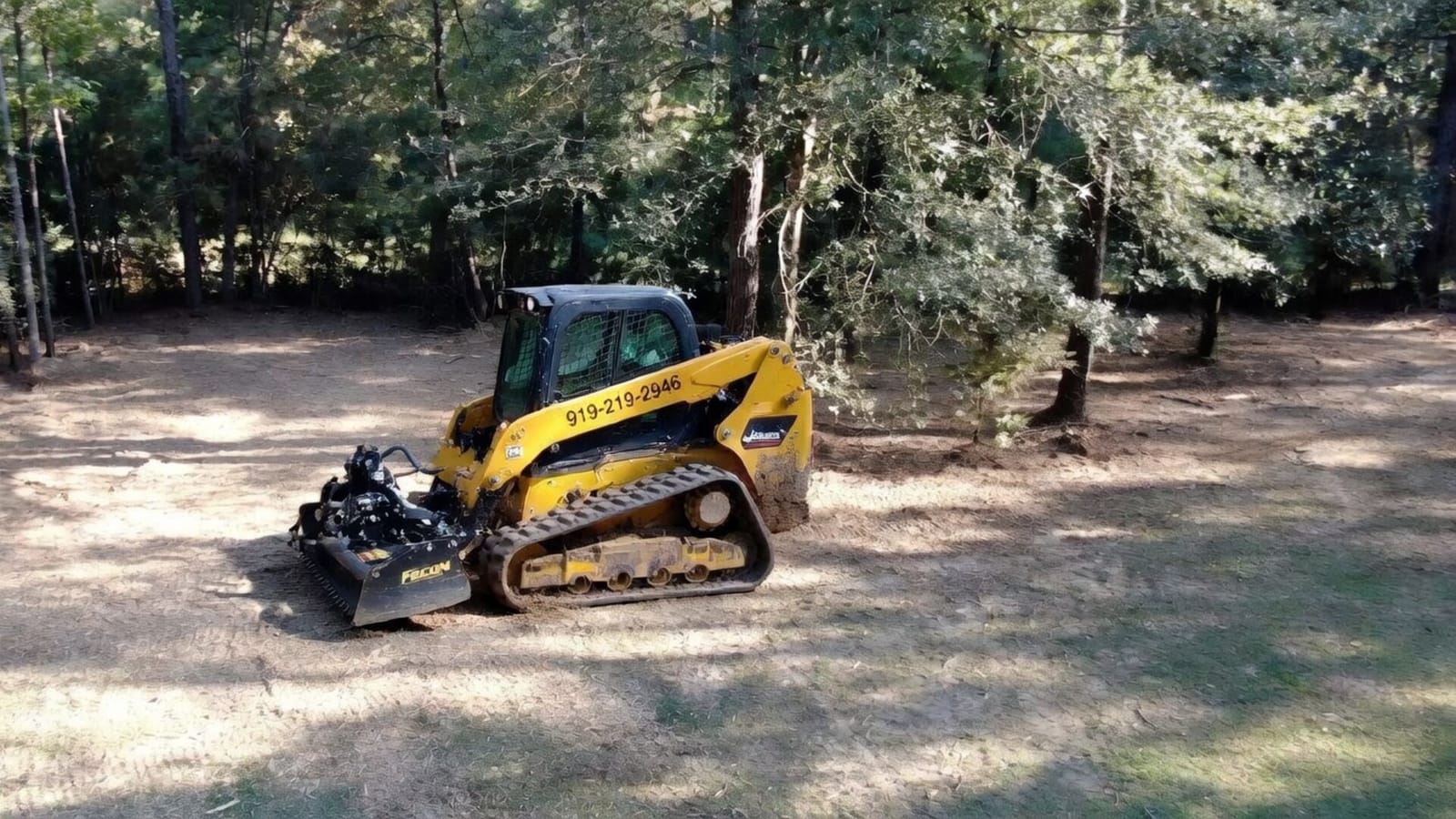
Guide Land Clearing Permits in Austin and Travis County
In unincorporated Travis County the permit trigger is machinery, not acreage. The clearing permit, Austin tree rules, habitat season and burn bans, in order.
 Comparison
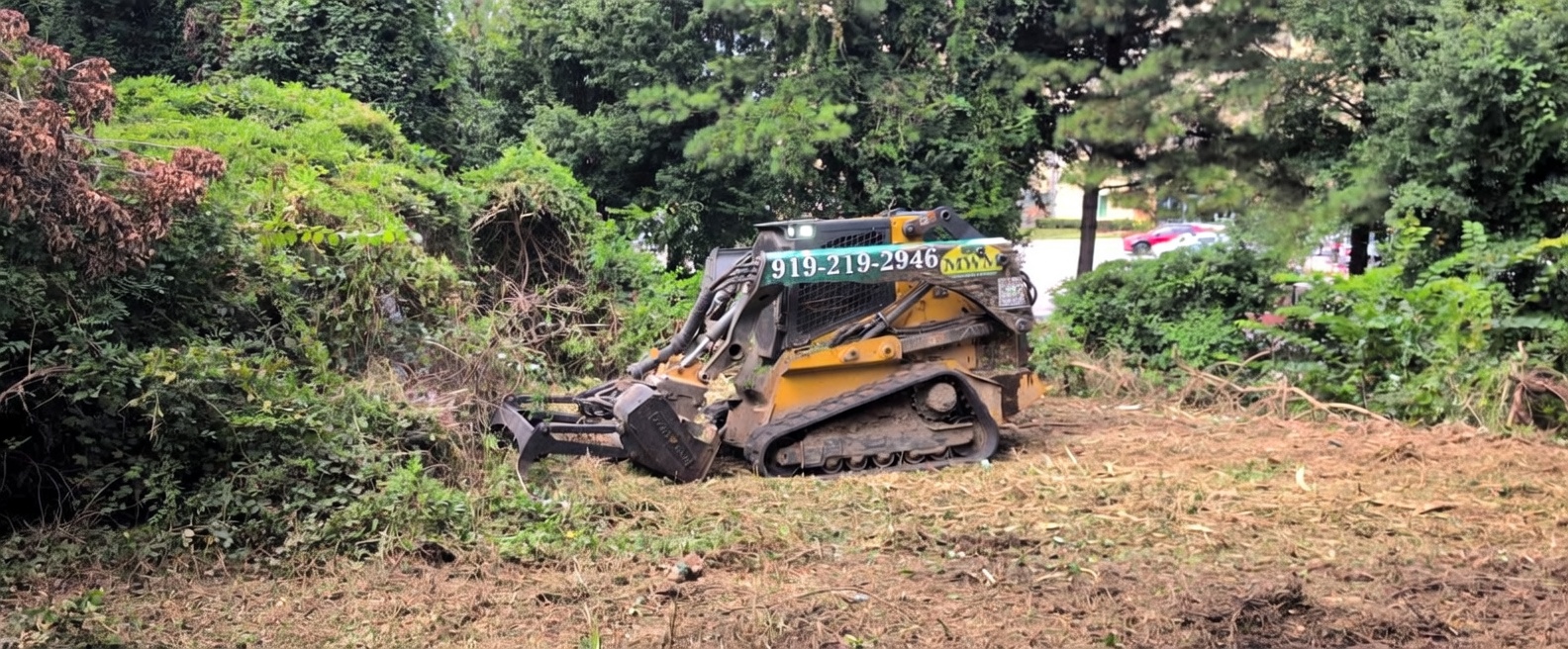
 Bush Hogging vs Forestry Mulching: Which Do You Need?
Bush hogging vs forestry mulching: which handles your overgrown field? Compare costs, vegetation limits, and regrowth for Central NC land. Get a free quote.
Ready to Get Started on Your Land?
Get a free, no-obligation estimate for property in Austin & Central Texas.
Get Your Free QuoteOr call us directly: (919) 525-3950