
Brush Hogging Cost Per Acre in New York (2026 Guide)
Cut Brush Team · October 9, 2026 · 8 min read

Nobody has cut the back field in a few summers. What was hay is now waist-high weeds, briars along the stone wall, and the first saplings coming through. Brush hogging runs $75 to $400 an acre with Cut Brush in New York, set by how long the field has gone uncut, with a $250 to $500 minimum per visit. Our crews mow across Orange, Dutchess, Ulster and Sullivan counties in the Hudson Valley.
At a glance:
- Our price: $75 to $150 an acre for a field cut within the past year, $125 to $250 after one or two seasons, $200 to $400 after three or more.
- Past a mower: once saplings pass 2 to 3 inches, it is understory work at $1,500 to $2,500 an acre.
- Nesting season: DEC’s grassland bird practices ask that fields over 25 acres not be mowed between April 23 and August 15 unless surveyed first.
- Giant hogweed: DEC says never to put a brush cutter or string trimmer on it. The sap can splash three to four feet and burn skin.
- Farm burning: contiguous farmland over 5 acres in active agricultural use is not bound by the March 16 to May 14 brush burning ban.
We mow grown-in fields around Goshen, Warwick and Liberty and across the rest of the four Hudson Valley counties. Outside them we have no New York crew. Pick your nearest area at the foot of this page and we will come look at the field.
What Is Brush Hogging?
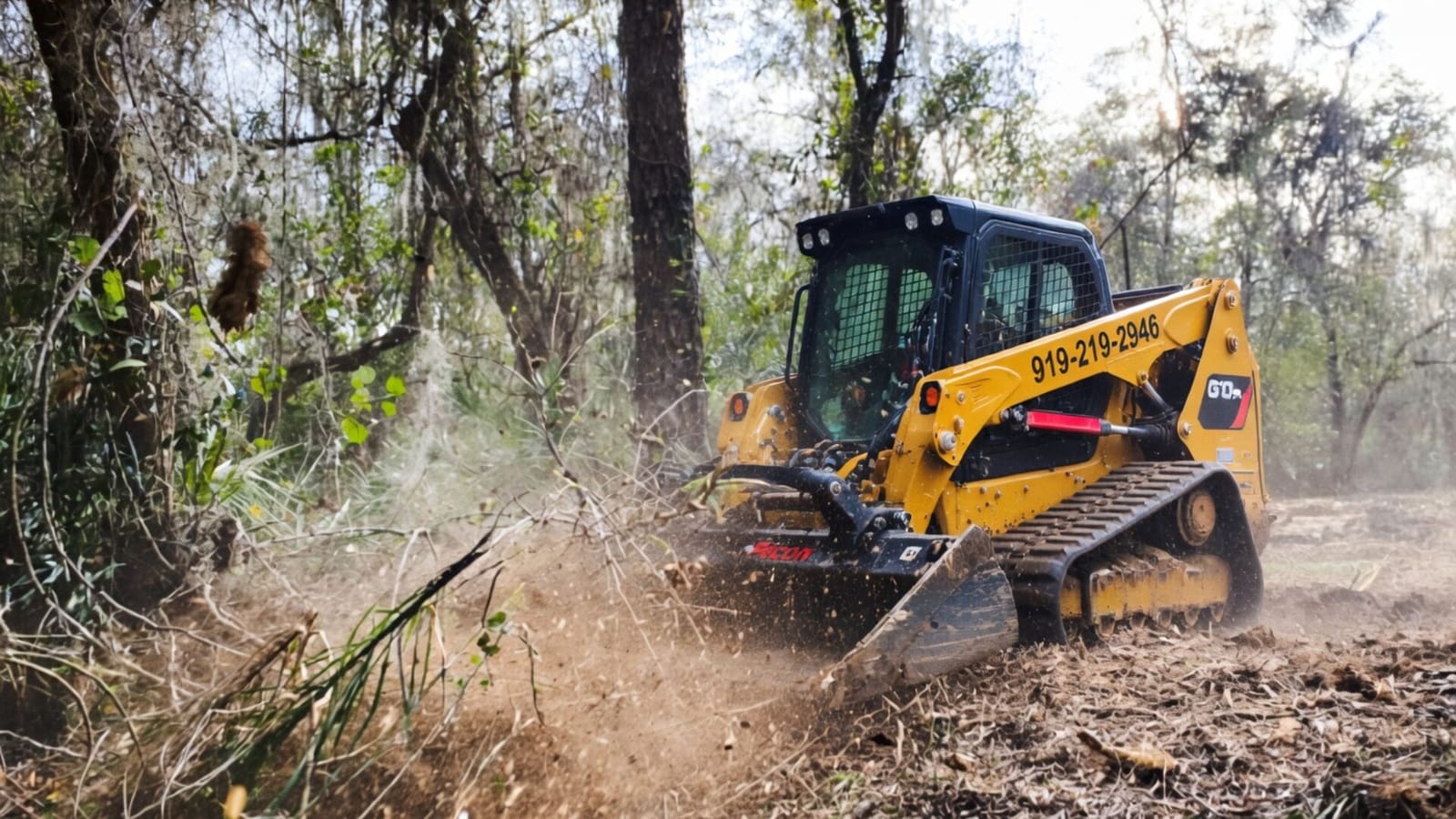
A heavy rotary cutter behind a tractor, run through growth that would wreck a lawn mower: tall grass, weeds, briars and saplings up to about 2 inches. The cut material lies where it falls. It keeps a field a field. Where stone in the sod or the size of the stems rules a mower out, a mulching head takes over, and that is a different price.
How Much Does Brush Hogging Cost in New York?
The price follows one thing above all: how long since the field was last cut.
| Field condition | Our price per acre | What it looks like in New York |
|---|---|---|
| Cut within the past year | $75 – $150 | Hay stubble or pasture grass with weeds starting |
| One or two seasons of growth | $125 – $250 | Tall weeds and briars, a few saplings along the wall lines |
| Three or more years overgrown | $200 – $400 | Brush and saplings up to about 2 inches, thick brush along the fence rows |
| Saplings past 2 to 3 inches | Not a brush hog job | Understory work at $1,500 – $2,500 an acre instead |
Every visit carries a $250 to $500 minimum, which covers loading, hauling and unloading the tractor. On one small field, the minimum may simply be your price.
Where these numbers come from. The mowing rows are the brush hogging rates Cut Brush publishes for its home crews in North Carolina, and they are what we quote in New York, since our Hudson Valley pricing page has no mowing row yet. The last row is that page’s Regrowth & Understory Work band, the one it describes as hedgerows, stone wall lines and old field margins.
What Changes the Price of a New York Field
Stone on the surface. Glacial till left New York fields full of rock, and a rotary cutter throws what it hits. On the Honeoye soil of central and western New York, stones over 10 inches across cover up to a fifth of the surface in places. The operator raises the deck and slows down, and blades wear faster. Walk the field before we come and flag the big ones; a field we can mow with confidence is a field that gets mowed fast.
How far the field has gone. DEC draws the line well in its own grassland definition: ground with under 25 percent woody cover, short of the point where upkeep would need “significant brush cutting (i.e. not suitable for brush-hogging).” On the Volusia soil of the Southern Tier, the USDA notes cleared fields “now growing up with a cover of brush and forbs.” A field that has crossed that line is a mulching job, not a mowing one, and we will tell you so on the walk.
The bird calendar. For fields over 25 acres, counting adjoining fields, or any field with a history of listed grassland birds, DEC’s practices say to avoid mowing from April 23 to August 15. They also say to avoid November 1 to March 31, when short-eared owls and northern harriers winter on open ground. That leaves a big field roughly August 16 to October 31, and everyone with a big field wants that window. Book early.
Giant hogweed in the margins. DEC’s control guide says that where mowing is the only option, plants must be cut at least three times a growing season for several years, because they regrow within a couple of weeks. Seed heads should never be mowed until the flower umbels are removed first. An enclosed cab is the safer machine. A hogweed edge is a careful, slow pass, and it is priced that way.
What the field earns you. Mowing alone does not put land into New York’s agricultural assessment. The state wants seven or more acres used in the previous two years to produce crops, livestock or livestock products for sale, averaging $10,000 a year in gross sales. A field kept open for hay or grazing is worth more to you than one kept open for looks.
Pro tip: Ask for the deck set at 6 to 12 inches and for the field to be cut from the center outward or straight across from one side. Both come from DEC’s grassland practices, they leave cover for anything nesting late, and a higher deck rides over more of the stone.
Brush Hogging Costs Across New York
The Hudson Valley. Our ground. The Hudson soil along the river is lake clay whose steeper slopes are “pastured, or reverting to brushy woodland,” per the USDA. Orange County’s farm belt around Goshen and Warwick is laced with hedgerows and old wall lines, and Ulster holds the Shawangunk Grasslands, one of DEC’s Grassland Bird Conservation Centers. See our Hudson Valley land clearing page for the territory.
The North Country. Jefferson and St. Lawrence counties hold four of DEC’s conservation centers between them, and Washington County has another. Big hayfields there are the ones the summer mowing window was written for.
The Southern Tier and the Catskill side. Volusia ground was cleared, farmed and left, so this is where the most fields sit right at the edge of what a mower can handle. Expect flat stone in the sod and some fields that need mulching first.
The Finger Lakes and Western New York. The Finger Lakes National Forest in Seneca and Schuyler counties and the Oak Orchard and Iroquois refuges on the lake plain are conservation centers too. Honeoye fields here are where surface stone sets the pace.
Burning, Hogweed and Farm Tax Rules in New York
Burning what you cut. A brush hog leaves the cuttings on the ground, but fence row material gets piled. Statewide, brush burning is closed from March 16 to May 14. Contiguous farmland larger than 5 acres, actively used for agriculture or horticulture, may burn organic agricultural waste and is not held to that ban.
Hogweed. Giant hogweed grows to 14 feet or more, and its sap, with sunlight and moisture, can cause a severe burn within 24 to 48 hours. Its seeds stay viable for up to 15 years and spread when people mow along roadsides. Report a stand to DEC’s invasive plant line at 845-256-3111 before anyone mows near it.
Agricultural assessment. Up to 50 acres of farm woodland can ride along with qualifying farmland, and land under 7 acres may qualify at $50,000 in average sales. The RP-305 application goes to your assessor by the taxable status date. Converting assessed land costs five times the taxes saved in the most recent year, so ask your assessor before you stop haying a field you now only mow.
Frequently Asked Questions
How much does it cost to bush hog one acre in New York?
With Cut Brush, $75 to $400 an acre depending on how long the field has gone, but a single acre usually comes to the $250 to $500 minimum, because hauling the tractor costs the same for one acre as for ten. Ask whether a quote is the minimum or a true per-acre rate.
When is the best time to brush hog a field in New York?
For fields over 25 acres, DEC’s grassland bird practices point to August 16 through October 31. Smaller fields with no history of listed birds can be cut earlier. For hay ground, the crop sets the timing rather than the birds.
Can I bush hog giant hogweed?
DEC advises against cutting it with a string trimmer or brush cutter because the sap splashes. If mowing is the only option, its guide says to cut at least three times a season for several years, from an enclosed cab, and never once it has gone to seed unless the flower heads come off first.
When is a field too far gone for a brush hog?
When saplings pass 2 to 3 inches, or woody growth covers more than a quarter of the field, the point where DEC stops calling it grassland. At that point stems bend and splinter instead of cutting clean, and mulching is the right tool. Our New York forestry mulching cost guide prices that work.
Does mowing keep my land in agricultural assessment?
Not by itself. The land has to produce crops, livestock or livestock products for sale, at seven or more acres and an average of $10,000 a year in gross sales over the previous two years.
Get a Brush Hogging Quote in New York
Pick your nearest area below and request a free quote. Our crew will contact you to go over the worst corner of the field and the gate or lane a tractor would use, what is growing (grass, tall weeds, briars or saplings), whether hay or cattle come off it, and whether you have seen giant hogweed. If shrubs have filled the woods beside the field, the New York underbrush removal cost guide covers that, and the New York land clearing cost per acre guide covers ground that needs opening up from scratch.
Sources
More from the Cut Brush Blog
Keep reading for more tips and guides on land clearing.
 Cost Guide
Land Clearing Cost Per Acre in New York (2026 Guide)
Land clearing cost per acre in New York runs $1,500 to $4,500. What glacial stone, a short working season and a town-by-town permit map do to the number.
 Cost Guide
Forestry Mulching Cost in New York (2026 Guide)
Forestry mulching runs $1,500 to $4,000 an acre with Cut Brush in New York's Hudson Valley. What flagstone, oak wilt and the burn ban do to your price.
Cost Guide Underbrush Removal Cost in New York (2026 Guide)
Underbrush removal runs $1,500 to $2,500 an acre with Cut Brush in New York's Hudson Valley, keeper trees left standing. Barberry, oak and wetland rules.
Comparing states? See land clearing costs by state.
Let's Get Started on Your Land
Request a free quote. We'll contact you to discuss your property, access, and the clearing you need.
Get a Free QuoteOr call us directly: (919) 525-3950