Land Clearing Cost Per Acre in New York (2026 Guide)
Cut Brush Team · September 12, 2026 · 8 min read
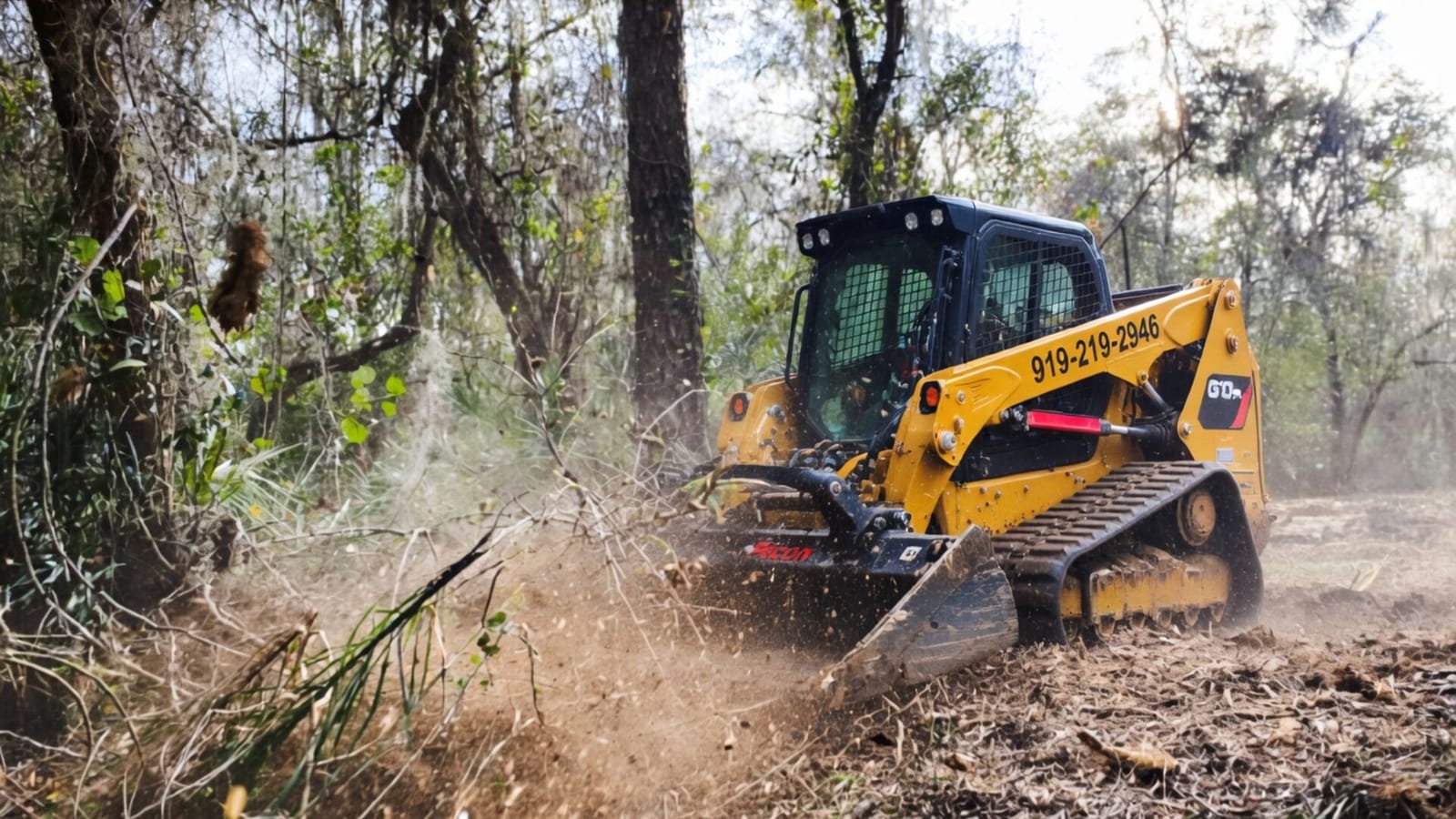
Land clearing cost per acre in New York generally runs $1,500 to $4,500. This guide is about what puts a particular piece of ground at the bottom or the top of that band, and it is written for upstate and the Hudson Valley rather than for the five boroughs.
New York is a forested state that most people think of as a city. DEC puts the state’s forest at 18.6 million acres, 62 percent of its land area, with 55 percent of that forest land owned and managed by small family forest owners (NYSDEC). Those owners are who this page is for.
The Short Answer, by What Is Standing
| What is on the acre | Per-acre range | Where you see it |
|---|---|---|
| Understory beneath timber you are keeping | $1,500 – $2,500 | Woodlot floors closed in with barberry, bittersweet or buckthorn |
| Light brush and saplings on open ground | $1,500 – $2,000 | Field and pasture going back after a few unmanaged years |
| Heavier regrowth, larger stems, stony ground | $2,500 – $3,500 | Hedgerows, stone wall lines, old upland pasture |
| Whole parcel to a named finish, wet or heavy ground | $3,500 – $4,500 | Anything being opened for building, or cleared bank to bank |
There is also a practical floor near $1,500 for any single visit, which is what it costs to put a tracked machine onto a property regardless of how little ground there is to cover. On a small parcel the money goes further if two or three jobs are bundled into one trip.
What Moves a New York Number
1. Glacial stone
Almost all of New York was glaciated, and the ground shows it. Large areas of the state carry loamy till with a dense pan under it and rock fragments through the profile: the Mardin series, extensive across southern New York, runs 5 to 35 percent rock fragments above its pan and 15 to 60 percent inside it (USDA NRCS).
Stone is slow in a way brush is not. It wears a mulching head, it forces a shallower pass, and it limits how close to the soil anyone can cut. Two fields that look the same from the air can price a third apart because of what is in the top foot of one of them.
2. Water, and how long the ground holds it
The other half of the glacial inheritance is fine-grained lake sediment, which the USDA maps across “the Erie and Ontario Lake plains, the Mohawk and Hudson valleys, and the larger valleys of the Allegheny Plateau of New York.” Those soils are clayey and silty, and their lower subsoil gives water up slowly.
Stony till with a pan perches water above it; lake silt holds water in it. Either way the working season is the real constraint. Frozen ground and a dry late summer are cheap and finish cleanly. A thaw or a wet spring is slower, costs more per acre and leaves a surface that would have stayed clean a few weeks later. In this state, a flexible date is worth real money.
3. Whether the canopy is staying
Two quotes that look nothing alike are usually describing two different jobs. Taking an understory out while the trees above it stay is efficient work: the material is sized for the head and the trunks are never touched. Opening the same ground to daylight means dealing with the timber as well, at a different price and pace.
New York has a particular version of this, because much of what has filled the understory is invasive shrub rather than native regrowth. That changes the density of the material and it changes how fast the ground closes back in.
4. Method: process it in place, or clear and haul
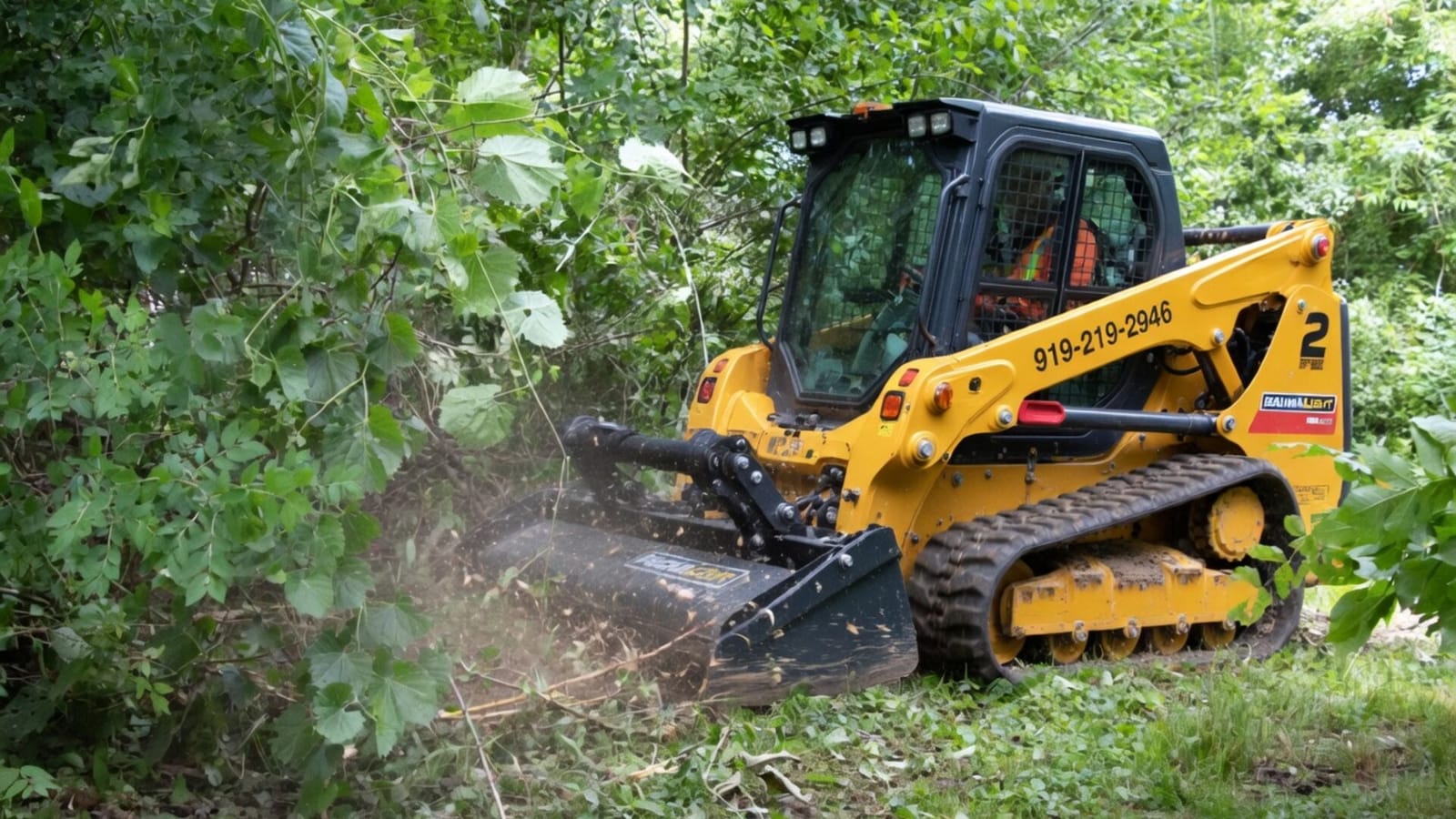
Traditional clearing has two halves, cutting and disposal. Forestry mulching deletes the second: the material is processed where it stands and left on the soil as cover, so there is no pile, nothing to load and no tipping fee. Clear-and-haul still wins where ground is being cut to grade or an owner wants nothing left on the surface. It simply costs more, and in New York the reason is sharper than usual.
5. Access
Long unpaved drives, seasonal town roads, small bridges with posted weight limits, stone gateposts and low limbs over the approach all burn hours before a stem is touched. Some of them decide which machine can come at all rather than how fast it works.
Burning Is Not the Free Option in New York
In many states a burn pile is the cheap way to deal with the material. In New York it is frequently not available at all, and this is the single most useful thing an out-of-state cost calculator will get wrong about your quote.
DEC prohibits the burning of brush statewide from 16 March through 14 May each year because of the wildfire risk in that period. Outside that window, downed limbs and branches “less than 6 inches in diameter and 8 feet in length” may be burned on site only “in towns with total population less than 20,000 residents.” Loose leaves, refuse and trash are prohibited year round, and towns, villages, cities and counties may all be stricter than the state (NYSDEC).
So for a rural landowner in a small town there is a burning window, and it comes with conditions. For anyone in a town over the population line there is no legal fire at any point in the year. That leaves chip on the ground or material on a truck, and it is why mulching prices well across most of this state.
Permits: a Town Question With a State Layer Over It
New York runs land disturbance differently from most states, and it catches people who have cleared land elsewhere.
There is no county land disturbance permit. Dutchess County’s Soil and Water Conservation District states that counties “have no role in the implementation of the stormwater program,” while “many municipalities (towns and villages) place additional restrictions on construction activities,” some of them requiring coverage at 5,000 square feet rather than the state figure (Dutchess County SWCD).
Over that sits the state. Soil disturbance of one or more acres requires coverage under DEC’s construction general permit before work begins, dropping to 5,000 square feet inside the New York City watershed east of the Hudson River. And since 1 January 2025 DEC’s freshwater wetland jurisdiction is no longer limited to mapped wetlands, with clear cutting vegetation in a wetland treated as a major regulated activity while selective cutting is exempt (NYSDEC).
None of that changes an hourly rate. All of it changes a start date, and a stopped job has a cost of its own. Requirements vary by parcel, scope and jurisdiction, and the governing authority makes the determination.
Where in New York Is Your Land?
The bands above hold across the state. What moves inside them changes by region, and so does the office that has to say yes first.
The Hudson Valley. This is the New York section Cut Brush currently covers: Orange, Dutchess, Ulster and Sullivan counties, from Red Hook and Saugerties down through Poughkeepsie, Kingston and New Paltz, west to Monticello and south to Warwick. The local variables are the working month, whether the parcel is river-side lake sediment or stony upland, and which municipality holds the permit. Start with land clearing in the Hudson Valley and the Hudson Valley pricing guide, and read the paperwork sequence in our Hudson Valley permit guide.
Elsewhere upstate. The statewide facts on this page travel: the glacial stone, the short working season, the burn rule and the state acre apply whether your land is in the Southern Tier, the Mohawk Valley or the North Country. What changes is the municipality, so start by naming your town rather than your county.
Is Doing It Yourself Cheaper?
On a small patch of light brush, with a rented machine and weekends you genuinely have, sometimes. On several acres of closed-in invasive understory it usually becomes an expensive education, and on stony ground a rental head is the part that pays for the lesson. A rental also does not answer the permit question, and in New York that question belongs to a town office you have not called yet.
Frequently Asked Questions
Is forestry mulching cheaper than clearing in New York?
Usually, and by more than in states where burning is easy, because mulching removes the disposal line entirely and New York closes off the cheap alternative for most of the year. Mulching runs $1,500 to $4,000 an acre against $1,500 to $4,500 for clearing.
When is the best time of year to clear land in New York?
Frozen ground and dry late summer are the two good windows. Spring thaw is the expensive one on both of the state’s common soil types.
Does the ground end up ready to build on?
Not from clearing alone. Stumps cut flush leave roots in the soil, which helps a wet slope and does nothing for a footing, so grading and compaction are separate work.
Get a Written Figure for Your Own Acre
Ranges are for budgeting. The number you pay comes from someone standing on your land looking at what is growing, what is under it, how a machine gets in and what the ground has to do next.
If your property is in the Hudson Valley, anywhere around Poughkeepsie, Newburgh, Middletown, Kingston, New Paltz or Monticello, ask for a free Hudson Valley quote and we will walk it with you and put a written scope and figure in your hands.
More from the Cut Brush Blog
Keep reading for more tips and guides on land clearing.
 Cost Guide
 Forestry Mulching Cost in the Hudson Valley, NY (2026)
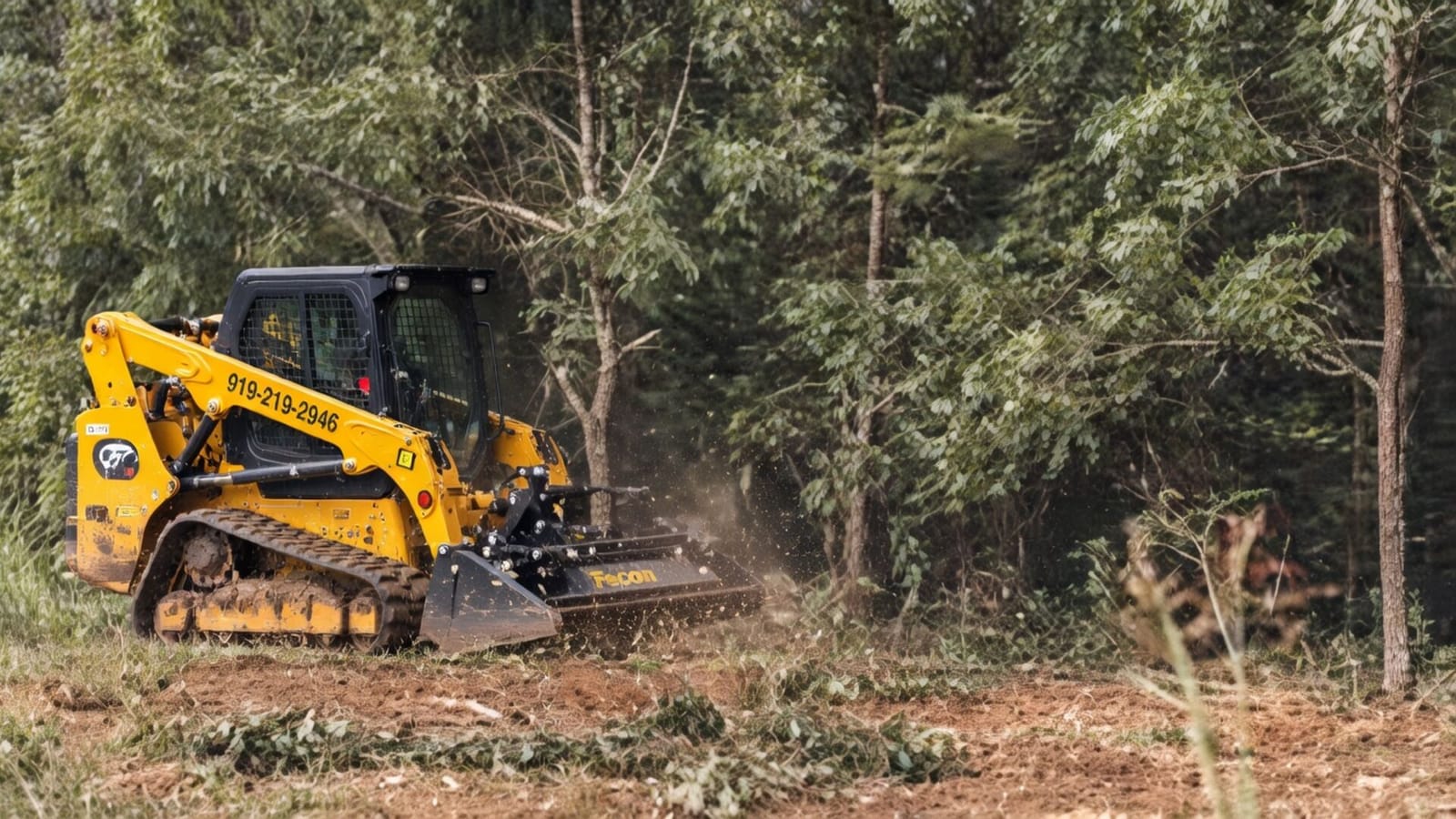
Forestry mulching in the Hudson Valley runs $1,500 to $4,000 per acre. What the working season, glacial stone and New York's burn rules do to your quote.
 Guide
Guide Land Clearing Permits in the Hudson Valley, NY
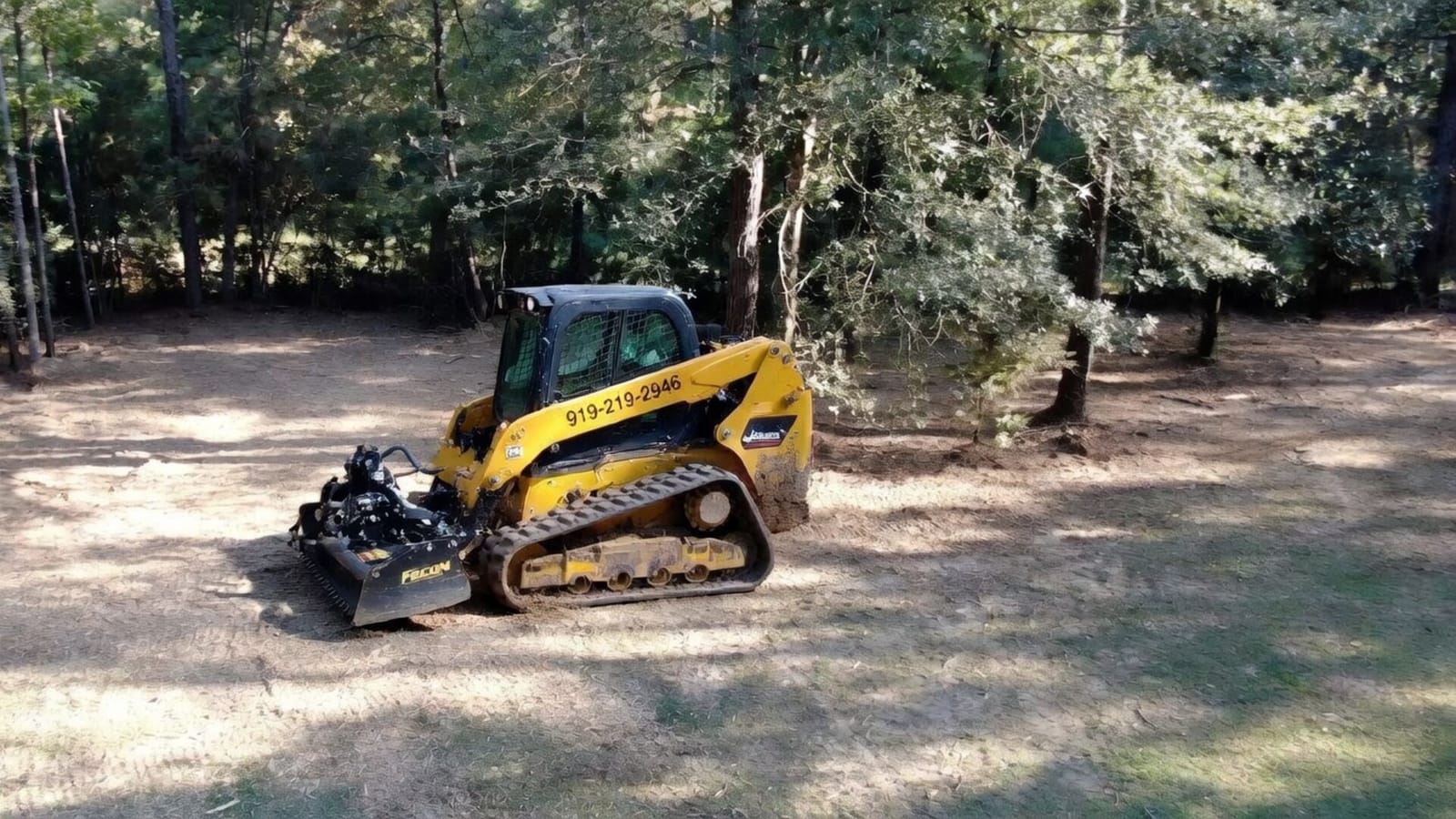
New York has no county land disturbance permit. Your town holds it, the state starts at one acre, and wetlands are no longer settled by a map. Sources here.
 Guide
Guide Japanese Barberry, Ticks and Overgrown Hudson Valley Land
Barberry thickets hold far more blacklegged ticks. Clearing it once cut tick numbers for six years. What that means for overgrown Hudson Valley property.
Ready to Get Started on Your Land?
Get a free, no-obligation estimate for property in the Hudson Valley of New York.
Get Your Free QuoteOr call us directly: (919) 525-3950