
Underbrush Removal Cost in New York (2026 Guide)
Cut Brush Team · October 9, 2026 · 8 min read

You can no longer walk your own woods. Barberry covers the floor knee high, honeysuckle and buckthorn fill every gap at eye level, and bittersweet is climbing into the crowns. Underbrush removal runs $1,500 to $2,500 an acre with Cut Brush in New York, with every tree you want kept left standing. Our crews do this work across Orange, Dutchess, Ulster and Sullivan counties in the Hudson Valley.
At a glance:
- Our price: $1,500 to $2,500 an acre for the layer beneath trees you keep, with a practical floor near $1,500 for a single visit. If the trees are coming out too, mulching runs $1,500 to $4,000.
- The shrubs are state-listed: Japanese barberry, multiflora rose, common and smooth buckthorn, the Amur, Morrow’s and Tartarian honeysuckles and Oriental bittersweet are prohibited invasive species under 6 NYCRR Part 575.
- Wetlands: DEC exempts selective cutting of trees, but treats clear cutting vegetation in a wetland as a major regulated activity, and the 100-foot adjacent area is regulated too.
- Oak wilt: DEC asks owners not to wound oaks from March through September.
- Cost share: DEC’s Regenerate NY program has paid for mechanical removal of competing vegetation on projects of five acres or more. Check whether a round is open before you start.
We work the whole valley, from Wappingers Falls and Rhinebeck on the east bank to New Paltz, Ellenville and Wurtsboro on the west. Outside those four counties we have no New York crew. Pick the area nearest you at the foot of this page for a walk-through.
What Is Underbrush Removal?
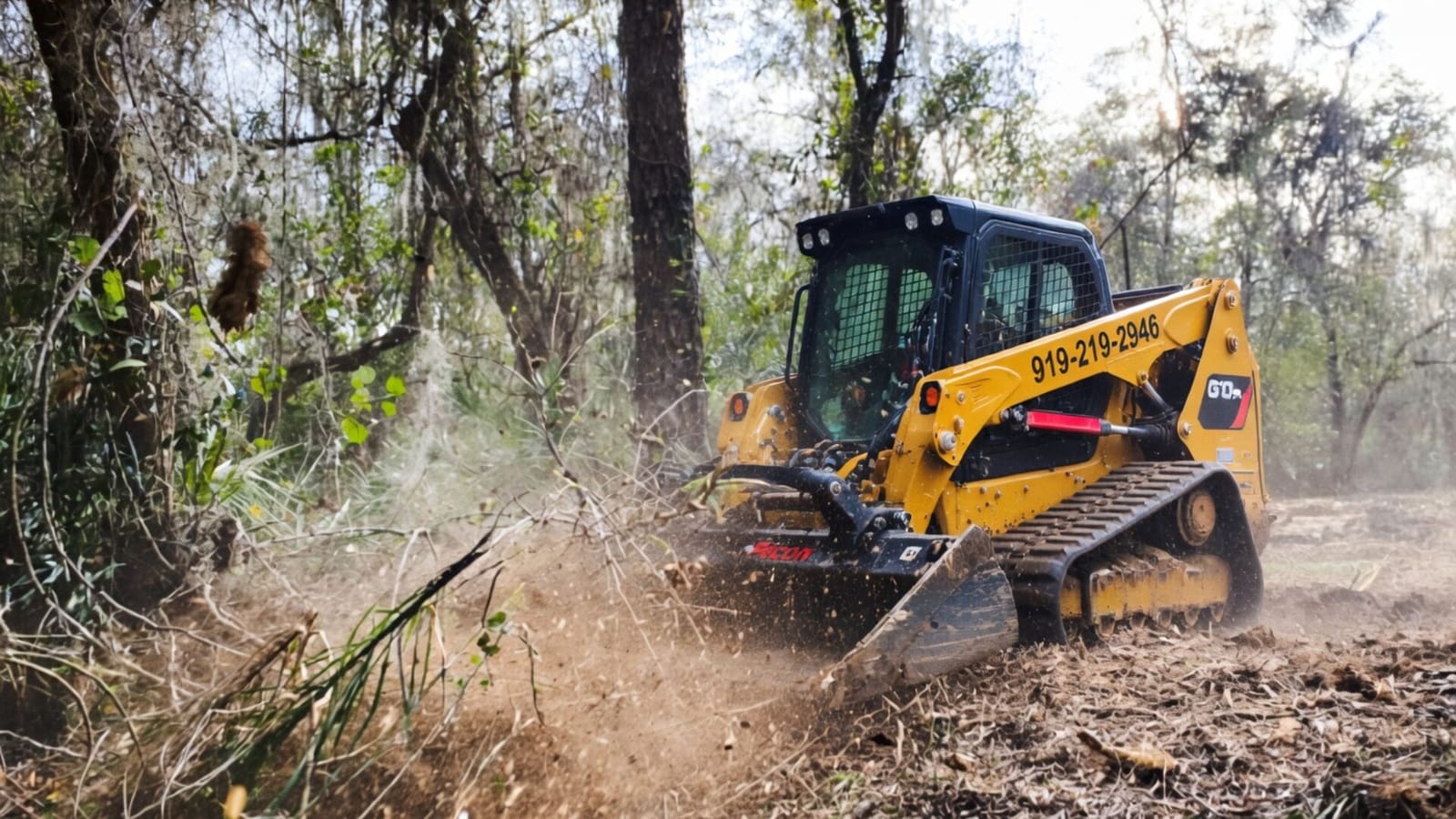
Underbrushing grinds out the shrubs, vines and saplings beneath a canopy you are keeping. A tracked mulcher works between the trunks and leaves the chip as a mat over the roots, so the soil stays covered and nothing needs hauling. It is our lightest scope and usually the cheapest per acre, because the material is small and the big trees never get touched.
How Much Does Underbrush Removal Cost in New York?
We price by what fills the floor and whether the canopy stays.
| What is on the land | Our price per acre | What it looks like in New York |
|---|---|---|
| Shrub layer under trees you keep | $1,500 – $2,500 | Barberry across the floor, buckthorn and honeysuckle at eye level under maple and oak |
| Vines and thorny shrubs | $1,500 – $2,500 | Multiflora rose thickets and Oriental bittersweet reaching into the crowns; slower near keeper trunks |
| Hedgerows, stone wall lines and old field margins | $1,500 – $2,500 | Rows of brush and young trees swallowing the walls between fields |
| Canopy coming out as well | $1,500 – $4,000 | Full forestry mulching, not underbrushing |
Where these numbers come from. Every band is copied from our Hudson Valley pricing page, where this work is the Regrowth & Understory Work row, described as hedgerows, stone wall lines, old field margins and “the layer beneath timber you are keeping.” Light, even growth on dry ground sits at the floor. Dense thorny shrubs, wet ground and a stand full of keeper trees push toward the top. If tree of heaven is in the mix, it needs a treatment plan, set out in our tree of heaven removal guide.
What Changes the Price of New York Understory Work
Shrubs that come back. Part 575 took effect in 2015 and bars anyone from selling, importing, buying, transporting, introducing or propagating a prohibited species. DEC describes it as a limit on commerce, and its summary says nothing about cutting what already grows on your land. What the list does tell you is how hard these plants are to beat: they are on it because they spread. Cutting takes the top and leaves the root, so on a New York understory job we put a lighter return pass in the plan from the first quote.
Oaks you want to keep. Underbrushing works within feet of every trunk. DEC asks owners to avoid pruning or wounding oaks from March through September, when oak wilt spore mats are present and the beetles that move it are most active, and red oaks close together pass the disease through grafted roots. On an oak lot we book October through February. The rate is the same; the month is what protects the trees.
Wet woods and the wetland line. Since 1 January 2025, DEC regulates freshwater wetlands whether or not they appear on a state map: 12.4 acres and larger now, 7.4 acres from 1 January 2028, plus a 100-foot adjacent area. Its rules exempt “selective cutting of trees and harvesting of fuel wood (not clear cutting),” but list “cutting but not elimination or destruction of vegetation” as a minor regulated project. If your thicket runs into a swamp edge, ask DEC first. A jurisdictional determination takes up to 90 days to come back and holds for five years.
Ground that stays wet. Across the Southern Tier and the Catskill side, the Volusia soil has a dense pan 10 to 22 inches down and drains slowly. Its woodlots are sugar maple, red maple, American beech and hemlock. A tracked machine on soft Volusia ground, threading between trunks it must not touch, is a slow day. Frozen or dry ground is cheaper per acre, and a flexible start date usually saves money.
Grant money, sometimes. Regenerate NY lists “competing vegetation control” by mechanical removal among the practices it funds, on projects of five acres or more finished within three years. Awards start at $10,000, a 10 percent match is required, and a forester or other natural resource professional helps with the application. Ask your DEC regional forester whether a round is open and get the award in hand before the work begins.
Pro tip: Tie flagging tape around every tree you want kept before we walk the property, and tell us if any oak has wilted or dropped its leaves in midsummer. On an oak lot, those two things decide the month we schedule, and the month is what keeps the oaks alive.
Underbrush Removal Costs Across New York
The Hudson Valley. Our territory. Barberry runs through the woodland floor here, and our barberry and ticks article explains what that shrub layer does to tick numbers. Bittersweet climbs the valley’s hedgerows, multiflora rose fills old pasture, and knotweed and tree of heaven are in the mix as well. More on the territory is on our Hudson Valley land clearing page.
The Southern Tier and the Catskill side. Volusia woodlots of maple, beech and hemlock over a slow-draining pan. Expect a wet spring and plan the work for frozen ground or late summer.
The Finger Lakes. Honeoye woodlots carry sugar maple, white ash, red and white oak, hickory and black cherry. That oak matters: DEC lists active oak wilt in Bristol, South Bristol, Naples and Canandaigua in Ontario County, and in Italy and Middlesex in Yates County. Understory work there is a winter job.
The Adirondacks. Inside the Park, the Agency counts any wetland of one acre or more, or any size connected to a stream or lake, and needs its permit before anyone clearcuts more than three acres of one. Selective work on dry ground is a different matter; the Agency’s jurisdictional inquiry form settles it.
Long Island. Plymouth sand under white and black oak, pitch pine and scrub oak, and Suffolk County has an inactive oak wilt center. The oak calendar applies as much here as anywhere.
Wetland, Oak and Park Rules in New York
None of these rules raises the per-acre rate. Each can move the start date, and a job that has to stop and wait costs more than one that began in the right month.
- Wetlands outside the Adirondack Park: selective cutting is exempt; cutting that leaves vegetation in place is a minor project; clear cutting in the wetland is major; the 100-foot adjacent area counts.
- Oak wilt: no wounding March through September. In a quarantine district, oak wood leaves only if chipped below an inch in two dimensions; chip left on your land never leaves.
- Adirondack Park: the Park Agency’s rules apply on top of DEC’s.
We do the clearing; we do not file permits or grade. Where a rule applies, we will tell you which office to call.
Frequently Asked Questions
What does it cost to clear underbrush per acre in New York?
With Cut Brush, $1,500 to $2,500 an acre. A one-acre lot usually lands near the $1,500 floor. Dense barberry and honeysuckle on wet, stony ground with many keeper trees pushes toward the top.
Does the state ban on barberry and buckthorn stop me cutting them?
Not as DEC describes it. Part 575 restricts selling, importing, buying, transporting, introducing and propagating those species, and DEC calls it a limit on commerce; its summary says nothing about cutting plants already on your land. Grinding the shrubs and leaving the chip on site also means nothing gets moved anywhere.
When should I clear brush under oak trees in New York?
Between October and February. DEC asks owners to avoid wounding oaks from March through September, when oak wilt spreads most easily, and an understory machine works close to every trunk.
Do I need a permit to clear brush near a wetland in New York?
Possibly. Selective cutting of trees is exempt, but cutting vegetation in a wetland is a regulated minor project and the 100-foot adjacent area is regulated too. A jurisdictional determination from DEC settles it, and inside the Adirondack Park the Park Agency also has a say.
Is there money to help remove invasive shrubs from my woods?
Regenerate NY has funded mechanical removal of competing vegetation on projects of five acres or more, with a 10 percent match and help from a forester. Check with DEC for the current round. Smaller lots usually pay their own way.
Get an Underbrush Removal Quote in New York
Pick the nearest area below and request a free quote. Our crew will contact you to go over the woods, the drive or gate a trailer would use, the trees you want kept (and whether any are oaks), whether the ground stays wet into June, and what you want the floor to look like when we leave. If the whole stand is coming down, the New York forestry mulching cost guide is the better fit; an open field gone to weeds is in the New York brush hogging cost guide.
Sources
More from the Cut Brush Blog
Keep reading for more tips and guides on land clearing.
 Cost Guide
Land Clearing Cost Per Acre in New York (2026 Guide)
Land clearing cost per acre in New York runs $1,500 to $4,500. What glacial stone, a short working season and a town-by-town permit map do to the number.
 Cost Guide
Forestry Mulching Cost in New York (2026 Guide)
Forestry mulching runs $1,500 to $4,000 an acre with Cut Brush in New York's Hudson Valley. What flagstone, oak wilt and the burn ban do to your price.
 Cost Guide
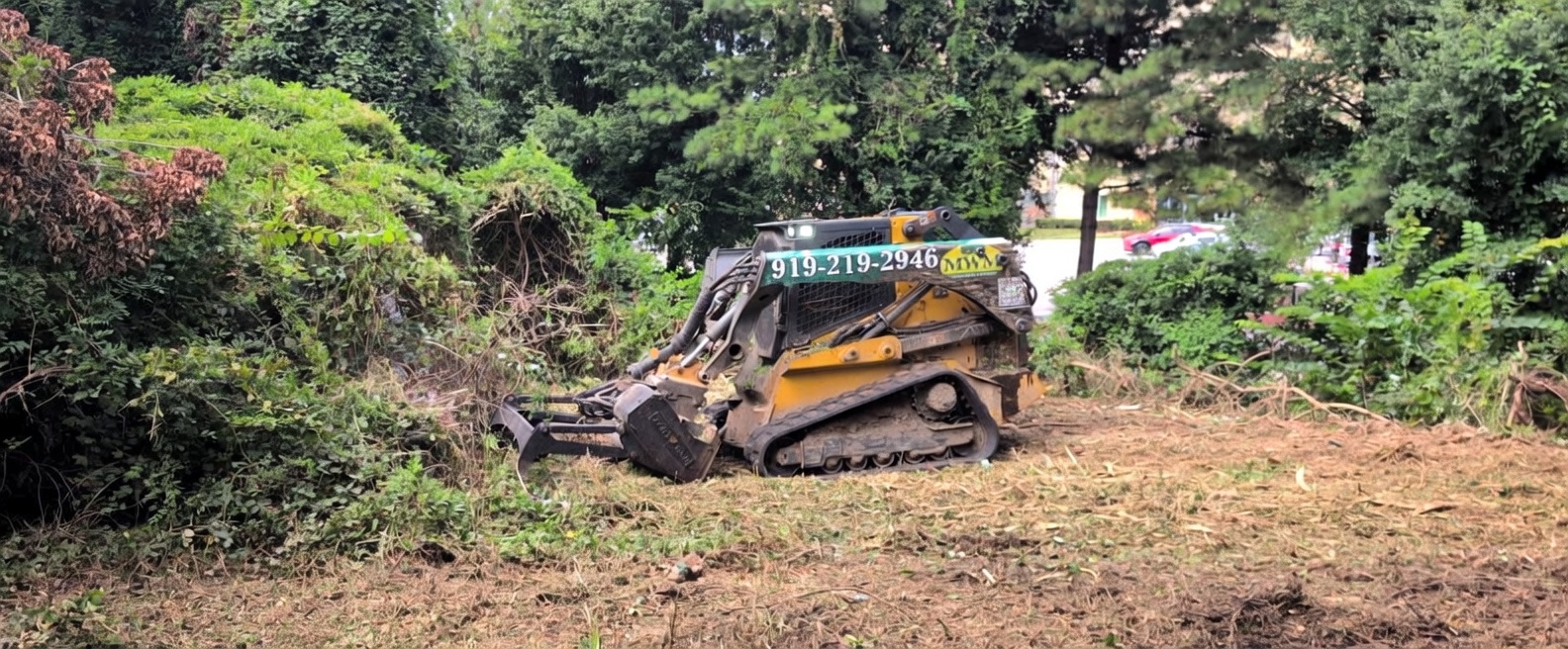
Brush Hogging Cost Per Acre in New York (2026 Guide)
Brush hogging runs $75 to $400 an acre with Cut Brush in New York's Hudson Valley, by how long the field went uncut. Stone, birds and hogweed explained.
Comparing states? See land clearing costs by state.
Let's Get Started on Your Land
Request a free quote. We'll contact you to discuss your property, access, and the clearing you need.
Get a Free QuoteOr call us directly: (919) 525-3950