Chinese Privet Removal in East Texas
Cut Brush Team · September 11, 2026 · 8 min read
Chinese privet is not a shrub problem, it is a canopy problem. Texas A&M Forest Service lists privet among the invasive plants of East Texas and puts the outcome bluntly: ligustrum can outcompete native vegetation and, left alone, take over, becoming the only thing there and changing the understory of a forest (Texas A&M Forest Service).
And there is a reason to deal with it this season specifically: Texas opened a cost share on 1 September 2026 that reimburses 75 percent of eligible invasive plant removal, up to $7,000 per landowner, with mechanical removal by heavy machinery explicitly eligible. Details and the deadline are further down.
What Privet Does to East Texas Ground
Privet spreads into the layer beneath your timber and closes it. Once it is established, three things follow.
You lose the floor. Native groundcover and hardwood regeneration cannot compete under a closed privet layer, which is the mechanism behind the Forest Service’s description of it becoming the only thing there.
You lose access. A privet stand on sandy loam gets thick enough that you cannot walk a fence line, run a survey, or get equipment to the back of a tract.
You lose the option of waiting. Privet is not a stable condition. A stand that is patchy this year is continuous in a few, and the cost of clearing tracks the density.
This matters across the whole Tyler territory because Smith County falls in both the Pineywoods and the Post Oak Savannah (Native Plant Society of Texas, Tyler chapter), and privet exploits the understory on either side of that seam. The soils here are acidic sands and sandy loams taking 28 to 60 inches of rain a year depending on which side you are on, which is hospitable ground for it.
How Do You Actually Get Rid of Privet?
Honestly: in two halves, by two different people, and anyone who tells you one pass finishes it is selling you a return visit.
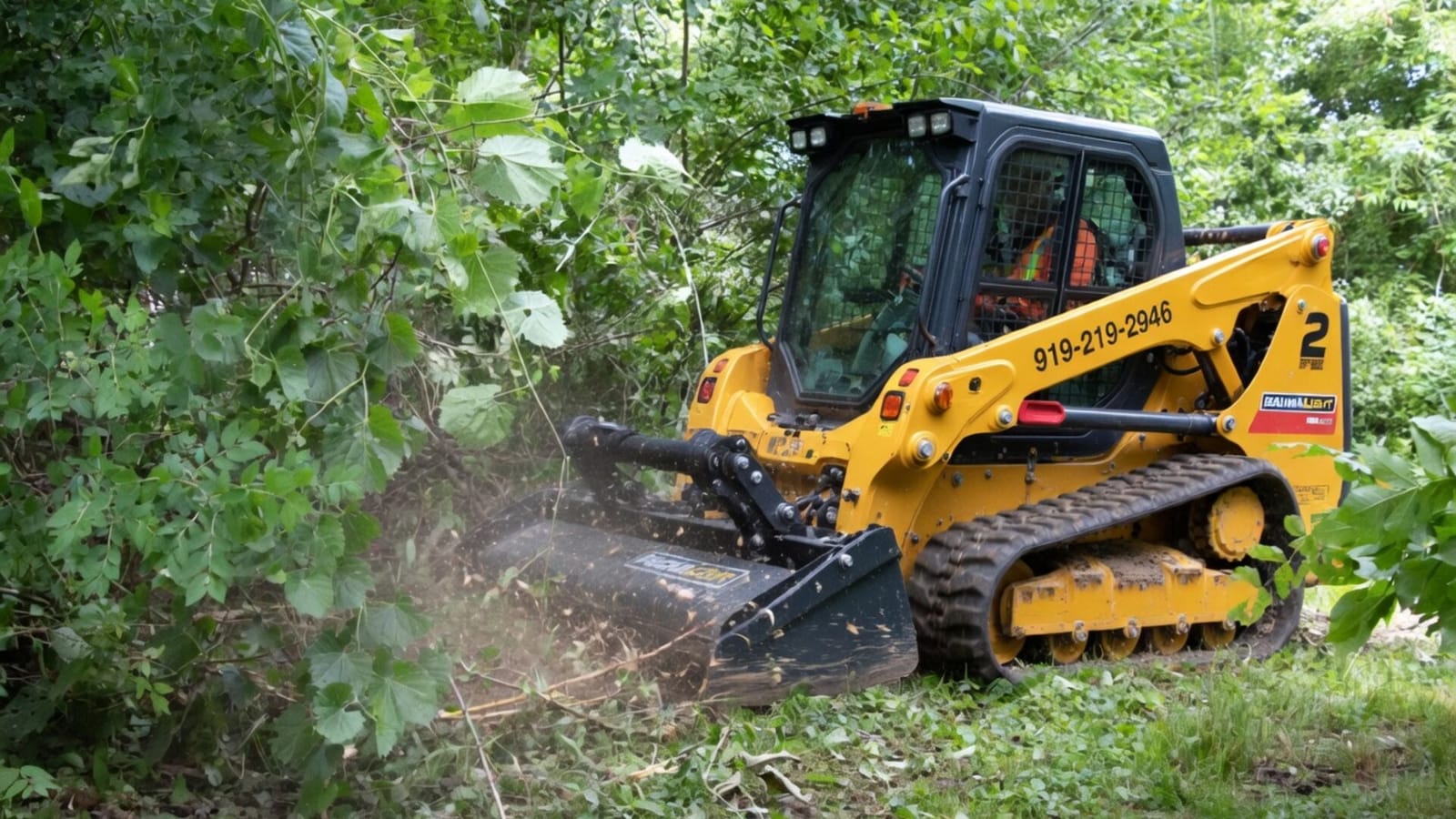
The mechanical half. Brush mulchers mounted on tracked machines grind entire shrubs and small trees, clearing dense stands quickly and giving immediate access to an area. For a real privet stand this is the only sane first move, because hand pulling and weed wrenches only work on seedlings and saplings up to about two inches in diameter (Alabama Cooperative Extension).
The chemical half. After mechanical treatment, privet sprouts from stumps and lateral roots, which sets up a foliar herbicide treatment on the tender new growth in late fall (same source). That regrowth is not a failure of the mulching. It is the expected condition, and it is what makes the follow up effective, because you are treating fresh low foliage rather than a closed canopy of mature stems.
Who does which half matters legally in Texas. Cut Brush performs the mechanical half. Herbicide application requires a Texas Department of Agriculture commercial pesticide applicator licence, which is not a service we offer. We say at the walk through whether your tract needs a follow up, and you bring in your own licensed applicator for it. Anyone quoting you a single price for “mulch it and spray it” should be able to show you the applicator licence that covers the second half.
Total eradication of a well established stand is difficult, and repeated treatment is normal. Plan for a sequence, not an event.
The Cost Share That Opened This Month
Texas A&M Forest Service launched the Texas Invasive Plant Solutions Cost-Share Program, which began accepting applications on 1 September 2026. The terms, from the agency’s own announcement (Texas A&M Forest Service):
| Term | Detail |
|---|---|
| Reimbursement | 75 percent of eligible invasive plant treatment or removal costs |
| Cap | Up to $7,000 per landowner |
| Total pool | $140,000 statewide |
| Eligible methods | Mechanical removal (mowing, cutting, using heavy machinery), herbicide application, prescribed burning |
| Not eligible | Personal labour costs, and individual items over $5,000 |
| Who can apply | Landowners, organisations and municipalities across Texas |
| Deadline | All approved treatments and removals completed before 1 June 2027 |
| How long it lasts | Applications accepted until available funding is exhausted |
Two things to be clear about. These are state reimbursement figures, not Cut Brush prices, and the programme is administered by Texas A&M Forest Service, not by us. Participants work with their local Texas A&M Forest Service forester or woodland ecologist, and the application runs through the agency’s landowner grants page.
The practical read: $140,000 across a state this size will not last, and the completion deadline is under nine months out. If privet is on your list, this is the season the arithmetic is best.
What About Chinese Tallow?
Worth knowing about, because it is moving your way. Chinese tallow increased by 38 percent in East Texas between 2007 and 2017 and is expanding northward from the Gulf Coast, with net volume up 44 percent at an average of 3.3 million cubic feet a year. It has been recorded on inventory plots as far north as Caddo Lake. It is a prolific seed producer that can reproduce in as little as three years, seeds move by birds and water, and its fallen leaves contain chemicals that create poor soil conditions for native vegetation (Texas A&M Forest Service).
Control follows the same split as privet. Foliar herbicide can handle smaller trees; larger ones need basal bark treatment. Both halves of that are applicator work, not machine work.
If you are already opening ground for privet, it is worth walking the tract for tallow at the same time rather than discovering it on a second mobilisation.
Do Not Plan on Burning It
The disposal route people assume is available here is not, at least not this season and not easily in any season.
Smith County has been under a countywide burn ban since 18 August 2026, declared for ninety days unless conditions improve, with a violation a Class C misdemeanor carrying a fine of up to $500 (Smith County Fire Marshal). The other counties in this territory set their own bans and were not checked for this article, so confirm yours locally.
Even without a ban, state rule requires allowable outdoor burning to sit downwind of or at least 300 feet from any structure with sensitive receptors on adjacent property, begin no earlier than an hour after sunrise, end an hour before sunset, run only in wind between six and 23 miles an hour, and be attended the entire time (30 TAC 111.219). Burning done for property development or land clearing has to run through a trench burner or air curtain incinerator with TCEQ authorisation at the site plus a federal operating permit (TCEQ Air PBR 106.496).
For a privet job this is mostly good news. Mulching the stand in place leaves the material as a mat that holds sandy soil through a wet spell, and it removes the burning question entirely.
Frequently Asked Questions
Will mulching alone kill privet?
No, and nobody should tell you it will. Mechanical removal takes the standing stand down and gives you access back, but privet resprouts from stumps and lateral roots. What mulching does is convert a closed, impassable stand into low fresh growth that a licensed applicator can treat effectively in late fall. That sequence is the plan. A single pass with no follow up buys you open ground for a season.
How much does privet clearing cost around Tyler?
Understory and privet work quotes between $1,500 and $3,500 an acre, depending on how sealed the stand has become and how wet the ground is. The full table is on the Tyler pricing guide, and the Tyler forestry mulching cost guide works through what puts a specific acre at either end. If the cost share applies to your project, 75 percent of eligible mechanical removal costs may come back to you up to the $7,000 cap, but that determination is Texas A&M Forest Service’s to make, not ours.
Can Cut Brush spray the regrowth for me?
No. Herbicide application in Texas requires a Texas Department of Agriculture commercial pesticide applicator licence and we do not hold one. We do the mechanical half and tell you plainly whether a follow up is needed. You engage your own licensed applicator for the chemical half.
Do I need a permit to clear privet from my land?
It depends on where the land is. Inside the City of Tyler, the Unified Development Code requires a clearing and grading permit prior to any agricultural timbering, predevelopment clearing, or depositing of fill on an undeveloped site, and bars removing living, healthy trees of 6 inch DBH or larger without one (Tyler UDC Sec. 10-302). Privet is not the tree that rule is written about, but the clearing activity may still fall under it depending on the parcel and the scope. Outside the city limits, Texas counties hold no zoning authority in unincorporated areas. Requirements vary by parcel, scope and jurisdiction. Cut Brush can flag what commonly applies and help identify the right office; the governing authority makes the determination. Our Tyler clearing permit guide goes through it.
When is the best time to start?
Mechanical work is not season locked, though drier ground is faster on this soil. The timing that matters is the follow up: the Alabama Extension guidance points at a late fall foliar treatment on the regrowth after mechanical clearing. Working backwards from that, and from the cost share’s 1 June 2027 completion deadline, sooner is better this year than most.
Getting the Stand Off Your Land
Privet does not stabilise and it does not get cheaper to remove. What it does is close your understory a little more each year until the tract you bought is not the tract you can walk.
Cut Brush clears privet and understory mechanically across Smith County and the five counties around it, from Longview and Kilgore through Jacksonville and Rusk out to Canton, Athens, Mineola and Quitman. We will tell you what the stand needs, what we can do, and what part of it belongs to a licensed applicator instead. See the ranges on the Tyler pricing guide, or request a free quote and we will walk it with you.
More from the Cut Brush Blog
Keep reading for more tips and guides on land clearing.
 Guide
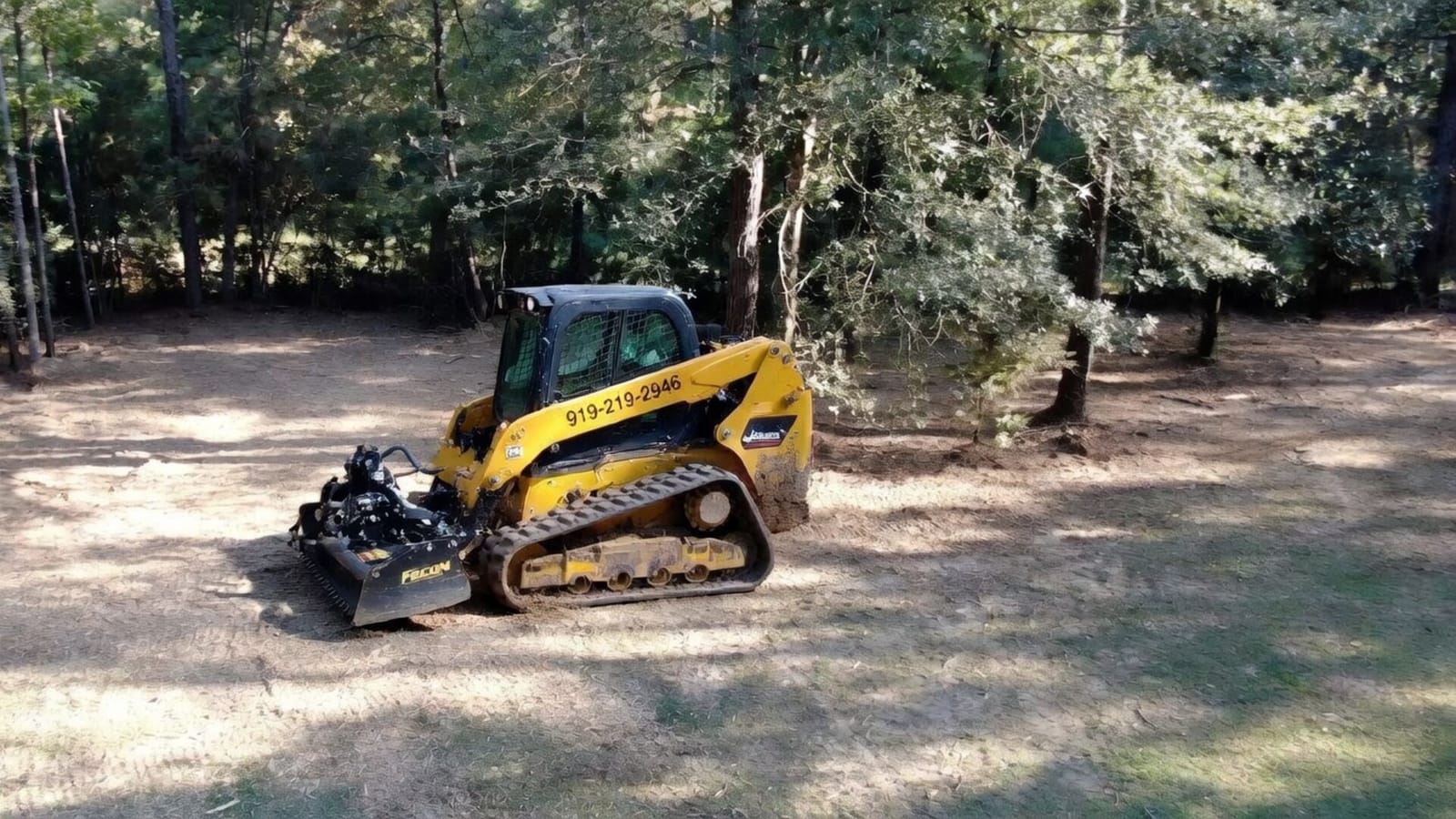
Guide Do You Need a Permit to Clear Land in Tyler, TX?
Inside Tyler, cutting your own timber needs a clearing and grading permit. Outside it, the county has no zoning power. Here is where the line falls and why.
 Cost Guide
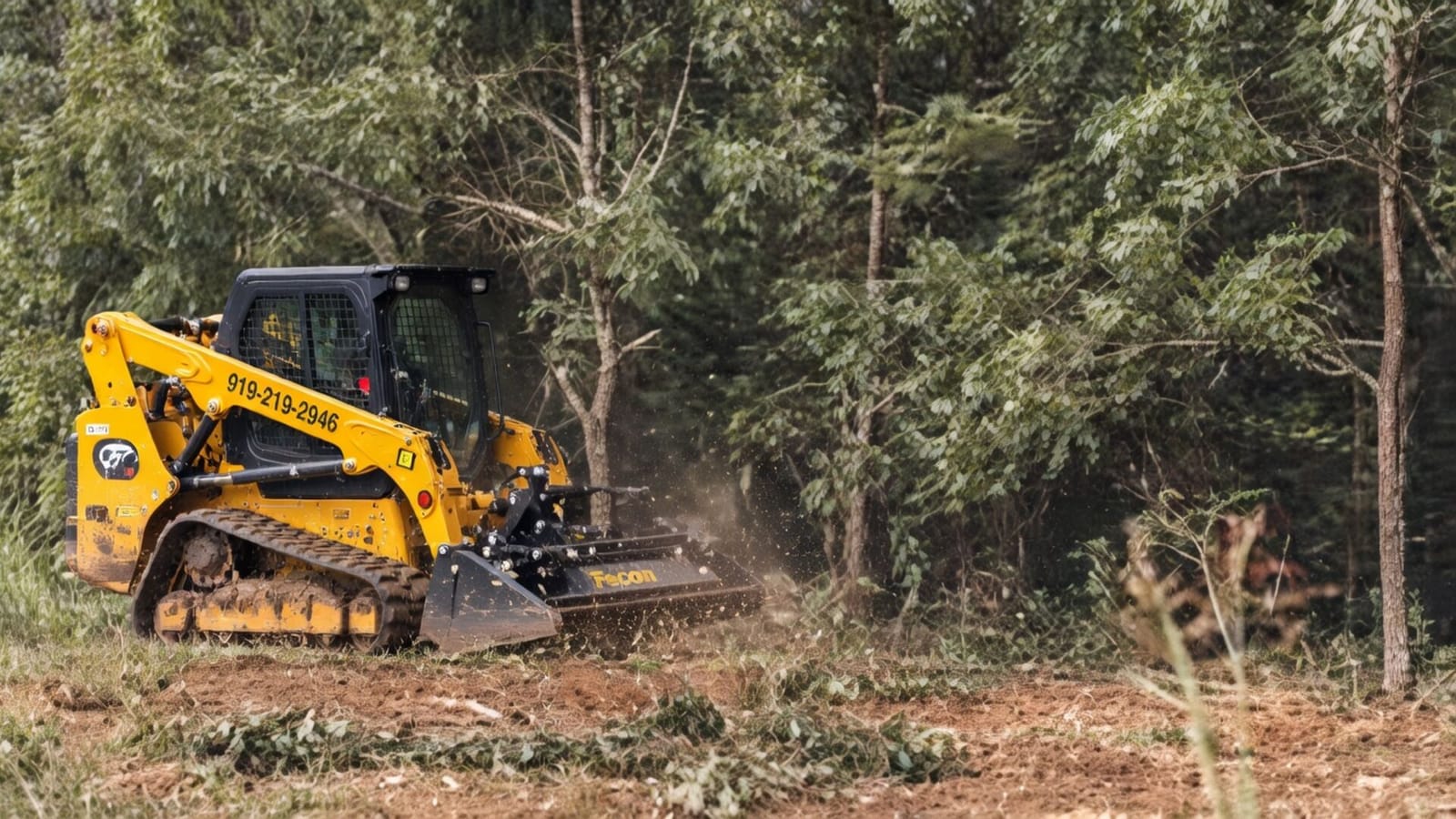
 Forestry Mulching Cost in Tyler, TX (2026)
Forestry mulching around Tyler runs $1,500 to $4,000 an acre. See how stem density and wet sandy loam move a Smith County quote, and what the bands assume.
Guide What Is Forestry Mulching? A Complete Guide
What is forestry mulching? See how a forestry mulcher grinds trees and brush into mulch in one pass, what it handles, and when to use it. Get a free estimate.
Where is your property?
Cut Brush runs 7 service areas in TX. Pick the one nearest you and the quote form comes to the right crew.
Ready to Get Started on Your Land?
Get a free, no-obligation estimate for property in Tyler & East Texas.
Get Your Free QuoteOr call us directly: (919) 525-3950