
Forestry Mulching Cost in Tyler, TX (2026)
Cut Brush Team · September 11, 2026 · 8 min read
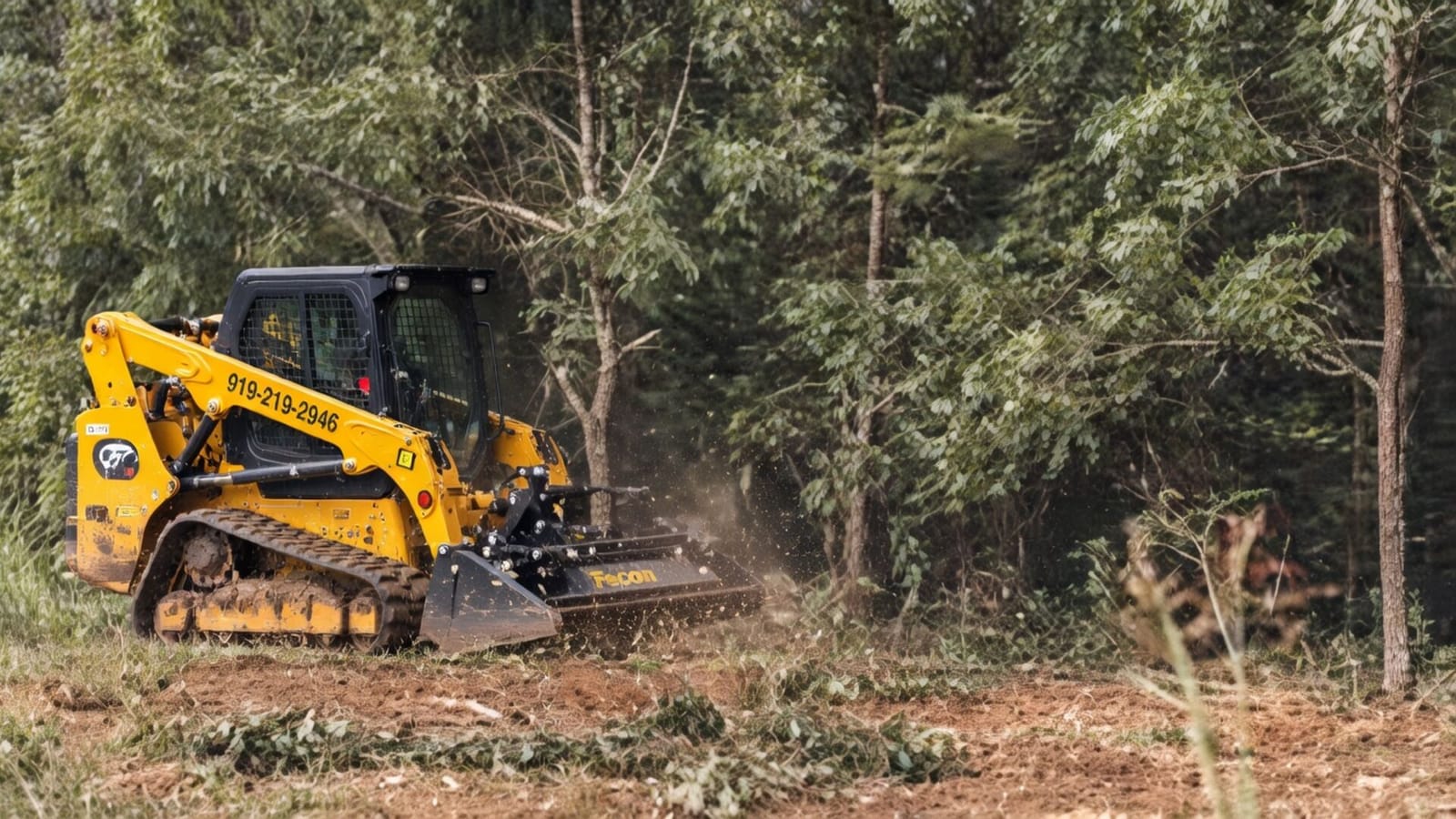
Forestry mulching around Tyler runs $1,500 to $4,000 an acre, and whole tract land clearing runs $2,500 to $4,500. Where a specific acre lands inside that band comes down to two things that have nothing to do with the size of the tract: how dense the standing growth is, and how much water the sandy loam is holding the week the machine arrives.
That second one surprises people. East Texas is not the Hill Country. There is no limestone to break and no rock to work around, so the whole cost question here is about stems and moisture.
What the Bands Actually Cover
| Work | Per-acre range | What it means on the ground |
|---|---|---|
| Forestry mulching | $1,500 – $4,000 | One tracked machine grinds standing brush and small trees in place, stumps ground flush, material left as a mat |
| Privet and understory clearing | $1,500 – $3,500 | The layer beneath timber that stays standing |
| Land clearing | $2,500 – $4,500 | Whole tract work, with the finish named in the quote |
| Lot and homesite prep | $2,500 – $4,500 | Pad, drive and utility runs; most complete residential lots total $3,000 to $6,000 |
Every one of these is on the Tyler pricing guide with the detail behind it. There is also a practical floor around $1,500 on very small parcels, which is what it costs to get equipment to a property regardless of how little ground there is to cover.
One thing worth saying plainly, because the local search results do not: mulching does not leave stump free, construction ready ground. It grinds what is standing and leaves the material down. If you need a pad graded and the stumps out, that is land clearing, and it is a different scope at a different price.
How Much Does It Cost to Clear an Acre in Tyler?
For most of what people actually call clearing here, budget $1,500 to $4,500 an acre. Understory work beneath standing timber sits near the floor. Dense mixed growth on saturated ground with a graded finish sits near the ceiling.
The reason the band is wide is that an acre is not a unit of work. It is a unit of area. What a mulching head has to chew through on that area is the actual cost driver, and around Tyler that varies enormously over short distances.
Why the Ground Here Prices Differently
Smith County falls in both the Pineywoods and the Post Oak Savannah (Native Plant Society of Texas, Tyler chapter). That is not trivia. It means a crew working this county meets two different acres.
On the Pineywoods side, soils are acidic and mostly pale to dark gray sands or sandy loams, carrying loblolly and shortleaf pine, and the area takes 35 to 60 inches of rain a year. On the Post Oak Savannah side, uplands are light coloured acidic sandy loam or sand, carrying post oak and blackjack oak over tall grass, with 28 to 40 inches of rain.
Two consequences for a quote:
Wet sand slows a tracked machine badly. Sixty inches of rain on sandy loam means there are weeks in the year when the ground will not carry equipment efficiently. A job that finishes in a day in a dry stretch can run into a second day after a wet week. This is the single most common reason two honest quotes on the same acre, taken a month apart, come back different.
Stem density is the whole equation. With no rock in the picture, the hours go entirely into what is standing. Scattered regrowth under open pine and a closed shrub layer with cedar elm and eastern redcedar pushing through it are completely different machine jobs on identically sized tracts.
What Moves the Number Most
How sealed the understory is. Without fire, yaupon, elm and redcedar crowd the understory and close the canopy on this ground (Texas Parks and Wildlife, Post Oak Savannah). A tract that has gone fifteen years without management is a materially bigger job than one that saw a mower five years ago, at the same acreage.
Whether the timber is staying. Pulling the shrub layer out from under standing loblolly is efficient work. The material is sized for the mulching head and the overstory is never touched. Clearing to open ground means handling the timber as well. The gap between those two scopes is larger than the gap between the top and the bottom of either band.
Access. Long drives, gates, and low limbs over the approach burn hours before any clearing starts. A tract a trailer can reach directly off a county road prices lower than one needing a staging plan.
What happens to the material. Every range above assumes the material is mulched in place and left as a mat. That matters more here than in most markets, for the reason in the next section.
Why You Cannot Just Burn It Instead
The cheap disposal route most landowners imagine is closed at both ends around Tyler.
Smith County has been under a countywide burn ban since 18 August 2026, declared for ninety days unless conditions improve and the Commissioners Court ends it early. A violation is a Class C misdemeanor carrying a fine of up to $500 (Smith County Fire Marshal). Check that page for current status before planning around it, because bans move.
Even with no ban in force, state rule makes burning awkward for a clearing job. Under 30 TAC 111.219, allowable outdoor burning has to be downwind of or at least 300 feet from any structure containing sensitive receptors on adjacent property, start no earlier than an hour after sunrise, finish the same day an hour before sunset, run only when wind is forecast between six and 23 miles an hour, and be attended by a responsible party the entire time the fire is progressing (30 TAC 111.219).
And burning carried out for property development or land clearing has to go through a trench burner or air curtain incinerator, each requiring TCEQ authorisation at the burn site before construction plus a federal operating permit (TCEQ Air PBR 106.496, Air GOP No. 518).
That chain is long enough that it is rarely worth starting. Cut Brush does not offer burning in this market. The practical effect on your budget is that mulching in place is not just the environmentally tidy option here, it is usually the only disposal route that does not add a permitting project to your clearing project.
Does the Tyler Permit Add Cost?
It adds process and lead time rather than changing the rate. Inside the city limits, the Tyler Unified Development Code requires a clearing and grading permit prior to any agricultural timbering, predevelopment clearing, or depositing of fill on an undeveloped site (Tyler UDC Sec. 10-302). Outside the city, Texas counties hold no zoning authority in unincorporated areas, so Smith County works through subdivision review, floodplain permits and septic siting instead.
Requirements vary by parcel, scope and jurisdiction. Cut Brush can flag what commonly applies and help identify the right office. The governing authority makes the determination. Our Tyler clearing permit guide sets out the sections with their sources.
The cost consequence is simple: a job that starts before the paperwork is settled is a job that stops, and that is more expensive than any line on the pricing page.
How This Compares With the Rest of Texas
Statewide, land clearing runs $1,500 to $4,500 an acre, but the reasons differ by region. Central Texas quotes are driven by juniper density and rock. North Texas quotes are driven by mesquite and Cross Timbers soils. East Texas quotes are driven by stem density and water. Our Texas cost per acre guide works through the statewide picture and what puts a parcel at either end of it.
Frequently Asked Questions
Is forestry mulching cheaper than traditional land clearing around Tyler?
Usually, yes, and the reason is method rather than discount. Mulching is one machine making one pass and leaving the material where it falls. Traditional clearing means moving material, often grubbing stumps, and sometimes grading. The mulching band starts at $1,500 an acre against $2,500 for whole tract clearing. The catch is that they do not produce the same finish, so the cheaper option is only cheaper if it gives you the ground you actually need.
Can I get a price over the phone?
You can get the band over the phone, which is what this page is. A firm number needs someone to see the stems and the access. Around Tyler a phone quote is usually wrong in one direction or the other because moisture and density are not things you can describe accurately without standing on the ground. The walk through is free.
What time of year is cheapest?
Nothing about the rate changes with the calendar, but a drier stretch buys more ground for the same money on this soil. Sandy loam carrying 35 to 60 inches of rain a year has weeks when a tracked machine simply works more slowly. If your schedule is flexible, a dry window is worth waiting for.
Do the ranges include hauling the debris off?
No. They assume the material is mulched in place and left as a mat, which is the normal finish here and the one that holds sandy soil through a wet spell. Hauling is a separate line because it depends on volume and on how far the nearest destination that will accept the material happens to be.
Does mulching leave ground I can build on?
Not by itself. Forestry mulching grinds standing brush and small trees in place and grinds stumps flush rather than pulling them. The ground is neither graded nor build ready when it is done. If you need a pad, that is lot and homesite prep, with grading scoped separately.
Getting a Real Number for Your Tract
The bands on this page are honest, and they are also the widest the answer can be without seeing the ground. What closes the gap is someone walking the stems, the access and the wet spots with you, then putting a written number in your hands.
Cut Brush quotes across Smith County and the five counties around it, from Longview and Kilgore through to Canton, Athens, Mineola and Quitman. Start with the Tyler pricing guide if you want the full range table with what moves each one, or request a free quote and we will come and look at it.
More from the Cut Brush Blog
Keep reading for more tips and guides on land clearing.
 Guide
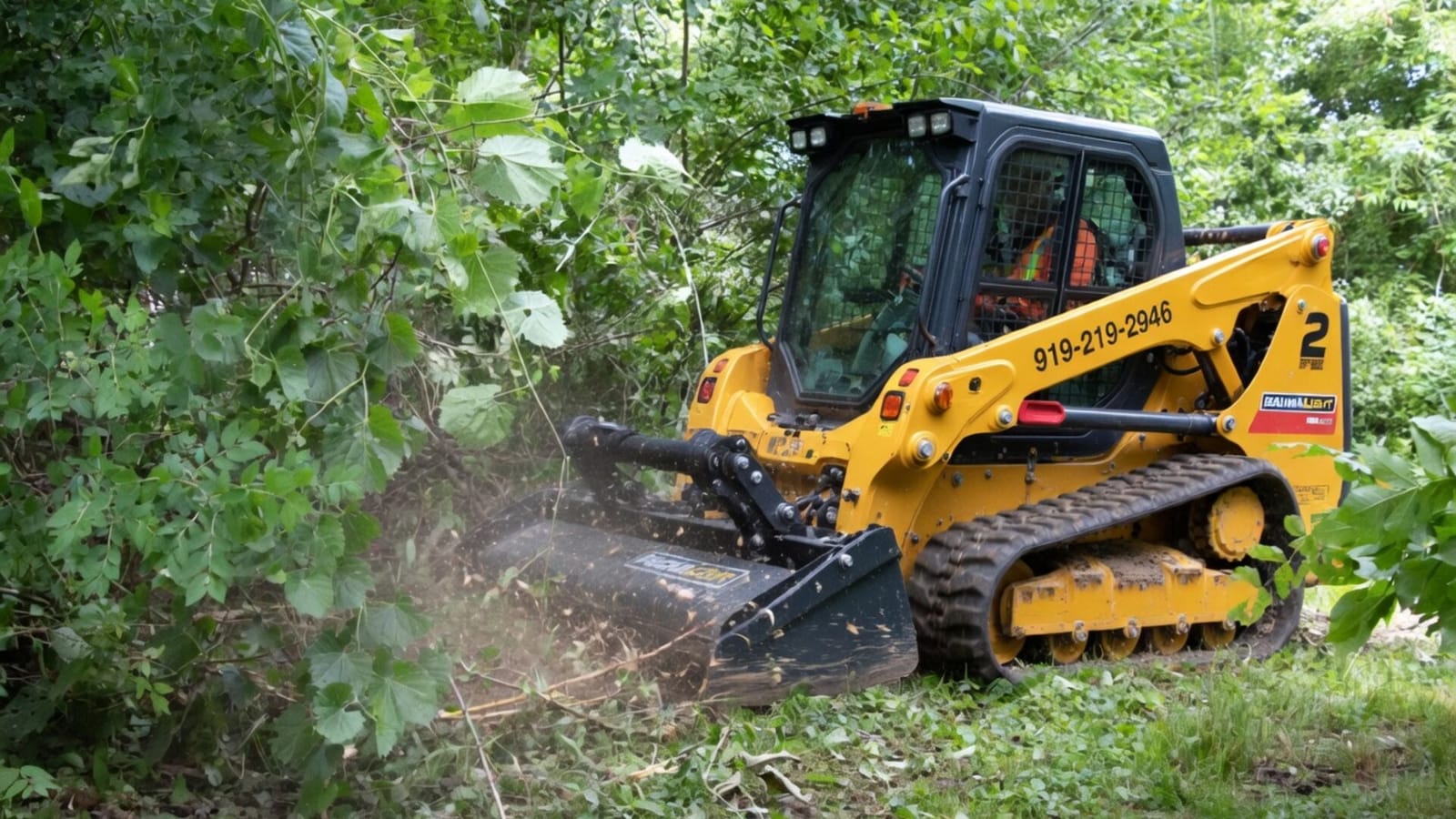
Guide Chinese Privet Removal in East Texas
Privet takes over an East Texas understory and resprouts after cutting. Here is the mechanical and chemical sequence, plus a state cost share worth $7,000.
 Guide
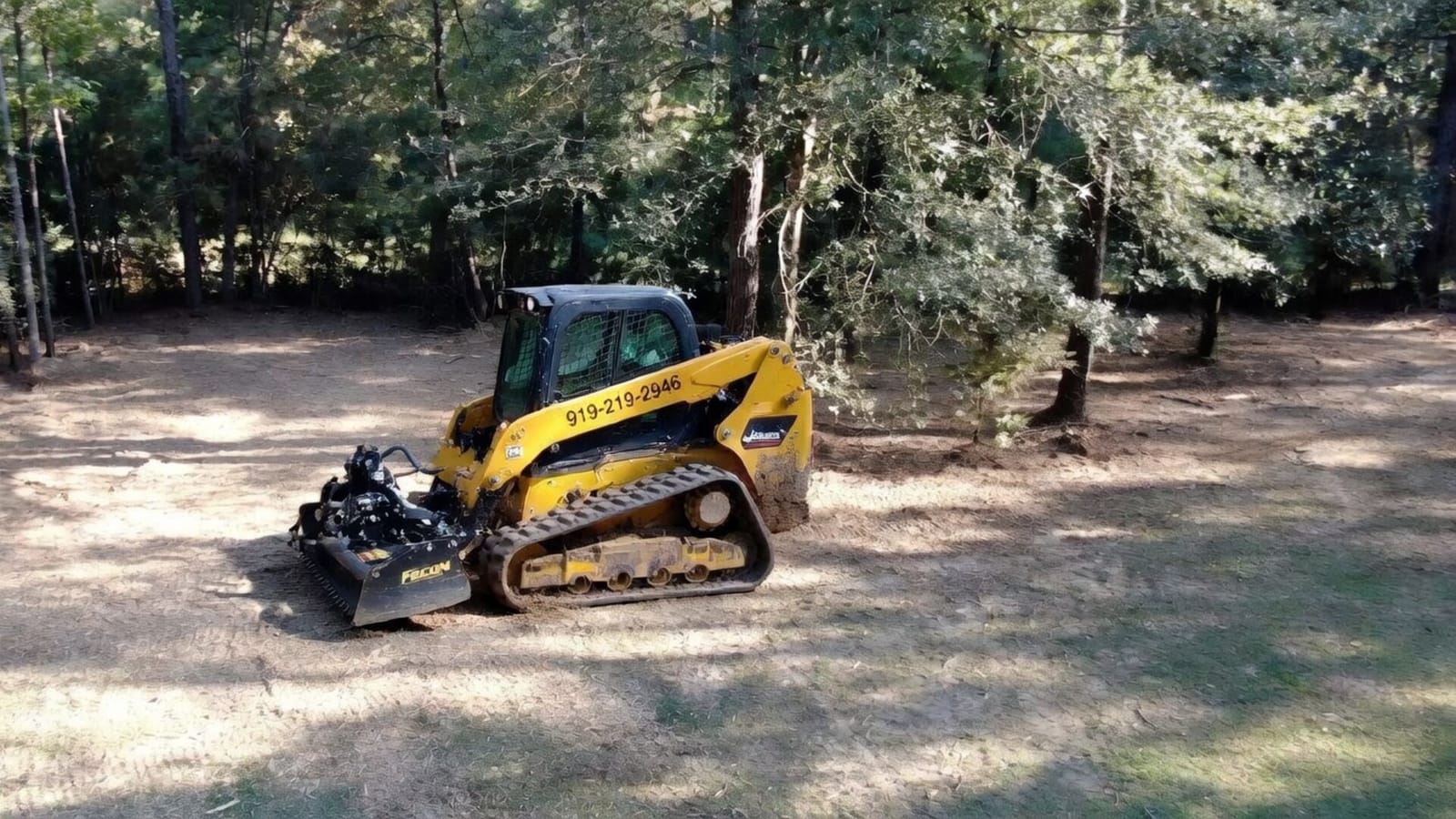
Guide Do You Need a Permit to Clear Land in Tyler, TX?
Inside Tyler, cutting your own timber needs a clearing and grading permit. Outside it, the county has no zoning power. Here is where the line falls and why.
 Comparison
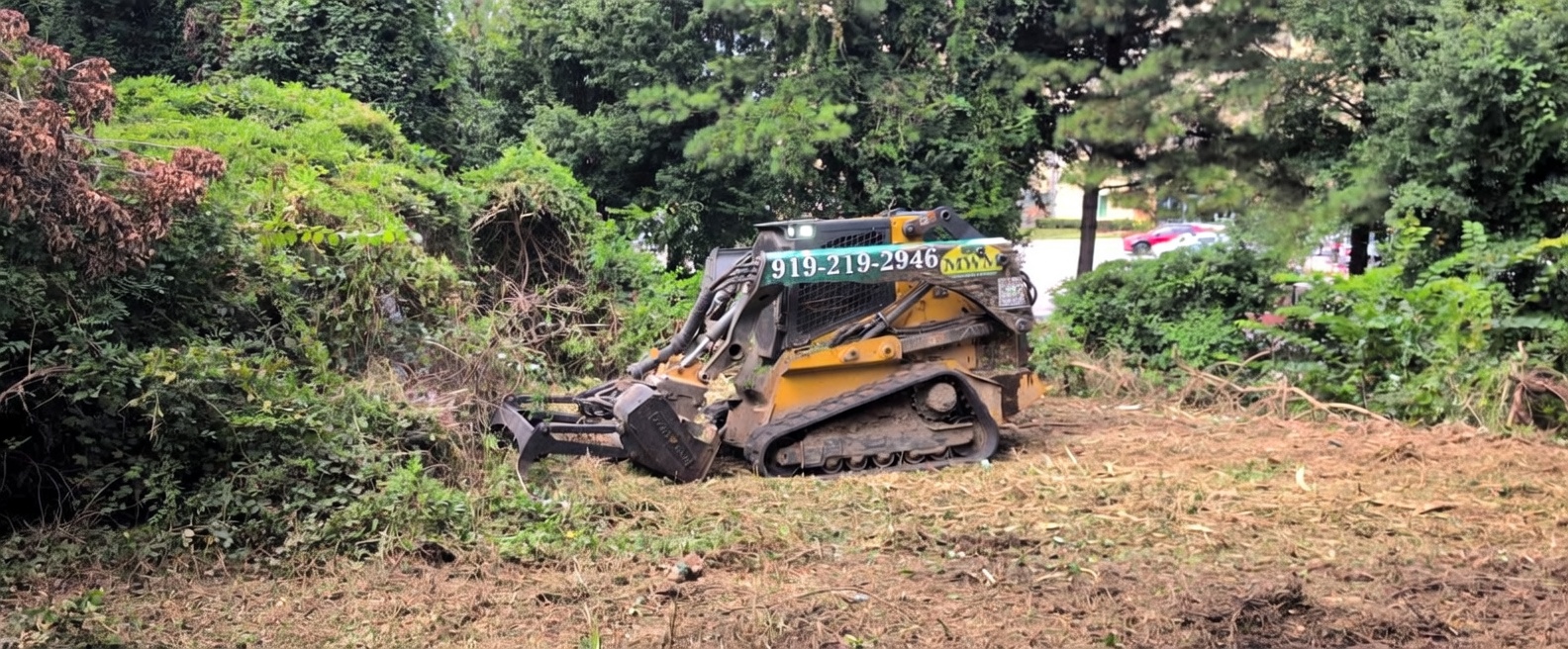
 Bush Hogging vs Forestry Mulching: Which Do You Need?
Bush hogging vs forestry mulching: which handles your overgrown field? Compare costs, vegetation limits, and regrowth for Central NC land. Get a free quote.
Ready to Get Started on Your Land?
Get a free, no-obligation estimate for property in Tyler & East Texas.
Get Your Free QuoteOr call us directly: (919) 525-3950