
Do You Need a Permit to Clear Land in Tyler, TX?
Cut Brush Team · September 11, 2026 · 9 min read
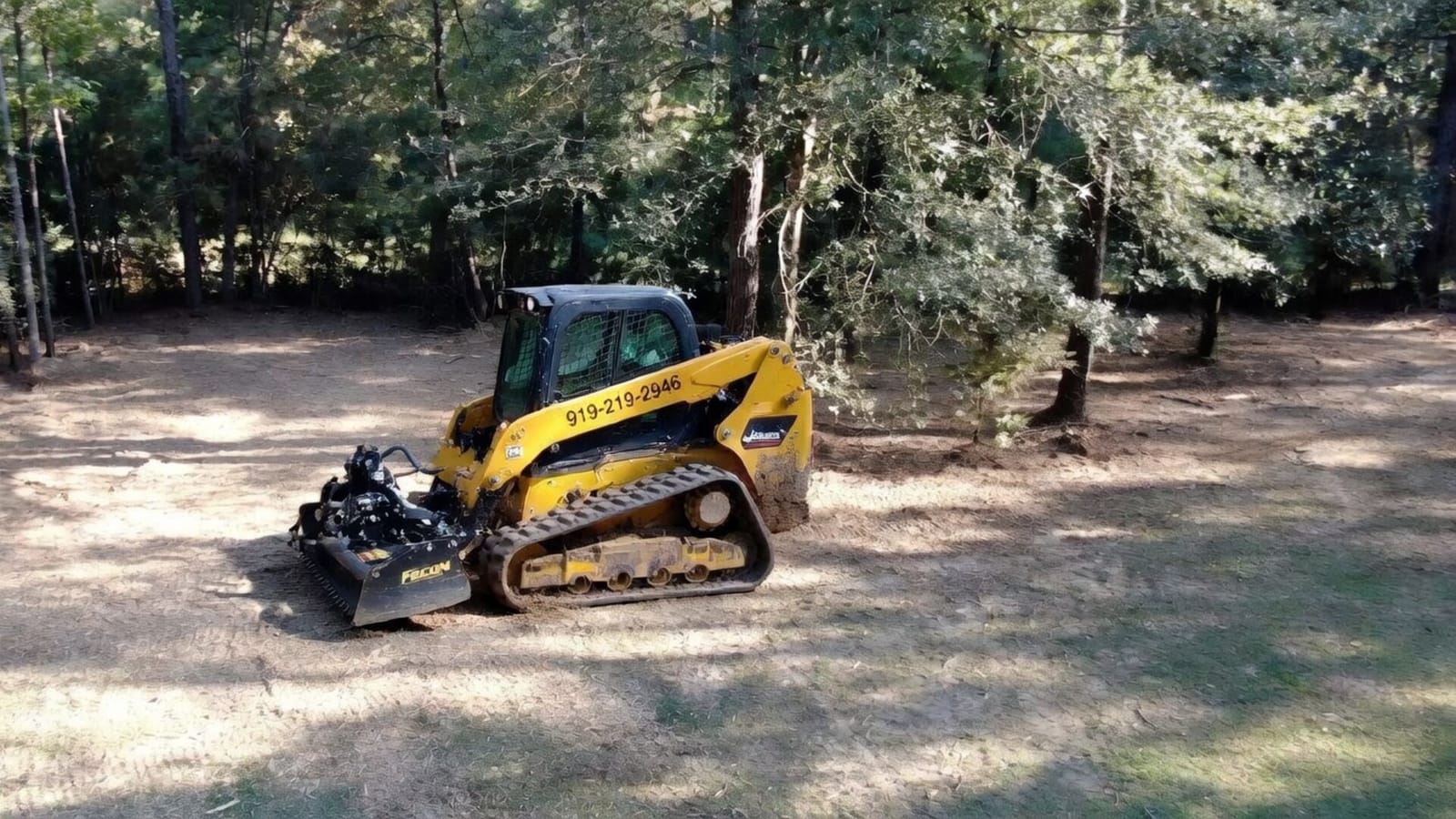
Inside the City of Tyler, cutting your own timber is not an exemption. The Unified Development Code requires a property owner, developer or contractor to obtain a clearing and grading permit prior to any agricultural timbering, predevelopment clearing, or depositing of fill on an undeveloped site (Tyler UDC Sec. 10-302).
Cross the city limit and the picture changes completely, because Texas counties hold no zoning authority in unincorporated areas at all. Same acre, same trees, two different answers depending on which side of a line on a map it sits.
That is the thing worth understanding before you book anyone, and this page walks through both sides of it.
Inside the City of Tyler
The clearing and grading permit
The trigger is broader than most landowners expect. It is not tied to an acreage threshold. It names agricultural timbering alongside predevelopment clearing and depositing fill, which means the “I am only harvesting my own timber” argument does not get you out of it. The stated purpose of the section is to minimise the visual impact of tree removal by retaining or replanting tree buffers around property boundaries.
The tree size rule
In no case may living, healthy trees of 6 inch DBH or larger be removed without a permit (Tyler UDC Sec. 10-301 and 10-302, code library). DBH is diameter at breast height, measured 4.5 feet above the ground.
Dead or diseased trees are excepted and may be taken down without a permit (Tyler UDC Sec. 10-304).
The erosion plan comes first
No permit for land disturbing activity requiring grading issues without an approved erosion and sedimentation control plan, and the city may ask for an abbreviated drainage plan before that. In practice this means the paperwork sequence runs ahead of the machine by more than people budget for.
An honest limit on what we can tell you
The tree preservation requirements in Sec. 10-301 are described as applying to land inside the city limits in the multifamily, commercial, office and manufacturing districts, with no tree preservation requirement in the Agricultural zone. Whether the Sec. 10-302 predevelopment clearing trigger carries the same district limits is not something we could confirm from the code text directly, and we are not going to guess at it on a page you might rely on.
Requirements vary by parcel, scope and jurisdiction. Cut Brush can flag what commonly applies and help identify the right office, which for city addresses is the City of Tyler Permit Center, Development Services. The governing authority makes the determination, and our crew works to the permit you hold.
Outside the City Limits
Counties cannot zone
Texas counties have no zoning authority in unincorporated areas or in a city’s extraterritorial jurisdiction. There is no county tree ordinance to comply with because there is no mechanism for one.
What that does not mean is that clearing outside Tyler is unregulated. Smith County holds three other levers, and any one of them can stop a project.
Subdivision review
Smith County regulates through subdivision regulations, with authority covering Arp, Hide-a-Way, New Chapel Hill, Noonday, Overton, Tyler Zone 3 and Winona (Smith County). If your clearing is the first step in dividing land, this is the process you are in.
Floodplain
Where any part of a tract lies in the 100 year floodplain, a Flood Plain Development Permit is required for any construction or earthwork (Smith County Flood Damage Prevention Regulations). Whether a specific parcel is in it is a determination for the county, not for a contractor.
Septic decides where the pad goes
This one catches more homesite projects than the other two combined. Smith County requires a lot of half an acre or larger for an on site sewage facility unless the land was platted before 1989.
There is a meaningful exemption: no planning materials, permit or inspection are required for an OSSF serving a single family dwelling on a tract of 10 acres or larger, provided the system causes no nuisance or groundwater pollution, all parts of it sit at least 100 feet from the property line, the wastewater stays on the property, and it is the only dwelling on the tract (Smith County).
Why this belongs in a clearing article: the septic field’s location is often what decides where the pad, the drive and the cleared envelope go. Working that out before clearing is considerably cheaper than working it out after.
Stormwater Applies on Both Sides
The state stormwater rule does not care about city limits. Under TCEQ’s Construction General Permit TXR150000, small construction activity is disturbance of at least 1 but less than 5 acres, or less where the site is part of a larger common plan of development or sale disturbing 1 or more acres. Large construction activity is 5 acres or more. Activity disturbing less than 1 acre and not part of a larger common plan is not regulated. A Stormwater Pollution Prevention Plan must be developed and implemented before construction commences (TCEQ).
The “larger common plan” clause is the one that surprises people. A half acre lot inside a subdivision that will eventually disturb ten acres is covered, even though the lot on its own would not be.
The City of Tyler also runs its own municipal stormwater programme for sites disturbing an acre or more. Confirm current thresholds with the city’s stormwater management programme directly.
Can You Burn Brush in Smith County?
Not at the moment. Smith County has been under a countywide burn ban since 18 August 2026, declared for ninety days unless conditions improve and the Commissioners Court approves an early end. A violation is a Class C misdemeanor punishable by a fine of up to $500. The ban followed a Keetch Byram Drought Index reading of 661 and an increase in grass fires (Smith County Fire Marshal).
Exceptions under the ban: cooking food in grills or smokers with enclosed lids, professional welding operations with Fire Marshal notification and registration, and activity authorised by TCEQ including firefighter training, utility operations, agricultural activity and prescribed burns.
Burn bans change. Check the Fire Marshal’s page for current status rather than relying on this one. The other five counties in this region set their own bans independently and were not checked for this article.
And even with no ban in force
State rule still governs. Under 30 TAC 111.219, allowable outdoor burning must:
- be conducted downwind of, or at least 300 feet from, any structure containing sensitive receptors on adjacent property, unless the adjacent occupant with possessory control gives prior written approval
- begin no earlier than one hour after sunrise and be completed the same day no later than one hour before sunset
- not be started when surface wind speed is forecast below six miles an hour or above 23
- run only when wind direction and conditions keep smoke off public roads, landing strips, navigable water and off site structures with sensitive receptors
- be attended by a responsible party at all times while the fire is progressing
(30 TAC 111.219). Texas A&M Forest Service must be notified before prescribed burning for forest management purposes.
The part that closes the door on development work
Burning carried out for the purpose of property development or land clearing operations must go through a trench burner or air curtain incinerator. Those must be authorised by TCEQ prior to construction at the burn site, and must hold a state permit by rule authorisation plus a federal operating permit (TCEQ Air PBR 106.496, Air GOP No. 518).
For a builder or a landowner clearing a homesite, that is a permitting project bolted onto a clearing project. It is the main reason mulching in place is the standard recommendation on this ground: it removes the disposal question entirely. Cut Brush does not offer burning in this market.
Frequently Asked Questions
Do I need a permit to clear land in Tyler, TX?
Inside the city limits, very likely. The code calls for a clearing and grading permit before any agricultural timbering, predevelopment clearing, or depositing of fill on an undeveloped site, and bars removing living, healthy trees of 6 inch DBH or larger without one. Whether it reaches your specific parcel depends on zoning district and scope. Outside the city limits there is no county zoning, but subdivision, floodplain and septic rules still apply. The City of Tyler Permit Center or Smith County makes the determination, not a contractor.
Can I cut down a tree on my own property in Tyler?
If it is dead or diseased, yes, without a permit. If it is living and healthy and 6 inches DBH or larger, the code says not without a permit. The exceptions section sets out what may be removed without one.
Does a permit cost money or take long?
We could not verify current permit fees or review timelines for the City of Tyler or Smith County, so we are not going to publish a figure. Ask the Permit Center directly. What we can say is that the erosion and sedimentation control plan has to be approved before a grading permit issues, so the sequence is longer than a single application.
What if my land is in the extraterritorial jurisdiction?
Then it is outside the city limits but inside the city’s ETJ, and counties have no zoning power there either. Which rules reach an ETJ parcel is exactly the kind of question the Permit Center should answer before anyone books a machine. We do not make that determination and neither should your contractor.
Can I burn the brush after clearing?
Not while the ban is in force, and rarely in a straightforward way even after it lifts. See the burning section above. For most clearing jobs around Tyler, mulching the material in place is the practical answer, and it is what the ranges on our pricing page assume.
Does the permit change what clearing costs?
It changes lead time rather than the rate. The real cost risk is starting before the paperwork is settled and having to stop. Our Tyler pricing guide sets out the ranges, and the Tyler forestry mulching cost guide works through what actually moves a number here.
Getting the Permit Question Settled Before You Book
The single most useful thing you can do before clearing land around Tyler is establish which side of the city limit your parcel is on, and then ask the right office what applies. That one question changes the answer to almost every other one.
Cut Brush works across Smith County and the five counties around it. We flag what commonly applies, help identify the office, and work to the permit you hold. We do not make determinations and we do not start before the paperwork does.
See the ranges on the Tyler pricing guide, get the regional cost picture in our Texas cost per acre guide, or request a free quote and we will walk the ground with you.
More from the Cut Brush Blog
Keep reading for more tips and guides on land clearing.
 Guide
Guide Chinese Privet Removal in East Texas
Privet takes over an East Texas understory and resprouts after cutting. Here is the mechanical and chemical sequence, plus a state cost share worth $7,000.
 Cost Guide
 Forestry Mulching Cost in Tyler, TX (2026)
Forestry mulching around Tyler runs $1,500 to $4,000 an acre. See how stem density and wet sandy loam move a Smith County quote, and what the bands assume.
Guide What Is Forestry Mulching? A Complete Guide
What is forestry mulching? See how a forestry mulcher grinds trees and brush into mulch in one pass, what it handles, and when to use it. Get a free estimate.
Ready to Get Started on Your Land?
Get a free, no-obligation estimate for property in Tyler & East Texas.
Get Your Free QuoteOr call us directly: (919) 525-3950