
Clearing Storm-Damaged Land Around Augusta
Cut Brush Team · September 12, 2026 · 5 min read
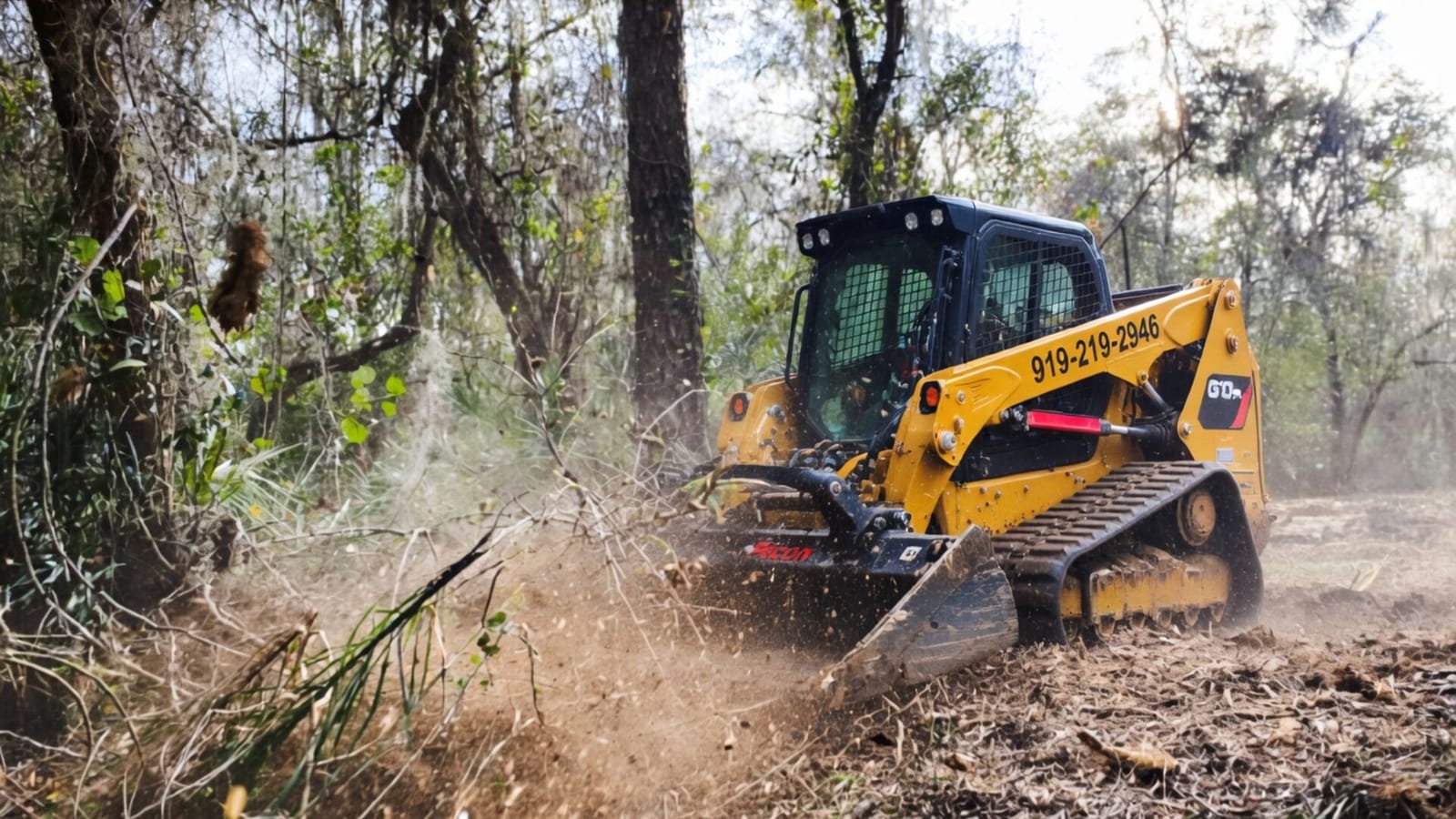
A storm-damaged tract is not a thicker version of an overgrown one. It is a different job. Around Augusta that distinction still decides a great many clearing quotes, because a lot of private ground here has not been touched since September 2024 and now carries broken timber under two growing seasons of new growth.
Here is what that ground is actually like to work, and what to ask anyone bidding on it.
What the Storm Left on CSRA Property
Hurricane Helene crossed Georgia on 27 and 28 September 2024 on a track that ran from Valdosta up to Augusta, with winds reaching 100 miles per hour. The Georgia Forestry Commission assessed the damage to the state’s timber resource at $1.28 billion across 8.9 million acres of forestland, and 88 percent of the affected acreage was privately owned (Georgia Forestry Commission).
Privately owned is the part that matters to a landowner. Roadsides and subdivisions were cleaned up quickly. Back acreage, woodlots behind pasture and the strip along a property line were not.
The state treated the leftover material as a hazard rather than an eyesore. A $25 million response announced on 18 November 2024 funded a fuels mitigation program and a firebreak restoration project, with Richmond, Columbia and Burke among the eligible counties, and applications closed on 6 December 2024 (Georgia Forestry Commission). The commission’s standing advice still says firebreaks around remaining stands “should be cleared or freshened to prevent damage from wildfire, especially those with heavy amounts of storm debris on the ground” (Georgia Forestry Commission).
Why Broken Material Works Differently
Four things change once timber is down rather than standing.
Leaners are under tension. A stem resting on its neighbour holds stored energy and has to be released in an order, from the right side, by someone who can read which way it will go. That is the part of a storm job that cannot be rushed safely.
Root plates come up instead of stumps staying down. Much of Richmond and Burke County ground sits in the Carolina and Georgia Sand Hills, where soils of the Troup series carry sandy horizons running from the surface down to about 44 inches (USDA NRCS). In ground that loose a wind-thrown tree often lifts a plate of roots and soil rather than snapping at the base, leaving a crater and a wall of soil-bound roots rather than a stump to grind flush.
The debris is hidden. Two seasons of regrowth covers everything lying on the ground, so a machine finds buried tops, old fence wire and broken limbs the hard way. A quote should allow for that rather than treat the surface as what it looks like.
The canopy holes grew a thicket. Light reaching the forest floor for the first time in decades produced dense young growth exactly where the storm did its worst, so the job is usually two at once: clearing the broken material and taking back the regrowth that arrived because of it.
Mulching or Hauling: What Happens to the Material
Grinding the material in place is usually the right answer here, for practical reasons rather than tidiness.
A mulching head takes standing regrowth, small stems and much of the downed material and leaves it on the ground as a mat. Nothing is piled, loaded or trucked, and the mat puts organic matter back onto ground that has very little of it. It also sidesteps the burning question, which has three answers in this service area: Richmond and Columbia counties are on the Georgia list where burning land-clearing debris is prohibited from May 1 through September 30, Burke County is not, and South Carolina runs no seasonal ban at all (Georgia EPD).
Hauling earns its cost when the finish has to be clean dirt for a pad, a drive or a field you intend to plough. Large-diameter storm timber may also need cutting and moving rather than grinding, and that belongs in the quote rather than at the end.
What mulching does not do is make ground build ready. Stumps are ground flush rather than pulled, root plates are dealt with separately, and nothing is graded. Ranges for both routes sit side by side on the Augusta pricing guide.
What to Ask Anyone Bidding on Storm Ground
Four questions separate a real quote from a guess.
- Have you walked it? Aerial images from before the storm are worthless here, and current ones show regrowth rather than what is under it.
- What happens to the large-diameter material? Grinding, cutting and stacking, and hauling are three different costs.
- Are root plates and craters in the scope, or excluded? This is the single most common gap between two bids.
- Who holds the permit, and have you checked which office issues it? Requirements vary by parcel, scope and jurisdiction, and the governing authority makes the determination. Our Augusta land clearing permit guide sets out both states’ tracks.
Frequently Asked Questions
Is clearing storm-damaged land more expensive?
Usually, though it shows up as a job sitting higher in its band rather than as a separate rate. Tension in leaning stems, hidden debris and root plates all cost time, so a tract that prices mid-band standing can price near the top of it storm-hit.
Should I wait longer, or clear it now?
Waiting adds regrowth over the debris rather than removing anything, and the material on the ground is a fuel load in the meantime. There is no seasonal discount, but dry ground works better than wet.
Can I salvage any value from the downed timber?
That depends on species, size and how long it has been down, and it is a question for a consulting forester rather than a clearing contractor. Cut Brush clears; we do not buy or market timber.
Take Back the Ground the Storm Took
The parcels that come out of this well are the ones where somebody looked under the regrowth before pricing the work.
See every range on the Augusta pricing guide, read the local conditions on our Augusta land clearing page, then request a free quote. We walk the ground and put the scope in writing.
More from the Cut Brush Blog
Keep reading for more tips and guides on land clearing.
 County Guide
 Land Clearing Permits in Augusta & Across the River
Augusta permits grading first and lists exemptions second. Here are the Richmond, Columbia and South Carolina thresholds, with the source beside each one.
 Cost Guide
 Forestry Mulching Cost in Augusta, GA (2026)
Forestry mulching around Augusta runs $1,500 to $4,000 per acre. See what storm timber, sandy Sand Hills ground and two sets of burn rules do to it.
Guide What Is Forestry Mulching? A Complete Guide
What is forestry mulching? See how a forestry mulcher grinds trees and brush into mulch in one pass, what it handles, and when to use it. Get a free estimate.
Ready to Get Started on Your Land?
Get a free, no-obligation estimate for property in Augusta & the Central Savannah River Area.
Get Your Free QuoteOr call us directly: (919) 525-3950