
Forestry Mulching Cost in Augusta, GA (2026)
Cut Brush Team · September 12, 2026 · 6 min read
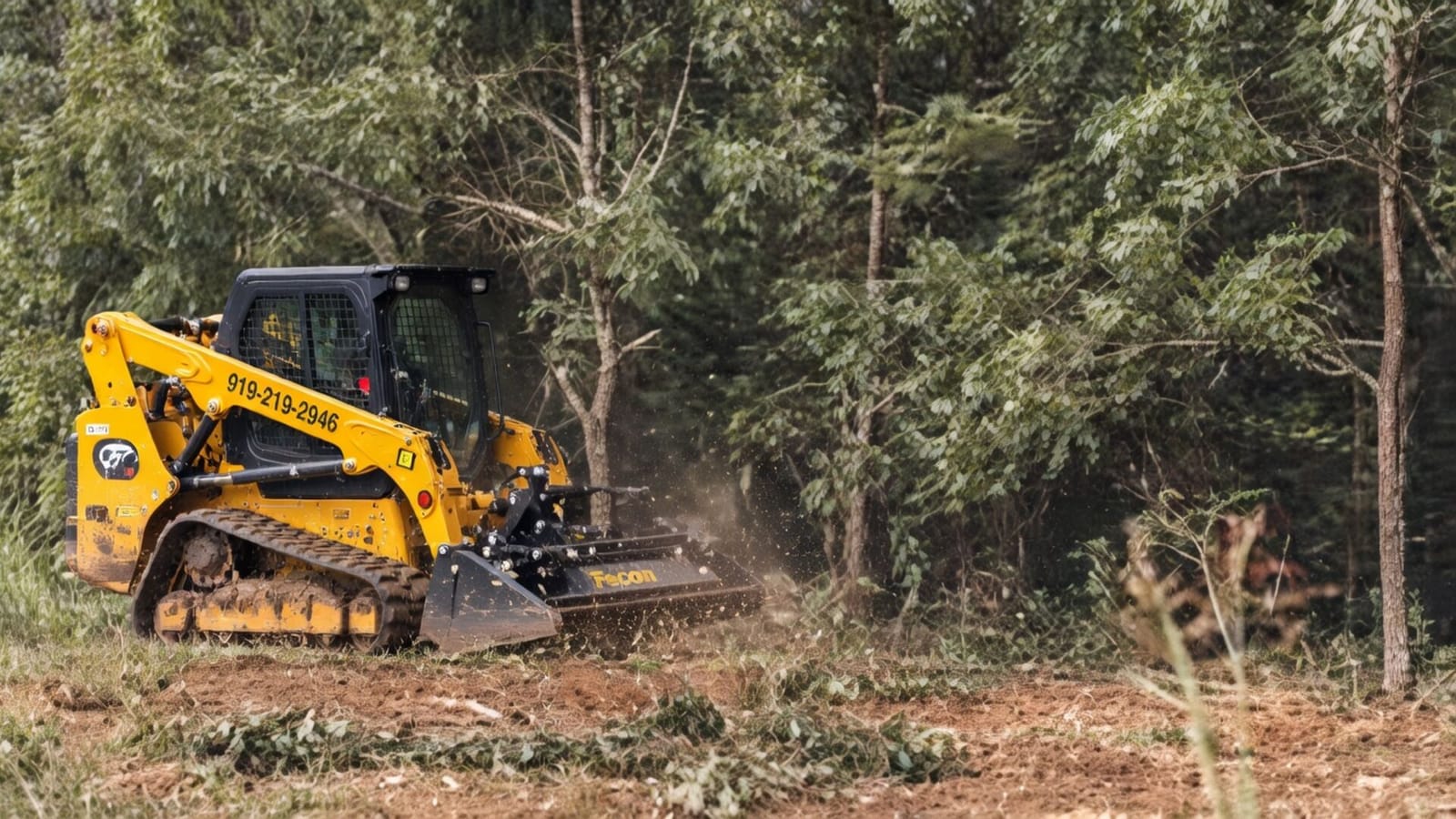
Forestry mulching around Augusta runs $1,500 to $4,000 per acre. Light regrowth on dry, open ground sits at the floor. Storm-broken material with two seasons of thicket grown up through it sits at the ceiling. What usually decides where a CSRA parcel lands is not acreage at all: it is whether the 2024 storm left timber lying on it, and which side of the Savannah River the address sits on.
Here is how that band breaks down, and where mulching stops being the cheaper option.
What Does Forestry Mulching Cost Per Acre Near Augusta?
| Condition | Range | Why it prices there |
|---|---|---|
| Light brush and saplings, open ground | $1,500 – $2,000 / acre | One fast pass, little steering |
| Mixed understory beneath standing timber | $2,000 – $3,000 / acre | Working around keeper trees, slower lines |
| Heavy stems or long-idle field ground | $2,800 – $3,600 / acre | Repeat passes, larger material, more wear |
| Storm-broken material with regrowth over it | $3,000 – $4,000 / acre | Leaners released in order, debris found under new growth |
A practical floor near $1,500 per project applies whatever the size, because trailering a tracked machine to your parcel costs the same whether it cuts for one hour or eight. Under two acres, the sensible move is bundling a fence line, a field edge and a brush patch into one visit. Every range here is a budgeting band; the walk-through that turns it into a written figure is free.
Why Storm Timber Moves a Number More Than Acreage
Hurricane Helene crossed 8.9 million acres of Georgia forestland on 27 and 28 September 2024, with winds reaching 100 miles per hour along a track that ran from Valdosta up to Augusta. The Georgia Forestry Commission put the damage to the state’s timber resource at $1.28 billion, with 88 percent of it falling on privately owned land (Georgia Forestry Commission).
Two growing seasons later that is not history on a lot of CSRA property. It is snapped tops, stems leaning on their neighbours, root plates tipped out of the sand, and young growth that shot up through every hole the storm opened in the canopy.
Broken material is slower work than standing brush for reasons that have nothing to do with volume. A leaning stem is under tension and has to be released in an order. Debris on the ground stays invisible under two years of regrowth until a machine finds it. So the same five acres can price mid-band standing and near the top of it storm-hit, and a bidder who has not walked it cannot tell you which. Our guide to clearing storm-damaged land around Augusta covers what to look for.
What Sandy Ground Changes
A good part of Richmond and Burke County sits in the Carolina and Georgia Sand Hills, where soils of the Troup series carry sandy horizons running from the surface down to about 44 inches, somewhat excessively drained, with rapid permeability through those upper layers (USDA NRCS).
For the price itself that is mostly good news. Dry sand carries a tracked machine well and gives a mulching head little to fight, so passes are quick and the ground stays workable in weeks when heavier soil would not be. Head north through Columbia County and the surface firms into Piedmont clay, which behaves nothing like it after rain.
What sand does change is what the mat is worth. This ground holds very little organic matter and binds to nothing once the cover is off it, so material ground in place and left down is doing real work rather than tidying up.
Mulching or Clearing: Which Are You Actually Buying?
This is the most common reason two quotes look nothing alike.
Forestry mulching is one tracked machine grinding standing brush and small trees where they stand. Stumps are ground flush rather than pulled, the material stays down as a mat, and the ground is neither graded nor build ready. It is the right method for opening understory, reclaiming a field edge or making a tract walkable.
Land clearing is whole-tract work whose ending gets named in the quote: whether stumps come out, whether material is hauled, whether a pad is graded and stabilised. It runs $1,500 to $4,500 per acre, and it is what you need if the parcel is headed for a house, a drive or utility runs. Ask any bidder which of the two they have priced, in writing.
What the Burn Calendar Does to Disposal
Mulching removes the loading and hauling line from a quote, and in this market it also removes a calendar problem that has three different answers in it.
Richmond and Columbia counties are both on the Georgia list of 54 counties where burning yard and land-clearing debris is prohibited from May 1 through September 30 (Georgia EPD). Burke County is not on that list. Across the river, South Carolina has no seasonal ban but requires you to notify the South Carolina Forestry Commission before burning outdoors, a law that does not apply inside town or city limits (SC Forestry Commission).
Grinding in place works in every month at every one of those addresses, which is a large part of why it wins here on arithmetic rather than preference.
Frequently Asked Questions
How much does it cost to mulch one acre near Augusta?
Budget $1,500 to $4,000 for an acre, light regrowth at the floor and storm-broken material near the ceiling. A single acre usually prices close to the project floor, because mobilisation costs the same at any size.
Does mulching cost more on the South Carolina side of the river?
No. The bands are the same in Aiken and Edgefield counties as in Richmond, because the machine and the working day do not change at a state line. What changes is the permit track and the burning rules, and those are set out in our Augusta land clearing permit guide.
Will the brush grow back after mulching?
Some of it will. Anything that resprouts from a cut stem or a root system comes back and needs a follow-up plan; anything that does not is finished. A mowing pass a year later costs a fraction of re-clearing a regrown thicket, and we say which category your ground falls into before quoting.
Get a Real Number for Your Augusta Property
What turns forestry mulching cost in Augusta into one figure is walking the ground: what the storm left, how the sand is sitting, and what the address allows you to do with the material.
Compare your project against every range on the Augusta pricing guide, read the local conditions on our Augusta land clearing page, then request a free quote. We put the scope in writing, so the number you approve is the number you pay.
More from the Cut Brush Blog
Keep reading for more tips and guides on land clearing.
 County Guide
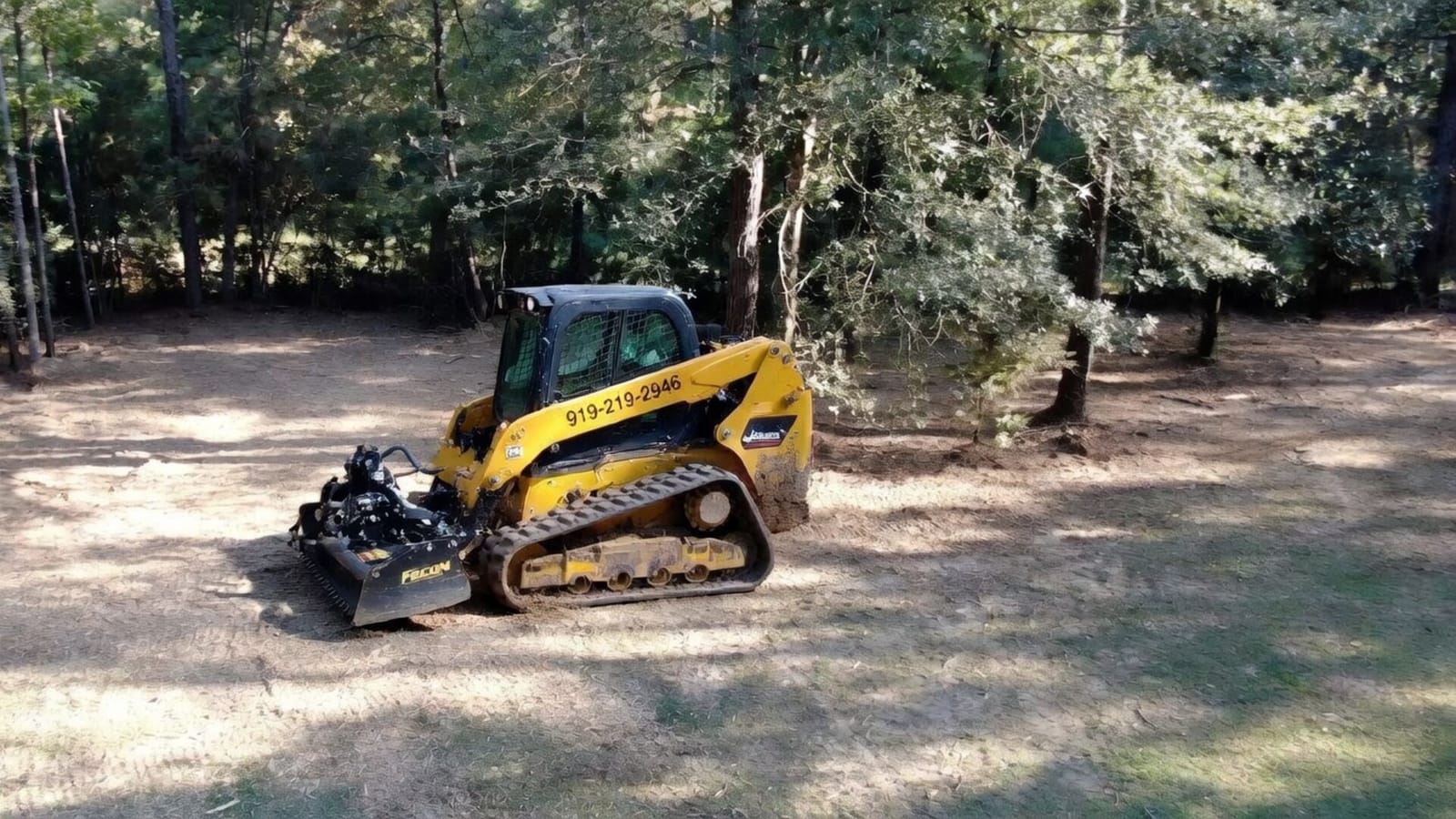
 Land Clearing Permits in Augusta & Across the River
Augusta permits grading first and lists exemptions second. Here are the Richmond, Columbia and South Carolina thresholds, with the source beside each one.
 Guide
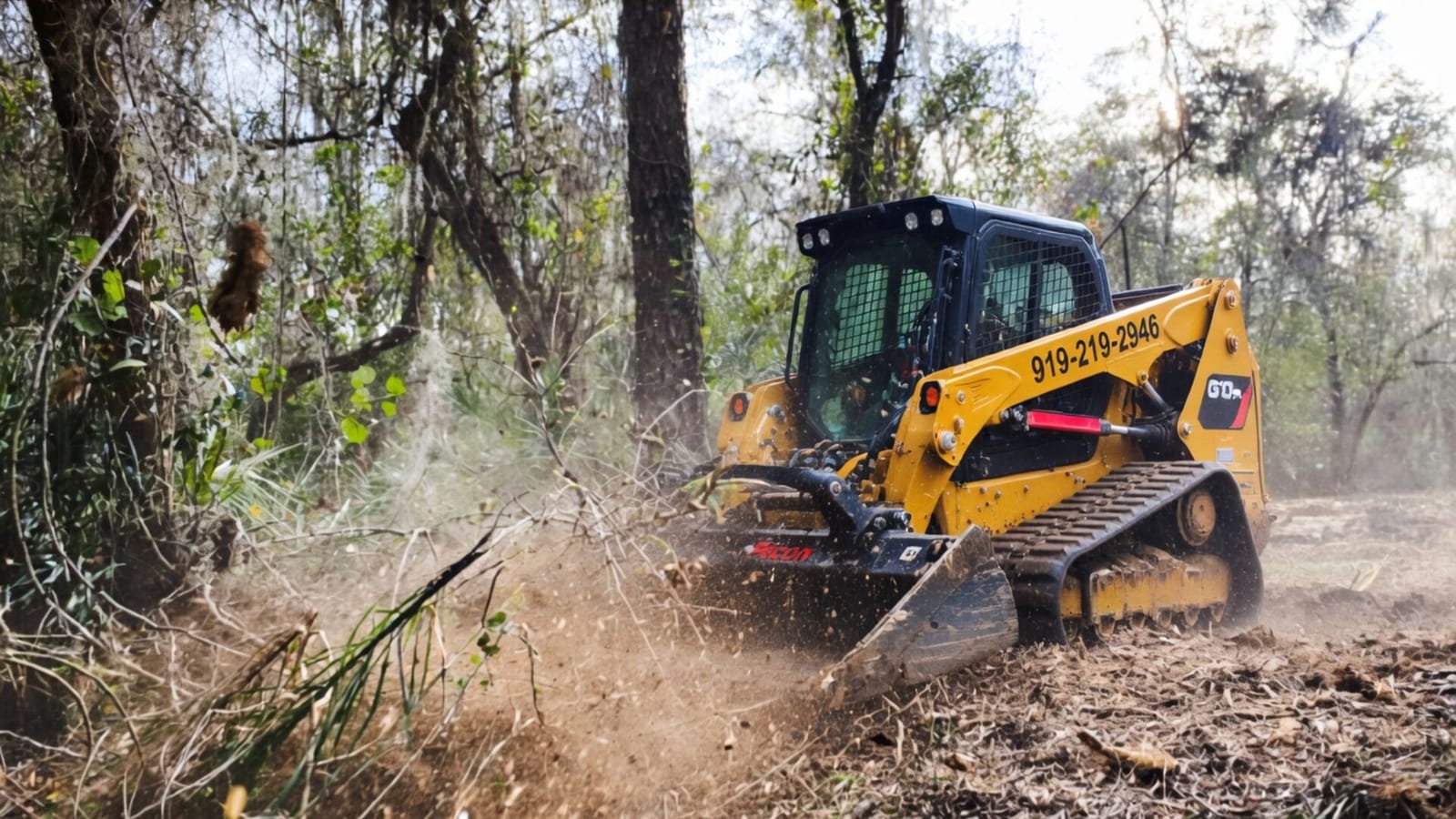
Guide Clearing Storm-Damaged Land Around Augusta
Two seasons on, CSRA property still carries broken timber and the thicket that grew through it. What that changes about clearing, and what to ask a bidder.
 Comparison
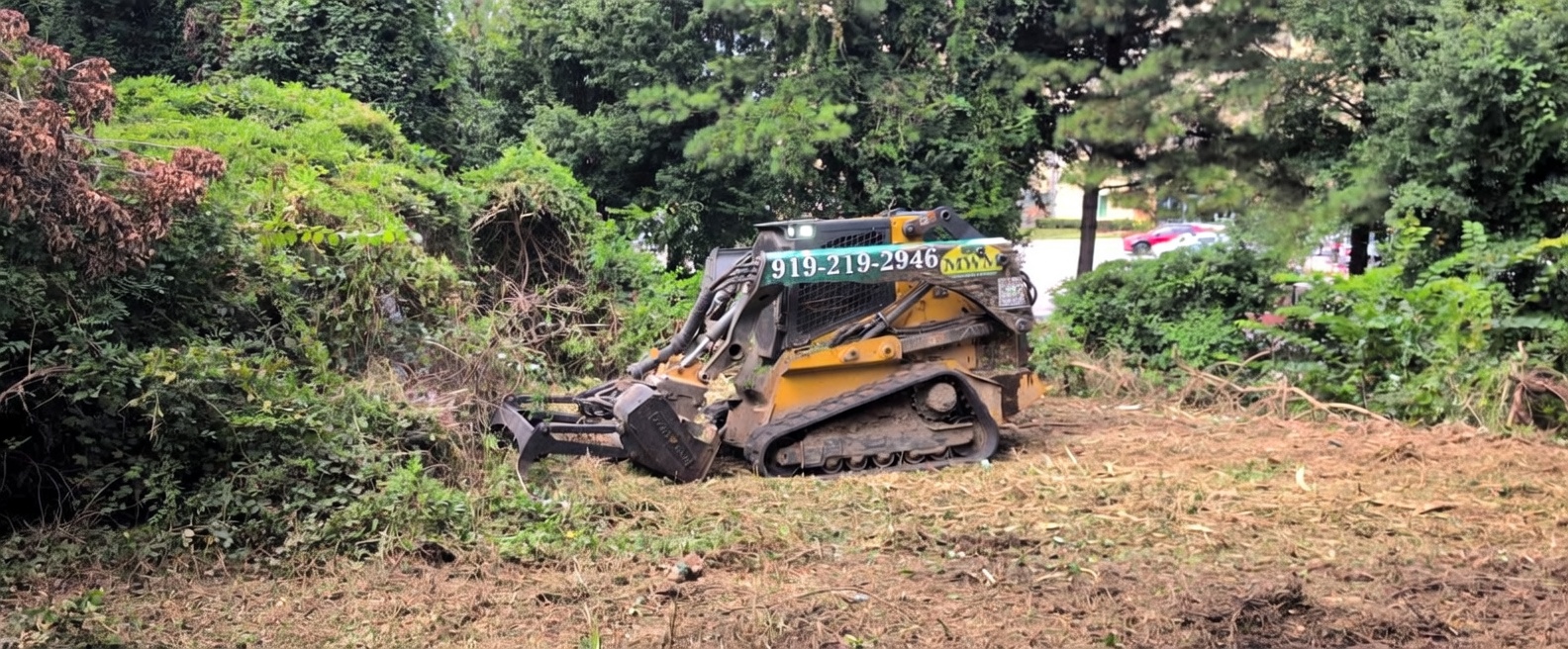
 Bush Hogging vs Forestry Mulching: Which Do You Need?
Bush hogging vs forestry mulching: which handles your overgrown field? Compare costs, vegetation limits, and regrowth for Central NC land. Get a free quote.
Ready to Get Started on Your Land?
Get a free, no-obligation estimate for property in Augusta & the Central Savannah River Area.
Get Your Free QuoteOr call us directly: (919) 525-3950