
Land Clearing Permits in Augusta & Across the River
Cut Brush Team · September 12, 2026 · 6 min read
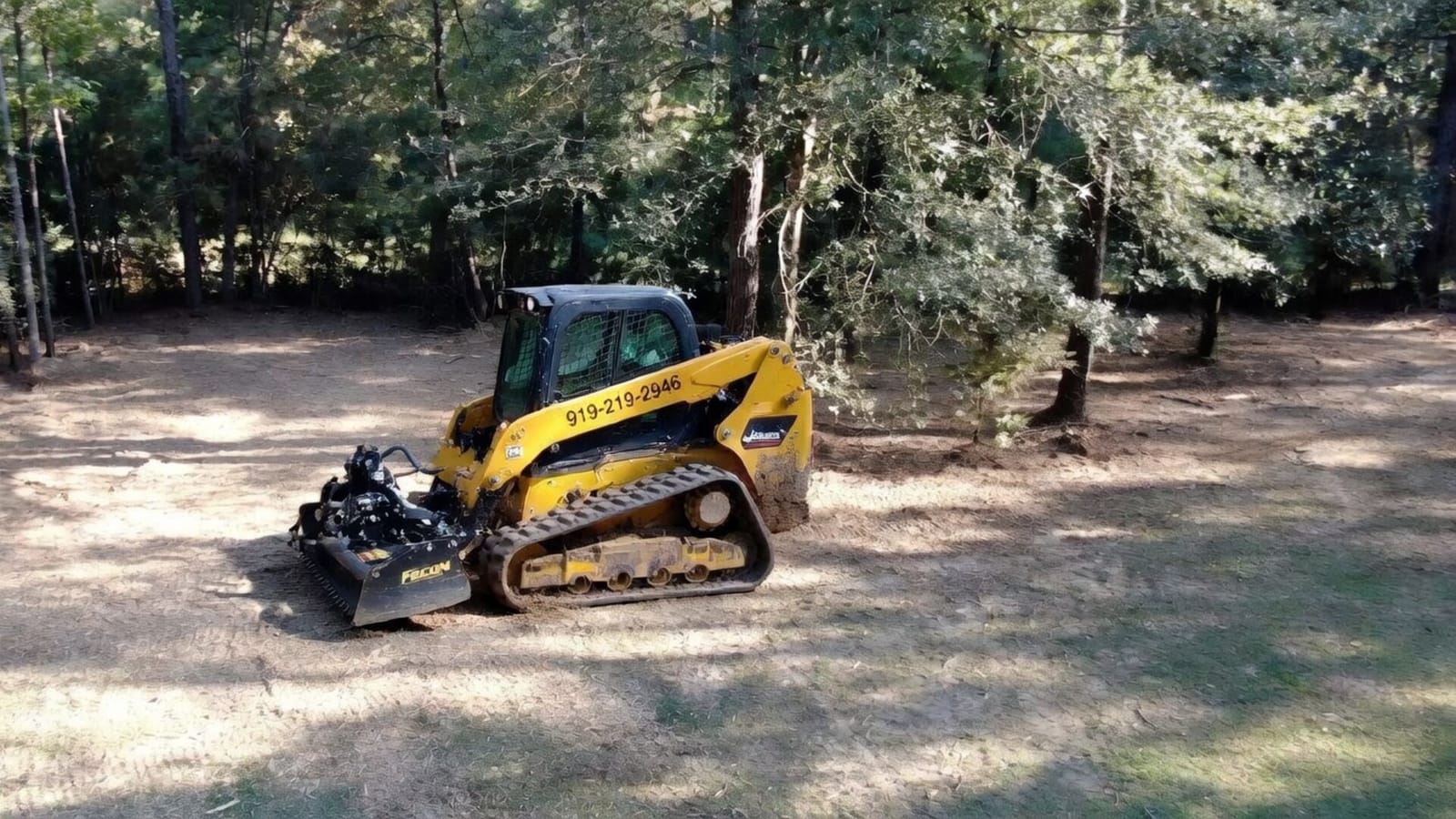
Most places tell you how many acres you may disturb before a permit appears. Augusta does it the other way round: the ordinance forbids grading outright and then lists what is exempt. Cross into Columbia County and the county issues instead. Cross the Savannah River and the state of South Carolina issues instead of the county at all.
Three tracks inside one service area, and each threshold below carries its official source.
Augusta and Richmond County: Permit First, Exemptions Second
Augusta-Richmond County is a consolidated government, so one office covers the county rather than a city program sitting inside a county program.
Its grading ordinance opens from the restrictive end. Section 7-3-42 states that “no excavation, filling, or grading shall be conducted within Augusta, Georgia, except for those activities as provided below, without first securing a permit,” and grading is defined broadly as any excavation or filling or a combination of the two. Section 7-3-43(a) puts the permit with the Augusta Planning and Development Department, one permit per site (Augusta Grading Ordinance, Development Document 11).
The exemptions are where most residential work actually lands, and two of them matter to landowners:
- Minimum land disturbing activities such as house gardens, individual home landscaping, repairs and maintenance work.
- Agricultural practices, which the ordinance defines to include “forestry land management practices including harvesting (where stumps are not removed)”.
Read that second one carefully, because the clause in brackets is doing the work. Taking material off while leaving the stumps in the ground sits inside the exemption. Grubbing stumps out does not. That is a real distinction between forestry mulching, which grinds stumps flush and leaves the root network in place, and clearing that pulls them.
One more threshold sits on top. Section 7-3-43(e) requires that site activity involving land disturbance greater than 1.1 acres also submit a Soil Erosion Sediment Control Plan under the county’s soil erosion provisions. That program is run by the Soil Erosion and Sedimentation Control section of the Augusta government (Augusta, GA).
Columbia County: Exempt, Minor or Major
Columbia County holds Evans, Martinez, Grovetown, Harlem and Appling, and it runs its own Land Disturbance Permit through the Stormwater Compliance office in Evans (Columbia County).
The application itself is the clearest guide to how the county thinks about a job. It sorts every project as exempt, minor or major, asks directly whether the limits of disturbance fall within 200 feet of state waters, carries a notice of intent fee of $45 per acre disturbed, to the nearest tenth of an acre, and points to a permit table in Chapter 34-70 of the county ordinance for which documents each project type needs. Projects requiring a permit must also pass a notice of termination inspection at the end (Columbia County LDP application).
Two practical consequences. The state waters question is asked before acreage in the sequence that matters, so a creek anywhere near the work area changes the conversation regardless of how small the job is. And the permit is not finished when work starts, because the closing inspection is part of it.
Across the River: South Carolina Permits Through the State
North Augusta, Aiken, Graniteville, Belvedere, Beech Island, New Ellenton, Clearwater, Edgefield, Johnston and Trenton are all inside this service area, and all of them answer to a different structure.
Georgia delegates land-disturbance permitting to local issuing authorities. South Carolina does not: the state permits, through the South Carolina Department of Environmental Services, and its tiers begin below one acre rather than at it. The full set of tiers, including the rule that catches lots inside a larger common plan of development, is laid out in our South Carolina land disturbance permit guide.
Aiken County adds one step in front of the state filing. Projects inside Aiken County’s stormwater boundary need a county approval letter first, which is then submitted to the state through its ePermitting system; projects outside that boundary go straight to the state for review and approval (Aiken County).
So the first question on a South Carolina parcel is not how many acres. It is whether the address sits inside that boundary, because the answer decides how many desks the application crosses.
Burning the Debris Is a Separate Question, With Three Answers
Permits govern the soil. Burning is a different agency and, in this market, a different answer on each side of two lines.
Richmond and Columbia counties are both on the Georgia EPD list of 54 counties where the summer open burning ban prohibits citizens and businesses from burning yard and land-clearing debris from May 1 through September 30 (Georgia EPD).
Burke County is not on that list, so the seasonal prohibition does not reach Waynesboro, Sardis or Keysville. Georgia’s permit and notification rules for machine-cleared debris still do, and those are covered in our Georgia land clearing cost per acre guide.
South Carolina runs no equivalent seasonal ban. What it has instead is a notification law: state law requires you to notify the South Carolina Forestry Commission before burning outdoors, that requirement “does not apply within town or city limits”, and it comes with conditions to clear a firebreak, keep control equipment on hand and stay with the fire until it is safe (SC Forestry Commission).
Local ordinances can be stricter than any of that. Mulching in place is the one disposal route that is available in every month at every address in this service area.
Frequently Asked Questions
Do I need a permit to clear half an acre in Augusta?
Possibly, and the acreage is not what settles it. The grading ordinance requires a permit for excavation, filling or grading unless the activity is on its exemption list, and the exemptions turn on what kind of work it is rather than how big. The 1.1 acre figure is the point at which a soil erosion plan is also required, not the point at which permitting begins.
Does forestry mulching need a permit in Richmond County?
It depends on the scope and what the reviewing office makes of it. Grinding material in place and leaving stumps sits closer to the ordinance’s forestry language than grubbing does, since that exemption is written for harvesting where stumps are not removed. Ask the Planning and Development Department about your specific parcel rather than assuming either way.
Who pulls the permit, me or the contractor?
Settle it in the contract before work starts, and put the answer in writing. Cut Brush can flag what commonly applies and help identify the right office, and we work to the permit you hold. Requirements vary by parcel, scope and jurisdiction, and the governing authority makes the determination.
Settle the Permit Question Before You Price the Work
Three tracks, two states and one service area is not complicated once you know which one your address is on, and the cost of guessing is a stopped job.
Ranges are on the Augusta pricing guide, local conditions on our Augusta land clearing page, and when you are ready, request a free quote. We walk the parcel, put the scope in writing, and say which office we think you need.
More from the Cut Brush Blog
Keep reading for more tips and guides on land clearing.
 Guide
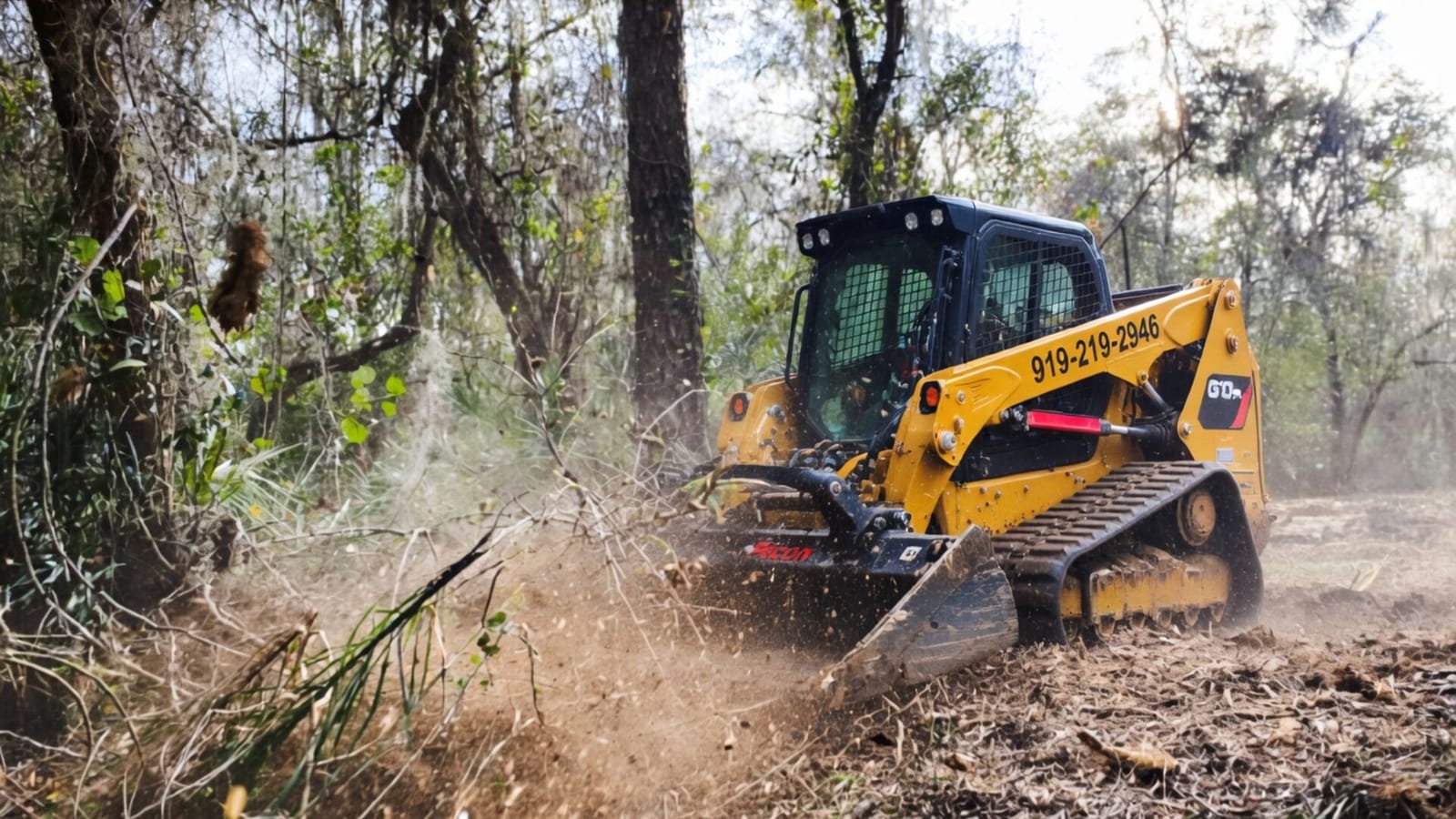
Guide Clearing Storm-Damaged Land Around Augusta
Two seasons on, CSRA property still carries broken timber and the thicket that grew through it. What that changes about clearing, and what to ask a bidder.
 Cost Guide
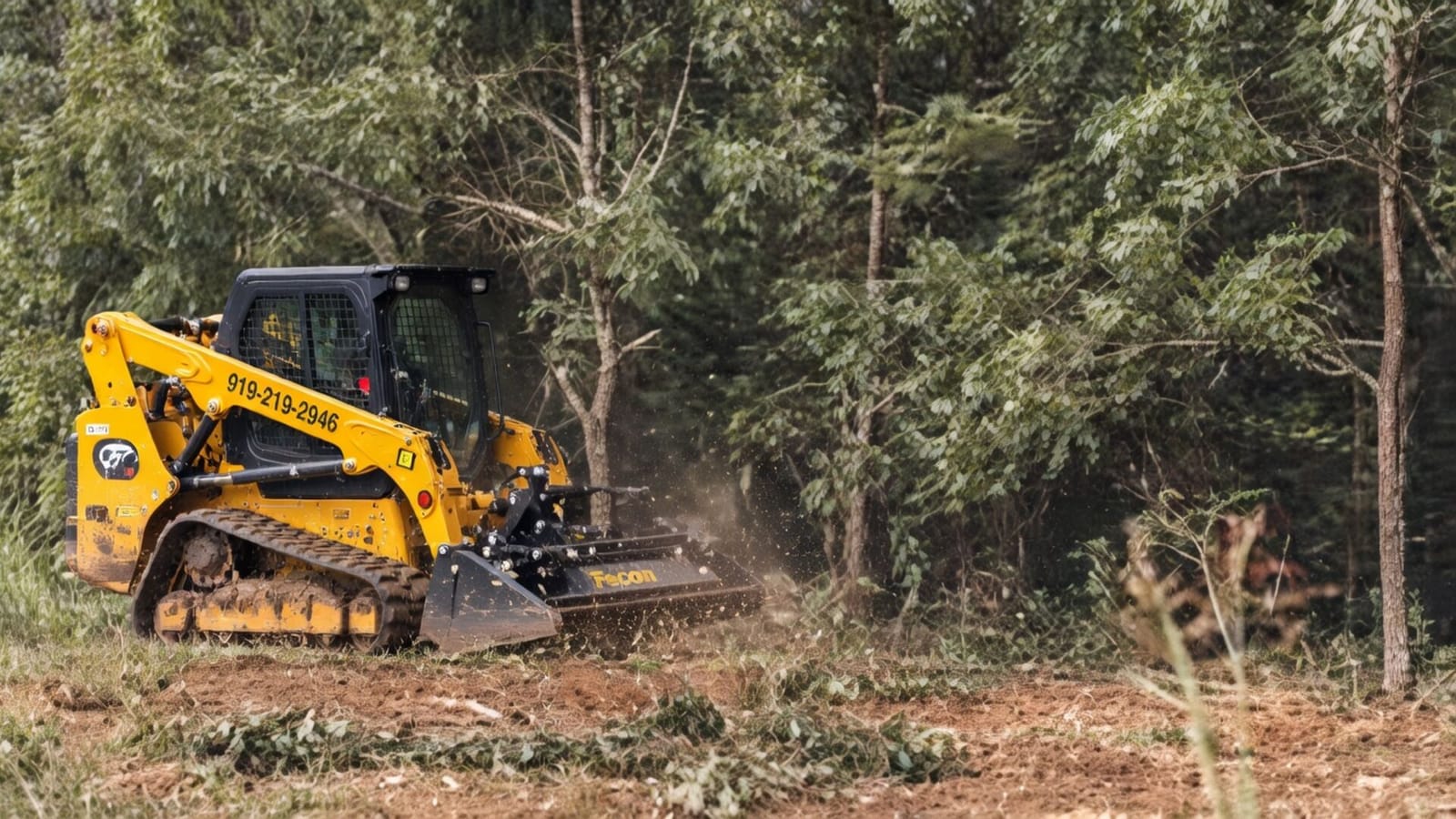
 Forestry Mulching Cost in Augusta, GA (2026)
Forestry mulching around Augusta runs $1,500 to $4,000 per acre. See what storm timber, sandy Sand Hills ground and two sets of burn rules do to it.
 Comparison
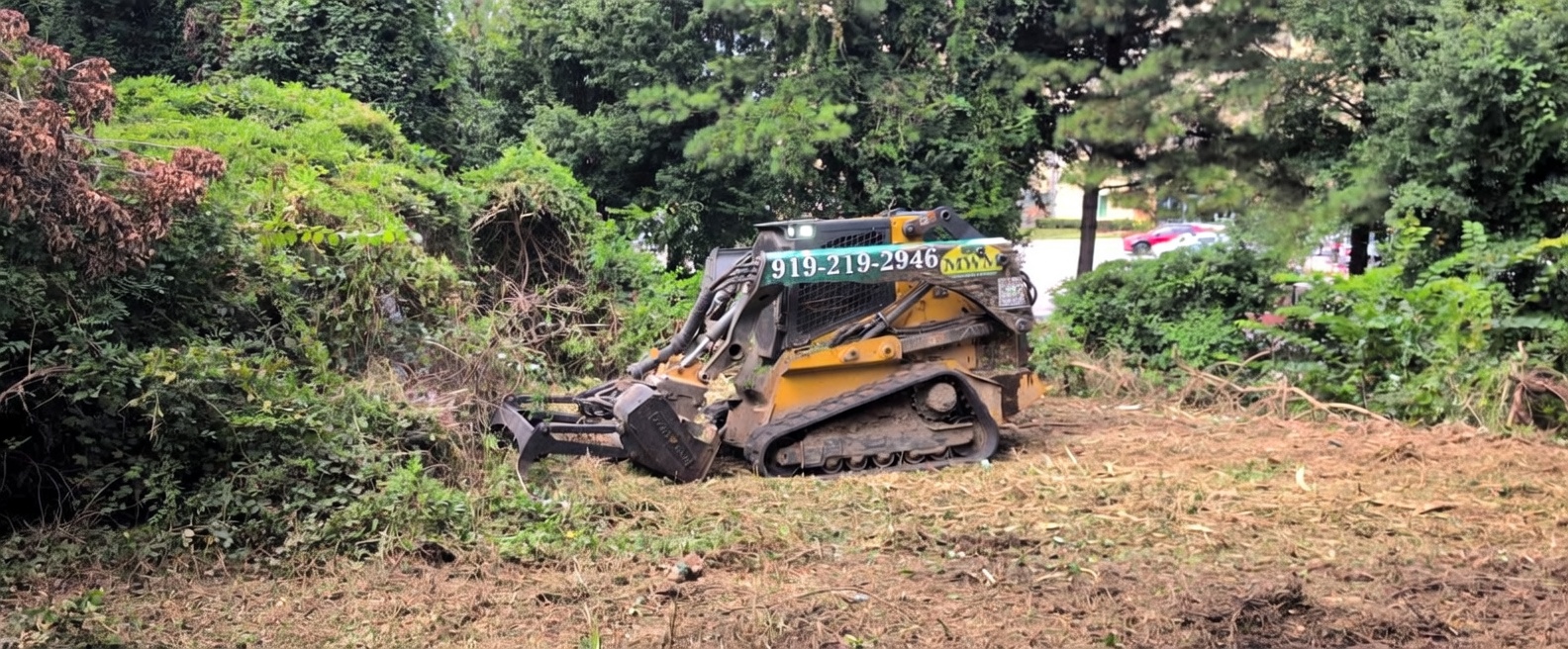
 Bush Hogging vs Forestry Mulching: Which Do You Need?
Bush hogging vs forestry mulching: which handles your overgrown field? Compare costs, vegetation limits, and regrowth for Central NC land. Get a free quote.
Ready to Get Started on Your Land?
Get a free, no-obligation estimate for property in Augusta & the Central Savannah River Area.
Get Your Free QuoteOr call us directly: (919) 525-3950