Clearing Land With Cogongrass on It Around Dothan
Cut Brush Team · September 24, 2026 · 5 min read
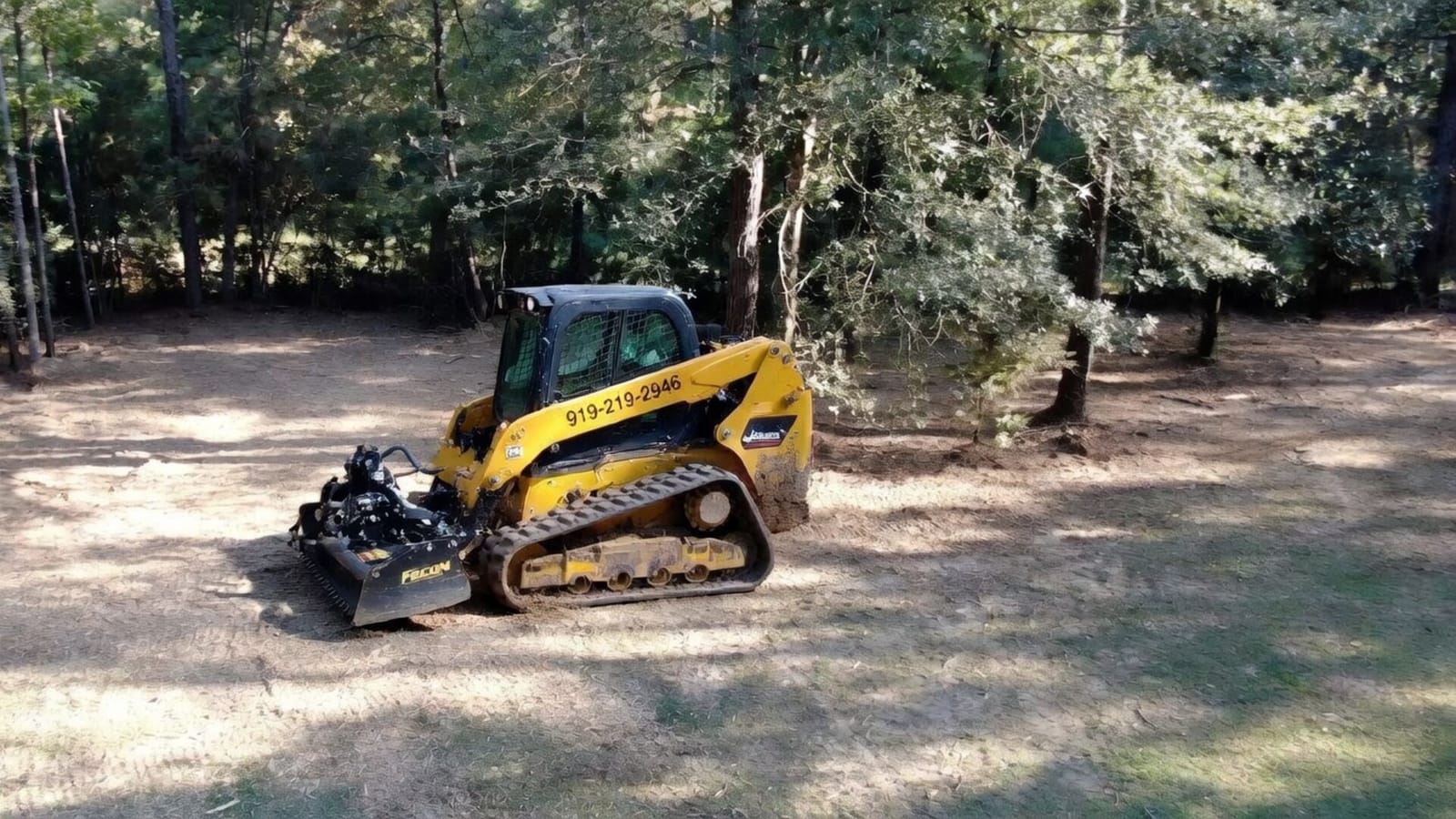
If cogongrass is on your land, clearing does not remove it and a careless machine spreads it. The grass lives in a mat of underground rhizomes that a mulching head never touches, and those rhizomes travel on tracks and teeth to the next patch of open ground. On Wiregrass property the plan for clearing and the plan for cogongrass have to be made together, in the right order.
Here is what the plant is, what the official guidance says works, and how that changes a clearing job around Dothan.
What Cogongrass Is and Why It Matters Here
Cogongrass, Imperata cylindrica, is a federally listed noxious weed. It first entered the United States in the early 1900s at the port of Mobile, and the Alabama Forestry Commission now reports it in all 67 Alabama counties. The Commission describes some areas where it is so widespread that eradication efforts are continuous, arduous and expensive.
On Wiregrass farm and pine land, the places worth checking are field edges, pine stands, road margins and pasture. Where it takes hold it forms dense stands, and those stands carry fire. Alabama Extension notes that dense cogongrass can burn hot enough to kill many fire-tolerant species, even young loblolly and longleaf pine (Alabama Cooperative Extension System). For an owner managing pines or trying to bring back a field, that is a direct threat to the asset.
Why Mowing, Disking and Burning Do Not Fix It
Everything that works on ordinary brush works badly on cogongrass, because the plant is below ground.
- Mowing and mulching remove the leaves. The rhizome mat is untouched and sends up new growth.
- Disking and other shallow tillage, Extension says, will generally not control cogongrass. Worse, a disk or plow moving across the field carries rhizome pieces with it.
- Burning favors it. Extension’s guidance is that prescribed fire at any time promotes cogongrass to the detriment of almost all other species. Fire plows can also drag rhizome pieces to ground that was clean.
That is why a quote to “clear the cogongrass” with a mulcher alone is a quote for a temporary result. The machine is not the tool that kills this plant.
What Actually Kills It
Herbicide, repeated, over years. Alabama Extension names glyphosate and imazapyr as the two most effective products and describes two schedules that can eliminate the whole rhizome layer:
- Imazapyr once a year for two or three years. More effective, but riskier to desirable trees and plants nearby.
- Glyphosate twice a year, in late spring and fall, for two or three years. Safer around plants you want to keep.
Which one fits depends on what else is growing on the tract, and product labels govern how either is used. Treatment is specialist work in its own right. The Alabama Forestry Commission has run a Cogongrass Mitigation Program, funded by USDA, offering private landowners spray treatments over three consecutive years; as of September 2026 its application portal is listed as closed because of demand, so check the Commission’s page for any reopening.
How Clearing Fits Around It
Clearing still has a job to do on land with cogongrass. It just has to be sequenced so it does not make the problem bigger. This is how Cut Brush approaches a Wiregrass tract with cogongrass on it.
Flag it before anything moves. The walk-through maps where the patches are, often along field edges, road frontage and open ground. You get a quote that shows which ground is worked and which is left.
Clean machine in, clean machine out. Extension advises cleaning equipment carefully to avoid spreading rhizomes. Tracks and the mulching head are cleaned before the machine comes onto your property and again before it leaves, so it neither brings cogongrass in nor carries it to the next job.
Work clean ground first, infested ground last or not at all. Where a patch sits in the middle of a clearing scope, it is either left standing for treatment and worked after the rhizomes are dead, or worked at the very end of the job before the machine is cleaned. It is never driven through on the way to somewhere else.
Leave the right surface for the sprayer. A mulched floor with the brush gone makes follow-up treatment easier to reach and easier to see. Opening a thicket so the grass can be found and sprayed is often the most useful thing clearing does on this kind of tract.
What It Means for Cost and Timing
Cogongrass does not change our per-acre rates. Forestry mulching is still $1,500 to $4,000 an acre and understory or field edge work $1,500 to $2,500, as set out on the Dothan pricing guide. What it changes is the calendar. On a heavily infested tract, part of the ground may be best cleared after a season or two of treatment, so a sensible plan can run in stages rather than as one visit. The mulching figure is broken down further in our Dothan forestry mulching cost guide.
Frequently Asked Questions
Can forestry mulching remove cogongrass?
No. It removes the leaves and the brush around them. The rhizomes stay alive underground and send up new growth, so herbicide over two or three years is what clears it.
Will a clearing machine spread cogongrass onto my land?
It can, which is why equipment should be cleaned before it arrives. Alabama Extension advises cleaning equipment to avoid carrying rhizomes between sites.
Should I burn a field that has cogongrass?
Extension says fire at any time promotes cogongrass over almost every other species, and dense stands burn hot enough to kill young pines. Get treatment advice before planning a burn.
Get a Plan for Your Wiregrass Land
If you have seen cogongrass on your property, say so when you ask for a quote and we will map it at the walk-through. What makes clearing here different is on our Dothan land clearing page, and the fastest route to a written plan is to request a free quote.
More from the Cut Brush Blog
Keep reading for more tips and guides on land clearing.
Guide Land Clearing Permits in Dothan & Houston County, AL
When clearing land in Dothan needs a city permit, why commercial work needs one at any size, the bond, the burn device rule and what applies in the county.
 Cost Guide
 Forestry Mulching Cost in Dothan, AL (2026)
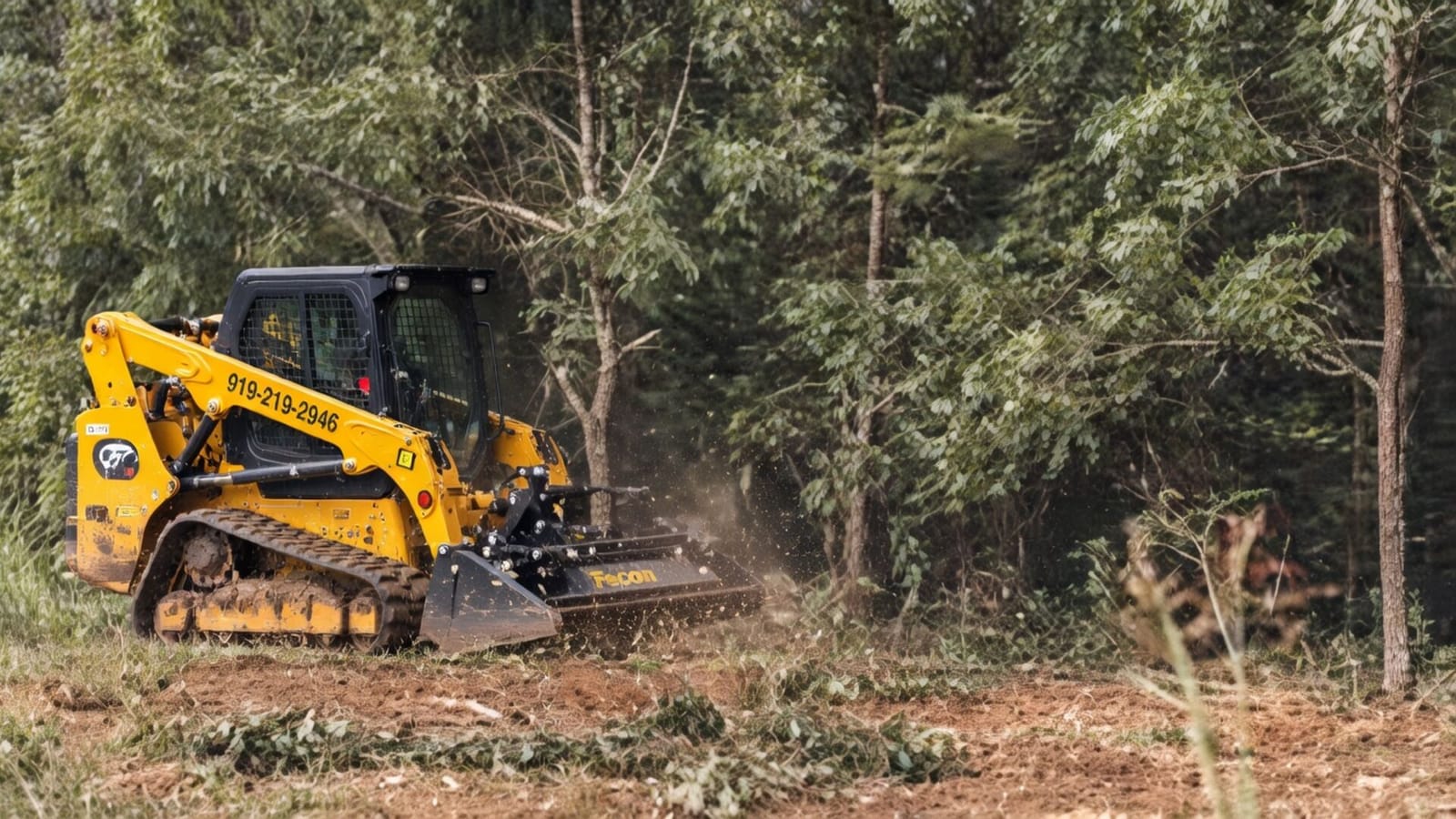
Forestry mulching around Dothan runs $1,500 to $4,000 per acre. Here is what growth age, cogongrass and the city burn rules do to a Wiregrass quote.
 Guide
Guide Kudzu Removal in Alabama: Cost and a Plan That Lasts
Kudzu removal in Alabama takes more than one cutting. See why it regrows, the multi-visit plan that drains the root crowns, and what it costs per acre.
Ready to Get Started on Your Land?
Get a free, no-obligation estimate for property in Dothan & the Wiregrass.
Get Your Free QuoteOr call us directly: (919) 525-3950