
Clearing Privet From Fence Rows Near Indianola, MS
Cut Brush Team · October 6, 2026 · 5 min read

To clear a privet-choked fence row around Indianola, grind the row down and then treat what sprouts back. Cutting alone does not work: Mississippi State University Extension says privet grows from root and stump sprouts, and that cut stumps need an herbicide to stop regrowth. A forestry mulcher opens the row in one pass and leaves the fence visible. A treatment on the stumps and sprouts, applied by a treatment provider, is what makes the clearing last.
This guide covers where privet grows in the Delta, why a single cut fails, a plan that works, which trees to protect and what the work costs.
Where Privet Takes Hold in the Delta
Chinese privet was introduced around 1952 and now grows from Texas to Massachusetts, according to MSU Extension. The publication describes a shrub that reaches 30 feet and forms thickets with little to no growth beneath them. It lists the places it favors: bottomland forests, fence rows, and the edges between open and wooded ground.
That list reads like a description of Delta farmland. Every fence row between a field, a ditch and a strip of timber is a seed bed, and birds eat the seed and carry it, so one untreated row seeds the next. Many owners know the pattern: a fence that was visible five years ago is now a green wall.
Why Cutting Alone Fails
Most failed privet jobs look clear for a season and then come back thicker.
The reason is below ground and in the stumps. MSU Extension says privet grows readily from seed or from root and stump sprouts, and that stumps or large shoots that are cut need an appropriate herbicide to prevent regrowth. Cutting before seed production only stops new seed, so a cut is a step, not an answer.
A Plan That Keeps It Down: Mulch, Then Treat
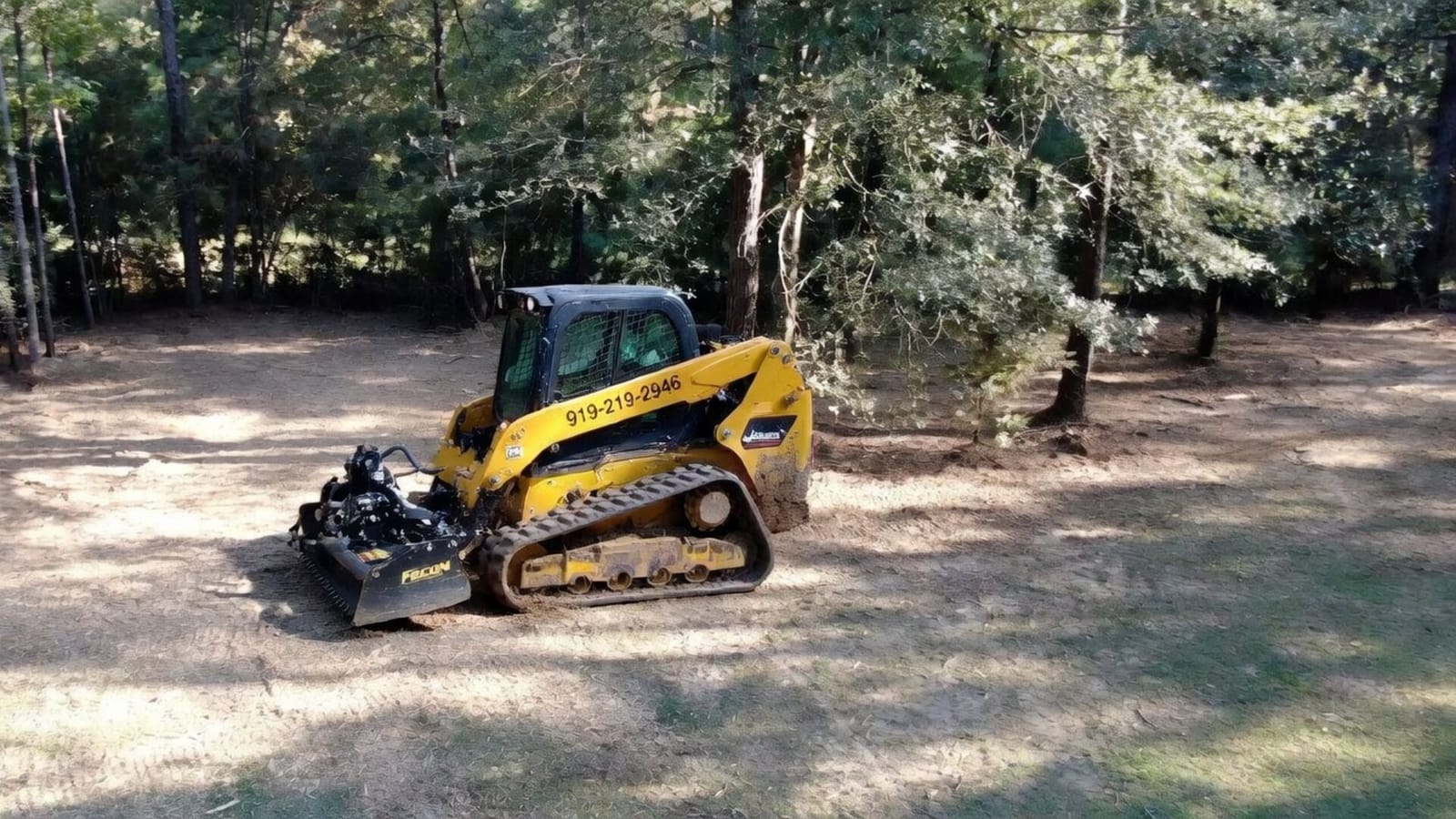
Step one: open the row. A tracked forestry mulcher grinds the thicket into a chip layer where it stood. It can steer between trees you want kept, and it works a narrow strip without tearing up the crop ground beside it. Nothing is piled, and the fence is uncovered so it can be repaired or replaced.
Step two: treat the regrowth. Within the next growing season, sprouts come up from the stumps and roots. That is the moment a treatment provider earns their fee, because every sprout is now low and easy to reach. MSU Extension lists foliar, cut-stump and basal applications of herbicides such as glyphosate and imazapyr, and the product label governs how and when. Cut Brush clears the row; it does not apply herbicide, so plan the treatment with a licensed applicator, your county extension office or a land manager you trust.
Step three: check back. Seed already in the ground and seed from the neighbor’s row will keep sprouting. A walk along the row each season for the first few years, with spot treatment as needed, is what turns a cleared fence line into one that stays clear.
Protect the Trees Worth Keeping
Privet often grows right up to the trunks of the hardwoods that remain beside a bayou or ditch. The Nature Conservancy says only about 18 percent of the Delta’s original 24 million acres of hardwood forest is left, often in small fragments, so the timber standing on your land may be the best of what is left nearby. A mulcher can clear privet from under and around a large trunk, but it takes slower, more careful passes. Flag every tree you want to keep before work is priced.
Rules That Touch a Fence Row Job
- Burning. Mississippi does not allow land clearing debris to be burned within 500 yards of an occupied home without a forced-draft system, according to the MDEQ open burning fact sheet, and burning farm or forest waste takes a Forestry Commission permit. Mulching leaves nothing to burn.
- Permits. Our Indianola and Sunflower County permit guide lists the city and county offices to ask.
- Wet ground. If the strip runs along a ditch or bayou, ask whether it has a wetland classification before the job is scheduled.
Requirements vary by parcel, scope and jurisdiction, and the governing authority makes the determination.
What Fence Row Clearing Costs
Taking privet and vine out of a fence row or field edge falls in Cut Brush’s $1,500 to $2,500 per acre band. A thick, old stand that also needs larger trees taken down moves into forestry mulching at up to $4,000 per acre. Because rows are long and narrow, a strip is priced by the acreage equivalent of the ground it covers, and the project floor is about $1,500, since the trip costs the same whether the machine runs for two hours or eight. Grouping several rows into one visit helps. Our Indianola forestry mulching cost guide explains where a job lands inside those bands.
Treatment is a separate cost and a separate provider, and it is not something Cut Brush prices. Ask for it to be quoted as its own line so you can see the whole plan, not just the first visit. Cut Brush does not level fields, dig or clean ditches, work on levees, build ponds or haul debris; a dirt or drainage contractor does that.
Frequently Asked Questions
How can I get rid of privet for good?
Cut or mulch it, then treat the stumps and sprouts with herbicide and check back for a few seasons. Cutting alone lets it resprout.
Will mowing a privet row work?
It stops new seed but does not kill the plant. Stumps and sprouts come back unless treated.
Get Your Fence Row Back
If privet has taken a fence line, a field margin or a bayou bank, start with the fence row and bottomland section of our services page, check the bands on the Indianola pricing guide, and read about the local ground on our Indianola land clearing page. Then request a free quote. If we can take the job, the scope, including what is and is not treated, goes on paper.
More from the Cut Brush Blog
Keep reading for more tips and guides on land clearing.
 Guide
Land Clearing Permits in Indianola & Sunflower County, Mississippi
Who to ask before clearing land in Indianola or Sunflower County, Mississippi: city permits, the county office, state stormwater and wetland rules.
 Cost Guide
Forestry Mulching Cost in Indianola, MS (2026)
Forestry mulching around Indianola, MS runs $1,500 to $4,000 per acre. How privet, wet Delta ground, trees you keep and field-road access move a quote.
 Guide
Kudzu Removal in Mississippi: Cost and Control Plan
Kudzu removal in Mississippi needs more than a mowing. See why the vine comes back, the multi-visit plan that kills the crowns, and the cost per acre.
Let's Get Started on Your Land
Request a free quote. We'll contact you to discuss your property, access, and the clearing you need.
Get a Free QuoteOr call us directly: (919) 525-3950