
Forestry Mulching Cost in Indianola, MS (2026)
Cut Brush Team · October 6, 2026 · 6 min read

Forestry mulching around Indianola, Mississippi costs $1,500 to $4,000 per acre. A fence row or field edge with young privet and vine sits at the low end. A thick wooded tract on soft ground, with large stems and trees you want kept, sits at the high end. Here is the figure, and the four Delta things that move it: how wet the ground is, how thick the privet has grown, which trees have to stay, and how the machine gets to the work.
Mulching Prices Per Acre Around Indianola
| Ground and growth | Typical range | Why it lands there |
|---|---|---|
| Young brush and privet on a firm, open fence row or field edge | $1,500 – $2,000 / acre | Good footing, one quick pass |
| Privet and vine cut out from under hardwoods you keep | $2,000 – $3,000 / acre | Careful lines between trunks |
| Dense wooded tract with large stems or soft ground | $3,000 – $4,000 / acre | Wet footing, big stems, repeat passes |
| Full clearing to a stated finish | $1,500 – $4,500 / acre | A different scope, explained below |
Under about two acres, the trip matters more than the acreage. Bringing a tracked mulcher to a fence line outside Ruleville or an overgrown lot in Cleveland costs the same for a short morning as for a full day, so the practical floor is about $1,500 per project.
Strips Count by the Acre Equivalent
Much Delta clearing is long and narrow: a fence row, a field margin, a ditch bank. A strip twelve feet wide and half a mile long is only an acre or so, but the machine still has to get there, work the length and come back. A narrow job is priced by the acre equivalent of the ground it covers, with the project minimum applying when the total is small. Grouping several strips into one visit is the easiest way to stretch that minimum.
Privet Thickness Sets the Pace
Chinese privet is the plant most likely to fill an Indianola quote. Mississippi State University Extension says it grows in bottomland forest, along fence rows and where open ground meets woods, and that it forms dense thickets with little growing beneath them. It spreads from seed that birds carry and sprouts from roots and stumps.
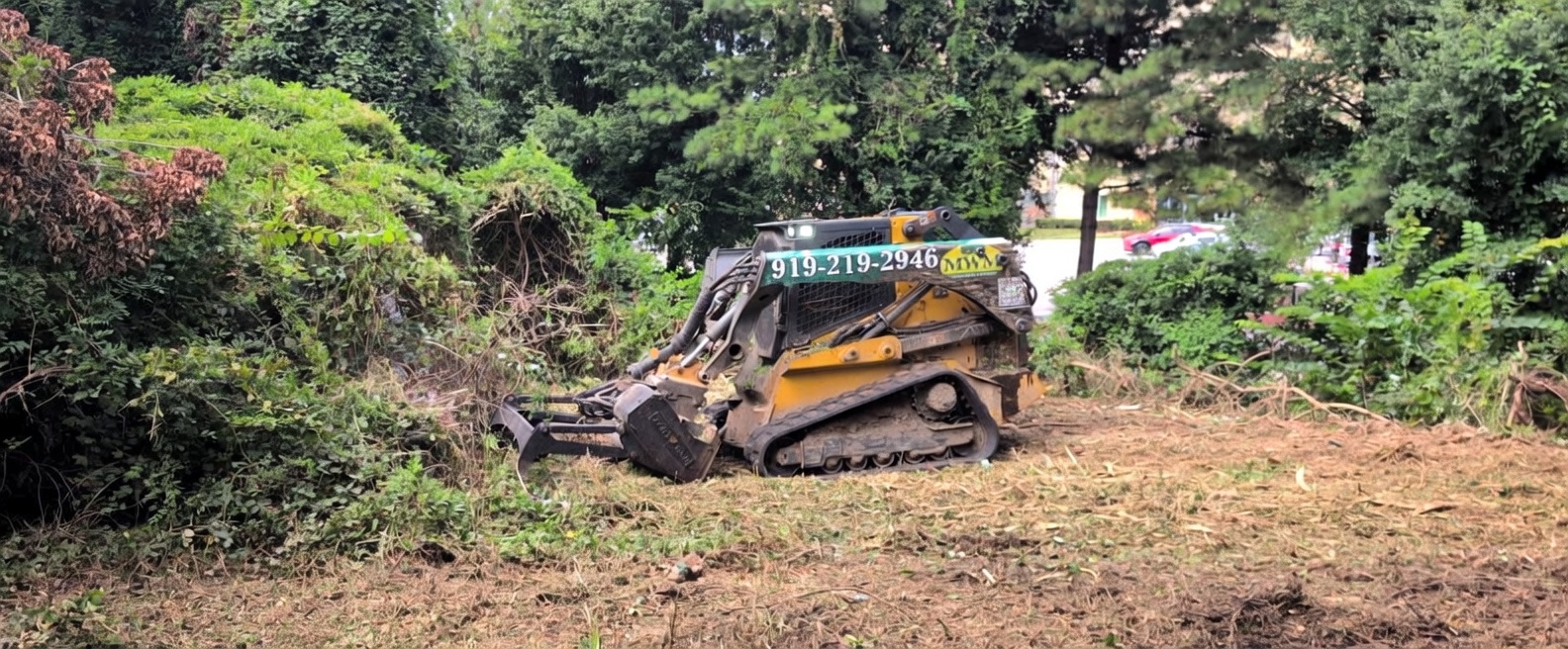
For price, how long the row has been left matters more than how many acres it covers. A few young shrubs on a fence line go down in a single pass. A row that has gone ten years untouched is a wall of stems the head works through one at a time, often beside a fence you want to keep. Because the roots survive, a mulching price covers knocking the row down, not keeping it down. Treatment of the stumps and sprouts is a separate line, usually a later visit. The fence row clearing guide sets out that sequence.
Wet Ground and the Trees You Keep
The Delta is floodplain. After a run of rain, a tracked machine on saturated soil slows down and can leave ruts, and a job that takes a day on dry ground takes longer. Waiting for a dry spell almost always costs less than working through mud.
Timber is also scarce here. The Nature Conservancy says about 18 percent of the Delta’s original 24 million acres of hardwood forest remains, often in small fragments. Most owners want the best of what is left kept, and working around a large trunk and its roots is slower than running straight through. That time shows up in the figure. Flag every tree you want to keep before anyone prices the job.
Access, Debris and What Is Not Included
Delta tracts are usually reached by field road, with ditches and gates along the way. If a trailer can unload beside the work, almost every hour goes into cutting. If the machine has to cross a ditch, squeeze through a narrow gate or travel a long way over soft ground, those hours show up in the price.
Debris is the cost that mulching removes. Mississippi does not allow land clearing debris to be burned within 500 yards of an occupied home without a forced-draft system, according to the MDEQ open burning fact sheet, and burning farm or forest waste takes a Mississippi Forestry Commission permit. A mulching job leaves no pile at all.
Be clear on what the price does not cover. Cut Brush does not level land, dig or clean ditches, work on levees, build ponds or haul debris away. If the ground needs any of that, a dirt, drainage or farm contractor does it.
Mulching or Full Clearing?
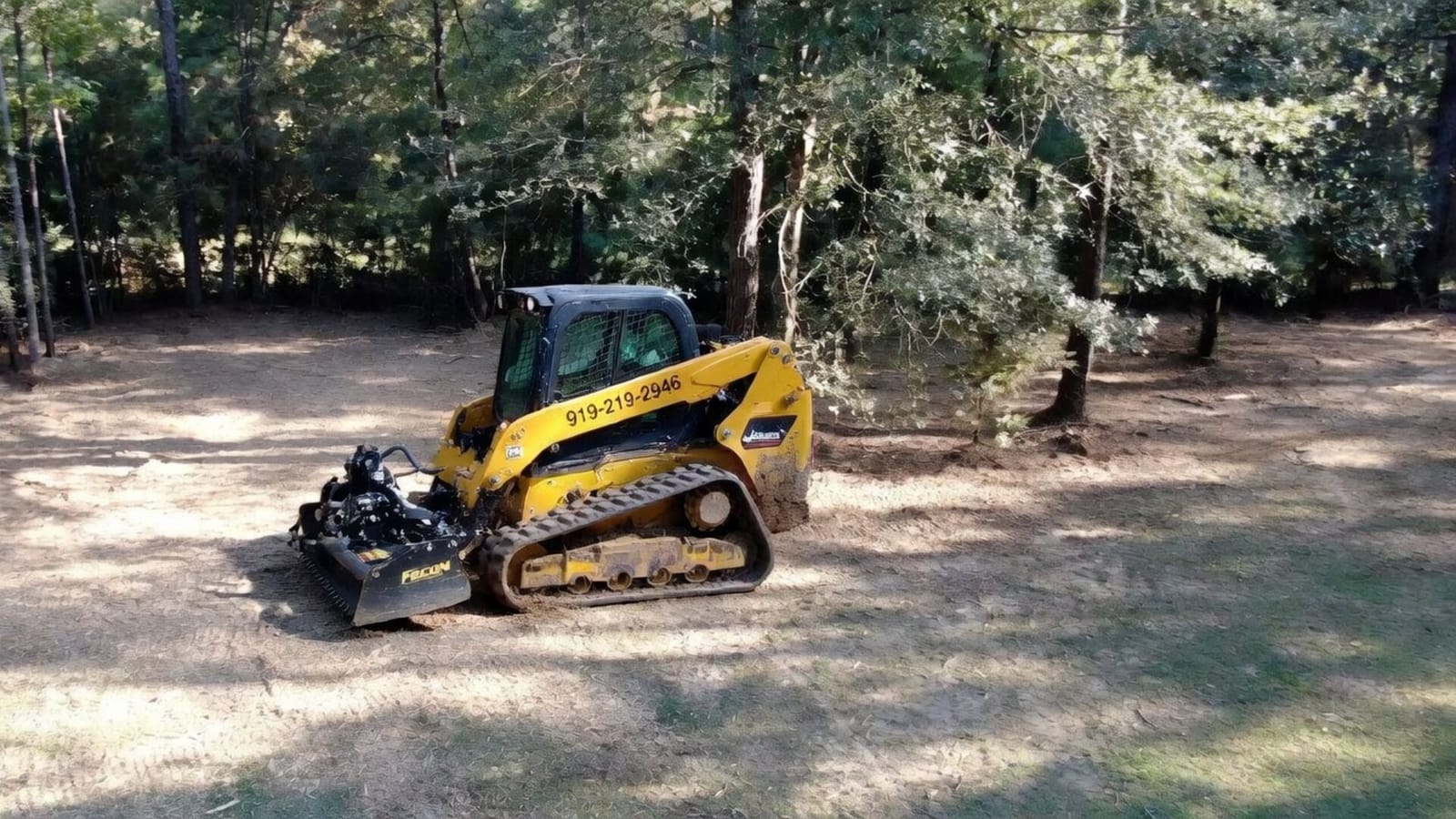
Forestry mulching grinds standing brush and small trees where they grow. Stumps stay at ground level, the chips stay on the surface, and nothing is graded or made ready for a slab.
Land clearing takes a whole parcel down to open ground: Cut Brush mulches the trees and brush to ground level, including larger timber. Stump removal, hauling and grading are not part of the work; your dirt or excavation contractor handles those if the site needs them. At $1,500 to $4,500 per acre, it is what a lot headed for a foundation, a driveway or a septic field usually needs.
Ask every contractor to state in writing which of the two the price covers.
Frequently Asked Questions
What does one acre of mulching cost near Indianola?
Between $1,500 and $4,000. Young growth on firm ground is the low end, and a dense, wet or heavily timbered acre is the high end. A single acre usually lands near the project minimum because the trip costs the same.
Does privet cost more to clear than other brush?
An old, thick row does, because of the number of stems and the care needed beside a fence or keeper trees. It also comes back from stumps and roots, so plan a treatment after the mulching.
Do I need a permit to mulch land near Indianola?
Ask the City of Indianola’s inspection department, or the Sunflower County Board of Supervisors outside the city. Our permit guide lists the offices.
Get a Number for Your Indianola Land
A real forestry mulching cost in Indianola starts with us confirming we can take work in your county, then looking at the ground: the stems, the wet spots, the trees that stay and what the land is for next.
Check your project against each band on the Indianola pricing guide, read about the local ground and offices on our Indianola land clearing page, see the permit picture in the Indianola and Sunflower County permit guide, then request a free quote. If we can take the job, the scope goes on paper, so the work you approve is the work you pay for.
More from the Cut Brush Blog
Keep reading for more tips and guides on land clearing.
 Guide
Land Clearing Permits in Indianola & Sunflower County, Mississippi
Who to ask before clearing land in Indianola or Sunflower County, Mississippi: city permits, the county office, state stormwater and wetland rules.
 Cost Guide
Brush Hogging Cost Per Acre in Mississippi (2026 Guide)
We charge $75 to $400 an acre to brush hog a Mississippi field, set by how long it went unmowed. What tallow, cogongrass, fire ants and Delta clay change.
 Cost Guide
Forestry Mulching Cost in Mississippi (2026 Guide)
We charge $1,500 to $4,000 an acre to forestry mulch Mississippi land. How Pine Belt sand, Delta clay, tallow, kudzu and state cost share move your price.
Let's Get Started on Your Land
Request a free quote. We'll contact you to discuss your property, access, and the clearing you need.
Get a Free QuoteOr call us directly: (919) 525-3950