Forestry Mulching Cost in Albany, GA (2026)
Cut Brush Team · September 25, 2026 · 6 min read
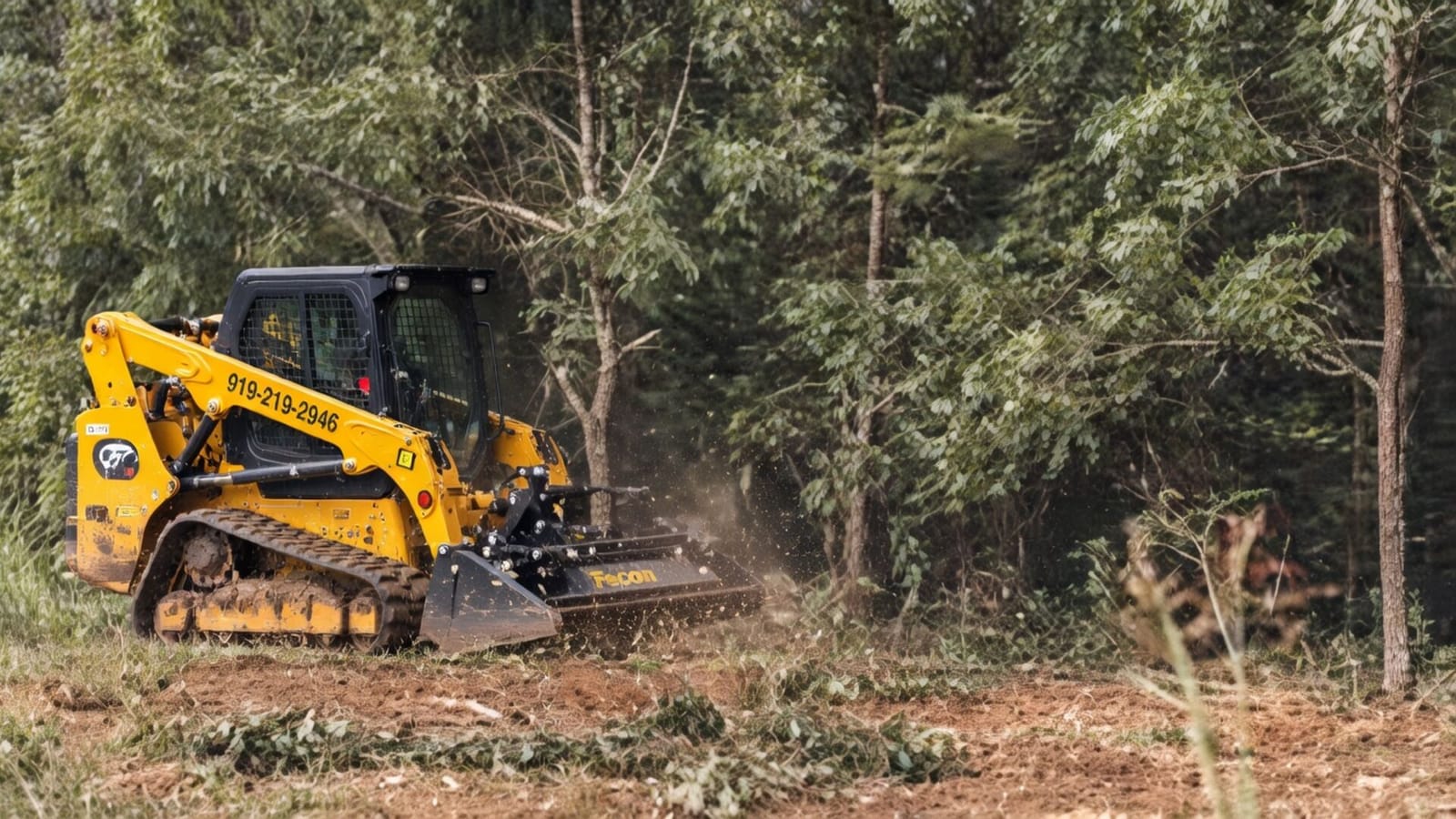
Forestry mulching around Albany, GA runs $1,500 to $4,000 per acre. A light pass under well-spaced pine on open, even ground sits at the floor. A stand where oak has closed in for a decade, on a tract the machine has to thread between sinks, ponds and creek buffers, sits at the ceiling. What usually decides where a Southwest Georgia tract lands is not the acreage: it is what has grown up under the pine, how many low spots have to be worked around, and how close the work comes to water.
What Does Forestry Mulching Cost Per Acre Near Albany?
| Condition | Range | Why it prices there |
|---|---|---|
| Light brush and saplings, open even ground | $1,500 – $2,000 / acre | One fast pass, little steering |
| Understory beneath standing pine | $2,000 – $3,000 / acre | Working between keeper trees, slower lines |
| Old field or stand closed in ten years or more | $2,800 – $3,600 / acre | Larger stems, repeat passes, more wear |
| Dense growth around depressions and buffers | $3,000 – $4,000 / acre | Marking, careful routing, slower travel |
A practical floor near $1,500 per project applies whatever the size, because trailering a tracked machine to your land costs the same whether it cuts for an hour or a full day. Every range here is a budgeting band; the walk-through that turns it into a written figure is free.
Why the Stand Matters More Than the Acreage
A lot of mulching work around Albany happens under pine, some of it longleaf ground kept for timber or quail. Longleaf and wiregrass stay open when fire runs through them every few years. When fire stays away, hardwoods move in underneath. The Jones Center at Ichauway, a longleaf reserve in Baker County on the same plain, describes its own work as removing oak-encroached stands and restoring the burn cycle that keeps longleaf open (NEON).
For a price, that means two very different jobs can share one acreage figure. Well-spaced pine with knee-high growth beneath it is quick, clean work. Pine with ten years of oak and sweetgum between the rows is not: the head works stems one by one, the carrier turns more often, and bark has to be protected on every tree that stays. That is the difference between the bottom and the middle of the band, and it is why a quote from someone who has not walked the stand is a guess.
Mulching does not replace fire on a longleaf stand. It resets an understory that has got away so a burn program can take over again, and Cut Brush offers no burning service.
What the Ground Underneath Does to the Number
Albany sits on the Dougherty Plain. The U.S. Geological Survey describes the Upper Floridan aquifer around Albany as lying under only 20 to 80 feet of overlying material and notes closed depressions, or sinks, throughout the plain (USGS).
On the surface, that means ponds, low swales and bowl-shaped dips across otherwise flat ground, and it works on a price in two directions. Sandy, even ground carries a tracked machine well and gives a mulching head little to fight, so passes go quickly. A tract with several depressions takes time: each one is marked on the walk-through, the machine routes around it rather than across it, and the lines between them are slower. A depression that holds water may be wetland, which only a formal determination can confirm, so the work stays out of it until that question is settled. Our guide to clearing land with sinkholes around Albany covers what to ask before a machine arrives.
How Water Buffers Change a Quote
Distance to water shapes a mulching job here as much as vegetation does. Inside Albany, state waters carry a 25-foot buffer that stays in its natural vegetation, and a project under one acre loses its permit exemption within 200 feet of the bank. Dougherty County can require a permit on small jobs near water too. Our Albany land clearing permit guide sets out the tests with their sources.
A buffer means the machine stops short and works a careful edge instead of open passes to the bank. It moves a job a little higher in its band, not onto a new rate, and it can move a start date.
Mulching or Clearing: Which Are You Buying?
Forestry mulching is one tracked machine grinding standing brush and small trees where they stand. Stumps are ground flush rather than pulled, the material stays down as a mat, and the ground is neither graded nor build ready. It is right for opening understory, reclaiming a field edge, or making a stand walkable and huntable.
Land clearing is whole-tract work whose ending gets named in the quote: whether stumps come out, whether material is hauled or piled for a permitted burn, whether a pad is shaped. It runs $1,500 to $4,500 per acre, and it is what you need if the parcel is headed for a house, a drive or utility runs. Ask each bidder which one they priced.
Disposal is simpler here than in north Georgia. Dougherty and its neighboring counties are not among the 54 under the May through September summer burn ban (Georgia EPD), so burning piles is possible with a Georgia Forestry Commission permit. Mulching still usually wins on cost, because it removes the piling, the burn day and the cleanup.
Frequently Asked Questions
How much does it cost to mulch one acre near Albany?
Budget $1,500 to $4,000, with a light understory pass at the floor and dense, closed-in growth around depressions or buffers near the ceiling. A single acre usually prices close to the project floor, because getting the machine there costs the same at any size.
Is mulching a substitute for burning a longleaf stand?
No. Mulching takes back an understory that fire has not reached for years, so a burn program can start again. Prescribed fire is its own job for a certified burner, and Cut Brush does not offer it.
Will the oak grow back after mulching?
Some of it will. Oak and sweetgum sprout from the root and need a follow-up pass or a burn every few years. Cut Brush applies no herbicide, so plan on mechanical maintenance or fire rather than a one-time fix.
Get a Real Number for Your Albany Property
What turns forestry mulching cost in Albany into one figure is walking the ground: what is under the pine, where the low spots sit, and how close the work comes to water.
Compare your project against every range on the Albany pricing guide, read the local conditions on our Albany land clearing page, then request a free quote. We put the scope in writing, so the number you approve is the number you pay.
More from the Cut Brush Blog
Keep reading for more tips and guides on land clearing.
 Guide
Guide Clearing Land With Sinkholes Around Albany, GA
Sinks and wet depressions on a Dougherty Plain tract change how a clearing job is laid out. What to mark, who decides, and what to ask a bidder before work.
County Guide Land Clearing Permits in Albany & Dougherty County
Albany and Dougherty County each issue their own land disturbance permit. Here are the one acre and 200 foot tests, the fees, the exemptions and the burn rules.
Cost Guide Land Clearing Cost Per Acre in Georgia (2026)
Land clearing cost per acre in Georgia runs $1,500 to $4,500. See how red clay, slope, regrowth and the summer burn ban move the number. Free quotes.
Ready to Get Started on Your Land?
Get a free, no-obligation estimate for property in Albany & Southwest Georgia.
Get Your Free QuoteOr call us directly: (919) 525-3950