
Brush Hogging Cost Per Acre in Georgia (2026)
Cut Brush Team · October 9, 2026 · 8 min read

The pasture you used to cut every summer is now waist-high horsenettle, briars and pine seedlings, with fire ant mounds you only find with your boot. You want it knocked down before it turns into woods. Brush hogging in Georgia runs $75 to $400 an acre with Cut Brush, depending on how long the field has gone uncut, and our crews mow out of Albany, Valdosta, Columbus, Savannah and Augusta.
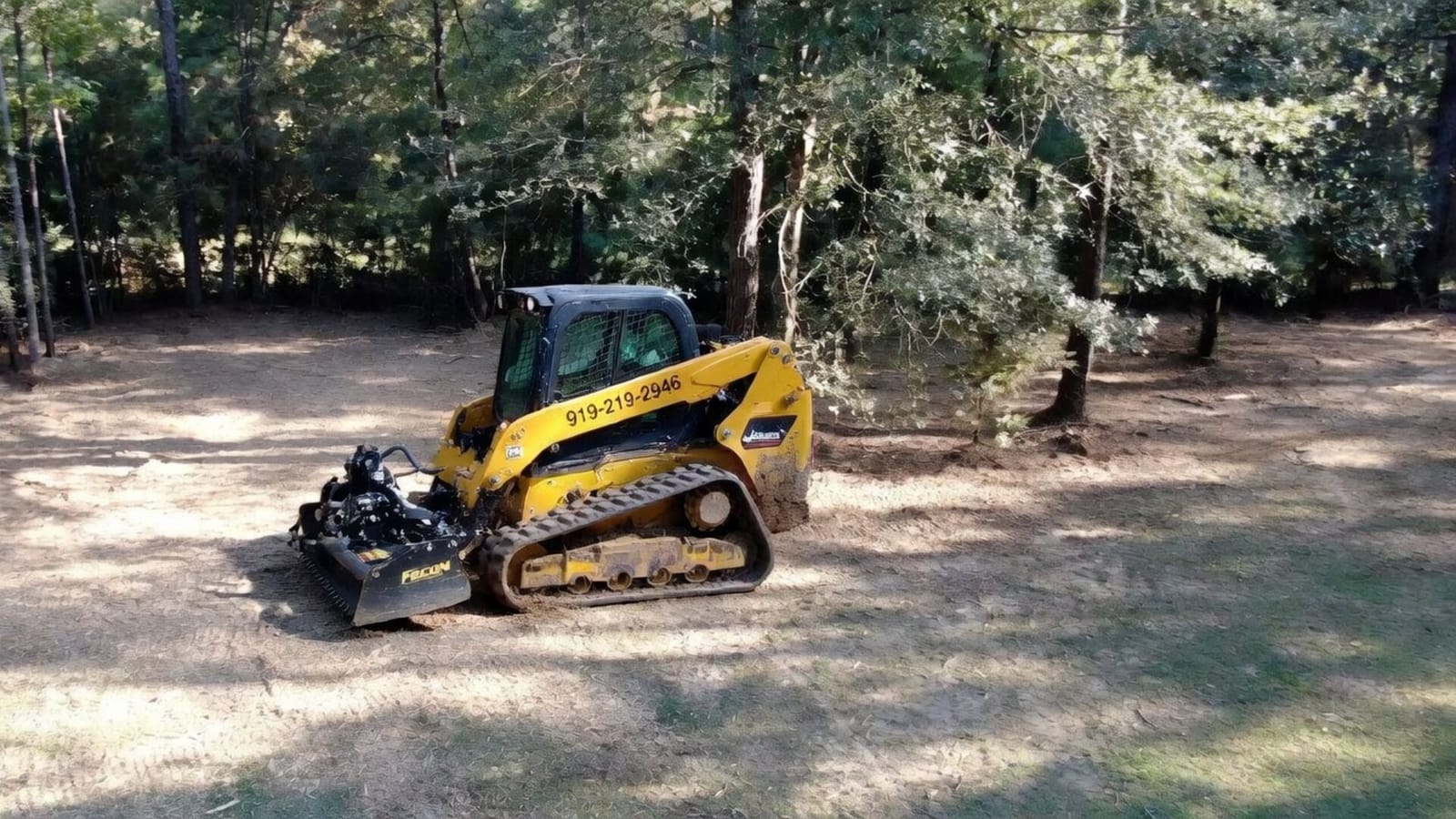
Brush hogging is a tractor pulling a heavy rotary cutter through growth that would wreck a lawn mower: grass, weeds, briars and young sprouts. It cuts everything down and leaves it on the field. It does not pull roots or take out trees, and knowing where that line sits is most of what keeps a mowing bill honest.
At a glance:
- $75 to $400 an acre for most Georgia fields, with a $250 to $500 minimum per visit.
- Past 2 to 3 inches, saplings are not a brush hog job. That ground moves to our understory or mulching prices.
- Cogongrass is a stop sign. The Georgia Forestry Commission says to keep mowers away from any known or suspected patch, and it treats confirmed patches free.
- Quail ground has a calendar. Georgia DNR advises against mowing field borders, openings and fallow ground from April through October.
- Spraying is separate. Herbicide on stumps or resprouts is work for a licensed applicator, so any spray follow-up is booked separately.
Brush hogging is on our Albany service list and on our lists in Valdosta, Columbus, Savannah and Augusta. We look at the field before we put a number on it, because a photo rarely shows what is under the grass.
How Much Does Brush Hogging Cost Per Acre in Georgia?
Time since the last cut sets the price more than anything else. A field mowed last year lets the tractor run at full speed; five years of growth makes it crawl.
| How the field looks today | Our price per acre | What we usually find |
|---|---|---|
| Cut sometime in the past twelve months | $75 – $150 | Grass and weeds, nothing woody yet |
| One or two growing seasons since the last pass | $125 – $250 | Briars, horsenettle and the first pine and sweetgum seedlings |
| Three or more years without a cut | $200 – $400 | Thick brush and saplings up to 2 inches through |
| Saplings past 2 to 3 inches | Not a brush hog job | Understory work at $1,500 – $2,500 or mulching at $1,500 – $4,000 an acre |
Where these numbers come from. These are the brush hogging rates Cut Brush publishes, and they are our rate in Georgia too. None of our Georgia pricing pages carries a separate mowing band, so this table is the one we quote from. The $250 to $500 minimum covers loading, hauling and unloading the tractor, and a one- or two-acre field usually starts there.
When the mower stops being the right tool. Our Georgia crews switch to the mulching head once stems pass wrist thickness. Sweetgum, pine and oak saplings bigger than that stop cutting cleanly and start splintering, and they beat up the cutter. The understory and mulching bands in the last row are the same on every one of our Georgia pricing pages; our Georgia forestry mulching cost guide and Georgia underbrush removal cost guide break each one down. When we walk a field and call it a mulching job, that is a read of what is standing there, not an upsell.
What Changes the Price of a Georgia Mowing Job
Fire ant mounds. UGA entomologists have warned that mounds dry to the consistency of concrete and do real damage to mowers and hay balers that hit them. The ants now turn up in every Georgia county, mountains included. A field studded with mounds gets cut slower and with the deck set higher, and that time shows up on the bill.
Cogongrass. The Georgia Forestry Commission finds it mostly in south Georgia and tells landowners to avoid mowing or disking through or near a known or suspected patch, because the machine spreads seed and root pieces. By May 2025 it had turned up in more than 78 counties. A patch does not raise our rate so much as change the job: it gets flagged and reported, and our crew skips it rather than mowing it.
What grows back. One pass trims a field; it rarely fixes it. UGA’s advice on horsenettle is to mow at 30-day intervals and treat the final fall regrowth with a systemic herbicide. We do not spray. Herbicide on stumps or resprouts is work for a licensed applicator, who handles that half and bills it separately.
Nesting season. Georgia DNR’s bobwhite quail booklet puts typical nesting in May through August, with some nests as early as March and as late as October. It recommends no mowing or disking of field borders, openings or fallow ground from April through October. If quail are part of your plan, your mowing window is November to March, and booking inside it is easier than chasing a crew in June.
Acreage and the trip. The tractor costs the same to haul whether it cuts one acre or fifteen. A big field spreads that cost thin; a small one pays the minimum.
Pro tip: A week before the tractor arrives, walk the field and stick a flag in every fire ant mound, stump, sink and coil of old wire you find. An operator who can see the hazards keeps the deck low and the speed up, and that is the cheapest hour you will ever save on a Georgia mowing bill.
Brush Hogging Across Georgia
The Dougherty Plain: Albany, Tifton and Camilla. Upland soils like the Tifton series, typed in Tift County, lie on slopes of 0 to 8 percent and carry crops, pasture and pine. That is flat, fast mowing ground, though the top layers hold 5 to 25 percent pea-sized ironstone nodules. Sinks are the real hazard. Our crew mows around low wet spots and sinks, not through them, and the Albany sinkhole guide explains what to look for before we arrive.
South Georgia around Valdosta. This is cogongrass country, so a field gets checked before it gets cut. The sequence for an infested tract is in our Valdosta cogongrass guide.
The coast around Savannah. Saw palmetto, gallberry and wax myrtle make a low, dense, woody layer that a mowing deck rides over without cutting. Past knee height it is a mulching job, covered in our Savannah flatwoods guide.
The Fall Line around Columbus and Augusta. Where sandhills meet clay, turkey oak and blackjack oak come up fast on the sand and outgrow a mower quickly. Catch those fields in the first or second row of the table and they stay cheap; let them go and they move to the understory band.
Rules That Touch a Georgia Mowing Job
Conservation use. The Georgia Department of Revenue lets bona fide agricultural property be assessed at its current use value rather than market value, and the land has to stay in that use for ten years. Plenty of owners mow to keep pasture looking like pasture, but whether your mowing supports the covenant is your county tax assessor’s call. Ask before you change the schedule.
Cogongrass reporting. A suspected patch goes to your local GFC office, which inspects it and treats a confirmed one free. A site only counts as eradicated after three years with no regrowth, so plan your mowing around that patch for at least that long.
Spraying. Any herbicide follow-up on horsenettle, briars or cogongrass belongs to a licensed applicator, booked separately from our mowing.
Frequently Asked Questions
How much does it cost to bush hog one acre in Georgia?
On a single acre, the $250 to $500 minimum usually is the price. The mowing itself might be worth $75 to $250 depending on growth, but loading and hauling the tractor costs the same for one acre as for ten. Bundling a neighbour’s field into the same trip is the easiest way to split that.
When is the best time to bush hog a field in Georgia?
It depends on what you want from the field. For quail, Georgia DNR’s guidance points to November through March. For horsenettle, UGA’s advice is repeated summer cuts followed by a fall spray, so decide which goal comes first before you book.
Can you bush hog cogongrass?
No. The Georgia Forestry Commission advises against mowing or disking through or near it, because that spreads seed and root fragments. Report it, let the commission treat it, and we mow the rest of the field around the flagged patch.
Will one mowing get rid of horsenettle?
No. It recovers after cutting, so one pass buys a season of open ground. Lasting control pairs repeat mowing with a herbicide program run by a licensed applicator.
Is bush hogging cheaper than clearing land in Georgia?
By a wide margin. Brush hogging cuts growth and leaves it on the field, at $75 to $400 an acre. Clearing removes trees and runs $1,500 to $4,500 an acre on our Georgia pricing pages; our Georgia land clearing cost per acre guide covers that side.
Get a Brush Hogging Quote in Georgia
Pick the nearest of our Georgia areas below and request a free quote. Our crew will contact you to talk through the field, the gate or field road, the finish you want (a one-time knockdown or a field kept open on a schedule) and any cogongrass, sinks, fire ant fields or old wire you already know about. Then we will tell you whether the field needs a brush hog or a mulching head and put a written price on it.
Field across the state line? See our Alabama brush hogging cost guide or South Carolina brush hogging cost guide.
Sources
More from the Cut Brush Blog
Keep reading for more tips and guides on land clearing.
 Cost Guide
Forestry Mulching Cost in Albany, GA (2026)
Forestry mulching around Albany, GA runs $1,500 to $4,000 per acre. See what oak under longleaf, Dougherty Plain depressions and water buffers do to the price.
 Guide
Clearing Land With Sinkholes Around Albany, GA
Sinks and wet depressions on a Dougherty Plain tract change how a clearing job is laid out. What to mark, who decides, and what to ask a bidder before work.
Cost Guide Forestry Mulching Cost in Georgia (2026 Guide)
Forestry mulching in Georgia runs $1,500 to $4,000 an acre with Cut Brush. See what palmetto, privet, wet flatwoods and the summer burn ban do to your price.
Comparing states? See land clearing costs by state.
Let's Get Started on Your Land
Request a free quote. We'll contact you to discuss your property, access, and the clearing you need.
Get a Free QuoteOr call us directly: (919) 525-3950