
Brush Hogging Cost Per Acre in Mississippi (2026 Guide)
Cut Brush Team · October 9, 2026 · 8 min read

Your pasture skipped a season or three. Now dogfennel and blackberry stand waist high, Cherokee rose is climbing the fence and the cows walk around half of it. Brush hogging a Mississippi field runs $75 to $400 an acre with Cut Brush, depending on how long it has gone since the last cut, with a minimum of $250 to $500 a visit. Our crews work from Indianola, Jackson, Hattiesburg, Gautier, Starkville and Corinth.
At a glance:
- Our price: $75 to $150 an acre for a field cut in the past year, $125 to $250 for one or two seasons of growth, $200 to $400 for three years or more.
- Minimum: $250 to $500 a visit, since loading and hauling the tractor costs the same for one acre as for ten.
- Past a mower: once saplings pass 2 to 3 inches thick, the field moves to our $1,500 to $2,500 an acre understory row.
- Nesting rule: on Conservation Reserve Program acres, Mississippi’s primary nesting season runs April 1 to August 15, and mowing waits until it ends.
- No city permit to mow in Gautier: the city’s fee schedule says mowing or bush hogging alone needs no land disturbance permit.
We cover the Delta, the capital region, the Pine Belt, the Gulf Coast, the Golden Triangle and the northeast hills. Before we quote, we look at the field and tell you straight whether a rotary cutter is enough or the growth has outrun it.
How Much Does Brush Hogging Cost Per Acre in Mississippi?
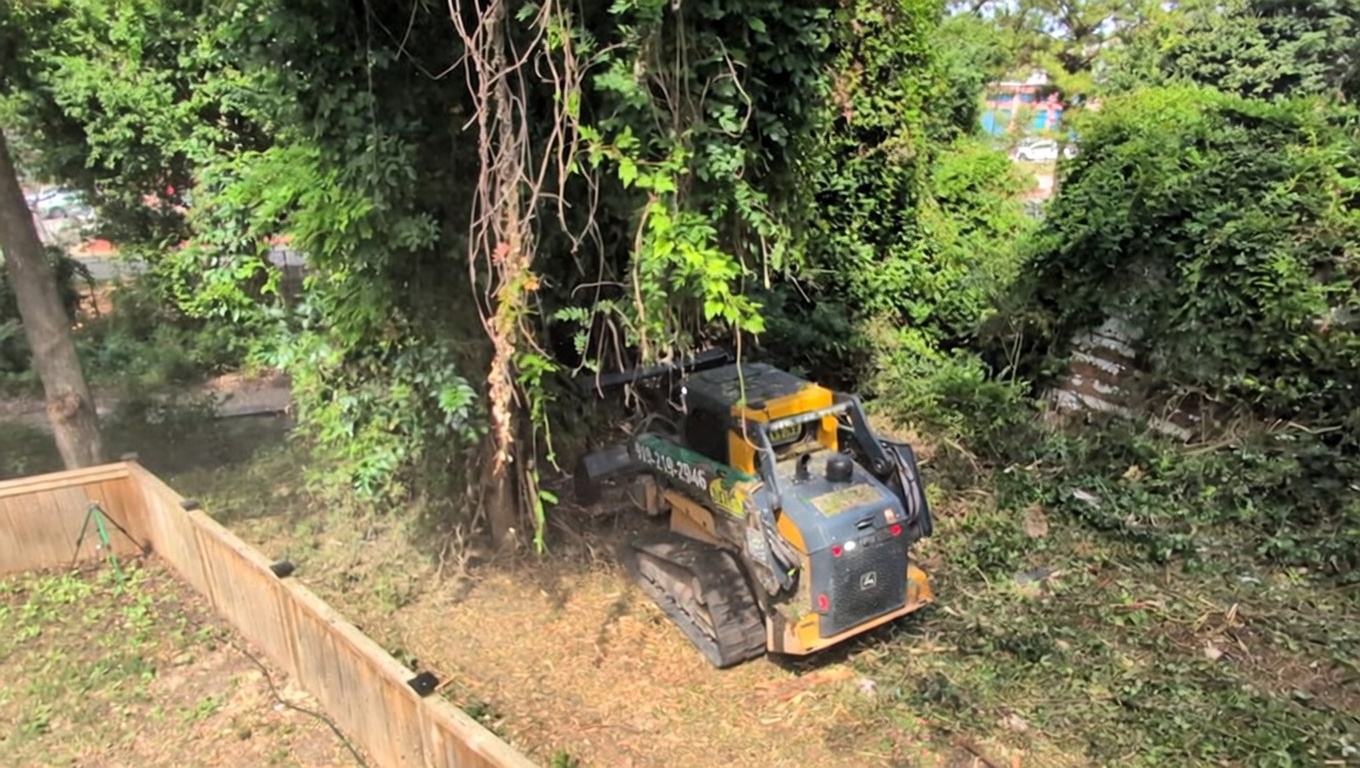
Brush hogging, or bush hogging, is a tractor pulling a heavy rotary cutter through growth that would wreck a lawn mower: rank grass, weeds, briars and saplings up to about 2 inches. The cuttings fall where they are cut. Our price follows one thing above all: how long the field has gone without a cut.
| How long since it was cut | Our price per acre | What it looks like in Mississippi |
|---|---|---|
| Within the past year | $75 – $150 | Bahiagrass or bermudagrass pasture with rank growth and seedheads the cattle left |
| One or two seasons | $125 – $250 | Dogfennel, dewberry and blackberry, smutgrass clumps, roses along the fence |
| Three years or more | $200 – $400 | Thick briars, privet sprouts and young cedar or pine up to 2 inches |
| Saplings past 2 to 3 inches | Not a brush hog job | Priced on our $1,500 – $2,500 understory row instead |
Where these numbers come from. Our six Mississippi pricing pages cover mulching and clearing but carry no mowing row, so a Mississippi field is priced on Cut Brush’s own brush hogging rates, the same rates we publish wherever we mow. Once the growth is woody, the price comes from the closest market’s understory row; in the Delta that is Fence Row & Bottomland Clearing on the Indianola pricing page. For whole tracts gone to woods, see the Mississippi land clearing cost per acre guide.
What Changes the Price of a Mississippi Mowing Job
Fire ant mounds. Mississippi State entomologists count 50 to more than 200 fire ant mounds an acre in permanent pasture, and say the mounds get in the way of mowing and can damage equipment. We run the cutter higher and slower across a mounded field, so a pasture that looks like an hour’s work can take two. MSU puts bait treatment at $8 to $45 an acre; baiting in spring makes the next cut quicker.
Cogongrass along the pasture. MSU Extension’s P3190 says mowing takes off the top growth but opens the ground for new stems from the rhizomes, that cogongrass can flower again after a cut, and that equipment spreads it. On Pine Belt pastures and roadsides we mow those patches last or leave them, then clean the deck before the tractor leaves. That care adds minutes, and minutes are what the bill is made of.
Tallow saplings. MSU’s tallow publication warns that mowing saplings forces one stem into several. On a Jackson County or Harrison County field gone to young tallow, brush hogging makes next year’s job bigger. We will say so and price it as mulching plus a treatment visit; our Mississippi forestry mulching cost guide covers that.
Wet Delta clay. The Sharkey series under much of the Mississippi River floodplain is very sticky, very plastic clay, saturated near the top from December through April in a normal year. MSU’s forage guide notes most producers keep heavy equipment off waterlogged fields, and so do we. A Sunflower County field in March gets a later date, not a tractor stuck to the axles.
Privet in the fence rows. MSU says cutting mature privet before it fruits stops the seed, but any stump or big shoot that is cut needs herbicide or it grows back. A brush hog keeps a Delta fence row down for a season; it does not clear it. Our Indianola fence row guide explains the longer fix.
Pro tip: Walk the field with a can of marking paint before we come. Mark every fire ant mound, stump, buried wire and cogongrass patch along the mowing lines. A marked field mows faster and safer, and it makes our walk-through quicker.
Brush Hogging Costs Across Mississippi
The Delta: Indianola, Leland, Cleveland, Greenwood. Most of this land is row crop, so mowing here means turn rows, ditch banks, fence rows and whatever pasture is left. The weather decides the date more than the acreage does, and privet decides how often a fence row needs us.
The hills: Jackson, Starkville, Corinth. MSU’s forage guide says bermudagrass shows up more often in central and northern Mississippi pastures. On Black Prairie ground around Starkville and West Point, young eastern redcedar is what creeps in, and cedar cut at ground level does not resprout, so a yearly cut keeps seedlings from ever taking hold. Cedar past mower size is a separate job, covered in our Starkville prairie pasture guide. Around Corinth, kudzu crawling out of the wood edge needs cutting again and again.
The Pine Belt and the coast: Hattiesburg, Collins, Gautier. Bahiagrass is the main warm-season pasture grass in south Mississippi. Fire ants and cogongrass are what slow us here, and a coastal field full of young tallow is one we will tell you not to mow at all.
Mowing Season and Permit Rules in Mississippi
Nesting season. The Farm Service Agency’s Mississippi office sets the primary nesting season at April 1 through August 15, and CRP maintenance such as mowing has to fall outside it. If your field is not in CRP, the rule does not bind you, but it is a sound calendar for any old field with quail or turkey using it.
Weeds a cutter meets. Mississippi had 1,550,222 acres in pasture and 583,634 more in hay and silage in the 2022 Census, MSU Extension notes, and it names the weeds that take them over: dogfennel, often called summer cedar, dewberry and blackberry, Cherokee, McCartney and multiflora roses, and smutgrass. MSU’s advice is to mow off rank growth and seedheads the cattle leave, alongside fertility and herbicide rather than instead of them.
City permits. Mowing alone rarely needs one. Gautier’s fee schedule says outright that bush hogging only does not require a land disturbance permit; anything past mowing does.
Frequently Asked Questions
How much does it cost to bush hog an acre in Mississippi?
With us, $75 to $400 an acre, set by how long the field has gone uncut, and a single acre usually lands on the $250 to $500 visit minimum. MSU’s 2024 custom rate survey shows farmers charging neighbours about $72 an hour on average, which is a useful floor for a clean hay meadow, not a rough field.
When should I bush hog a pasture in Mississippi?
For weeds, before seedheads set. For wildlife, and always on CRP land, after August 15. In the Delta, wait until the clay dries; ruts cost more to fix than the cut saves.
Can a brush hog cut small trees?
Up to about 2 inches thick, cleanly. Between 2 and 3 inches it struggles and tears the stand, and past that the field is a mulching job on our $1,500 to $2,500 understory row.
Should I bush hog a field of Chinese tallow?
No. MSU warns mowing tallow saplings turns one stem into several. The field needs the trees ground out and the roots treated, which is mulching plus a herbicide visit.
Does Cut Brush brush hog fields in Mississippi?
Yes, when a rotary cutter is the right tool for the growth. If saplings or privet have taken the field over, we tell you that before any work starts and price it on the closest market’s understory row instead.
Get a Brush Hogging Quote in Mississippi
Pick the closest area below and request a free quote. Our crew will contact you to talk through the worst patch and the gate or turn row the tractor comes in by, what is growing (grass, briars, saplings, tallow), whether the field is under a CRP contract, and whether you want one pass or a yearly cut. If saplings have closed in under trees, the Mississippi underbrush removal cost guide is the better fit.
Mowing across the state line? See our Alabama and Tennessee brush hogging guides.
Sources
More from the Cut Brush Blog
Keep reading for more tips and guides on land clearing.
 Cost Guide
Forestry Mulching Cost in Indianola, MS (2026)
Forestry mulching around Indianola, MS runs $1,500 to $4,000 per acre. How privet, wet Delta ground, trees you keep and field-road access move a quote.
 Guide
Clearing Privet From Fence Rows Near Indianola, MS
Why Chinese privet fills Delta fence rows and field edges around Indianola, why cutting alone fails, and how to mulch it and treat the regrowth to keep it down.
Cost Guide Forestry Mulching Cost in Mississippi (2026 Guide)
We charge $1,500 to $4,000 an acre to forestry mulch Mississippi land. How Pine Belt sand, Delta clay, tallow, kudzu and state cost share move your price.
Comparing states? See land clearing costs by state.
Let's Get Started on Your Land
Request a free quote. We'll contact you to discuss your property, access, and the clearing you need.
Get a Free QuoteOr call us directly: (919) 525-3950