
Forestry Mulching Cost in Iowa (2026 Guide)
Cut Brush Team · November 9, 2026 · 9 min read
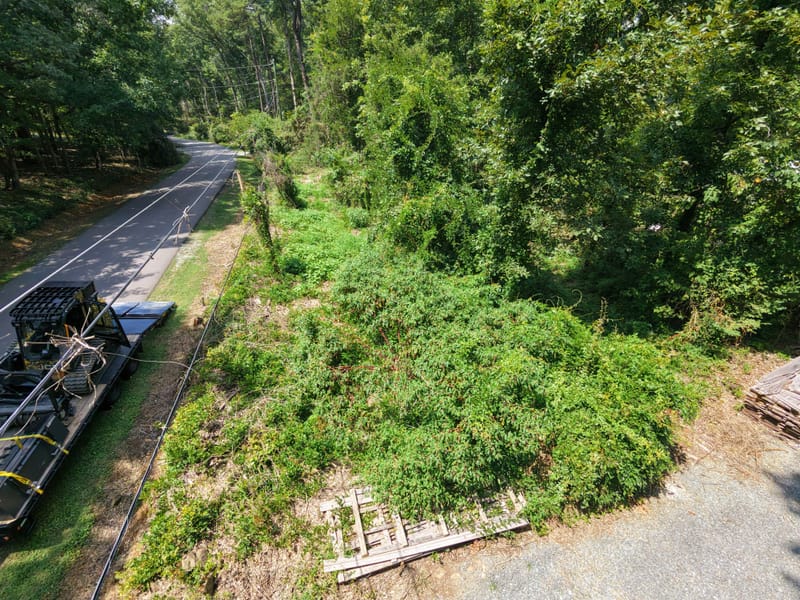
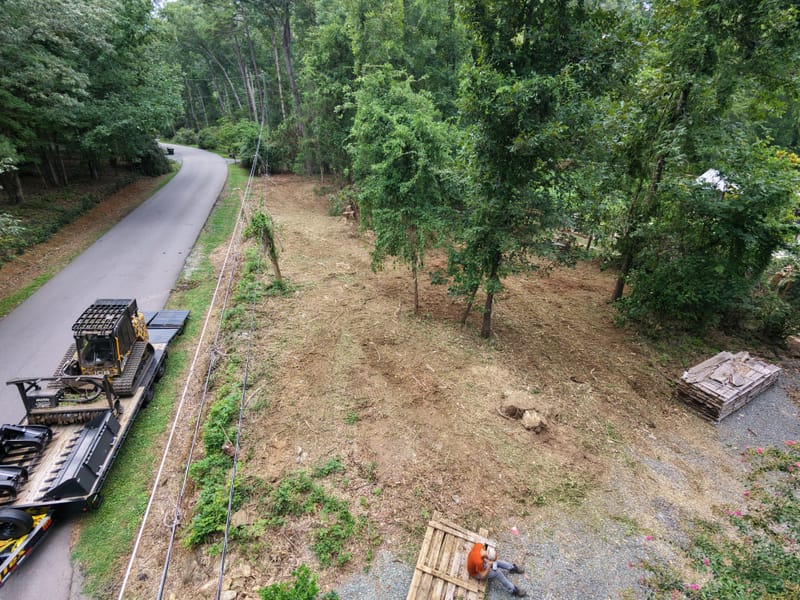
Forestry mulching in Iowa costs $1,500 to $4,000 an acre with our crew, and cutting buckthorn, bush honeysuckle or autumn olive out from under trees you keep costs $1,500 to $2,500 an acre. Where your acre lands depends on what has grown up, how steep the timber is, and whether the regrowth is handled too.
At a glance:
- Mulching standing brush, cedar and small trees: $1,500 to $4,000 an acre
- Understory shrubs under kept oaks, or a grown-up fence row: $1,500 to $2,500 an acre
- Small jobs: a minimum charge of about $1,500, billed in place of an acre rate
- Burning: brush from clearing may only burn a quarter mile or more from any home other than the owner’s or tenant’s, and never inside eleven listed cities, among them Des Moines, Cedar Rapids and the city of Marion
- Regrowth: buckthorn is a primary noxious weed under Iowa Code 317.1A and multiflora rose a secondary one, so budget for the return visit
Our crews work three Iowa markets: Pella and South-Central Iowa, Coralville and the Corridor, and Perry and Central Iowa.
How Much Does Forestry Mulching Cost in Iowa?
Forestry mulching is one tracked machine with a spinning drum that grinds brush and small trees into chips where they stand. Stumps finish flush, and the roots and soil stay put, which matters on a loess slope above a creek.
| What is standing on your land | Our price per acre | What it looks like |
|---|---|---|
| Young buckthorn, bush honeysuckle or autumn olive under oak, hickory or walnut you keep | $1,500 – $2,500 | A timber floor too thick to walk, with keepers flagged first |
| A fence row or pasture edge of autumn olive, multiflora rose and saplings | $1,500 – $2,500 | Counted in acres: 1,320 feet of row, 33 feet across, makes one |
| Eastern redcedar spread through a pasture | $1,500 – $4,000 | Scattered young cedars near the bottom, a closed stand near the top |
| An old thicket of pole-sized trees and shrubs on a river bluff or ravine | $1,500 – $4,000, toward the top | Short passes across the slope, unsafe pitches left out |
| Less than a third of an acre of any of these | Minimum charge of about $1,500 | A short fence row or one corner of timber |
Where these numbers come from. They are the bands on our three Iowa pricing pages, for Pella, Coralville and Perry. Forestry mulching is $1,500 to $4,000 an acre in all three. The $1,500 to $2,500 understory row goes by a local name: autumn olive and fence row clearing around Pella, buckthorn and honeysuckle clearing around Coralville, honeysuckle and understory clearing around Perry. Work past mulching, such as large trees cut and hauled or stumps dug out below grade, is land clearing at $1,500 to $4,500, set out in our Iowa land clearing cost guide.
A figure of a hundred or a few hundred dollars an acre is a mower’s price, not a mulcher’s. Iowa State’s farm custom rate survey puts chopping brush at a median of $100 an acre across 18 responses, and mowing CRP or pasture at a median of $27 across 47. That buys a tractor and rotary cutter over grass and light brush, and once saplings pass 2 to 3 inches a mower stops being the tool. If yours are smaller than that, our Iowa brush hogging cost guide is the better fit.
What Changes the Price of an Iowa Mulching Job
How long the shrubs have had. Amur honeysuckle reaches 15 feet and autumn olive 20, and autumn olive fruits once it is three years old. A pasture edge left for three years is light work; one left for fifteen carries far more and thicker stems, and stem count is what moves an acre up its band.
Cedar coming into the pasture. Eastern redcedar is native to every part of Iowa and grows in pastures, dry open woods and rocky bluffs. A pasture with a few young cedars mulches near $1,500 an acre; a stand that has closed over the grass works toward $4,000.
Winter ground or a July cut. Frozen ground carries a tracked machine across bottoms and field lanes that are soft the rest of the year. The catch is regrowth. Woody plants here hold the most food in their roots from November to early May, and stems cut while dormant sprout back the hardest, while stems cut after the leaves are fully out sprout the least. For buckthorn, bush honeysuckle and autumn olive, July is the month to cut a stump and have it treated straight away. Settle which matters more on your ground before the date is set.
Slope on the river breaks. In our three Iowa areas the open ground is farmed, so most mulching work sits in timber on the breaks of the Iowa River, the North Raccoon ravines and the bluffs around Lake Red Rock. A mulcher works a side hill in shorter passes, so a sloped acre prices higher than a flat one with the same growth.
Will It Grow Back After One Pass?
Usually, yes, and in Iowa the law cares. Iowa Code 317.1A makes buckthorn a primary noxious weed (glossy buckthorn is excluded) and multiflora rose a secondary one, unless your county board of supervisors has voted the rose off. Owners must destroy them as the county board orders; if not, the weed commissioner can fine $10 a day for up to ten days, destroy the weeds and assess the cost against the land. Bush honeysuckle and autumn olive are not on the list, but both sprout from a cut stump.
The seed bank is the long tail. A multiflora rose plant can shed up to 500,000 seeds a year, and they stay viable in the soil for up to 20 years, so seedlings keep coming after the parent is chips.
What works in Iowa timber is mechanical and chemical together: cut, then treat the stumps, or cut and spray the regrowth several weeks or months later. Treatment is a licensed applicator’s work. Our part is the first pass and the return visits. Sprout work falls in the same $1,500 to $2,500 understory row, and a small return visit starts at the minimum charge. Each visit is its own line in the quote, so you can stop after the first pass or take the whole plan.
Pro tip: If your thicket is buckthorn, honeysuckle or autumn olive, no oak you are keeping stands in it, and the ground is dry in July, ask for a July start. Stumps cut then sprout least, and an applicator can treat them the same day.
Our Coralville forestry mulching guide shows one Iowa city’s year of woodland visits, and how to set an hourly bid beside an acre price.
Burning and Permit Rules in Iowa
The quarter-mile rule. Iowa lets you burn landscape waste grown on your own land, but brush from clearing, grubbing and construction must burn at least one-fourth mile from any building lived in by someone other than the landowner or tenant. A quarter-mile circle around a pile covers about 125 acres, so one neighbor’s house anywhere inside it rules the pile out.
The eleven cities. The exemption does not apply at all in Cedar Rapids, the city of Marion and Hiawatha in Linn County; in Des Moines, West Des Moines, Clive, Windsor Heights, Urbandale and Pleasant Hill; or in Council Bluffs and Carter Lake on the Missouri River. Marion County, around Pella and Knoxville, is not on the list: the rule names the city of Marion beside Cedar Rapids. Anywhere else, a local ordinance can still forbid the fire. Mulching leaves nothing to pile.
Stormwater. Burning never excuses the stormwater rules. Iowa DNR requires General Permit No. 2 coverage when construction disturbs an acre or more, or less when it is part of a larger plan that will, and the authorization must be issued before any soil is disturbed. Mulching on its own leaves the ground in place; if the cleared acre becomes a house site, the building plan decides the permit, and your builder holds it, since we do not file permits or grade. Our Iowa land clearing and grading cost guide shows who does each phase.
Forestry Mulching Across Iowa
Pella and South-Central Iowa. Marion, Jasper, Mahaska, Poweshiek, Monroe and Polk counties. The usual job is a fence row or pasture corner that autumn olive has taken, measured into acres, plus timber on the bluffs above Lake Red Rock where low ground waits for a dry or frozen spell. Our Pella forestry mulching guide turns a fence row into acres.
Coralville and the Corridor. Johnson, Linn, Cedar, Washington, Iowa and Muscatine counties. Buckthorn and honeysuckle under oak and hickory on the Iowa River slopes is the common job, and three Linn County cities on the burn list make mulching in place the usual answer there.
Perry and Central Iowa. Dallas, Boone, Greene, Polk and Story counties. Honeysuckle fills the ravine timber along the North Raccoon, and four of the excluded suburbs sit in this service area. Our Perry forestry mulching guide compares mulching with cutting and burning.
If your trees stay and only the brush beneath goes, see our Iowa underbrush removal cost guide.
Frequently Asked Questions
How much does it cost to forestry mulch one acre in Iowa?
$1,500 to $4,000 an acre. $1,500 is also our minimum charge, so a light acre and a small patch cost the same. Young shrubs under kept oaks run $1,500 to $2,500. An old thicket or cedar stand on a bluff works toward $4,000.
How many acres can a forestry mulcher clear in a day?
It depends on stems and slope more than acreage: a level fence row of young autumn olive goes much faster than a ravine of old buckthorn. That is why we price by the acre with the finish written down, so slow ground is our time, not your money.
Can I bush hog the ground after it has been mulched?
Yes. Stumps finish flush, so a rotary mower can run over the chips the next summer. Mowing keeps sprouts short, but woody weeds that are cut or mowed tend to come back bushier, with more stems, so cutting alone rarely controls buckthorn or honeysuckle. That is why the stump or the regrowth gets treated.
Can I burn the brush instead of mulching it in Iowa?
Only outside the eleven listed cities, only with the fire a quarter mile or more from any home but yours or your tenant’s, and only where no local ordinance forbids it. On a small acreage with neighbors close by, that distance is rarely there.
Get a Forestry Mulching Quote in Iowa
Request a free quote, and our crew will contact you to discuss your property, access and the clearing you need. Pick the nearest area below: Pella, Coralville or Perry. Your quote shows the first pass and any return visits as separate lines, priced per acre from the bands above.
Sources
- Iowa State University Extension and Outreach, Ag Decision Maker: 2026 Iowa Farm Custom Rate Survey
- Iowa Administrative Code 567-23.2: open burning exemptions and the eleven-city exclusion
More from the Cut Brush Blog
Keep reading for more tips and guides on land clearing.
 Cost Guide
Forestry Mulching Cost in Pella, IA (2026)
Forestry mulching in Pella, IA: $1,500 to $4,000 an acre. Why per-tree quotes miss fence row work, plus lake ground and regrowth. Request a free quote.
 Guide
Autumn Olive Removal in Iowa: Fence Rows and Pasture
Autumn olive removal in Iowa: $1,500 to $2,500 an acre for fence rows and pasture. Plan the first pass and the sprout visits near Pella. Request a free quote.
Cost Guide Land Clearing Cost Per Acre in Iowa (2026 Guide)
Land clearing in Iowa runs $1,500 to $4,500 an acre with our crew. How buckthorn, timber slopes, forest reserve status and burn rules move the price.
Comparing states? See land clearing costs by state.
Let's Get Started on Your Land
Request a free quote. We'll contact you to discuss your property, access, and the clearing you need.
Get a Free QuoteOr call us directly: (919) 525-3950
 Quick answers from Cut Brush