
Underbrush Removal Cost in Iowa (2026 Guide)
Cut Brush Team · November 9, 2026 · 9 min read
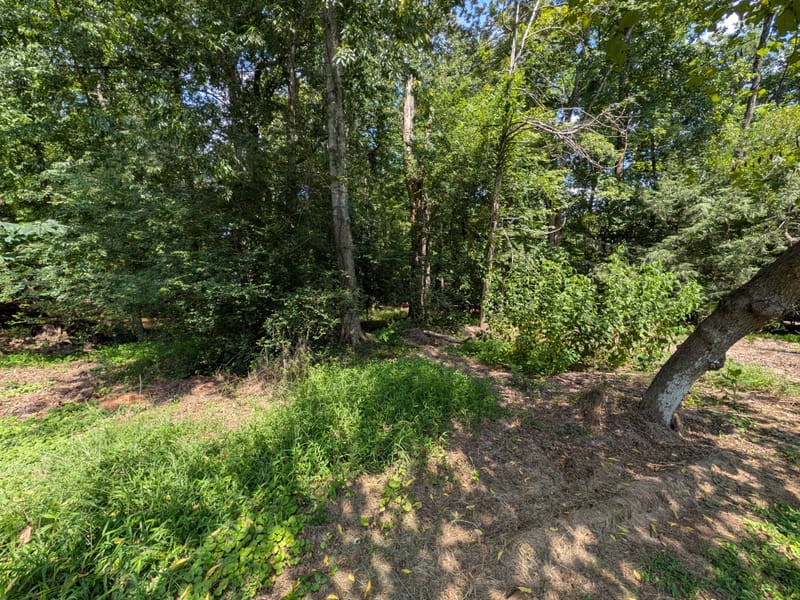
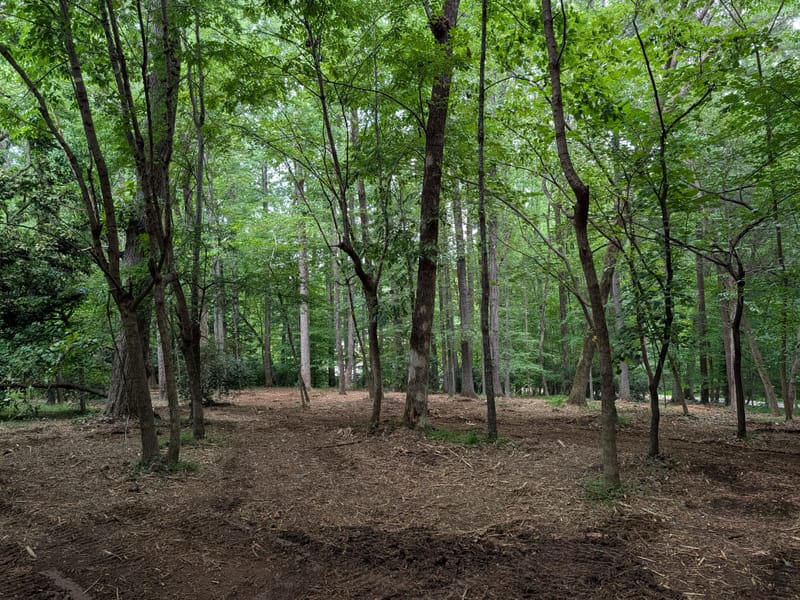
You walk into your timber in October and the oaks have dropped their leaves, but the woods are still a wall: green honeysuckle and yellow-leaved buckthorn, waist to head high, hiding everything past the first few trunks. Our crew clears that kind of Iowa understory for $1,500 to $2,500 an acre, and an old thicket with pole-sized stems prices in our $1,500 to $4,000 forestry mulching band. The oak, hickory and walnut you want to keep stay standing.
At a glance:
- Young buckthorn, honeysuckle or multiflora rose under kept trees: $1,500 to $2,500 an acre
- Old thickets with thick stems: priced as forestry mulching, $1,500 to $4,000 an acre
- Small jobs: a minimum charge of about $1,500 per project, the floor rather than an extra fee
- Sprouts: honeysuckle and buckthorn grow back from the stump, so each return visit is its own line in the quote
- Burning: clearing brush may only burn on the land it grew on, a quarter mile or more from any neighbor’s home, and never inside eleven listed cities, among them Cedar Rapids, the city of Marion, Hiawatha and Des Moines
Our Iowa crews work from three markets: Coralville and the Corridor (Johnson, Linn, Cedar, Washington, Iowa and Muscatine counties), Perry and Central Iowa, and Pella and South-Central Iowa.
How Much Does Underbrush Removal Cost in Iowa?
Underbrush removal means taking out the shrub layer beneath a canopy you keep: the buckthorn, bush honeysuckle, multiflora rose and autumn olive that fill Iowa timber and fence rows. A tracked mulcher grinds it where it stands, and we price it by what is growing under your trees.
| What is under your trees | Our price per acre | What it looks like |
|---|---|---|
| Scattered young buckthorn and honeysuckle beneath oak and hickory | $1,500 – $2,500 | You can still walk through it; stems finger to wrist thick |
| A fence row or timber edge filled with autumn olive and multiflora rose | $1,500 – $2,500 | A strip along a pasture or field, measured by its acre equivalent |
| A closed thicket of pole-sized honeysuckle or buckthorn among keeper trees | $1,500 – $4,000 | No ground cover left under it; stems you cannot bend |
| Understory and the trees above it, all taken down | $1,500 – $4,500 | The whole stand cleared to an agreed finish |
Where these numbers come from. All three Iowa pricing pages carry the same understory band under the name that fits each place: Buckthorn & Honeysuckle Clearing on the Coralville pricing page, Honeysuckle & Understory Clearing on the Perry pricing page, and Autumn Olive & Fence Row Clearing on the Pella pricing page. The price grinds stumps flush and hauls nothing away. If you want the trees gone as well, our Iowa forestry mulching cost guide prices that job, and the Iowa land clearing cost per acre guide covers whole-parcel clearing.
The First Pass and the Sprouts: What Iowa Understory Costs Over Two Years
The acre price buys the first pass. What Iowa owners rarely budget for is the regrowth: all four shrubs that fill timber here return after one cutting.
Honeysuckle. On larger plants, cutting alone almost never ends it; the cut stumps need herbicide afterward. A very small patch can be beaten without chemicals, but only by cutting it several times a year for two years. Pulled plants left lying on the ground can root again.
Multiflora rose. Mowing or cutting works when it is done three to six times a growing season, for two to four years. Its seed stays alive in the soil for 10 to 20 years, so new plants come up long after the old ones are gone.
Buckthorn and autumn olive. Both sprout from the stump. Buckthorn seed in the soil keeps coming up for two or three years after the first clearing, and birds keep dropping fresh autumn olive seed along every fence row.
Coralville planned its own city woodland work this way: a winter cut, then regrowth visits in May or June and again in August or September, a fair model for a private woodlot.
What that means for your budget:
- The first pass is the big number. It opens the woods and takes the woody stems down.
- Return visits are lighter work, listed and priced on their own lines so you see the whole plan before agreeing. A short visit can still reach the minimum charge, so pair it with other ground on the same property where you can.
- Stump treatment is a licensed applicator’s work. We cut the regrowth back; the chemical side belongs to them.
Our guides to buckthorn removal in Iowa and bush honeysuckle removal around Perry set out the visit plan for each shrub.
Pro tip: Walk your timber in late October, after the oaks drop their leaves. Honeysuckle stays green and buckthorn turns yellow while the rest of the understory is bare, so you can see exactly how far the infestation runs before you ask for a price.
What Moves the Price Under Iowa Timber
Stem size. A buckthorn or honeysuckle stand that has gone unchecked for ten years is no longer brush. Bush honeysuckle in a dense Iowa stand has reached 12 inches across at the stem. Once stems reach pole size, the work moves from the understory band to the mulching band.
Your keeper oaks and the calendar. Oak wilt spreads through fresh wounds when sap beetles are active in spring and early summer. Winter, December through February, is the safest time to work around oaks in Iowa. If a keeper oak gets barked outside winter, the wound should be painted with latex house paint within 15 minutes. A winter schedule costs nothing extra.
When the sprouts are weakest. Stumps ground at the end of July or in early August, when root reserves are at their lowest, send up fewer sprouts. Where there are no oaks to protect, a late-July first pass can save a return visit.
Bare ground under the thicket. Where honeysuckle and buckthorn are dense, the ground beneath them is bare of grass and wildflowers. On a loess side hill that bare soil can wash once the shrubs come out, which is why we leave the chips as a mat instead of hauling them.
Underbrush Work Across Iowa
The Corridor: Coralville, Iowa City and Cedar Rapids. Oak, hickory and black walnut timber on steep loess along the Iowa River and Clear Creek, with buckthorn and honeysuckle beneath. Johnson County puts multiflora rose on its must-control weed list, and where the weed commissioner has to step in, the cost and any fines go on the land’s tax bill. Inside Iowa City and other towns with woodland or slope rules, ask the city before clearing a wooded ravine.
Central Iowa: Perry, Adel and the western suburbs. The timber here follows the North Raccoon River and its ravines through Dallas County, with crop ground on every side. Bush honeysuckle is the usual understory under the oaks, and getting a machine across the field to the timber is part of the price. In West Des Moines, Clive, Urbandale and Windsor Heights, a pile cannot be burned at all.
South-Central Iowa: Pella, Knoxville and Lake Red Rock. Much of the work is fence rows and pasture edges that autumn olive has filled. On the Lake Red Rock bluffs, find your property line before any marking starts, since the timber next door may be public, and expect bottom ground to wait out high water. Our Iowa autumn olive removal guide explains its return trips. For open pasture with no canopy, the Iowa brush hogging cost guide is the better fit.
Burning the Brush and Paying for the Work
Can you burn it? Iowa lets you burn landscape waste only on the property where it grew; it cannot be hauled to another place and burned there. Brush from clearing has a further limit: the fire has to sit at least a quarter mile from any building lived in by anyone other than the landowner or tenant. Inside Cedar Rapids, Marion, Hiawatha, Des Moines, West Des Moines, Clive, Urbandale, Windsor Heights and Pleasant Hill, that allowance does not exist, and a local ordinance or a county burn ban can shut it off anywhere else. Coralville’s own woodland plan chips or removes its brush and burns none of it. Mulching in place is the no-burn route, and it is already inside our price.
Is there help with the cost? Brush management is a practice EQIP, the federal cost-share run by NRCS, can pay for on agricultural land and private non-industrial forest, not a suburban lot. Iowa sets its brush management payment rate each year, so ask NRCS for the current rate and sign-up window before you book the machine. The state REAP fund helps with timber stand improvement on 5 acres or more. Both start with your USDA service center or DNR district forester.
Frequently Asked Questions
How much does it cost to clear underbrush per acre in Iowa?
$1,500 to $2,500 an acre for buckthorn, honeysuckle, multiflora rose or autumn olive under trees you keep. An old thicket with pole-sized stems prices as forestry mulching, $1,500 to $4,000. Small jobs start at a minimum charge of about $1,500.
Is it cheaper to rent a mulcher and do it myself?
For seedlings, yes: small and medium honeysuckle pulls out by hand in spring. Once stems pass a few inches, a walk-behind cannot keep up, and a skid steer mulcher is an expensive machine to learn on a side hill among keeper oaks. Price the rental and your days against our minimum charge.
What happens to the small stumps left after mulching?
They are ground flush with the soil, and most of them will sprout. That is what the return visits are for: the regrowth is cut back while it is young, and a licensed applicator can treat the stumps if you want the chemical route.
Does EQIP pay to clear honeysuckle out of Iowa timber?
It can, through the brush management practice, on farm ground or private forest land. Talk to your NRCS service center before the machine arrives, not after the woods are already cleared. On 5 acres or more of timber, ask your district forester about REAP as well.
When is the best time to clear underbrush in Iowa?
Around oaks, December through February. Where oaks are not a concern, late July or early August cuts back the sprouting. Honeysuckle should come out before its seed drops in late summer.
Get an Underbrush Removal Quote in Iowa
Request a free quote and our crew will contact you to talk through the property, the access and the clearing you need under your trees. Pick the nearest area below. For a full parcel taken down to grade, our Iowa land clearing and grading cost guide shows which part we clear and which part your excavating contractor grades.
Sources
- Iowa Administrative Code, 567-23.2, open burning
- Iowa DNR, forestry landowner assistance: EQIP, REAP and district foresters
More from the Cut Brush Blog
Keep reading for more tips and guides on land clearing.
 Cost Guide
Land Clearing Cost Per Acre in Iowa (2026 Guide)
Land clearing in Iowa runs $1,500 to $4,500 an acre with our crew. How buckthorn, timber slopes, forest reserve status and burn rules move the price.
Cost Guide Forestry Mulching Cost in Coralville, IA (2026)
Forestry mulching near Coralville, IA runs $1,500 to $4,000 an acre. A three-acre buckthorn lot priced pass by pass, and hourly bids checked against ISU rates.
Cost Guide Forestry Mulching Cost in Iowa (2026 Guide)
Forestry mulching in Iowa costs $1,500 to $4,000 an acre. How buckthorn regrowth, July or winter timing and Iowa's brush burning limits shape your quote.
Comparing states? See land clearing costs by state.
Let's Get Started on Your Land
Request a free quote. We'll contact you to discuss your property, access, and the clearing you need.
Get a Free QuoteOr call us directly: (919) 525-3950
 Quick answers from Cut Brush