Kudzu Removal in Georgia: Cost and a Plan That Lasts
Cut Brush Team · October 1, 2026 · 9 min read
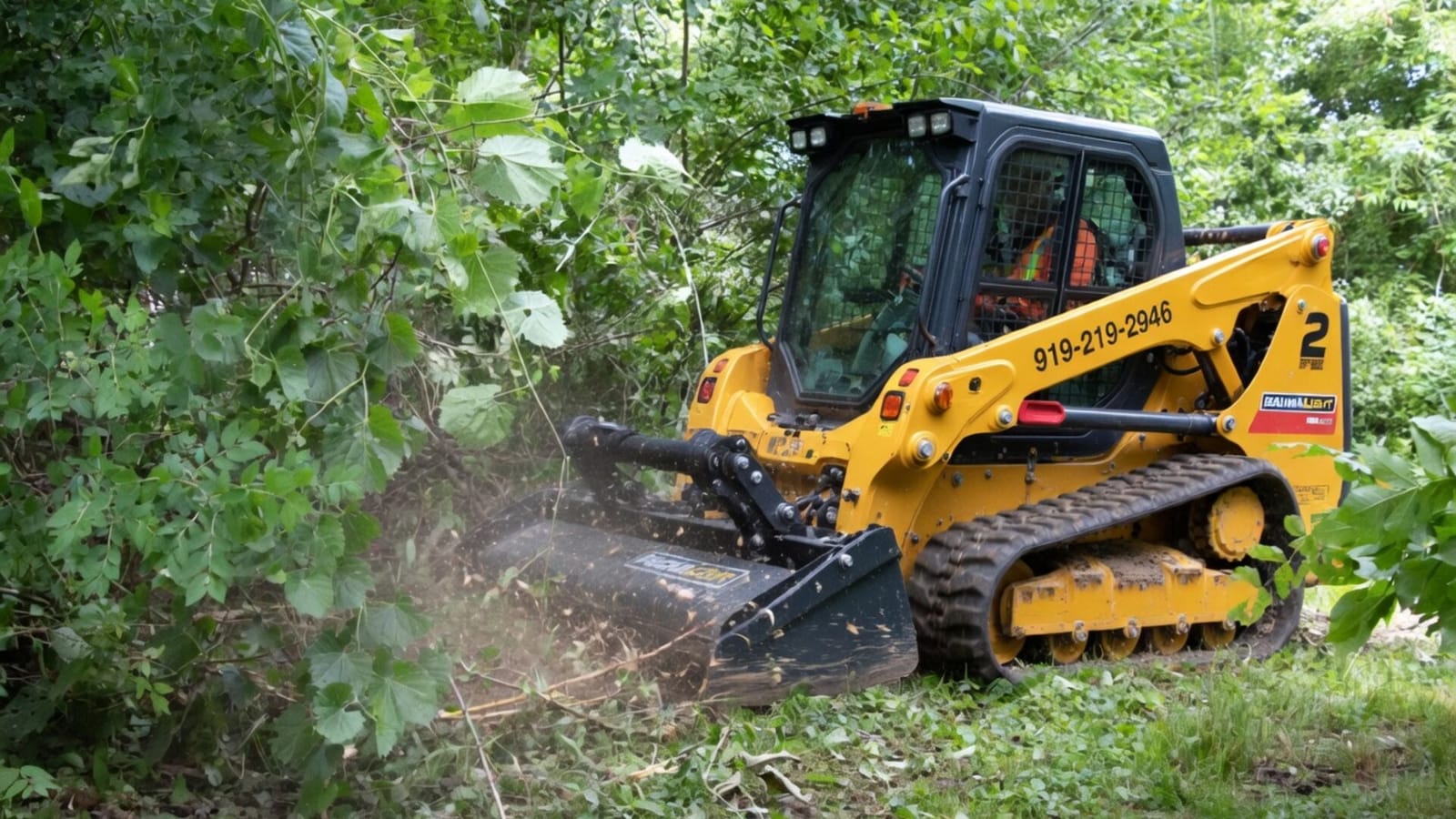
It starts as a green fringe on the bank behind the house. Two summers later the fence line is gone, the pines along the property line are wearing vines to their crowns, and the shed has a new roof made of leaves. Kudzu removal in Georgia is its own kind of clearing job, because the state gives the vine everything it wants: long hot summers, red clay road cuts, old farm terraces and miles of field edge nobody mows.
The bad news is that no single cutting fixes it. The good news is that kudzu has one weak point, and a plan built around it works. This guide covers why Georgia grows so much of it, how it really spreads, why one cutting never lasts, the multi-visit plan, what removal costs per acre, and how the job changes from metro Atlanta to the Coastal Plain.
Why Is Georgia Such Good Kudzu Country?
Kudzu is ranked among the worst invasive plants in the state. The Georgia Invasive Species Council places it in Category 1, “the number one being the most invasive,” alongside Chinese privet, Chinese wisteria and Japanese honeysuckle, according to UGA Extension in Paulding County.
The reason is simple. Kudzu thrives on sunny, disturbed ground, and the Piedmont is full of it: highway cuts through the clay, rail corridors, old cotton terraces gone to brush, and lots graded and then left waiting on a buyer. Every one of those edges is a launch point. In metro Atlanta the problem reached the city’s best-known parks. In 2012, 100 sheep were brought into Chastain Park to graze two to three acres of kudzu that, in words quoted by WSB-TV, was “usurping water from the trees.”
The vine does not stop at the Fall Line. Field edges, creek banks and abandoned home sites from Columbus to Valdosta carry it too.
How Does Kudzu Actually Spread?
Kudzu spreads from root crowns, the woody knots where a vine has rooted into the soil. Everywhere a vine node touches bare ground, it can set a new crown. A patch that looks like one plant is really hundreds of rooted points per acre, each able to rebuild the vine above it.
Under the crowns sit large tuberous roots that store years of energy. That stored energy is why kudzu shrugs off any one attack. Cut every visible vine and you have removed its solar panels, not the plant.
The crown is also the weak point. According to Alabama Extension, “Kudzu cannot regrow from below the root crown, and it does not sprout from lateral roots.” Destroy the crowns and the regrowth stops, even with roots left deep in the ground. Every method that works is a way of reaching those crowns, or of starving them.
What kills trees is the climb. Vines run up trunks and over the canopy, and the weight and shade take down healthy pines and hardwoods within a few seasons. A tree line disappearing under green drapery is a slow loss of timber, not scenery.
Why Doesn’t One Cutting Last?
Because every crown survives it. A mowed, bush-hogged or hand-cut patch looks finished for a few weeks of Georgia summer. Then new runners push out of the crowns and cover the same ground again.
Alabama Extension puts the bar plainly: repeated mowing “that removes more than 80 percent of the leaf area every month of the growing season for a few years can substantially weaken or kill a stand of kudzu.” One cutting a year does not come close to that. It only resets the clock.
Winter fools people too. Frost browns the vines every December, and plenty of owners decide the patch died. Mark the edge of the mat in winter and check it in May; it will be moving toward the house.
There is also a way to make it worse: dragging fresh-cut vines to a pile in another corner of the property. Green vine can root where its nodes touch moist soil, so moving it can start a second patch. Grinding the material where it lies removes that risk, and in summer it is often the only option anyway (see below).
What Does a Realistic Kudzu Control Plan Look Like?
Plan on one mechanical knockdown, then scheduled regrowth passes over two to three growing seasons. Alabama Extension notes that older root crowns “may require repeated treatments for 3 to 5 years,” so a long-established mat sits at the far end of that range. The sequence Cut Brush quotes:
- Mulch the mat. A forestry mulcher grinds the vine mass, the brush it smothered and the dead saplings underneath in one pass. It leaves ground you can walk and inspect, and a layer of chips that holds the clay through the first rains.
- Find the crowns. With the mat gone, crowns show as woody knobs at the soil surface. On slopes they cluster along old terraces, fence lines and the toe of the bank.
- Cut every regrowth flush. Each follow-up pass cuts new runners back to the crowns before they can refill the roots. Every cycle costs the plant stored energy it cannot replace.
- Hit hardest in late summer. Late in the season kudzu moves energy down into its roots for winter, so pressure then costs the plant the most.
Skipping a season hands back most of the progress, so follow-ups are scheduled from the start, not offered as an add-on. A one-visit kudzu fix is a mowing job with better marketing.
Cut Brush does mechanical work only. If you want chemical follow-up on the crowns, that is licensed pesticide contractor work in Georgia, and a licensed applicator can be scheduled into the gaps between passes.
Pro tip: If your land backs onto a highway right-of-way or a rail line, treat that boundary as a permanent front. The patch on the other side will send runners across every summer. A mulched buffer strip along the line, walked twice a season, costs far less than clearing the whole hillside again in five years.
How Much Does Kudzu Removal Cost in Georgia?
The first knockdown of a kudzu mat typically runs $1,500 to $2,500 per acre, the brush and understory band on our Atlanta pricing page. Follow-up passes are priced per visit, at a fraction of the first. Every Georgia market uses the same bands. Here is what moves a quote inside, or out of, that range:
| Cost factor | What it does to the price |
|---|---|
| Mat age and depth | First-year runners price near the bottom; a decade-old mat hiding brush and debris prices in the upper half |
| Trees inside the mat | Vines that swallowed standing timber can shift the job to land clearing at $1,500 – $4,500 per acre |
| Slope | Grade slows every pass; ground past safe machine limits is excluded at the walk-through, not priced in |
| Access | Narrow gates, terraces and soft ground at the bottom of a bank add setup time |
| Parcel size | Getting equipment to the site sets a practical floor near $1,500; the per-acre cost drops as acreage rises |
| Follow-up schedule | Priced per visit; budget for passes across two to three growing seasons |
For how kudzu compares with other kinds of ground, the Georgia land clearing cost guide puts the whole per-acre picture in one place.
Is there cost-share? For forest landowners, sometimes. The Georgia Forestry Commission’s Invasive Plant Control Program lists kudzu among its eligible species and pays $60 per acre, capped at $10,000 and at 75 percent of documented cost. It requires at least 3 treated acres on a property with at least 10 acres of forest land. The practice uses “herbicides or a combination of mechanical and herbicide treatments,” so a mulching knockdown can be one part of a qualifying plan, not all of it. The 2026 sign-up closed on 3 July; check the commission’s page for the next round.
Kudzu Around Atlanta, Augusta and the Rest of Georgia
The plant is the same statewide. What changes from one region to the next is the ground and what the calendar lets you do with the debris.
Metro Atlanta. Cherokee, Forsyth, Paulding, Coweta, Henry and Fulton counties combine the worst conditions: red clay cuts, steep lots and fast growth at the metro edge. The state’s summer open burning ban applies here from 1 May to 30 September, which, per Georgia EPD, “prohibits citizens and businesses from burning yard and land-clearing debris.” Grinding in place is how kudzu gets cleared in summer. Our guide to burning clearing debris around Atlanta covers the rest of the year. Start at the metro Atlanta service page.
Augusta and the CSRA. Richmond and Columbia counties are inside the summer burn ban; Burke County is not. Upper Columbia County is Piedmont clay, much like Atlanta. The Sand Hills to the south are deep, loose sand that carries a machine well when dry but has no hold once the vine cover is stripped, one more reason to leave the ground mulched rather than bare. See land clearing around Augusta.
Columbus. The Chattahoochee Valley straddles the Fall Line, so one service area holds both clay hillsides and sandy flats. Expect kudzu on the same disturbed edges as everywhere else: road cuts, field margins and abandoned home sites. See land clearing around Columbus.
Savannah, Albany and Valdosta. On the Coastal Plain, kudzu is mostly a field-edge and creek-bank job, and it often shares the ground with another invader. In South Georgia that is frequently cogongrass, which needs a different order of work: our Valdosta cogongrass guide explains it.
Frequently Asked Questions
Can kudzu be removed permanently in Georgia?
No single clearing guarantees permanent eradication. A multi-season program, a mulching knockdown followed by scheduled passes on the root crowns, can bring established kudzu under control, although reinvasion from neighboring land remains possible. Young patches respond fastest; decades-old mats take longer, which is why the follow-up schedule is part of the quote.
How much does kudzu removal cost per acre in Georgia?
Start from $1,500 to $2,500 per acre for the first knockdown, with follow-up passes priced per visit. If the vines have swallowed standing timber, the job can price as land clearing at $1,500 to $4,500 per acre. Small patches carry a practical project floor near $1,500.
Does mowing kill kudzu?
Not occasional mowing. It takes cutting that removes most of the leaf area every month of the growing season, for several years, to weaken a stand. A single mowing or bush-hog pass only resets the clock.
Will kudzu come back after forestry mulching?
Yes, and the plan counts on it. The first flush of regrowth comes from crowns that survived the knockdown. The mulching pass exists to remove the mass and expose those crowns so the follow-up visits can wear them down.
Can I burn the kudzu after it is cut?
In much of north and central Georgia, not between 1 May and 30 September. The rest of the year, a burn needs a Georgia Forestry Commission permit, and moving green vines to a pile risks rooting a new patch. Mulching the vines in place avoids both problems.
Does kudzu kill trees?
Yes. The vines climb trunks and blanket the canopy, and the weight and lost sunlight kill pines and hardwoods within a few seasons. Cutting vines at the base early saves trees that are still green.
Get Your Georgia Kudzu Patch on a Real Schedule
Whether the kudzu is climbing a clay bank in Canton, swallowing a fence line outside Newnan or covering an old field edge near Waynesboro, waiting only makes the mat older and the crowns stronger. Cut Brush quotes kudzu removal across Georgia the way the plant requires: a mulching knockdown, crown mapping, and a written schedule of regrowth passes, with both phases priced before any work starts.
More from the Cut Brush Blog
Keep reading for more tips and guides on land clearing.
Guide Bamboo Removal in Atlanta: Stop Running Bamboo
Bamboo removal in Atlanta fails when only the canes are cut. Learn how rhizomes spread, the order of work that stops a grove, and what removal costs.
 Cost Guide
 Land Clearing Cost Per Acre in Georgia (2026)
Land clearing cost per acre in Georgia runs $1,500 to $4,500. See how red clay, slope, regrowth and the summer burn ban move the number. Free quotes.
Guide Wisteria Removal in Georgia: Save the Trees, Stop Regrowth
Wisteria removal in Georgia starts with cutting vines off the trees you want to keep. See how it spreads, why one cutting fails, and what clearing costs.
Where is your property?
Cut Brush runs 6 service areas in GA. Pick the one nearest you and the quote form comes to the right crew.
Ready to Get Started on Your Land?
Get a free, no-obligation estimate for property in Atlanta & Metro Georgia.
Get Your Free QuoteOr call us directly: (919) 525-3950