Land Clearing Cost Per Acre in Georgia (2026)
Cut Brush Team · September 12, 2026 · 8 min read
You called three contractors about clearing a few acres in Georgia and the quotes came back thousands of dollars apart. That spread is rarely padding. The land clearing cost per acre in Georgia runs $1,500 to $4,500 for most projects, and where a parcel lands inside that band depends on things a phone call cannot see: what is actually growing on it, how much of it comes back from the roots, how steep and how wet the clay is, how a machine gets on the property, and what the law lets you do with the material once it is cut.
That last one is a bigger deal in Georgia than in most states, and it is where a lot of the surprise in those quotes comes from. This guide breaks down per-acre pricing by vegetation, the Georgia-specific factors that move a number, and why the calendar sometimes matters more than the acreage.
How Much Does It Cost to Clear Land in Georgia?
Most land clearing in Georgia costs $1,500 to $4,500 per acre in 2026. Vegetation density sets the baseline, because machine hours per acre are most of the price and thick woody growth means more of them.
| What’s growing | Typical cost per acre | Where it shows up |
|---|---|---|
| Overgrown field edges and light brush | $1,500 – $2,200 | Pasture edges and fence lines gone unmowed |
| Privet walls and vine-covered bottoms | $1,500 – $2,500 | Creek corridors and shaded property lines |
| Mixed brush with scattered saplings | $2,000 – $3,200 | Acreage left alone for five to ten years |
| Dense understory beneath standing timber | $2,500 – $4,000 | Wooded lots being opened for a house |
| Timbered or steep Piedmont ground | $3,000 – $4,500 | Slopes, hollows and benched building sites |
Two more numbers worth knowing before you budget. Mobilizing equipment sets a practical minimum near $1,500 per project, even on parcels well under an acre, because hauling a tracked machine costs the same whether it cuts for an hour or a day. And complete homesite packages covering the building envelope, the driveway and the utility corridor typically total $2,000 to $6,000.
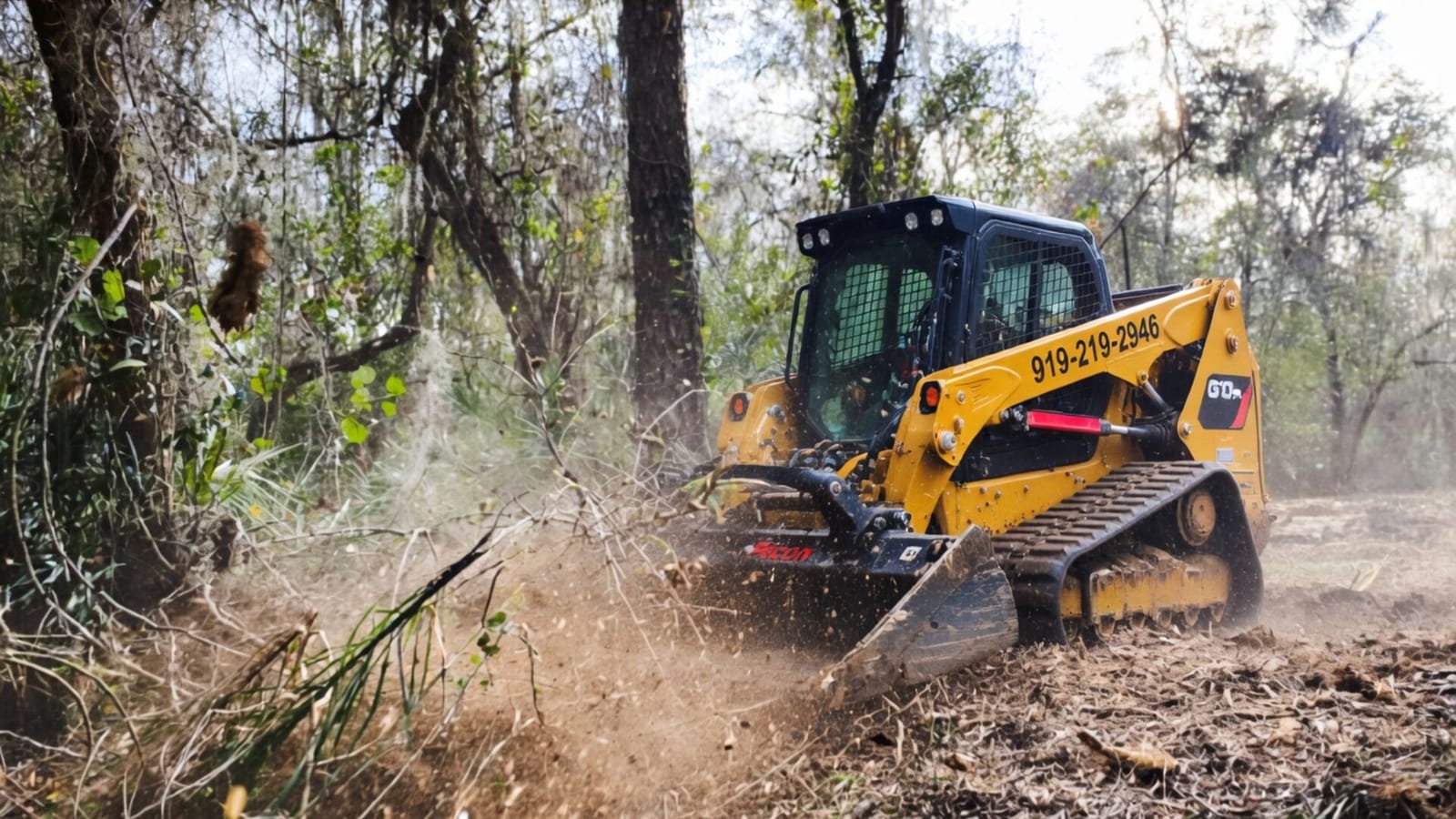
Forestry mulching, where the material is ground in place instead of hauled away, runs $1,500 to $4,000 per acre. Brush and understory work on its own runs $1,500 to $2,500 per acre.
What Moves a Georgia Clearing Quote?
Clay, slope, regrowth and access, in roughly that order.
Red clay. Much of the Georgia Piedmont sits on deep red soils of the Cecil family, weathered from granite and gneiss, with a subsoil running 35 to 70 percent clay and more than 60 inches of soil before bedrock, on slopes from level to about 25 percent (USDA NRCS). Deep soil is good news for a mulching head, which is not fighting rock the way it does further north and west. Wet clay is bad news for the schedule: it holds water at the surface, turns slick on a grade and slows every pass.
Erosion, which is really a cost. That same clay moves fast once its cover comes off, which is why Georgia built a permitting system around bare ground rather than around tree counts. Stabilization is part of the job on a sloped parcel, not an optional extra, and a mulch mat left on the surface is doing real work.
Regrowth. Chinese privet, kudzu, Japanese honeysuckle and multiflora rose are all recognized invasive plants of Georgia forests (Georgia Forestry Commission), and they share one habit that changes a budget: cutting the top off does not end them. They push again from roots and cut stumps. An honest quote separates the knockdown from the follow-up plan instead of implying one visit settles it. Cut Brush does not apply herbicide, so any chemical step is arranged with a licensed applicator.
Access. Long drives, tight gates, culverts, soft bottoms and low limbs over the approach burn hours before the first stem is cut. A tract the trailer reaches straight off a county road starts cheaper than one that needs a staging plan.
The Five Months You Cannot Burn It
This is the Georgia factor that catches people out, and it sits right on top of the building season.
Georgia EPD runs a summer open burning ban from May 1 through September 30 that “prohibits citizens and businesses from burning yard and land-clearing debris” across 54 north and central Georgia counties (Georgia EPD). That covers the whole metro Atlanta region, the Athens and Macon areas, the north Georgia mountains and the Augusta counties. From October 1 through April 30 burning returns, but debris generated by machine clearing still needs a Georgia Forestry Commission permit, issued for a single day (Georgia Forestry Commission).
So for nearly half the year, in most of the populated half of the state, the cheapest disposal route is closed and the comparison becomes grinding the material in place against loading and hauling it off. Hauling is what moves the number. Our Atlanta debris burning guide covers the calendar, the permit conditions and the exceptions in full.
Is Forestry Mulching Cheaper Than Clear-and-Haul?
For most residential projects, yes, because nothing leaves the site. Mulching runs $1,500 to $4,000 per acre and the ground-up vegetation stays put as a mat. No piling, no loading, no dump fees, and no waiting on a burn window that may not open.
Full clearing at $1,500 to $4,500 per acre earns its price when the end result has to be clean dirt: a building pad, a driveway cut, a graded yard. Once grubbing and hauling enter the scope, expect the top half of the range.
If you are clearing for a build that is a year or two out, there is a practical Georgia argument for mulching first and grubbing later. The mat holds the clay through the interval, which matters on any slope, and it keeps you out of a disposal problem in the summer.
Do Georgia Permits Add to the Bill?
They add process and lead time rather than changing a clearing rate, and agency fees stay the owner’s responsibility.
Georgia’s Erosion and Sedimentation Act treats land clearing and grading as land-disturbing activity and leaves enforcement to local issuing authorities, so the threshold that governs your parcel is a county or city question rather than a state one (Georgia EPD). Two rules do apply from above: state construction stormwater coverage once disturbance reaches one acre, and an undisturbed vegetated buffer along state waters that applies whatever the acreage and often reshapes a clearing scope. Cities with tree ordinances, Atlanta among them, add a tree permit on top. The buffer widths, the filing and the city tree thresholds are set out with their sources in our Atlanta and Cherokee County permit guide.
Requirements vary by parcel, scope and jurisdiction. Cut Brush can flag what commonly applies and help identify the right office. The governing authority makes the determination.
Clearing Around Metro Atlanta?
The metro is where most of the state’s clearing demand sits, and the rules and the clay behave exactly as described above, with the burn ban covering every county in the area. Per-acre ranges for mulching, brush work, whole-tract clearing and homesite prep are on our Atlanta pricing guide, the local conditions and service area are on the Atlanta land clearing page, and the mulching number specifically is broken down in our Atlanta forestry mulching cost guide. For the permit sequence, including the city tree ordinance, start with our Atlanta and Cherokee County permit guide.
Clearing Around Augusta?
The Central Savannah River Area runs on the same bands and most of the same rules, with two differences worth knowing before you budget. The summer open burning ban covers Richmond and Columbia counties but not Burke, so the disposal answer changes with the county line rather than the season alone. And Columbia County charges a notice of intent fee of $45 for each acre disturbed, figured to the nearest tenth, which is a real line on a small job. Augusta’s own grading ordinance sets its soil erosion plan trigger at 1.1 acres and carries a forestry exemption that applies only where stumps are not removed. Per-acre ranges are on our Augusta pricing guide, the territory and local conditions are on the Augusta land clearing page, the mulching number is in our Augusta forestry mulching cost guide, and the permit sequence is in our Augusta and Richmond County permit guide. The territory crosses into Aiken and Edgefield counties in South Carolina, where a different set of state rules applies.
Frequently Asked Questions
How much does it cost to clear one acre of land in Georgia?
$1,500 to $4,500 for full clearing, or $1,500 to $4,000 if mulching gets you the finish you need. A flat, accessible acre of light brush sits near the bottom; a steep, timbered acre with a graded finish sits near the top. Density, slope, regrowth and access decide it, not the acre count alone.
Do small jobs really cost $1,500?
Yes, as a practical floor. Mobilization costs the same whatever the size, so bundling a fence line, a drainage corridor and a brush patch into one visit is the easiest way to get full value out of it.
Is there a cheap season to clear land in Georgia?
No published seasonal discount, but the calendar genuinely matters. Clay holds water after storms, and a job that can wait out a wet spell runs more efficiently than one forced onto saturated ground. If your plan depends on burning the debris, October through April is the only window.
Can I get a number without a site visit?
You can get a rough range from acreage and photos. A firm written quote takes a walk-through, because regrowth, buffers and access are the three things aerial views hide and they are the three most likely to move the price.
Get a Straight Number on Your Georgia Clearing Project
Understanding the land clearing cost per acre in Georgia starts with your own ground: what is growing on it, what will come back, how the clay is sitting, and what the county and the calendar allow you to do with the material.
Compare your project against the ranges on our Atlanta pricing guide, then request a free estimate. We respond within 24 hours, walk the parcel with you, and put every line item in writing so the quote you approve is the price you pay.
More from the Cut Brush Blog
Keep reading for more tips and guides on land clearing.
 Cost Guide
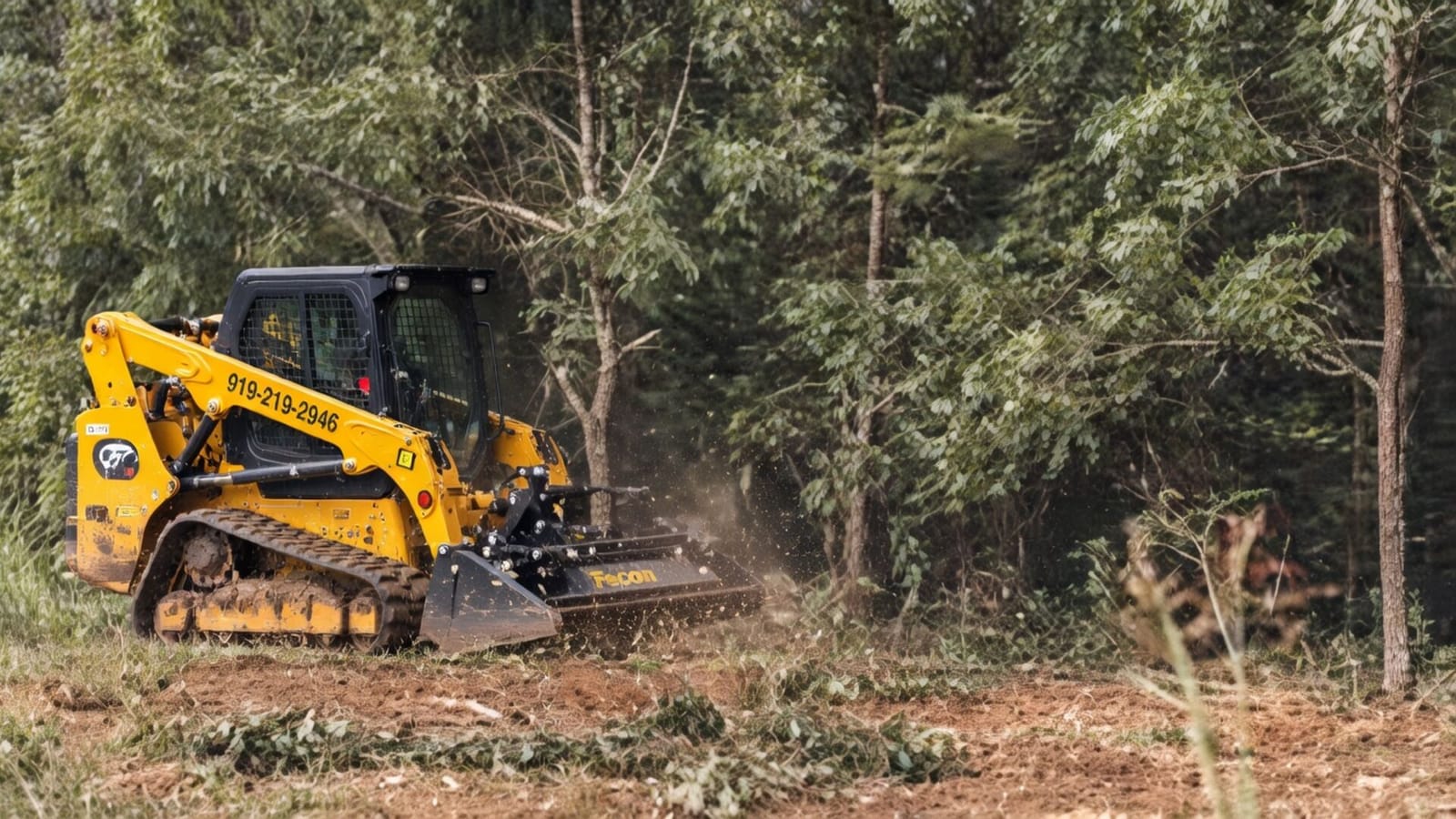
 Forestry Mulching Cost in Atlanta, GA (2026)
Forestry mulching around Atlanta runs $1,500 to $4,000 per acre. See what Piedmont clay, regrowth and the summer burn ban do to the number.
 County Guide
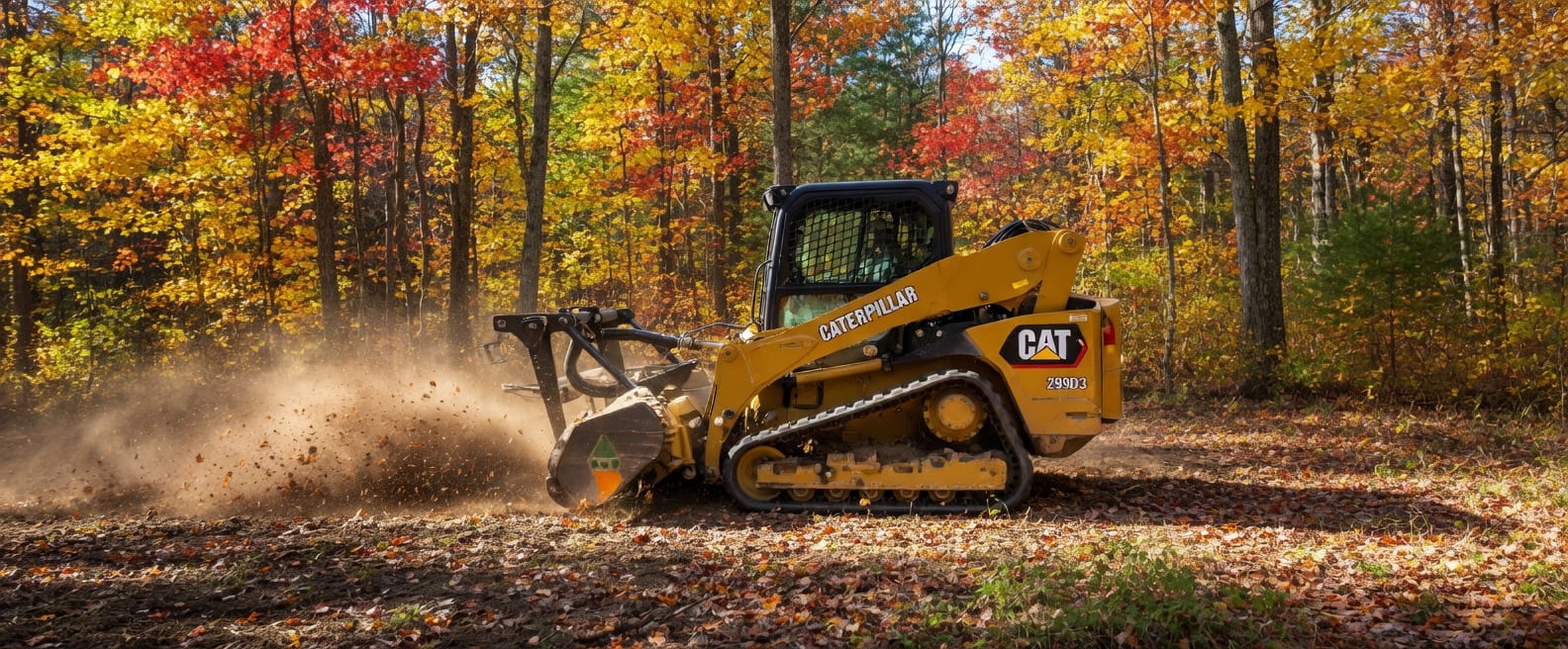
 Land Clearing Permits in Atlanta & Cherokee County
Clearing land near Atlanta takes a county land disturbance permit, and inside the city a tree permit at six inches DBH. Thresholds, buffers and offices.
 Seasonal
 Can You Burn Land Clearing Debris Around Atlanta?
Georgia bans burning yard and land-clearing debris across metro Atlanta from May 1 to September 30. Here is the calendar, the permit rules and the alternative.
Where is your property?
Cut Brush runs 2 service areas in GA. Pick the one nearest you and the quote form comes to the right crew.
Ready to Get Started on Your Land?
Get a free, no-obligation estimate for property in Atlanta & Metro Georgia.
Get Your Free QuoteOr call us directly: (919) 525-3950