
Land Clearing and Grading Cost in Illinois (2026 Guide)
Cut Brush Team · November 9, 2026 · 9 min read

You own a wooded lot in Kane County or above the Illinois River, a builder is waiting, and two trades have to finish before a footing is poured. Clearing the house site, drive and utility path on an Illinois lot costs $1,500 to $4,500 per acre equivalent with our crew, and the grading, fill and pad come after us on your excavating contractor’s own bill. Below is each phase, who does it and what Illinois adds to both.
At a glance:
- Clearing the footprint (our crew): $1,500 to $4,500 per acre equivalent, with a minimum charge near $1,500 for small lots.
- Mulching brush you keep outside the footprint (our crew): $1,500 to $4,000 an acre.
- Cut, fill, pad, compaction and drive base (your excavator): priced on their own quote. We do not grade.
- State stormwater: disturb an acre or more, or less as part of a larger plan, and ILR10 coverage applies, with a one-time fee of $250 under 5 acres or $750 at 5 or more.
- Kane County: a county stormwater permit can apply once a project disturbs more than 5,000 square feet or moves 250 cubic yards of material, and erosion control applies even when no permit is needed.
- Burning: brush cut to clear land for new development is trade waste in Illinois and may be burned only in an air curtain incinerator with permits.
Our crews clear Illinois building lots from three markets: Gilberts and the Fox Valley, Peoria and the Illinois River Valley, and Metropolis on the Lower Ohio Valley. We hand the excavator a cleared site and step off, and this guide shows where that line falls.
How Much Does It Cost to Clear and Grade a Lot in Illinois?
| Phase | Who does it | Price |
|---|---|---|
| Open the house envelope, drive and utility path | Cut Brush | $1,500 – $4,500 per acre equivalent |
| Mulch brush and saplings around the footprint, under the trees that stay | Cut Brush | $1,500 – $4,000 an acre |
| Stumps: flush with the soil under chips, or dug out below grade where the pad and drive go | Cut Brush | Flush is included; below grade is priced in the quote |
| State stormwater coverage once an acre or more is disturbed | Whoever you agree runs the site; never us | $250 fee under 5 acres, $750 at 5 or more |
| Strip topsoil, cut and fill, compact the pad, shape the drainage | Your excavating contractor | Their quote |
| Drive base, fill brought in, finish grade and seed | Your excavating contractor or landscaper | Their quote |
Where these numbers come from. The clearing rows are the bands on our Gilberts pricing page, and the Peoria and Metropolis, IL pages carry the same ones. Trailering a tracked machine to a quarter acre costs what it costs to trailer it to three, so small lots start at the minimum charge near $1,500, which is then the whole price. The grading rows carry no figure from us because we do not do that work; its price rests on the cubic yards your excavator takes off the plan.
How the clearing band splits by what is growing is in our Illinois land clearing cost guide.
What Moves the Number on an Illinois Lot
A pothole or a rise. The till plains of northeastern Illinois are dotted with potholes holding Peotone soil: very poorly drained, ponded in wet spells, with water from half a foot above the surface to a foot below it between January and June even where drained. The same parcel can rise onto Plano, a well-drained silt loam on outwash. Put the house on the rise and the excavator moves less dirt. Put it in the pothole and fill becomes the biggest line on their quote, and spring clearing there ruts ground they then have to fix.
Kane County’s 250 cubic yards. The county’s own permit worksheet opens with two questions: does the project disturb more than 5,000 square feet, and does it involve 250 cubic yards of material or more? A basement 40 by 50 feet dug 8 feet deep is close to 600 cubic yards on its own. A permit there asks for plans sealed by a professional engineer with existing and proposed contours, an erosion and sediment control plan, and a performance security. That cost lands on the excavator’s and engineer’s side, not our clearing line, but it sets the start date for everyone.
Stumps out or stumps flush. Our band leaves stumps level with the soil under chips. Under a footing, slab or drive they have to come out, and digging them below grade is its own line in our quote. Whoever digs, our crew pulling stumps or the excavator cutting grade, calls JULIE at 811 at least two days and no more than ten before the dig. Weekends, JULIE holidays and the day of the call do not count, and the ticket runs 25 days.
Where the brush goes. Illinois treats brush from clearing for development as trade waste, so an open burn pile is out (see the burning rules below). That leaves chips where it stands, or loading it out. Chips earn their keep at the tree line and along the drive edge, holding soil while the lot sits open. On the pad they are one more layer the excavator scrapes off with the topsoil, so mark where the pad goes and keep the chips off it.
Pro tip: Before the excavators bid, walk the lot with your builder and flag the pad corners, the drive centerline, the septic area and every oak you mean to keep. We clear to those flags, and two excavators pricing the same flagged ground give you numbers you can compare line by line.
Clearing and Grading Across Illinois
Gilberts and the Fox Valley. In Kane, McHenry, northwest Cook and DeKalb counties a building lot is often an oak corner full of buckthorn and honeysuckle, which our crew clears from the Gilberts market. Kane’s stormwater ordinance is run by the county or by a certified village, so ask whichever office covers your parcel. Lots along the Fox River and its creeks carry one more layer: in Cook outside Chicago, DuPage, Kane, Lake, McHenry and Will, construction in a mapped floodway needs IDNR approval first, or coverage under Regional Permit No. 3 or a delegated community. Aurora allows no open burning without a city permit.
Peoria and the Illinois River Valley. Timber here grows on loess hills. Rozetta, a well-drained loess soil of west-central and northwestern Illinois, runs on slopes up to 25 percent under hardwood, so the dirt work is about cut and fill on a slope more than water. Down on the river flats, floodplain soils such as Sawmill flood between November and June, and a pad there is built up on fill. Downstate, floodway construction on a rural stream draining 10 square miles or more (one square mile in town) needs an IDNR permit before work starts, though common minor work is covered by statewide permits. Our crew clears from the Peoria market.
Metropolis and the Lower Ohio Valley. In Massac, Johnson and Alexander counties, around Vienna and Cairo, the bottomland is Karnak: a slackwater clay whose reference site sits in Massac County, with very high shrink-swell, water within 10 inches of the surface from November to May, and bald cypress, overcup oak and pin oak where it is wooded. How a pad sits on clay that swells that much is a question for your builder’s engineer and excavator before it is one for us. It clears best in the dry end of the year, from our Metropolis, IL market.
Permits and Burning on an Illinois Building Lot
Stormwater. Illinois EPA coverage under ILR10 applies when construction disturbs an acre or more, or less when it is part of a larger common plan of development or sale on a contiguous area. The notice of intent goes in online with a stormwater pollution prevention plan, and the one-time fee is $250 under 5 acres or $750 at 5 or more; active MS4 communities are exempt from the fee. The permit falls on the operator, meaning whoever controls the plans and specifications or runs the site day to day. Our clearing and the excavator’s grading are one project on one plan, so count the ground both will touch, and decide in writing which of you files. We never file permits.
Burning. Brush from clearing land for development may be burned only in an air curtain incinerator under an Illinois EPA permit. Those permits are free but can take up to 90 days to issue, so a burn plan starts long before the machines arrive. Inside any Illinois town, or within a mile of a town of 1,000 or more, nothing but landscape waste may be burned at all, and local ordinances can go further, as Aurora’s does.
Frequently Asked Questions
Does Cut Brush grade lots or build house pads in Illinois?
No. We clear to ground level, leave stumps flush or dig them out where the plan needs it, and hand the site over. Your excavating contractor does the cut, fill, compaction and drive base. Book the clearing to their start date, so a lot on Peotone or Karnak ground is not left open through the wet months.
Can I burn the trees and brush from clearing my building lot in Illinois?
Not in an open pile. Brush cut to clear land for new development is trade waste, which needs an air curtain incinerator and an Illinois EPA permit that can take up to 90 days. Budget for mulching in place or hauling instead.
Do I need a permit to clear and grade a lot in Kane County?
You may need two. ILR10 state coverage applies at an acre of disturbance, and Kane’s county stormwater permit can apply past 5,000 square feet disturbed, 250 cubic yards moved, or any floodplain or wetland on the site. Erosion and sediment control rules apply to every project even without a permit, so ask the county or your village before anyone books a machine.
How much does it cost to clear and grade an acre in Illinois?
Clearing an acre runs $1,500 to $4,500 with our crew. The grading is your excavator’s figure and turns on how many cubic yards move, which is why the same acre costs more on a pothole than on a dry rise. Get both numbers before you commit to a house location.
Get a Clearing Quote Before the Excavator Bids
Request a free quote by picking the nearest Illinois area below, and our crew will contact you to discuss the property, access and the clearing needed. If the job is mostly brush under trees you are keeping, our Illinois forestry mulching cost guide and Illinois underbrush removal cost guide cover that work.
Sources
- Illinois EPA, construction site stormwater permit (ILR10)
- Kane County Environmental and Water Resources, stormwater management permit worksheet
More from the Cut Brush Blog
Keep reading for more tips and guides on land clearing.
 Cost Guide
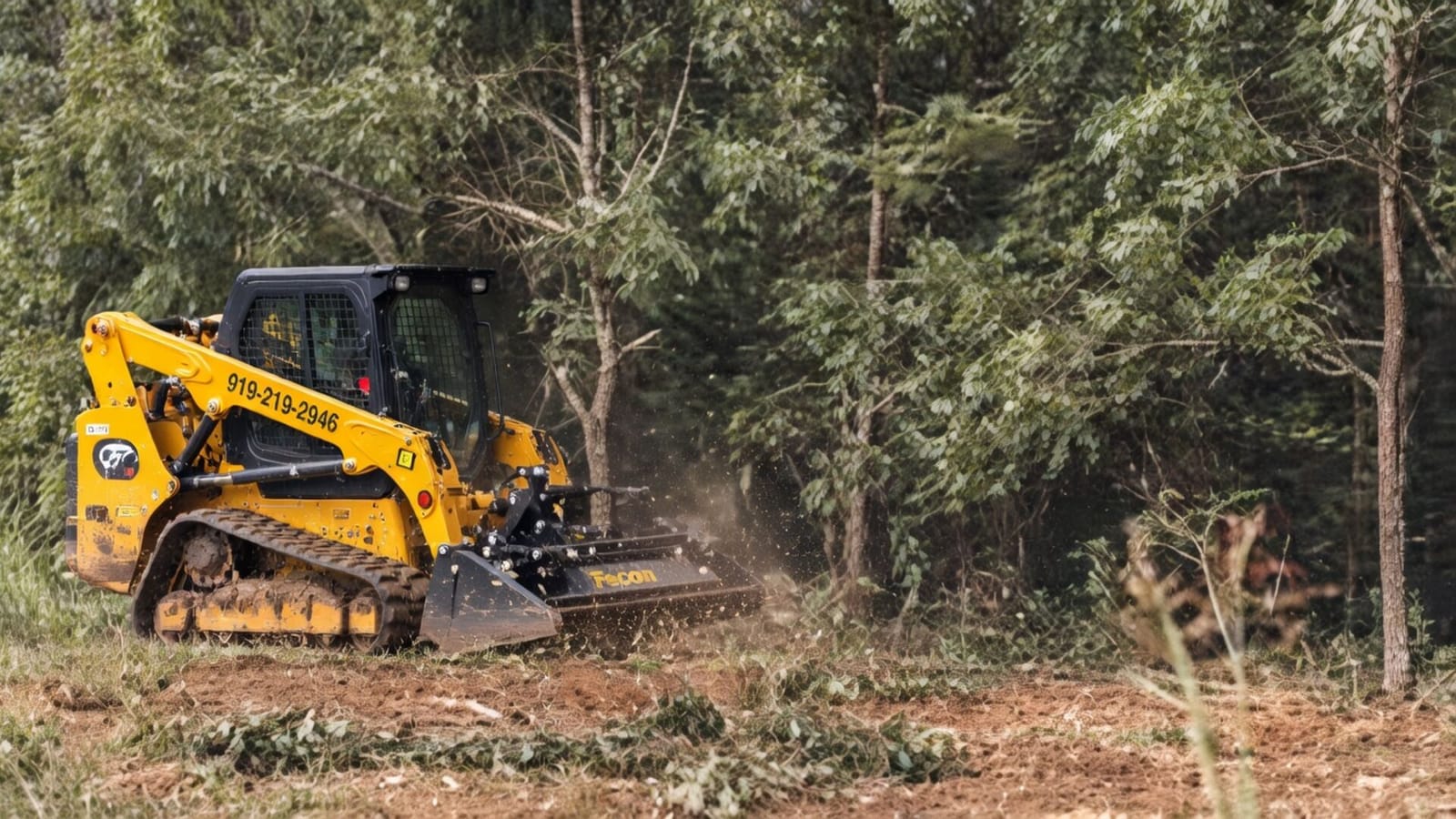
Forestry Mulching Cost in Gilberts, IL (2026)
Forestry mulching near Gilberts, IL runs $1,500 to $4,000 an acre. What it costs to keep the oaks and cut only buckthorn, or to clear the wooded lot outright.
 Cost Guide
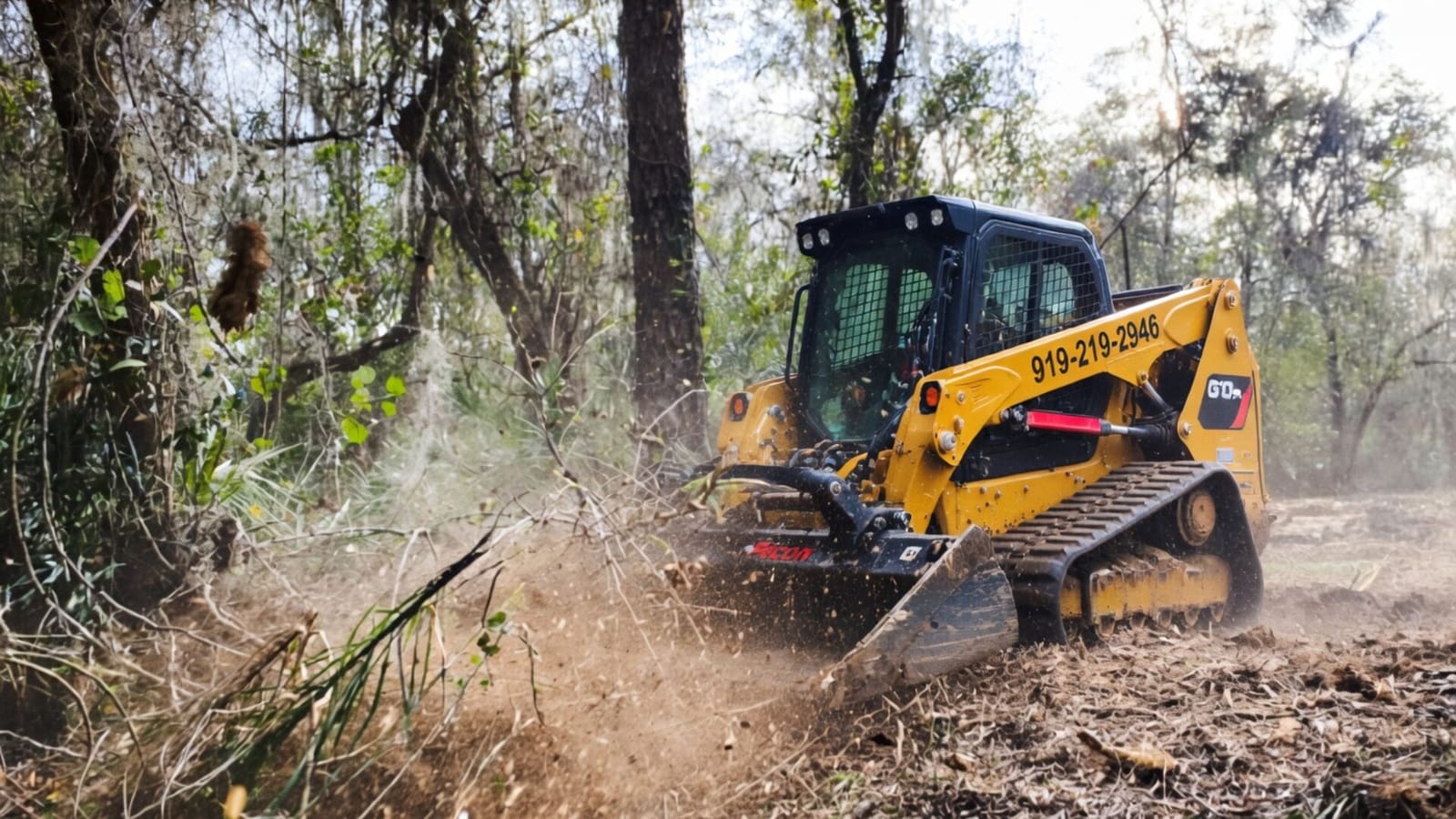
Underbrush Removal Cost in Illinois (2026 Guide)
Underbrush removal in Illinois runs $1,500 to $2,500 an acre for buckthorn, honeysuckle and kudzu under trees you keep. What moves it, and what grows back.
Cost Guide Forestry Mulching Cost in Illinois (2026 Guide)
Forestry mulching in Illinois costs $1,500 to $4,000 an acre at all three of our markets. How honeysuckle, oaks, burn limits and cost share change your price.
Comparing states? See land clearing costs by state.
Let's Get Started on Your Land
Request a free quote. We'll contact you to discuss your property, access, and the clearing you need.
Get a Free QuoteOr call us directly: (919) 525-3950
 Quick answers from Cut Brush