
Land Clearing and Grading Cost in Maine (2026 Guide)
Cut Brush Team · November 9, 2026 · 9 min read

You own a wooded lot outside Lewiston or Bangor, you have a house plan, and you need two prices before the cellar hole: one to take the woods off and one to shape the ground. Our crews clear a Maine house lot for $1,500 to $4,500 an acre, and the grading after us is a separate quote from your excavating contractor. In Maine that split matters twice, because felling and mulching leave the soil in place while stumping and grading open it, and only open soil counts toward the state’s 1-acre stormwater permit.
At a glance:
- Our part, clearing: forestry mulching at $1,500 to $4,000 an acre; a whole parcel, or a house site with its drive and utility route, up to $4,500; small jobs start at a minimum charge of about $1,500
- The excavator’s part, grading: silt fence, stripping, cut and fill, the pad, the drive base, loam and seed
- The 1-acre line: once an acre or more is stripped, grubbed, graded, filled or excavated, DEP’s Maine Construction General Permit applies; trees cut with the stumps and soil left alone do not count
- Erosion control wherever soil is opened: a sediment barrier goes on the downhill side before the work starts and stays until the ground is permanently stable, permit or no permit
- Dig Safe: anyone digging with power equipment, homeowners included, marks the area in white and calls 811 three business days ahead
Our Maine crews work from two markets: Sabattus and the Lewiston-Auburn area, across Androscoggin, Sagadahoc, Cumberland and Kennebec counties, and Hermon and the Penobscot Valley. The pad, the septic system and the permits stay with your excavator and builder.
How Much Does Land Clearing and Grading Cost in Maine?
A Maine lot goes from standing woods to a graded house site in a fixed order. The first phases are ours and priced by the acre; the rest belong to the excavator, who quotes them by the job.
| Phase | Who does it | What it covers | Price |
|---|---|---|---|
| 1. Brush and saplings off the footprint | Cut Brush | Forestry mulching; stumps cut flush, chips left on the soil | $1,500 – $4,000 an acre |
| 2. Whole parcel opened | Cut Brush | Land clearing to the finish named in the quote | $1,500 – $4,500 an acre |
| 3. House site, drive and utility route | Cut Brush | Lot and homesite prep, laid out after any pond, brook or wetland setback is marked | $1,500 – $4,500 an acre equivalent |
| 4. Sediment barrier on the low side | Excavating contractor | Silt fence or hay bales set before soil is exposed | Excavator’s quote |
| 5. Stumps out below grade | Cut Brush, or the excavator while stripping | Only where the cellar, drive and septic field go | Its own line in our quote |
| 6. Strip, cut and fill, pad and drive base | Excavating contractor | Topsoil off, grades set, gravel placed and packed | Excavator’s quote |
| 7. Loam, seed and mulch | Excavating contractor | Bare ground covered until it holds | Excavator’s quote |
Where these numbers come from. Our three clearing lines are the bands on our Sabattus pricing page, and the Hermon pricing page carries the same bands, so a lot in Carmel prices the same way as one in Lisbon. An acre of saplings on an old hayfield lands low in its band; closed woods taken down to soil lands high. We publish no grading number because we do not grade. Our quote ends where the excavator’s begins, so the stump line should appear in one quote, not both.
Pro tip: Walk the lot with your excavator before we clear. Flag the cellar hole, the drive, the septic field and the well line together, so stumps come out only where the excavator strips anyway and the rest stays mulched with its roots holding. That keeps your count toward the 1-acre line as small as the plan allows.
What Moves the Number on a Maine Lot
Marine clay under the house site. Around Topsham and Brunswick, Elmwood soils put 20 to 40 inches of loamy material over olive marine clay that passes water slowly or very slowly. A cellar hole goes deeper than that, so the clay is where drainage and extra gravel enter the excavator’s quote. On our side, a mulched floor keeps rain off the silt until the excavator arrives.
Dense till on the drumlins. Through central and northern Maine, Howland soils sit on drumlins and till ridges, with dense lodgment till 20 to 33 inches down and stones and boulders on up to 15 percent of the surface. A stump pulled there tends to bring stone up in its roots, so stumping is best kept to the footprint, with the rest cut flush.
Slate ledge on the hills. Thorndike soils, common on hills in central Maine from Waldo County to Piscataquis, reach slate, phyllite or shale bedrock 10 to 20 inches down, with a third or more of the soil made of rock fragments. A pad on that ground is rock work for the excavator. A mulched yard over it costs no more than any other acre in our band.
How much soil you open. The permit counts land that is stripped, grubbed, graded, filled or excavated. Felling and mulching that leave the stumps in and the soil covered do not count. On a five-acre woodlot where only the house, drive and septic area are stumped and graded, the disturbed area can stay under an acre; stump the whole lot and it will not.
Water near the lot. The shoreland zone runs 250 feet from a great pond, a river, the upland edge of a coastal wetland and defined freshwater wetlands, and 75 feet from certain streams. Each town enforces it through its code enforcement officer, so on a lot near water the house site is laid out after the setback is marked, and that sets how much of the lot either of us may touch.
Clearing and Grading Across Maine
Lewiston, Auburn and Sabattus. Lewiston and Auburn both hold stormwater capacity from DEP: the city reviews stormwater design under its own ordinance, approved as at least as strict as state law, so its planning or code office is the first call. DEP’s construction permit at 1 acre is a separate filing. Pond lots around Sabattus are covered in our Sabattus forestry mulching cost guide.
Brunswick, Topsham and the lower Androscoggin. Topsham, the type location of the Elmwood series, also reviews stormwater locally, as do Freeport and Windham. Our Sabattus land clearing page lists the towns we cover.
Augusta and the Kennebec towns. Augusta no longer holds stormwater capacity, so DEP reviews projects there itself, as in Gardiner and Winthrop, while our Sabattus bands apply unchanged.
Bangor, Hermon and the Penobscot Valley. Bangor reviews stormwater locally; Hermon, Carmel and the smaller towns go to DEP. Boothbay soils, whose reference profile sits in a Carmel hayfield, are very deep silt loams with under 5 percent rock on old marine terraces: easy digging, though bare silt needs cover quickly. Poorly drained Swanville soils fill the low marine plains toward Belfast, where wet spring ground is scheduled for a dry or frozen spell. Our Hermon forestry mulching cost guide covers how a tract there is priced.
Permits, Erosion Control and Dig Safe in Maine
The rules come in tiers, and they key on soil, not trees.
- Any job that exposes soil. Maine’s erosion and sedimentation control law applies to anyone filling, displacing or exposing soil. No permit is needed, but the measures go in before the work starts and stay working until the site is permanently stable. Agricultural fields are exempt.
- 1 acre or more of disturbed area. The Maine Construction General Permit applies, as it does to a smaller lot in a subdivision whose plan will reach an acre. The site’s operator files a Notice of Intent with an erosion and sediment control plan whose schedule lists clearing, grubbing and earth moving. DEP treats the notice as approved 14 calendar days after receiving it unless it acts first, and a Notice of Termination is due within 30 days of permanent stabilization.
- 5 acres or more. The permit calls this large construction activity, and the plan needs more detail.
- Before digging. Dig Safe is free; skipping the 811 call can bring a fine of up to $10,000 per violation.
Burning. Wood waste from clearing land may be burned on site only with a permit from the town forest fire warden, a forest ranger or the local fire official, and never where a town ordinance forbids it. A mulched lot leaves nothing to burn.
Frequently Asked Questions
Does a clearing price in Maine include the stumps, the grading and the driveway?
Ours covers clearing to the finish named in the quote, stumps cut flush. Stumps below grade are their own line; the pad, drive base and septic work sit in the excavator’s quote. Compare the two so each item appears once.
Do I need a permit to clear and grade a house lot in Maine?
Under an acre of disturbed ground, outside a subdivision, there is no state stormwater permit, but the erosion control law still applies and your town’s shoreland and building rules come first. At an acre or more, file the Notice of Intent with DEP first; work can start once it is approved, or 14 days after DEP receives it if DEP raises nothing. Mulching without stumping does not count toward that acre.
What does a Maine site prep price usually leave out?
The silt fence and the loam and seed that close the job, the Dig Safe call, the Notice of Intent and its plan once you pass an acre, and getting rid of the wood. A mulched lot settles the last one, since the chips stay on the soil.
Should I rent a dozer and clear the lot myself?
The rules treat you like any contractor. The erosion control duty applies to anyone exposing soil, Dig Safe applies to homeowners using power equipment, and every stump you pull with a rented machine counts toward the acre. Mulching first and renting only for the footprint keeps both bills smaller.
Where should the house sit to keep site prep down?
Near the road, outside the 250-foot shoreland zone if the lot touches a pond or river, and on your firmest ground. A short drive means fewer acres to clear and less gravel to place.
Get a Clearing Quote Before Your Excavator Prices the Pad
Request a free quote and pick your nearest area below, Sabattus or Hermon. Our crew will contact you to discuss the property, the access and the clearing you need, and the written price will show where our work ends so your excavator can quote the rest. For the clearing number on its own, read our Maine land clearing cost per acre guide; for mulching and understory work, see the Maine forestry mulching cost guide and the Maine underbrush removal cost guide.
Sources
- Maine DEP, Maine Construction General Permit
- Maine Revised Statutes, Title 38, section 420-C: Erosion and sedimentation control
More from the Cut Brush Blog
Keep reading for more tips and guides on land clearing.
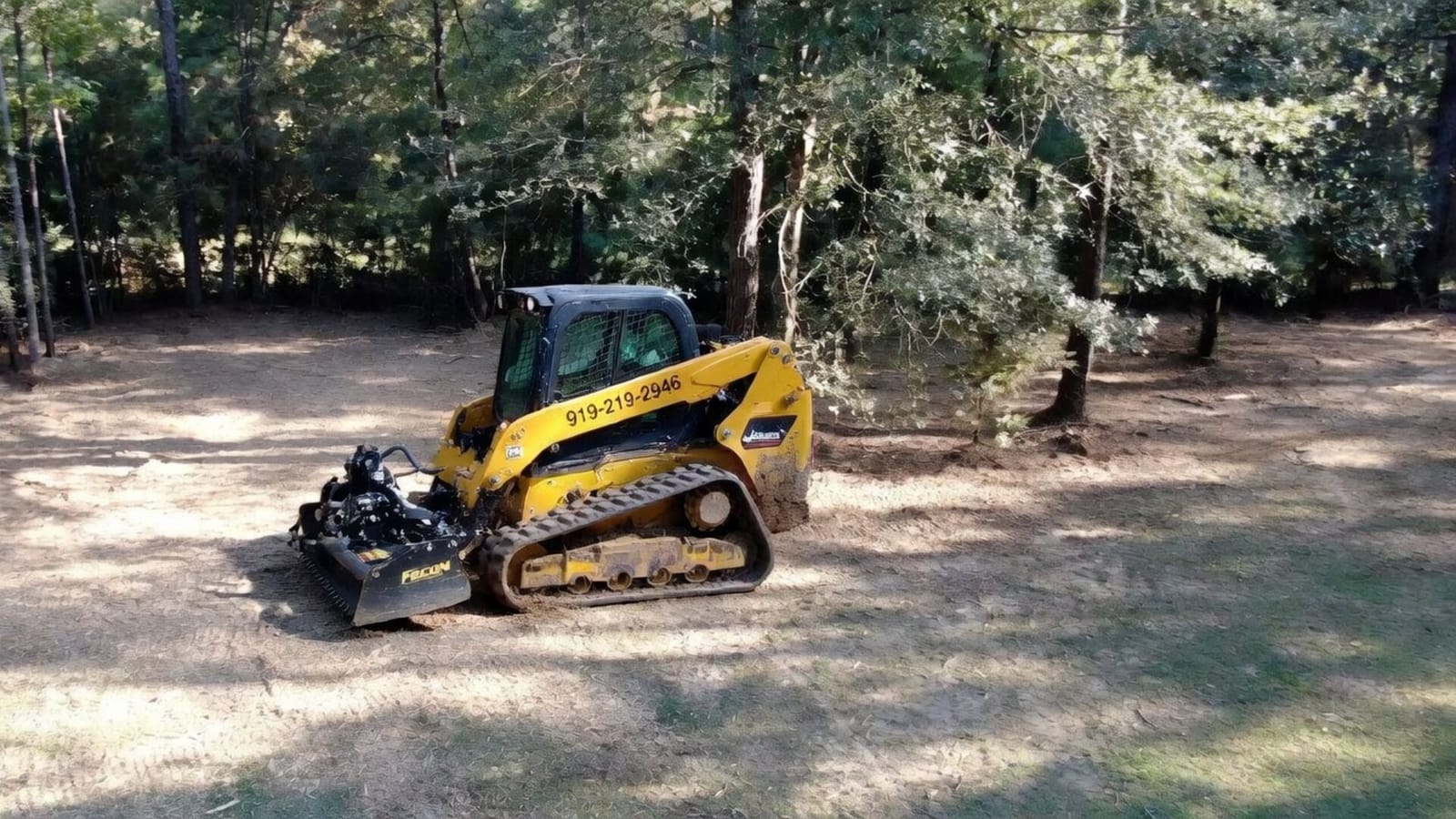 Cost Guide
Land Clearing Cost Per Acre in Maine (2026 Guide)
Land clearing in Maine: $1,500 to $4,500 an acre. Brush, trees and lot prep, with stumps left flush, around Sabattus. Request a free quote for your land today.
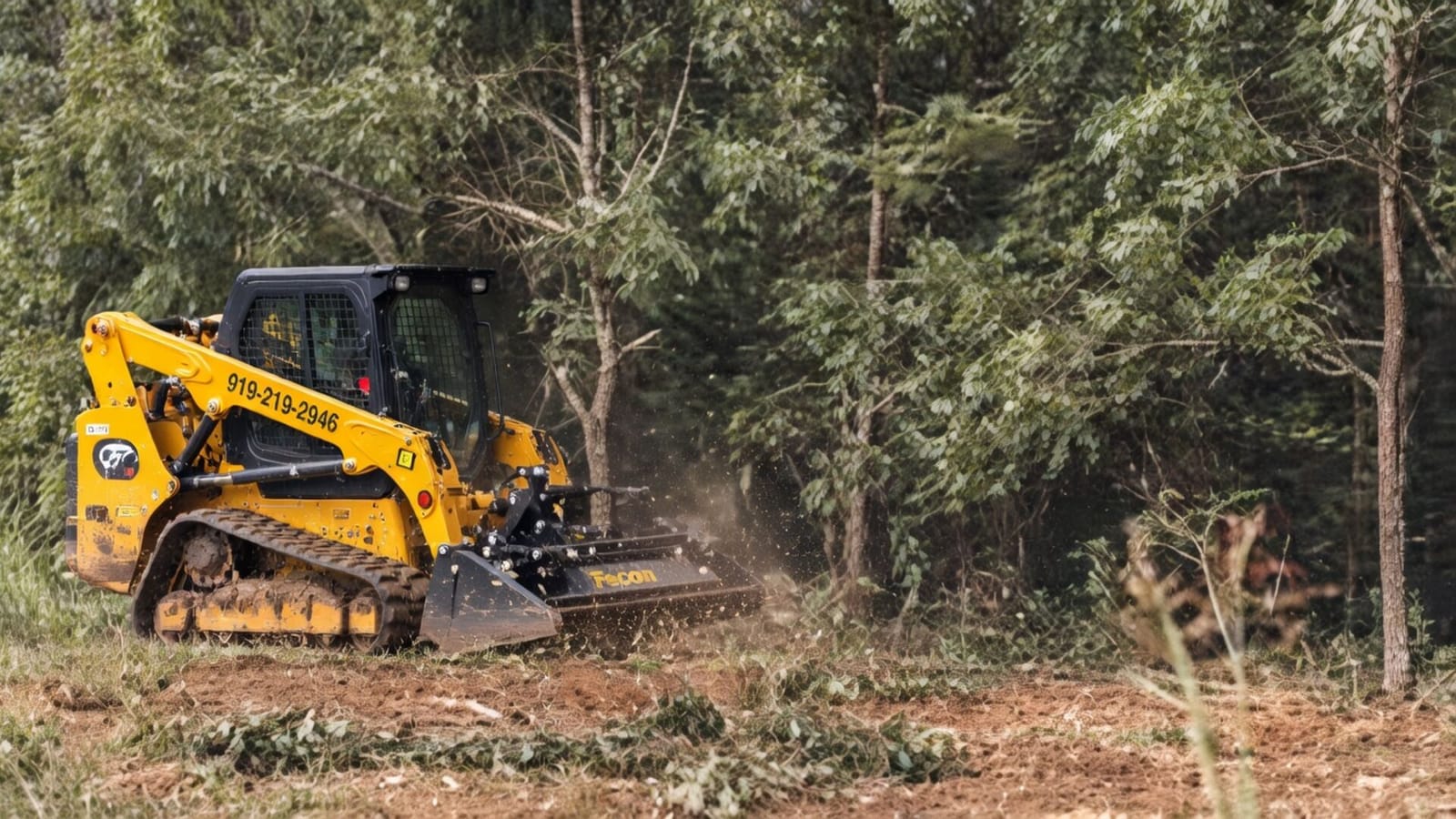 Cost Guide
Forestry Mulching Cost in Sabattus, ME (2026)
Forestry mulching cost in Sabattus, ME: $1,500 to $4,000 an acre. What the Sabattus Pond shoreland buffer leaves to clear. Request a free quote.
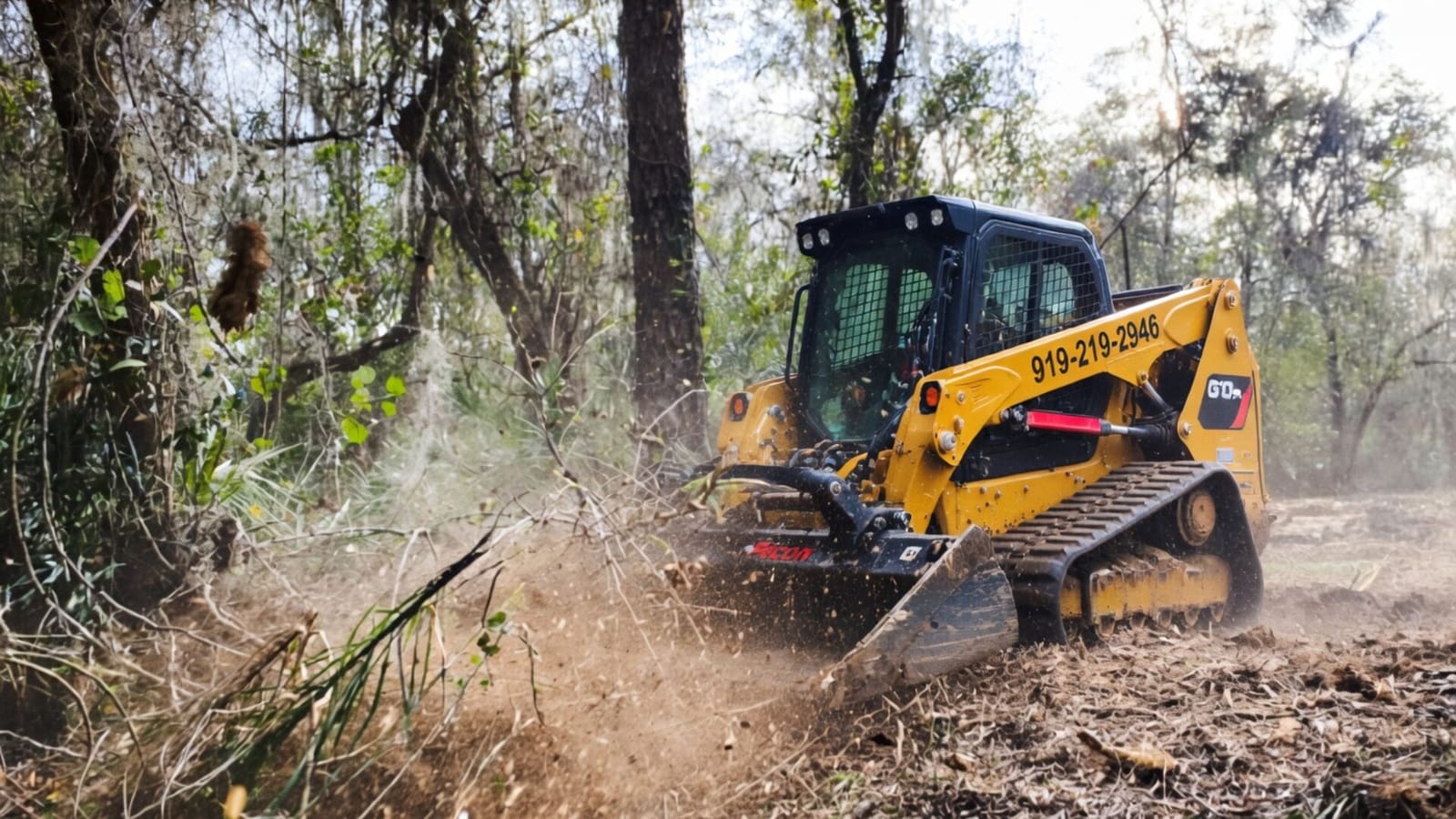 Cost Guide
Underbrush Removal Cost in Maine (2026 Guide)
Underbrush removal in Maine runs $1,500 to $2,500 an acre under trees you keep. See what buckthorn, barberry and the shoreland buffer change before you book.
Comparing states? See land clearing costs by state.
Let's Get Started on Your Land
Request a free quote. We'll contact you to discuss your property, access, and the clearing you need.
Get a Free QuoteOr call us directly: (919) 525-3950
 Quick answers from Cut Brush