
Underbrush Removal Cost in Maine (2026 Guide)
Cut Brush Team · November 9, 2026 · 9 min read
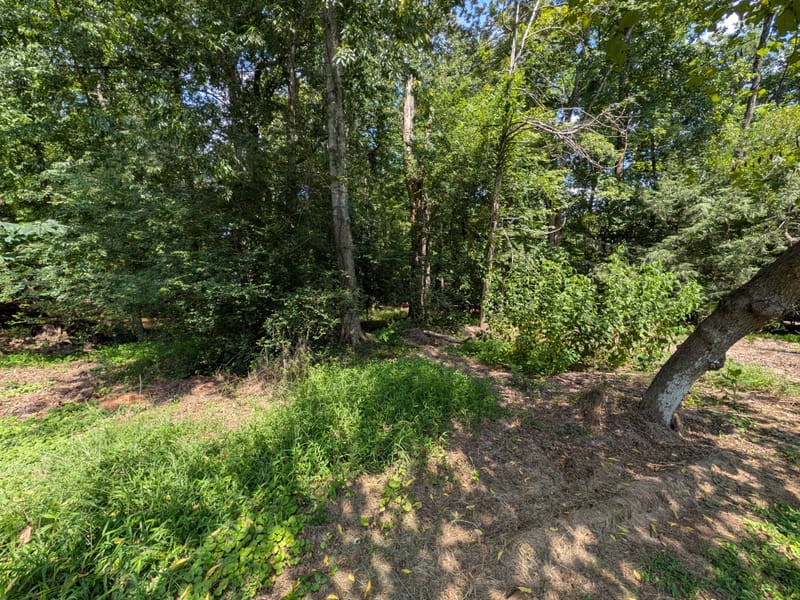
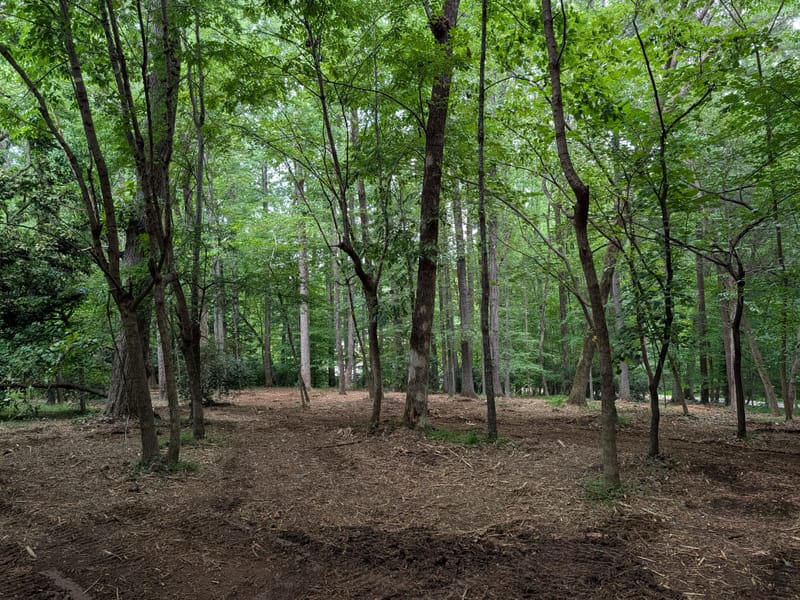
The pines and maples are why you bought the land, and now you can barely see them: glossy buckthorn has filled the wet edge of a Penobscot Valley woodlot, or Japanese barberry has knotted itself into an old stone wall near Lewiston. Clearing that shrub layer while the trees stay standing costs $1,500 to $2,500 an acre with our Maine crews. Once saplings are woven through the shrubs, we price the job as forestry mulching instead, at $1,500 to $4,000 an acre.
At a glance:
- Shrubs under trees you keep: $1,500 to $2,500 per acre, the same band in both of our Maine markets
- Thickets with young trees grown up through them: $1,500 to $4,000 per acre, our mulching band
- Smallest job: about $1,500, a floor for a single patch or wall line, never a fee added on top
- Near water: in the first 75 feet from a river, stream, tidal water or wetland edge (100 feet beside great ponds), growth under 3 feet tall and the ground cover have to stay
- Regrowth: barberry, buckthorn and shrub honeysuckle sprout from the cut crown, so return cuts are quoted on their own lines
- Burning: a brush pile needs a burn permit in every season; mulching leaves chips, not a pile
Our crews clear understory across two Maine markets: Hermon and the Penobscot Valley, and Sabattus and the Lewiston-Auburn area.
How Much Does Underbrush Removal Cost in Maine?
Underbrush removal takes out the shrubs, vines and thin stems beneath a canopy that stays. A tracked machine with a mulching head grinds them where they stand and steers around every trunk you flag.
| What is growing under your trees | Our price per acre | What you see when we leave |
|---|---|---|
| Glossy buckthorn and brush on woods edges and wet low ground | $1,500 – $2,500 | An open floor under the canopy, chips on the ground |
| Japanese barberry along old field edges and stone walls | $1,500 – $2,500 | The wall line and the field edge visible again |
| A shrub thicket with young trees grown up through it | $1,500 – $4,000 | Thicket and saplings ground in place, keeper trees standing |
| One patch behind the house or a single wall line | About $1,500 minimum | One trip, billed at the minimum instead of an acre rate |
| Sprouts after the first pass | Priced per return cut | Each visit on its own line, yours to take or skip |
Where these numbers come from. The band is the understory row on our two Maine pricing pages: Buckthorn & Woods Edge Clearing on the Hermon pricing page, Barberry & Field Edge Clearing on the Sabattus pricing page. The shrub changes between the markets; the rate does not. A strip along a wall or woods edge is charged as the share of an acre its length and width cover. Shrub stumps end flush, and nothing is hauled off.
What Changes the Price of a Maine Understory Job
How close the work is to water. Maine’s shoreland buffer is the first 75 feet from a river, stream, tidal water or wetland edge, and 100 feet beside great ponds and the rivers flowing into them. That strip protects exactly the layer we are hired to remove. Growth under 3 feet tall and the ground cover stay, no new cleared opening is allowed, and woody stems under 2 inches come out only where at least five saplings already stand in each 25 by 50 foot plot. Our rate per acre holds; what shrinks is the ground a machine may touch, and the buffer is left out of the mulching.
Which shrub fills the understory. They do not all come back the same way. Shrub honeysuckle and autumn olive sprout only from the root collar, so grinding the crown and cutting what returns wears them down. Japanese barberry and multiflora rose also root wherever a twig tip touches the soil and can sprout from pieces of root, and Asiatic bittersweet sends shoots up across a wide underground root system. The more root-sprouters on a lot, the more return cuts belong in the plan.
Japanese knotweed in the mix. Cutting its stems wakes dormant buds on the rhizomes and pushes the patch outward, and pieces of stem, root and rhizome can each grow a new plant. If knotweed grows on your lot, point it out before work starts and ask that the stand be left uncut, so no piece of it is carried across the cleared ground.
Will the Underbrush Grow Back, and What Does the Second Visit Cost?
Most of it will try. Cut the top off a large barberry, buckthorn, honeysuckle, autumn olive or multiflora rose and the crown sprouts again, so plan on cutting the new shoots for several years. Mowing six times a year for three years stops seedlings and small plants, but on a large bittersweet stand constant cutting spreads the patch through its root suckers; vines grown up into a tree are cut through and left in the canopy to die.
How the cost breaks down:
- The first pass is the band in the table, and it is the big cost: it opens the woods and takes the woody stems down.
- Return cuts sit on their own lines in the quote, each yours to accept or decline, never folded into the acre band.
- Herbicide, if you want it, is a licensed applicator’s work, and the cuts and the treatment can be timed around each other.
Our glossy buckthorn and Japanese barberry removal guides lay out the visits one by one.
Pro tip: Ask for the return cuts in July and August. Through those months and up to mid-September, the shrub is moving the food its leaves make down into the roots for storage, so each time it has to sprout again it draws those reserves down and weakens.
Underbrush Removal Across Maine
Hermon and the Penobscot Valley. Around Hermon, Hampden, Glenburn, Levant and Orono, and out to Winterport, Bucksport, Belfast and Dover-Foxcroft, the understory is mostly glossy buckthorn on woods edges and in wet low ground. Hermon’s shoreland rules begin 250 feet from a great pond, a river or a rated wetland and 75 feet from a stream, so where the water sits is one of our first questions about a lot here. A section that stays soft into spring is planned for a dry or frozen spell, since slow footing pushes an acre toward the top of its band.
Sabattus and the Lewiston-Auburn area. Around Sabattus, Lewiston, Auburn, Lisbon and Turner, old hayfields end at stone walls, and barberry grows up through the stones and under the trees kept along them. That is the Barberry & Field Edge Clearing row, and a wall line with keeper trees on it sits higher in the band than an open field edge.
Camp lots on the big lakes. Where a great pond is zoned Resource Protection, no vegetation may be cut in the first 75 feet back from the water except to remove a safety hazard. A town’s own ordinance can also be stricter than the state minimum.
Permits and Burning Rules for Maine Underbrush
Shoreland zoning is run by your town. Each Maine town adopts its own shoreland ordinance, at least as strict as the state guidelines, and the Code Enforcement Officer decides what may be cut. Call before work on any lot within 250 feet of a great pond, river, tidal water or wetland edge, or 75 feet of certain streams. We do not file permits, but we will tell you which office to call.
What the buffer still allows. Outside Resource Protection, a footpath up to 6 feet wide between the trunks is allowed through the strip, as long as it winds instead of opening a straight line of sight to the water.
Burning. Brush piles and wood debris need a burn permit at any time of year, and so does any fire bigger than 3 feet high and 3 feet wide. Permits come from the town forest fire warden, who is often the fire chief, or online from the Maine Forest Service between 9am and midnight, seven days a week. Check the day’s fire danger rating first. Grinding invasive shrubs where they grew also keeps their seed from riding to new ground.
Frequently Asked Questions
How much does it cost to clear underbrush on an acre in Maine?
Budget $1,500 to $2,500 an acre for shrubs under trees you keep, in either of our Maine markets. A thicket with saplings through it prices as mulching at $1,500 to $4,000, and one small patch is the minimum of about $1,500. Return cuts are priced on their own lines.
Can I clear the brush between my camp and the lake?
Some of it. In the first 75 feet, or 100 beside a great pond, the low growth and ground cover stay, and the winding path described above is the usual way through. Ask the Code Enforcement Officer before anyone cuts.
Will barberry grow back if it is cut to the ground?
Yes. It sprouts from the root collar, from pieces of root left in the soil and from twig tips that touch the ground, and its seed can last 1 to 5 years in the soil. Plan return cuts over several years, or a licensed applicator’s treatment.
My woodlot is enrolled in Tree Growth. Should I ask anyone before clearing the understory?
Yes: any change of use or forest type is yours to report to your assessor, so ask first; our Maine land clearing cost guide explains the withdrawal penalty.
When is the best time to clear underbrush in Maine?
Before the shrubs fruit: by midsummer for buckthorn, honeysuckle and autumn olive, before late summer for barberry, multiflora rose and bittersweet. Birds carry off the berries and drop the seed, so clearing first leaves fewer seedlings for the return visits. Wet ground waits for a dry or frozen spell. In late fall barberry still holds green leaves after the native shrubs have dropped theirs, which makes a stand easy to find.
Get an Underbrush Removal Quote for Your Maine Land
Request a free quote and our crew will contact you to talk through the property, the access and the understory you want gone. Pick the nearest area below. If the whole tract has grown over, our Maine forestry mulching cost guide prices that work, and open fields belong in our Maine brush hogging cost guide.
Sources
- Maine Department of Environmental Protection, Clearing Vegetation in the Shoreland Zone
- Maine Forest Service, Maine Open Burn Permit
More from the Cut Brush Blog
Keep reading for more tips and guides on land clearing.
 Cost Guide
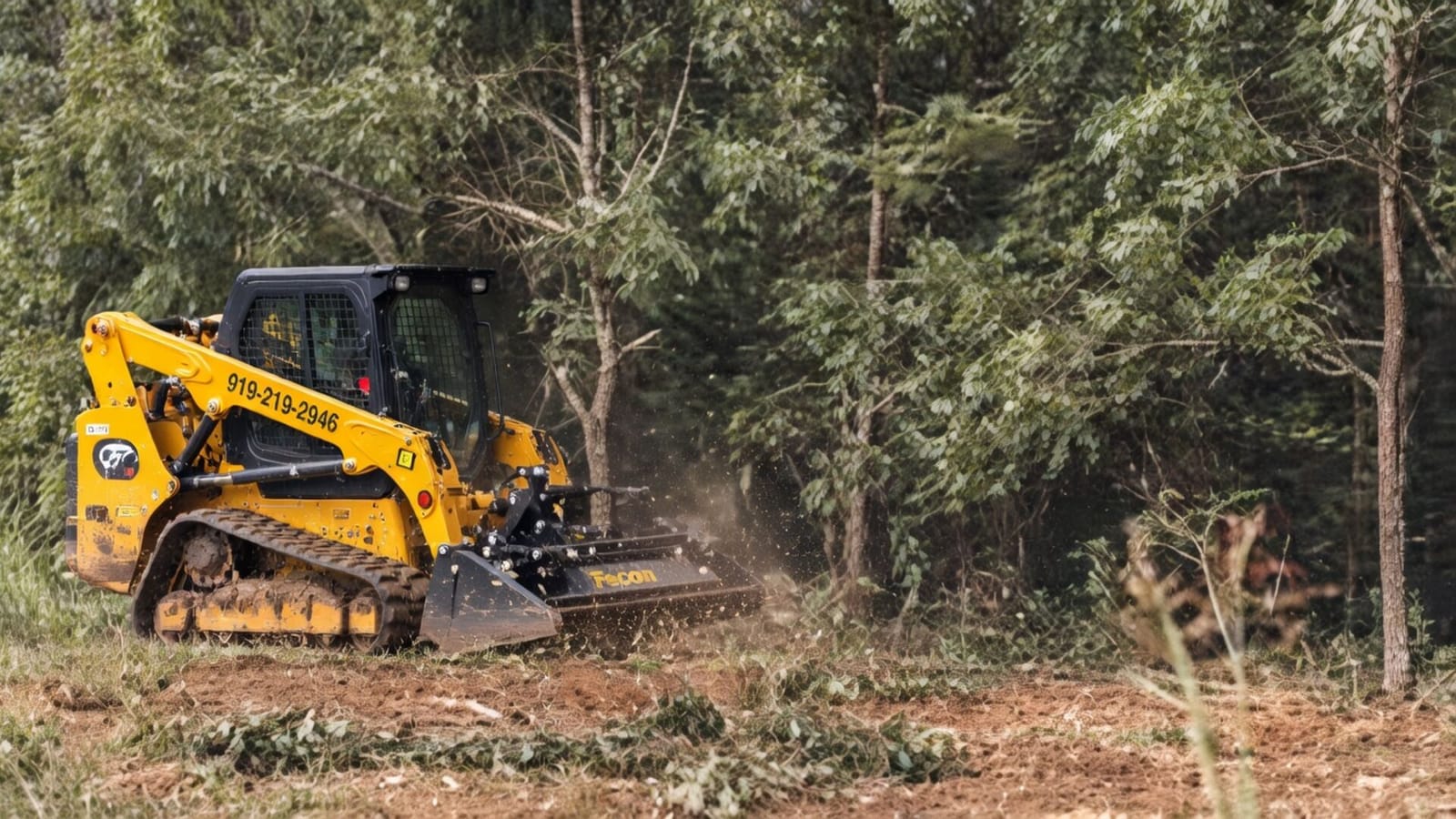
Forestry Mulching Cost in Maine (2026 Guide)
Forestry mulching in Maine runs $1,500 to $4,000 an acre. What barberry, stone walls, browntail moth, shoreland buffers and stumps change on a Maine job.
Cost Guide Forestry Mulching Cost in Hermon, ME (2026)
Forestry mulching cost in Hermon, ME: $1,500 to $4,000 an acre. How a day rate becomes an acre price and how much ground a day covers. Request a free quote.
 Cost Guide
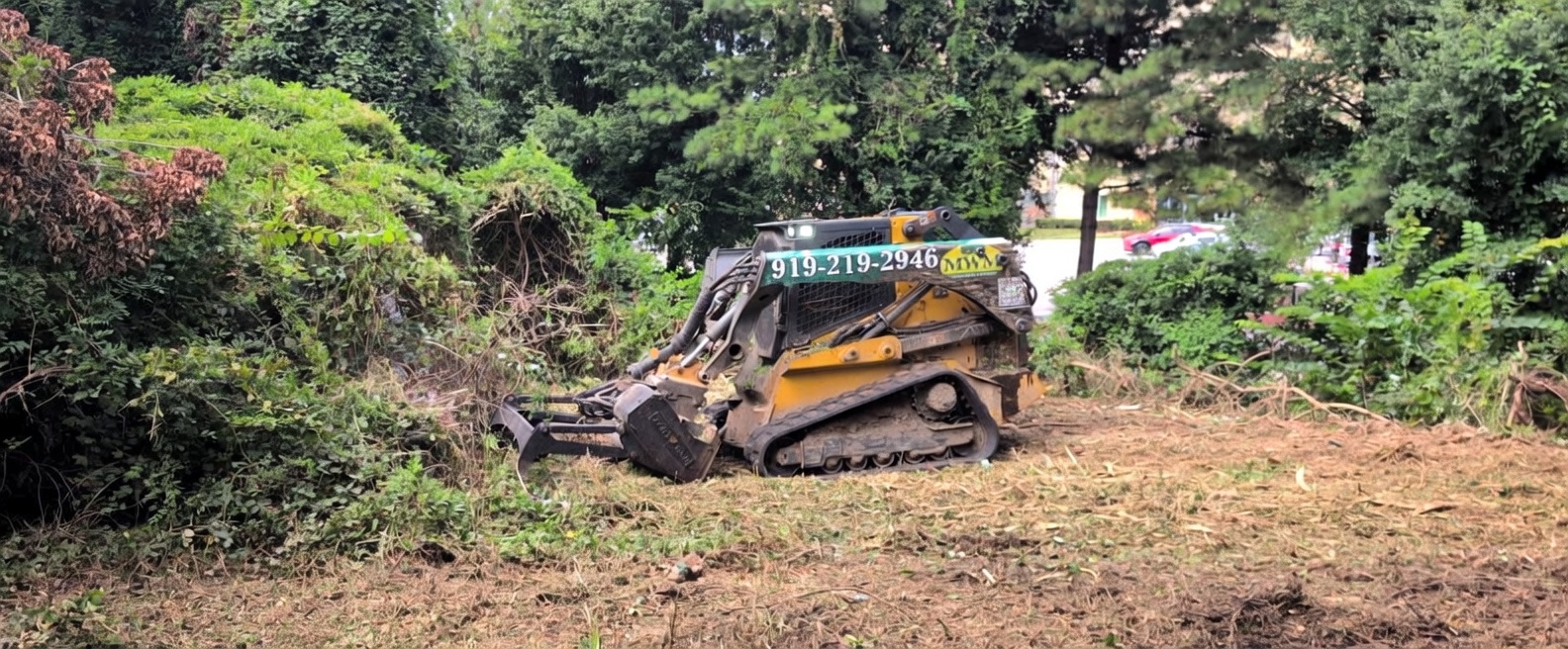
Brush Hogging Cost Per Acre in Maine (2026 Guide)
Brush hogging in Maine runs $75 to $400 an acre, set by how long the field has gone unmowed, with a $250 to $500 minimum. Alder, rocks, nesting and shoreland.
Comparing states? See land clearing costs by state.
Let's Get Started on Your Land
Request a free quote. We'll contact you to discuss your property, access, and the clearing you need.
Get a Free QuoteOr call us directly: (919) 525-3950
 Quick answers from Cut Brush