
Forestry Mulching Cost in Maine (2026 Guide)
Cut Brush Team · November 9, 2026 · 9 min read
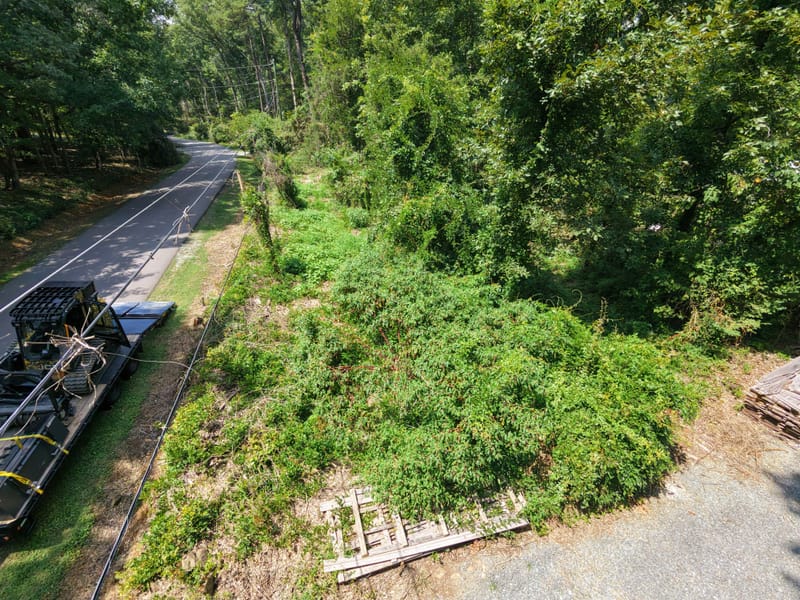
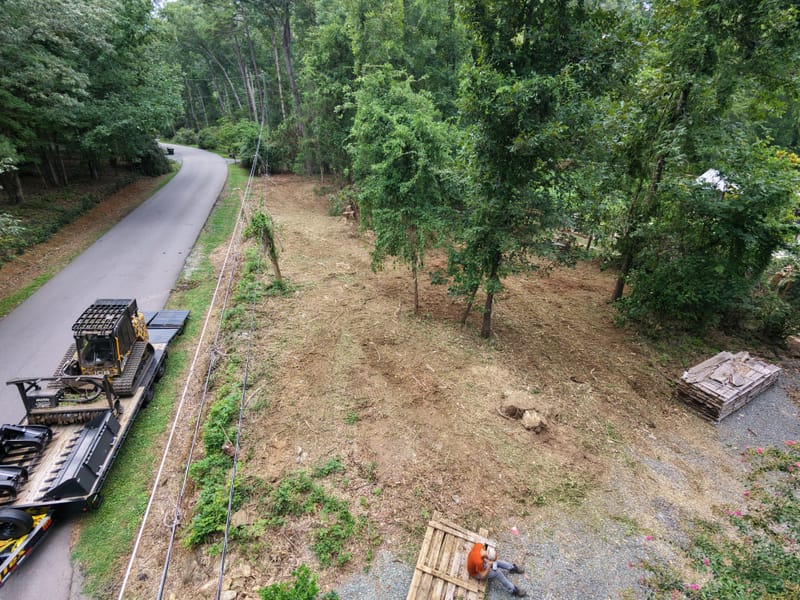
Forestry mulching in Maine costs $1,500 to $4,000 an acre with our crews, and clearing barberry or glossy buckthorn from under trees you are keeping costs $1,500 to $2,500. Here the job might be a hayfield gone back to brush, a stone wall lost under barberry, or a camp lot where shoreland rules decide how much ground a machine may touch.
At a glance:
- Mulching band: $1,500 to $4,000 an acre, from thin young growth on level ground to a closed thicket with young trees woven through it
- Shrubs under trees that stay: $1,500 to $2,500 an acre in both our Maine markets
- Smallest job: a minimum charge of about $1,500, which stands in for the acre rate and is never added to it
- Stormwater: cutting without grubbing or stump removal does not count toward the one acre of disturbed ground that brings in Maine’s Construction General Permit; pulling the stumps does
- Near water: in the buffer strip closest to a pond, river or wetland, growth under 3 feet and the ground cover must stay, so that strip is never mulched
- Burning: a brush pile needs a permit in any month; a mulched acre leaves no pile
Our crews work Maine from two markets: Sabattus and the Lewiston-Auburn area (Androscoggin, Sagadahoc, Cumberland and Kennebec counties), and Hermon and the Penobscot Valley (Penobscot, Waldo, Hancock, Somerset and Piscataquis counties). Both publish the same mulching prices.
How Much Does Forestry Mulching Cost in Maine?
Forestry mulching is one tracked machine with a spinning drum that grinds brush, saplings and stumps where they stand into chips. Nothing is piled or trucked away.
| What is standing on the acre | Our price per acre | Where it lands |
|---|---|---|
| Barberry or glossy buckthorn under trees you are keeping | $1,500 – $2,500 | The canopy stays; only the shrub layer goes |
| Scattered young growth in a level back field | $1,500 – $4,000 | Near the bottom of the band |
| A barberry or buckthorn thicket with saplings coming through | $1,500 – $4,000 | The middle of the band |
| A closed stand of young trees with shrubs packed between the trunks | $1,500 – $4,000 | Toward $4,000 |
| One stone wall line or narrow field edge | The band, as a share of an acre | Billed by its length and width |
Where these numbers come from. They are the forestry mulching and understory rows on our Hermon pricing page and our Sabattus pricing page. The bands match; only the understory row’s name differs, buckthorn and woods edge clearing around Hermon, barberry and field edge clearing around Sabattus. Stumps finish level with the ground and the chips stay. Pulling stumps below grade, or felling and carting off very large trees, is priced in the quote when you want it, and grading is your builder’s work after ours. Our Maine land clearing cost guide has the bands for clearing to bare ground.
What Changes the Price of a Maine Mulching Job
Stone walls inside the brush. Where an old Maine field ends at a stone wall, barberry grows up through and along the stones. The head works beside a wall, never across it, so a wall line travels slower than open field and sits higher in the band. Billed by length and width, one wall at the back of a hayfield is a fraction of an acre and starts at the minimum.
Browntail moth in the oaks and apple trees. Browntail caterpillars shed toxic hairs that drift on the air and settle into leaf litter, where hairs from the last three years can still be waiting. A mulcher stirs that litter the way a mower does, and Maine’s browntail advice is to keep out of heavily infested ground from April to August and do yard work there on wet days. Where webs hang in the oak, apple or cherry on your land, ask for the mulching to be booked on a wet day or outside those months. The rate holds; only the date moves.
Trees you keep. Each flagged trunk is something the head steers around. A woodlot where most of the canopy stays and only barberry or buckthorn comes out moves to the understory row and sits high in it.
The way in and the spring ground. A camp road, a gate between stone walls, a culvert crossing or a lane that turns soft in spring each eat into cutting time. Where part of a tract holds water, we plan that section for a dry or frozen spell rather than rutting it.
Will It Grow Back After Mulching?
Some of it will, often the shrub you called us about. Japanese barberry is widespread and severely invasive across Maine. Cut a large plant and it resprouts; it dies only after persistent cutting or mowing several times a growing season, over several years. Glossy buckthorn sprouts from the stump the same way.
So we never fold regrowth into the acre band. The first pass is priced at the mulching or understory rate, and each return cut is its own line in the quote that you can accept or decline. Our Japanese barberry removal guide and glossy buckthorn removal guide lay out the visits.
Pro tip: Barberry seed lasts only about one to five years in the soil, and turkeys and grouse carry in fresh seed from fruiting plants nearby. Mowing a mulched field through those first seasons keeps seedlings from taking hold while the seed in the ground runs out.
Forestry Mulching Costs Across Maine
Sabattus and the Lewiston-Auburn area. From Sabattus, Lewiston and Auburn out to Lisbon, ME, Turner, Topsham, Brunswick, ME, Gray and Augusta, ME, our understory band is written for barberry along old field edges and stone walls. A Sabattus Pond lot is priced on the ground behind the town’s 100-foot shore buffer, which stays wooded. Our Sabattus forestry mulching guide works through a pond lot band by band and weighs renting a mulcher against hiring the job.
Hermon and the inland Penobscot Valley. Around Hermon, Carmel, ME, Glenburn, Orono, Old Town, Dexter, Newport, ME and Dover-Foxcroft, our understory band is written for glossy buckthorn along woods edges, and low sections that hold spring water wait for firm or frozen ground. Travel, access and growth place a job inside the same bands as in Hermon. Our Hermon forestry mulching guide turns a day rate into an acre price.
Waldo and Hancock counties toward the coast. In Belfast, Searsport, Bucksport and Ellsworth, ME, the shoreland zone follows tidal water as well as ponds and rivers, 250 feet back from the high-water line. A saltwater lot prices like a pond lot: selective thinning by the water, quoted on its own, and the mulching band behind it.
Shoreland, Stormwater and Burn Rules for Maine Mulching
Lakes, ponds, rivers and the coast. The shoreland zone covers land within 250 feet of great ponds, rivers, tidal water and the upland edge of non-forested wetlands, and within 75 feet of certain streams. Your town’s ordinance may be stricter than the state minimum; in a township or plantation with no town government, the Land Use Planning Commission’s rules apply instead. Talk to the code enforcement officer before any cutting.
The buffer strip, the first 75 feet, or 100 feet beside a great pond or a river flowing into one, is where mulching stops. Growth under 3 feet and the ground cover must stay, and trees down to 2 inches thick score points that each 25 by 50 foot plot must keep: 24 beside a great pond, 16 elsewhere. Outside Resource Protection, a footpath up to 6 feet wide between trunks may wind down to the water. Within 75 feet of a great pond zoned Resource Protection, nothing is cut except safety hazards.
Behind the strip, cleared openings may total 25 percent of the lot or 10,000 square feet, whichever is greater, and no more than 40 percent of the zone’s tree volume may come out in ten years. On a one-acre camp lot the openings cap is about 10,900 square feet, and the camp, drive and lawn count against it. An opening is a gap in the canopy, so clearing barberry from under trees that stay does not add to it.
Stormwater. Maine’s Construction General Permit covers a project with one acre or more of disturbed ground, or less when part of a larger plan of development. Disturbed means stripped, graded, grubbed, filled or excavated; cutting trees without grubbing, stump removal or exposed soil is not. Mulching that leaves the roots in place and the soil covered stays out of that count, while pulling stumps from a 3-acre back lot can put the job over the line.
Burning. Brush piles and wood debris need a burn permit in every month, and so does any fire bigger than 3 feet high and 3 feet wide. In an organized town the permit comes from the town forest fire warden or the Maine Forest Service online system; in an unorganized town, from the local forest ranger. Mulching skips the pile and the permit.
Frequently Asked Questions
How much does it cost to forestry mulch an acre in Maine?
$1,500 to $4,000 an acre with us, the same band around Sabattus and Hermon. Scattered young growth in a level back field sits near $1,500; a closed stand of young trees with barberry or buckthorn packed between them sits near $4,000. Under an acre, the minimum charge of about $1,500 often sets the price.
What does the land look like after forestry mulching?
A mat of chips over the ground, stumps cut flush, and every flagged tree still standing. With the roots in place and the soil covered, it is not disturbed ground for Maine’s stormwater permit, and there is no pile to burn.
Can you forestry mulch in the winter in Maine?
Yes, and for some ground it is the better season. Wet sections wait for a dry or frozen spell, and land with browntail webs is best worked outside April to August.
Can I keep the bigger trees and mulch around them?
Yes. Flag what stays and the head works around each trunk; very large trees you want felled and carted off are priced in the quote. Near water, the trees you keep also hold you under the shoreland limit of 40 percent of tree volume in ten years.
Get a Forestry Mulching Quote in Maine
Request a free quote and our crew will contact you to discuss the property, the access and the clearing you need. Pick the nearest area below, Sabattus and the Lewiston-Auburn area or Hermon and the Penobscot Valley. On that call we will ask where the water is and which trees stay, because in Maine those answers shape a quote as much as acreage does.
If the field only needs mowing, see brush hogging costs in Maine. For shrubs under a canopy you keep, see underbrush removal costs in Maine, and for a build site, land clearing and grading costs in Maine.
Sources
- Maine Department of Environmental Protection, Clearing Vegetation in the Shoreland Zone
- Maine Revised Statutes, Title 12, section 9324: burning out of doors needs a permit
More from the Cut Brush Blog
Keep reading for more tips and guides on land clearing.
 Cost Guide
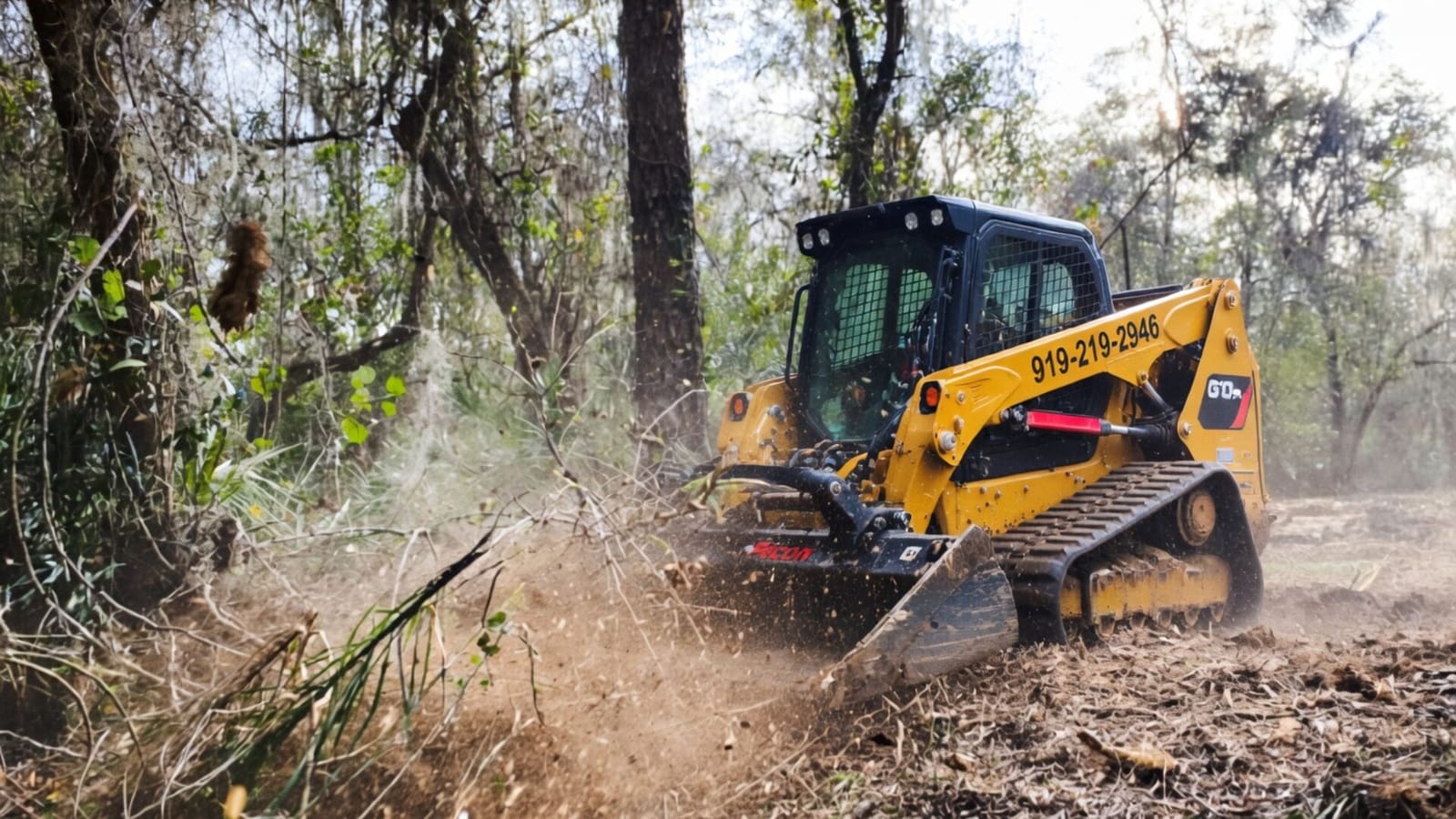
Underbrush Removal Cost in Maine (2026 Guide)
Underbrush removal in Maine runs $1,500 to $2,500 an acre under trees you keep. See what buckthorn, barberry and the shoreland buffer change before you book.
 Cost Guide
Forestry Mulching Cost in Hermon, ME (2026)
Forestry mulching cost in Hermon, ME: $1,500 to $4,000 an acre. How a day rate becomes an acre price and how much ground a day covers. Request a free quote.
 Cost Guide
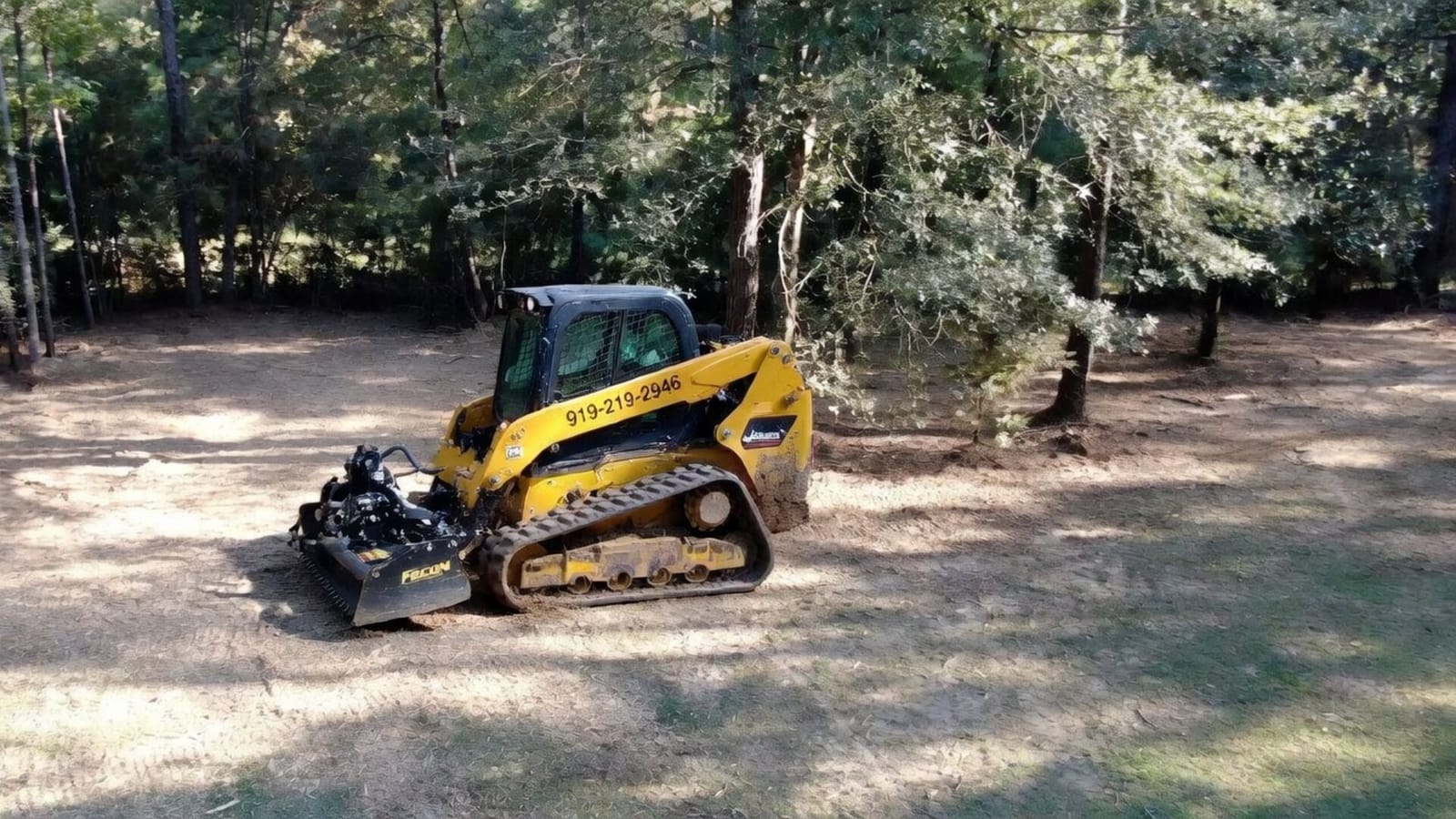
Land Clearing Cost Per Acre in Maine (2026 Guide)
Land clearing in Maine: $1,500 to $4,500 an acre. Brush, trees and lot prep, with stumps left flush, around Sabattus. Request a free quote for your land today.
Comparing states? See land clearing costs by state.
Let's Get Started on Your Land
Request a free quote. We'll contact you to discuss your property, access, and the clearing you need.
Get a Free QuoteOr call us directly: (919) 525-3950
 Quick answers from Cut Brush