
Clearing Redcedar From Pasture Around Starkville, MS
Cut Brush Team · October 6, 2026 · 5 min read

To get rid of eastern redcedar around Starkville, grind the trees down and then watch for seedlings. Unlike many invasive plants, redcedar does not grow back from the stump: the US Forest Service says it does not sprout after cutting or burning. A forestry mulcher can clear a thicket in a pass and finish it. What returns comes from seed that birds carry in, so a cleared pasture needs mowing or a return visit while the new cedars are small.
This guide covers why cedar fills the ground around Starkville, what makes the clay here different, how clearing it works, and what to expect afterward.
Why Cedar Fills the Ground Around Starkville
The Blackland Prairie, also called the Black Belt, runs in an arc through Mississippi and Alabama. The US Forest Service describes it as a mosaic of tallgrass prairie, oak woodland and redcedar thickets, and says the cedar-dominated zones may represent invasion by the species where fire has not been frequent enough. Fire once swept this ground often, and with fire gone, cedar fills the openings.
Farming added to it. The same source says almost all the original prairie was converted to agriculture, and that abandoned land has in places become cedar glades. For an owner near Starkville the practical result is familiar: a pasture or old field that was open ten years ago and is now full of cedars of every size.
Not every acre in Oktibbeha County is prairie. The Forest Service notes that the prairie is surrounded by pine-oak forest on sandier, more acidic soil. The ground in your own field decides how it behaves, which is why a quote starts with where the land is.
What Makes This Clay Different
The soil series named for Oktibbeha County is a good picture of the problem. The federal series description lists it as moderately well drained with very slow permeability, formed in clayey sediments over chalk or calcareous clay, with slickensides beginning around 13 inches down. Slickensides are polished surfaces that form in clay that swells and shrinks with moisture.
Two things follow for clearing. First, water moves through this ground slowly, so it stays soft after rain. A tracked machine working it wet slows down and can rut, and waiting for a dry spell usually costs less than pushing through. Second, clay holds root zones in place, which is why leaving roots and a chip layer, rather than scraping to dirt, helps the field hold together.
Why a Mulched Cedar Stays Gone
The Forest Service fire effects summary states it plainly: eastern redcedar does not sprout after complete cutting or burning, and there is no natural asexual reproduction in the species. That sets it apart from many invasive plants, which resprout from the roots.
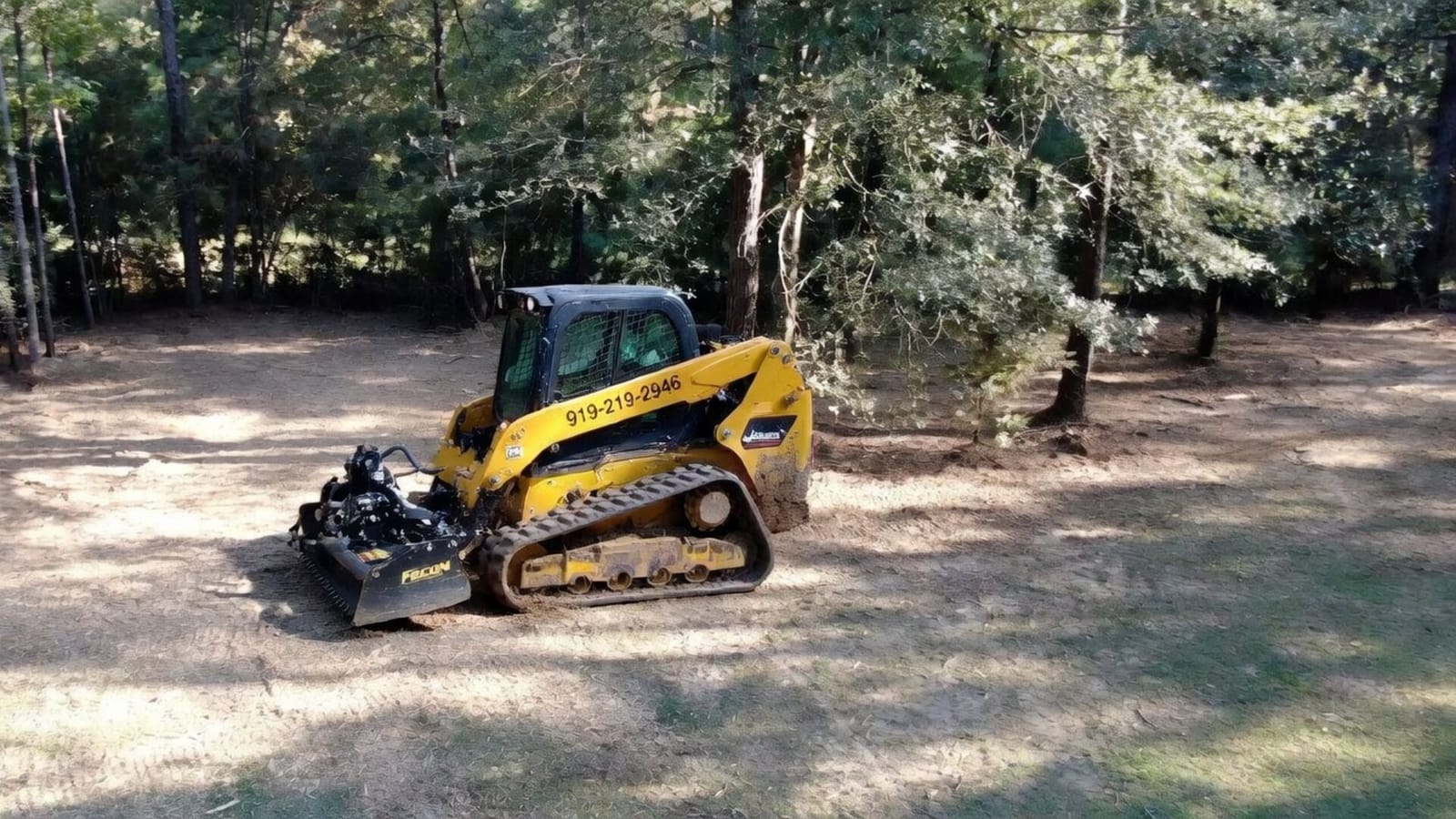
For you, that means a mulcher finishes the job on any cedar it cuts. There is no stump to treat and no herbicide visit to schedule for the trees that were ground down. The finish is also useful: a chip layer over the soil, stumps at ground level, and a field you can walk and mow.
What Comes Back
Seed is what returns. The same summary says birds and small mammals disperse redcedar seed, and that trees reach reproductive age at about ten years. Cedars standing along a fence line or in a neighbor’s field keep supplying seed.
Small cedars are easy to deal with. A pasture that is mowed or grazed once or twice a year keeps seedlings from establishing, and a planned return visit a season or two after the first pass catches any that got ahead. The Forest Service adds that seedlings and saplings under about twenty years old are very susceptible to fire, though burning is a separate question with its own limits.
Burning Instead of Mulching?
Many owners ask whether they can just burn the cut trees. Mississippi allows burning land clearing debris only under conditions. The MDEQ open burning fact sheet says it is not allowed where local ordinances prohibit it or during a High Fire Danger Alert, and not within 500 yards of an occupied dwelling without a forced-draft air system. Agricultural and forestry burning needs a permit from the Mississippi Forestry Commission. On a lot near a house, that usually rules a burn pile out, and mulching removes the question.
On the day, a cedar job comes down to four choices.
- Mark the keepers. Post oaks and other hardwoods among the cedars are worth saving. Flag them before the machine moves.
- Pick the finish. Chips left in place suit a pasture. If the ground is going to be seeded, say so.
- Plan the weather. Wet clay sets the calendar more than the cedars do.
- Plan the follow-up. Mow or graze the field, or schedule a return visit.
Pricing sits in the redcedar and pasture row of our Starkville pricing guide, which is $1,500 to $2,500 per acre for young cedar and understory work. Older, denser stands fall under mulching or clearing, up to $4,000 and $4,500, and the Starkville forestry mulching cost guide explains why.
Frequently Asked Questions
Does redcedar grow back after it is cut?
Not from the stump. The Forest Service says it does not sprout after cutting or burning. New trees come from seed.
Is cedar worth keeping in a pasture?
Some owners keep a few for shade or windbreak. A thicket crowds out grass and is the usual reason a pasture is cleared.
When is the best time to clear?
When the clay is firm. Dry spells matter more than the season.
Take Back Your Starkville Field
Start with the Starkville land clearing page for what we do around the Golden Triangle, check the Starkville pricing guide, then request a free quote. If we can take the job, the scope and price go on paper.
More from the Cut Brush Blog
Keep reading for more tips and guides on land clearing.
 Guide
Land Clearing Permits in Starkville & Oktibbeha County, MS
When clearing land in Starkville or Oktibbeha County, Mississippi needs a permit, what the city charges, and the state stormwater and burning rules.
 Cost Guide
Forestry Mulching Cost in Starkville, MS (2026)
Forestry mulching around Starkville, MS runs $1,500 to $4,000 per acre. How cedar age, wet prairie clay, trees you keep and field access move a quote.
 Guide
Kudzu Removal in Mississippi: Cost and Control Plan
Kudzu removal in Mississippi needs more than a mowing. See why the vine comes back, the multi-visit plan that kills the crowns, and the cost per acre.
Let's Get Started on Your Land
Request a free quote. We'll contact you to discuss your property, access, and the clearing you need.
Get a Free QuoteOr call us directly: (919) 525-3950