
Clearing Old Strip-Mined Ground Around LaFollette, TN
Cut Brush Team · October 1, 2026 · 5 min read
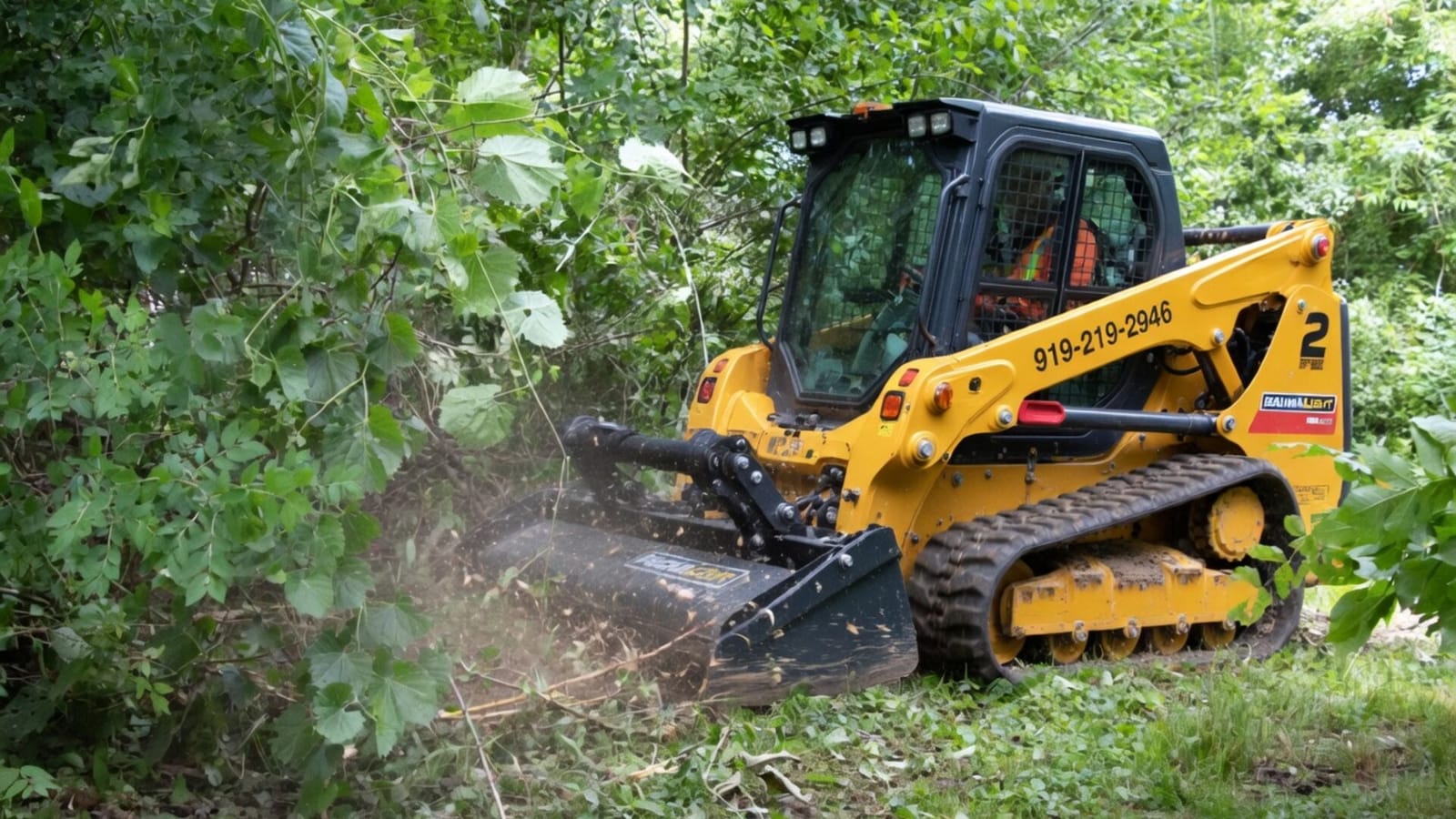
Old strip-mined ground around LaFollette can be cleared with a forestry mulcher, but it rarely stays clear on one pass. Mine benches and fills in this part of Tennessee tend to carry autumn olive, black locust and sericea lespedeza over compacted, stony soil, and kudzu often holds the edges. A mulcher knocks the thicket down fast. The shrubs come back from their roots unless a treatment follows, so the job is a sequence rather than a single visit.
Why Mine Ground Looks the Way It Does
Coal shaped Campbell County. The Tennessee Encyclopedia says coal ruled the county’s economy for about three-quarters of a century, and LaFollette itself was founded in 1893 on mountain land bought for its iron and coal. Some of that history is now parkland: Indian Mountain State Park at Jellico was once a coal mine, and its Ballard Lake fills an old strip mine pit.
Most mined ground is not a park. Virginia Tech’s Powell River Project reforestation guidelines, written for unused surface-mined land across the eastern coalfields, describe the usual picture. These lands are mostly covered in persistent grasses and legumes such as fescue and sericea lespedeza, with a mix of invasive and native woody plants of little value, and most are neither used nor managed. Sericea was sown on many sites because it tolerates poor, acidic soil. About five years after reclamation, even where nobody planted them, autumn olive and black locust move in. The guidelines call what follows arrested succession: the existing cover is so dense that forest trees struggle to establish.
What That Means for the Machine
Two features of mine ground matter to a mulcher operator.
The thicket is dense but not heavy. Autumn olive, locust whips and lespedeza are mostly small stems packed close together. A mulching head goes through them quickly, often faster per acre than through mature hardwood. That keeps the rate toward the lower part of the band for the vegetation itself.
The footing is the slow part. Benches and fills are often compacted, rocky and uneven, with buried stone that wears the teeth on the drum and highwalls or steep fill slopes that limit where the machine can travel safely. A tract that looks easy from an aerial photo can take longer on the ground. Walking the site before pricing it is the only reliable way to know.
Why It Comes Back After One Pass
The Powell River guidelines are blunt about cutting: spraying is preferred over cutting or chipping stems without spraying, because spray kills the root systems as well as the stems and prevents regrowth and resprouting. In other words, a mulcher alone leaves live roots, and autumn olive answers with a flush of new shoots.
Kudzu has its own reserves. Tennessee’s forestry division notes that kudzu spreads by runners that root wherever a node touches the ground, can grow more than a foot a day, and stores energy in tubers at the root crown so it can regrow. Its listed controls are removing the crown, repeated mowing over several years, or herbicide.
None of that makes clearing pointless. It means clearing is the first step, not the last.
A Practical Order of Work
For a mine-ground tract near LaFollette, Jacksboro or Jellico, the sequence usually looks like this:
- Walk and mark. Flag highwalls, steep fill edges, wet spots and any trees worth keeping, and decide what the ground is for: pasture, a hunting tract, a homesite or simply open woods.
- Mulch the thicket. Grind the autumn olive, locust and lespedeza down to a chip layer, working along the contour where the slope allows.
- Treat the regrowth. Book a licensed treatment provider to treat the new shoots once they appear, following the label and their own timing.
- Return if needed. A second mulching or mowing pass a season or two later keeps the ground open while the treatment works.
If the goal is new forest rather than open ground, the same guidelines describe a heavier method built on mechanical clearing, deep ripping of compacted soil and planting. That is a forestry project with its own specialists, and worth asking about before you commit to a plan.
When Mulching Is the Wrong Tool
Mulching suits mine ground headed for pasture, wildlife openings or walkable woods. It is not a building pad. A homesite on old fill needs the ground assessed for stability, and the chips have to come off before an excavator starts. Inside the City of LaFollette, the posted permit form asks for a grading permit before any land disturbing activity, so confirm current requirements with the city codes office; the LaFollette and Campbell County permit guide covers that.
Frequently Asked Questions
Is autumn olive hard to mulch?
No. The stems are small and grind quickly. The challenge is the regrowth from roots, which needs a treatment after the clearing.
Does mine ground cost more to clear?
Sometimes, because rocky, compacted footing slows the machine, even though the shrubs themselves are light work. The forestry mulching cost guide for LaFollette explains where it lands in the band.
Can I just mow the lespedeza?
Mowing keeps the herbaceous cover short, but it rarely clears woody shrubs that have already taken hold. A mulcher opens the thicket first; mowing then helps keep it open.
Get a Plan for Your Mine Ground
Every mine bench is different, so tell us where yours is; if we can take work there, the quote starts with a walk. Check the bands on the LaFollette pricing guide, read about the wider area on the LaFollette land clearing page, then request a free quote and tell us the land was mined.
More from the Cut Brush Blog
Keep reading for more tips and guides on land clearing.
 Guide
Guide Land Clearing Permits in LaFollette & Campbell County, TN
When clearing land in LaFollette needs a city grading permit, the stream buffer, what Campbell County requires, state stormwater, and TVA's Norris Lake rules.
 Cost Guide
 Forestry Mulching Cost in LaFollette, TN (2026)
Forestry mulching around LaFollette runs $1,500 to $4,000 per acre. How mountain slope, old mine ground, Norris Lake frontage and access change a quote.
Guide Bradford Pear Removal in Tennessee: Thickets and Costs
Bradford pear removal in Tennessee: is there a bounty or a ban, why wild callery pear thickets spread, and what clearing them costs per acre.
Ready to Get Started on Your Land?
Get a free, no-obligation estimate for property in LaFollette & the Cumberland Mountains.
Get Your Free QuoteOr call us directly: (919) 525-3950