Bradford Pear Removal in Tennessee: Thickets and Costs
Cut Brush Team · October 2, 2026 · 8 min read
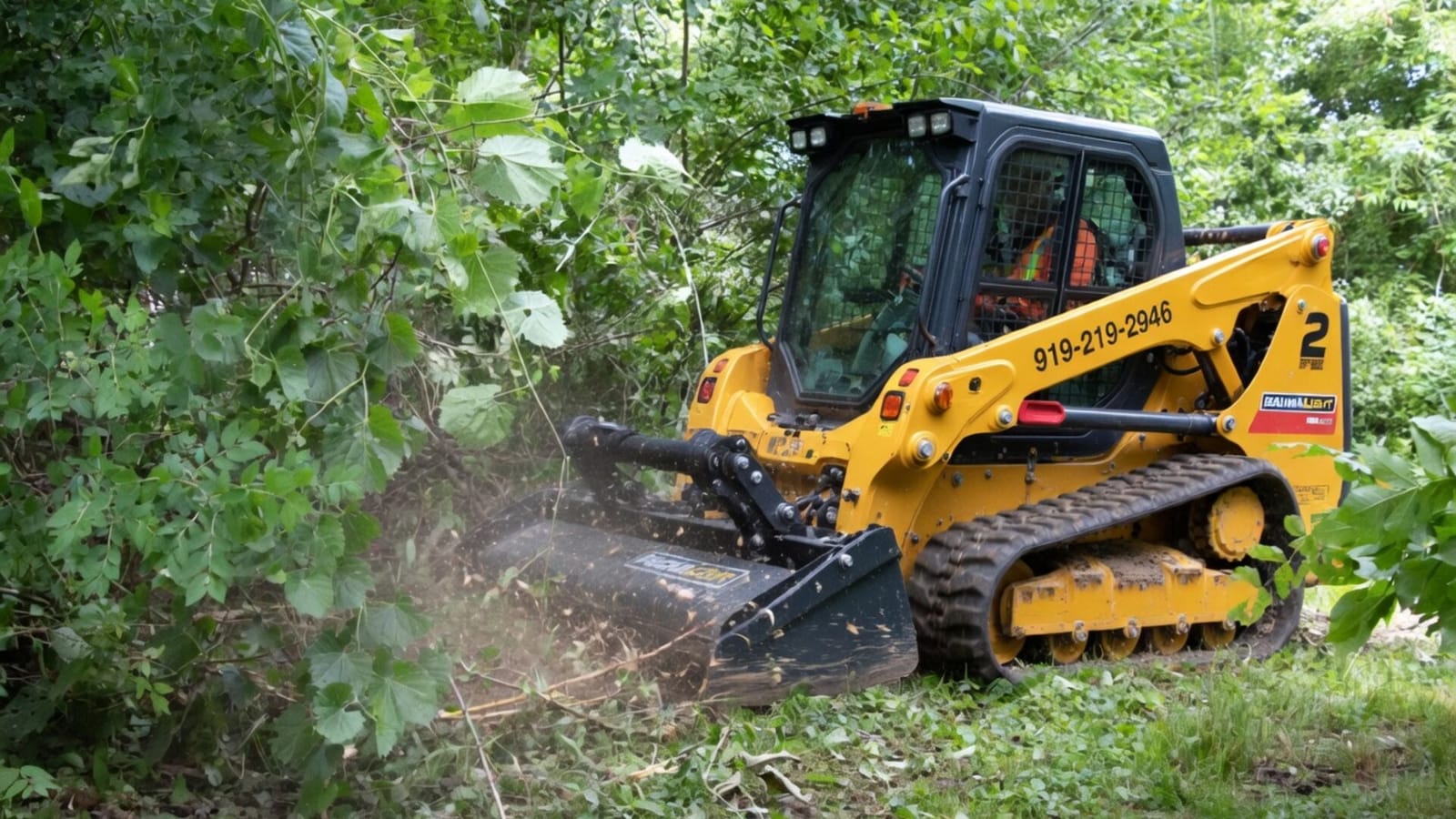
Every March the interstate shoulders and old fields of Tennessee go white for two weeks, from the foothills around Maryville to the edges of Murfreesboro. It is pretty from the car. Up close it is callery pear: the Bradford pears planted along driveways and parking lots for decades, and the thorny wild offspring now taking over pastures, fence rows and every field that sits idle for a few seasons. Bradford pear removal in Tennessee is really two jobs: an aging ornamental by the house, and a thicket of its descendants claiming the land down the road.
This guide answers the questions Tennessee owners actually ask: whether there is a bounty, whether the tree is banned, why the wild thickets spread so fast, why cutting alone never finishes them, what clearing costs per acre, and how the job changes across East and Middle Tennessee.
Is There a Bradford Pear Bounty in Tennessee?
Not a statewide one, as of October 2026. South Carolina and North Carolina run bounty exchanges that trade cut pears for free native trees, and plenty of Tennessee owners search for the same thing. We found no state program in Tennessee and no city exchange in Knoxville, Chattanooga or Nashville. If one starts, it will most likely come through UT Extension or the Division of Forestry, so check with your county extension office before you cut.
The upside of no bounty is that there is no deadline or event calendar to work around. You can clear on the season that suits the ground, which in most of the state is late fall through winter.
Is Bradford Pear Banned in Tennessee?
No. It is still legal to buy, plant and keep in Tennessee. The state does treat it as a problem. The Tennessee Invasive Plant Council lists callery pear as “Established,” and in 2024 WLOS reported that “conversations are underway about banning these trees from being sold or planted in Tennessee.” The same report noted that “the City of Chattanooga and Cleveland stopped planting them back in 2017.”
Callery pear is not on the short list of plants the Tennessee Department of Agriculture regulates, so nobody has to remove one. Owners remove them because of what the wild ones do to land.
Why Are Wild Callery Pear Thickets Spreading So Fast?
Because the “sterile” ornamental was never sterile once other varieties were planted nearby. Clemson’s Home and Garden Information Center explains that “Bradford pears, by themselves, cannot produce viable seed. But, if pollen from a different flowering pear cultivar (or a wild Callery pear) pollinates a Bradford pear flower, then viable seed can be produced.” Nurseries sold several varieties for years, and the trees cross-pollinated.
Birds did the rest. The Tennessee Invasive Plant Council notes that “the spread of callery pear is by seed, apparently dispersed by birds, and perhaps also small mammals, that consume the small hard fruits and excrete the seeds when they defecate.” Every fence row a bird sits on becomes a nursery.
The offspring are a different animal from the tree in the front yard. TNIPC describes the wild form’s “large thorns, which are usually present,” and Clemson notes thorns “sometimes up to 3” long!” and reports that “many have reported the loss of tires from Callery pear thorn punctures.” A pasture going to pear is a pasture you cannot mow, graze or walk.
Why Doesn’t Cutting Callery Pear Finish It?
Because it comes back from the stump and the roots. Penn State Extension says it plainly: “Cutting or mowing effectively eliminates the low cover and provides access to overgrown sites, but plants will readily resprout.” Fire is no better; Clemson warns that “for every stem that a fire kills, four more will resprout in its place.”
Two habits make thickets worse. Bush-hogging a stand every year keeps it short but can turn each stem into a cluster. And leaving seed trees in place guarantees a return; Penn State notes callery pear “will likely reinvade areas where it has been removed as long as a seed source remains nearby.”
So the plan has three parts: take out the thicket, cut the resprouts on a schedule, and remove the seed trees on your own land. Cut Brush does mechanical work only and applies no herbicide. Chemical treatment of cut stumps is work for a licensed applicator, who can be scheduled alongside the clearing.
What Does Bradford Pear Removal Cost in Tennessee?
Clearing a wild callery pear thicket typically runs $1,500 to $2,500 per acre, the brush and understory band on our Maryville pricing page. Stands that have grown into small woods price higher, and resprout passes are priced per visit. Every Tennessee market uses the same bands.
| Job | Typical range | Who does it |
|---|---|---|
| One ornamental Bradford near a house, roof or power line | Priced per tree | An insured tree service; it is climbing and rigging work |
| Ornamentals in open ground a machine can reach | Starts near the $1,500 project floor | A clearing crew |
| Wild callery thicket on a field edge or fence row | $1,500 – $2,500 per acre | Forestry mulching |
| Mature callery stand with trees to fell | $1,500 – $4,500 per acre | Land clearing |
| Resprout passes | Priced per visit | Scheduled for the next one to two growing seasons |
Thorns change how the work is done. Mulching grinds the thorny branches into chips on the spot, so nothing sharp is left behind for tires, livestock or bare feet. For the full per-acre picture, see the Tennessee land clearing cost guide.
Pro tip: If you have one Bradford pear by the house, call a tree service. If you also have a white stripe along the back fence every March, the stripe is the bigger problem, and clearing it on the same visit as any other brush work costs less than two separate jobs.
Bradford Pear Around Maryville, Chattanooga and Nashville
The tree is the same statewide. What changes is the ground and what you can do with the debris.
Maryville and the Knoxville area. Old pasture and field edges across Blount County are prime callery ground, and they often hold autumn olive and privet as well; our East Tennessee autumn olive guide covers the other common invader. Outside city limits, debris burning from October 15 through May 15 needs a permit from the Tennessee Division of Forestry, and “burning without a permit is illegal and can lead to a fine or up to 30 days in jail.” Start at land clearing in Blount County.
Chattanooga. The city stopped planting Bradford pears in 2017, but the wild ones are already on the ridges and field edges. On the same slopes, kudzu is often the bigger fight; our Chattanooga kudzu guide explains that job.
Nashville and Middle Tennessee. Callery pear fills the old fields around the growing edge of the metro, often alongside eastern red cedar; our Nashville red cedar guide covers that. Debris burning is prohibited in Davidson County, so mulching in place is the practical route there. If you are also fighting a bamboo grove, our Nashville bamboo guide covers it. See land clearing in Middle Tennessee.
The Cumberland Mountains and West Tennessee. Callery pear moves into idle fields and road edges around LaFollette and around Brownsville the same way it does near Maryville, and the same order of work applies: clear the thicket, cut the resprouts, remove the seed trees. See land clearing in the Cumberland Mountains and in West Tennessee.
Frequently Asked Questions
Is there a Bradford pear bounty in Tennessee?
Not a statewide one as of October 2026, and we found no city exchange in Knoxville, Chattanooga or Nashville. Neighboring South Carolina and North Carolina run bounty programs; check with your county extension office in case a local event starts.
Is Bradford pear banned in Tennessee?
No. It is still legal to buy, plant and keep. The Tennessee Invasive Plant Council lists callery pear as established, and a statewide ban has been discussed but not enacted.
How much does Bradford pear removal cost in Tennessee?
A single yard tree near a house is priced per tree by a tree service. Wild callery thickets typically clear for $1,500 to $2,500 per acre, mature stands can price as land clearing at $1,500 to $4,500 per acre, and small jobs carry a practical floor near $1,500.
Do callery pear thorns really puncture tires?
The wild offspring carry thorns up to three inches long, and Clemson Extension notes that many owners have reported losing tires to them. Mulching grinds the thorny branches in place, leaving nothing sharp on the ground.
Will callery pear grow back after it is cut?
Yes, from the stump and roots, unless the resprouts are cut again on a schedule or treated by a licensed applicator. Removing the seed trees on your own property keeps new seedlings from coming back in.
When is the best time to clear callery pear?
Late fall through winter. The trees are dormant, the fruit is mostly gone so the machine is not spreading seed, and in March the blooms make every remaining tree easy to spot for the follow-up.
Get Ahead of the Pears Before Spring
Whether it is a row of aging ornamentals along a drive in Alcoa, a white stripe of wild pear along a fence line outside Maryville or a pasture going to thorns near Murfreesboro, every spring the thicket spreads further. Cut Brush quotes Bradford pear and callery pear removal across Tennessee with the whole job in view: the thicket cleared, the thorns ground in place and the resprout passes priced up front.
Related Services
Learn more about the services mentioned in this article.


More from the Cut Brush Blog
Keep reading for more tips and guides on land clearing.
 Cost Guide
 Forestry Mulching Cost in Knoxville: 2026 Per-Acre Guide
Forestry mulching cost in Knoxville runs $1,500 to $4,000 per acre. See density pricing, hourly vs per-acre quotes, and slope factors. Get a free estimate.
Guide Autumn Olive Removal in East Tennessee: Reclaim Old Fields
Autumn olive removal in East Tennessee: spot the silver-leaf invader, why bush hogging backfires, and the fall window to kill it. Get a free estimate today.
 Cost Guide
 Land Clearing Cost Per Acre in Tennessee (2026)
Land clearing cost per acre in Tennessee runs $1,500 to $4,500. See Chattanooga-area pricing by vegetation density, slope, and rock. Request a free quote today.
Where is your property?
Cut Brush runs 5 service areas in TN. Pick the one nearest you and the quote form comes to the right crew.
Ready to Get Started on Your Land?
Get a free, no-obligation estimate for property in Maryville & Blount County.
Get Your Free QuoteOr call us directly: (919) 525-3950