
Brush Hogging Cost Per Acre in Maine (2026 Guide)
Cut Brush Team · November 9, 2026 · 9 min read
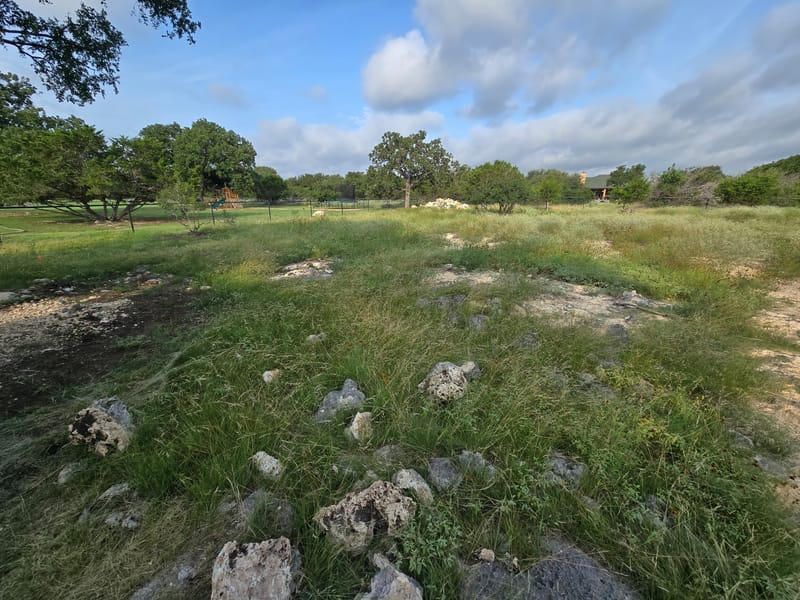
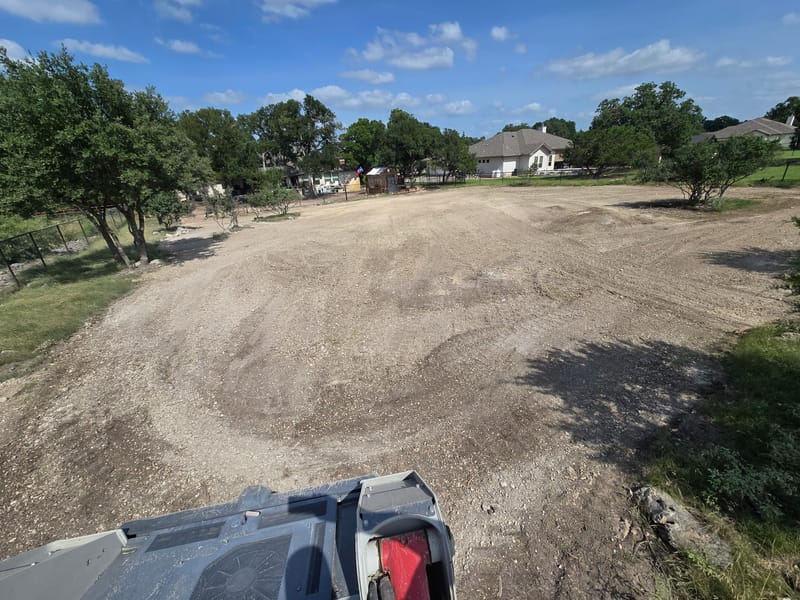
An old hayfield behind a farmhouse in Androscoggin County gets skipped for a few summers, and alders and birches start creeping in from the stone wall. Our crews brush hog Maine fields for $75 to $400 an acre, set by how many seasons the field has gone without a mower, with a $250 to $500 minimum per visit. A field cut last year sits at the bottom; one left four or five years sits at the top, or has become clearing work.
At a glance:
- Cut within the past year: $75 to $150 an acre. One or two seasons missed: $125 to $250. Three or more years: $200 to $400.
- By the hour, where a rough first cut is quoted that way: $60 to $150.
- Alder, birch or poplar past 2 to 3 inches is no longer mower work; it moves to our field edge clearing or forestry mulching prices, which start at $1,500 an acre.
- Shoreland rule: the zone runs 250 feet from a great pond, river or tidal water, or 75 feet from certain streams, and inside its buffer strip a field that has grown back to shrubs is regulated as buffer, not as a field.
- Nesting: bobolinks and eastern meadowlarks raise their young in Maine hayfields; for them, hold the mower until at least July 15.
In Maine, our crews work two areas: Sabattus and the Lewiston-Auburn area and Hermon and the Penobscot Valley. The same field prices apply in both.
How Much Does Brush Hogging Cost Per Acre in Maine?
A Maine mowing price follows the growing seasons since the last cut, because that sets how tall and woody the growth is.
| Field condition | Our price per acre | What it looks like in Maine |
|---|---|---|
| Cut or hayed in the last twelve months | $75 – $150 | Grass and perennial weeds, nothing woody, the stone wall at the edge still in plain view |
| One or two growing seasons missed | $125 – $250 | Weeds past your knee, the first alder, birch and poplar seedlings coming in from the edges |
| Three or more seasons missed | $200 – $400 | Alder and birch saplings up to 2 inches, barberry and multiflora rose along the walls |
| Saplings thicker than 2 to 3 inches | Not a brush hog job | Priced as field edge clearing at $1,500 – $2,500 an acre, or forestry mulching at $1,500 – $4,000 |
Every visit carries a minimum of $250 to $500, because the tractor and cutter cost the same to haul to a half-acre lot in Lisbon as to a ten-acre field in Turner. On a rough first cut where nobody knows what is under the growth, we may quote by the hour instead, at $60 to $150.
Where these numbers come from. The mowing bands are the ones we hold to for brush hogging wherever we work, set wide so the quote never surprises you. Once a field turns woody, the price comes from our Maine pricing pages. Around Sabattus that row is called Barberry & Field Edge Clearing; around Hermon it is Buckthorn & Woods Edge Clearing. Both run $1,500 to $2,500 an acre, and forestry mulching runs $1,500 to $4,000 on both, as the Sabattus pricing page and Hermon pricing page show.
What Changes the Price of a Maine Field
Four things on a Maine field move a quote up or down its band.
Alder, birch and poplar. These are the trees that take over a neglected Maine hayfield first. Under about 2 inches a rotary cutter takes them, and mowing starts to kill many of them while it weakens the perennial weeds. The first thing we look for is any stem over 2 inches, because that is where a mowing price stops.
Rocks the frost has lifted. In a field nobody has worked for years, frost heaves large rocks up toward the surface, and grass hides them. A blade that finds granite stops the job, so walk an old field before it is mowed and flag the rocks you know of; stony ground sits higher in its band than a clean one. A field rough with stumps and big rocks needs a dozer with a rock rake before it can be farmed again, and that is an excavating contractor’s work, not ours.
Shrubs that come back. Japanese barberry, glossy buckthorn and multiflora rose are all widespread in Maine and all resprout after a cut. Mowing several times a growing season for several years can kill them; glossy buckthorn takes at least three cuts a year for three years. One pass knocks them down. A schedule is what clears them.
Japanese knotweed. It grows back from any stem joint or scrap of root, so a cutter that chops and scatters it can spread it across the field. Point out a knotweed patch before the mowing and ask that it be left out of the cut. Patches of fewer than 20 stems can be cut back as often as once a week for several years; anything bigger usually needs herbicide, which is separate work and not ours.
Pro tip: If you want hay off the field again, the mowing is the cheap part. Cutting three times a season, with lime and fertilizer added, brings a Maine field back in three to four years. Rushing it means tillage: at Maine custom farm rates, about $20 an acre to plow, $16 an acre per harrowing (it takes at least two), $25 an acre to seed plus $25 to $50 of seed, and $90 to $100 an acre for 2 tons of lime. Seed in May or the first three weeks of August.
Brush Hogging Costs Across Maine
Sabattus and the Lewiston-Auburn area. Androscoggin, Sagadahoc, Cumberland and Kennebec counties. Here open ground is mostly old hayfield set between woodlots, cut up by stone walls, with Japanese barberry along the edges. A field that missed two summers in Sabattus, Lisbon or Turner is still mower work; barberry packed thick along the wall is priced as field edge clearing. Our Japanese barberry removal guide sets out the return visits.
Hermon and the Penobscot Valley. Penobscot, Waldo, Hancock, Somerset and Piscataquis counties. Glossy buckthorn handles wet ground and grows into wetlands, so here the woody edge of a field is often buckthorn on soft soil, and that ground waits until it firms up in late spring. The glossy buckthorn removal guide covers why it comes back.
River fields. On fields along the Kennebec, the Androscoggin or the Penobscot, walk the bank before a mower goes near it. Knotweed is worst along Maine’s larger rivers, where spring floods carry live root pieces downstream and start new patches on the fields below. Flag any patch you find so the mower stays out of it.
Shoreland Rules and Nesting Season in Maine
The shoreland zone. Maine’s shoreland zoning covers the land within 250 feet of a great pond, river or tidal water, within 250 feet of the upland edge of a non-forested wetland, and within 75 feet of certain streams. Closest to the water is the buffer strip: 75 feet deep, or 100 feet beside great ponds and the rivers that flow into them. A field that was open when your town adopted its ordinance can be kept open and mowed. A field that has gone back to shrubs and young trees is regulated like any other buffer, and mostly cannot be mowed back to grass. Town ordinances can be stricter, so on a reverted field near water, call your code enforcement officer before we cut. In Sabattus that means any field near Sabattus Pond.
Nesting birds. Bobolinks and eastern meadowlarks are both Species of Greatest Conservation Need in Maine, and both nest in hayfields. A bobolink needs about 65 days to build a nest, hatch its eggs and raise its young, and a second nest after a lost one does far worse. The first hay cut in Maine usually comes in June, right in the middle of that. For these birds, the mower waits until at least July 15; Maine’s own fields kept for nesting birds are not cut before July 1. If you must mow earlier, leaving 4 to 6 inches of stubble keeps more cover. Cost share programs exist to offset the extra cost of mowing late: your county Soil and Water Conservation District or the NRCS office can tell you what is open.
Frequently Asked Questions
How much does it cost to brush hog one acre in Maine?
Usually $250 to $500, because the minimum per visit covers hauling the tractor and cutter. A single acre mowed last year is worth $75 to $150 in mowing time, but the trip costs the same for one acre as for ten. Lining up neighbours’ fields for one trip spreads it.
Why do brush hogging prices in Maine range from $150 to $1,500 an acre?
Three different jobs get called brush hogging. Mowing a field kept open runs $75 to $150 an acre. A first cut through three or more years of growth runs $200 to $400. Grinding saplings too thick for a mower is forestry mulching, from $1,500 an acre. Ask which of the three a number is for.
Will the brush come back after one mowing?
Mowing begins to kill alder and birch under 2 inches, and three cuts a season keeps a field open. Barberry, glossy buckthorn and multiflora rose resprout from a single cut, so plan on a schedule, not one visit. Knotweed should not be mowed through at all.
When is the best time to brush hog a field in Maine?
After July 15 if the field holds nesting bobolinks or meadowlarks, and once the ground has firmed up after mud season. Late summer and fall suit most fields. If you plan to reseed, mow in time to seed in the first three weeks of August.
Can I brush hog a field next to a pond or stream in Maine?
If it was an open field when your town’s shoreland ordinance took effect, it can be kept mowed. If it has reverted to shrubs and young trees inside the buffer strip, it is treated as buffer and mostly cannot be cleared. Check with your code enforcement officer first.
Get a Brush Hogging Quote for Your Maine Field
Request a free quote and pick the nearest area below: our crew will contact you to discuss the field, the way in and the cut you need. If the field has already gone to woods, see our forestry mulching cost guide for Maine or the underbrush removal cost guide. For a house lot, the land clearing and grading guide shows who does each phase, and the per-acre clearing guide covers whole parcels.
Sources
- University of Maine Cooperative Extension, Bulletin #2491, Forage Facts: This Old Hayfield
- Maine Department of Environmental Protection, Clearing Vegetation in the Shoreland Zone
More from the Cut Brush Blog
Keep reading for more tips and guides on land clearing.
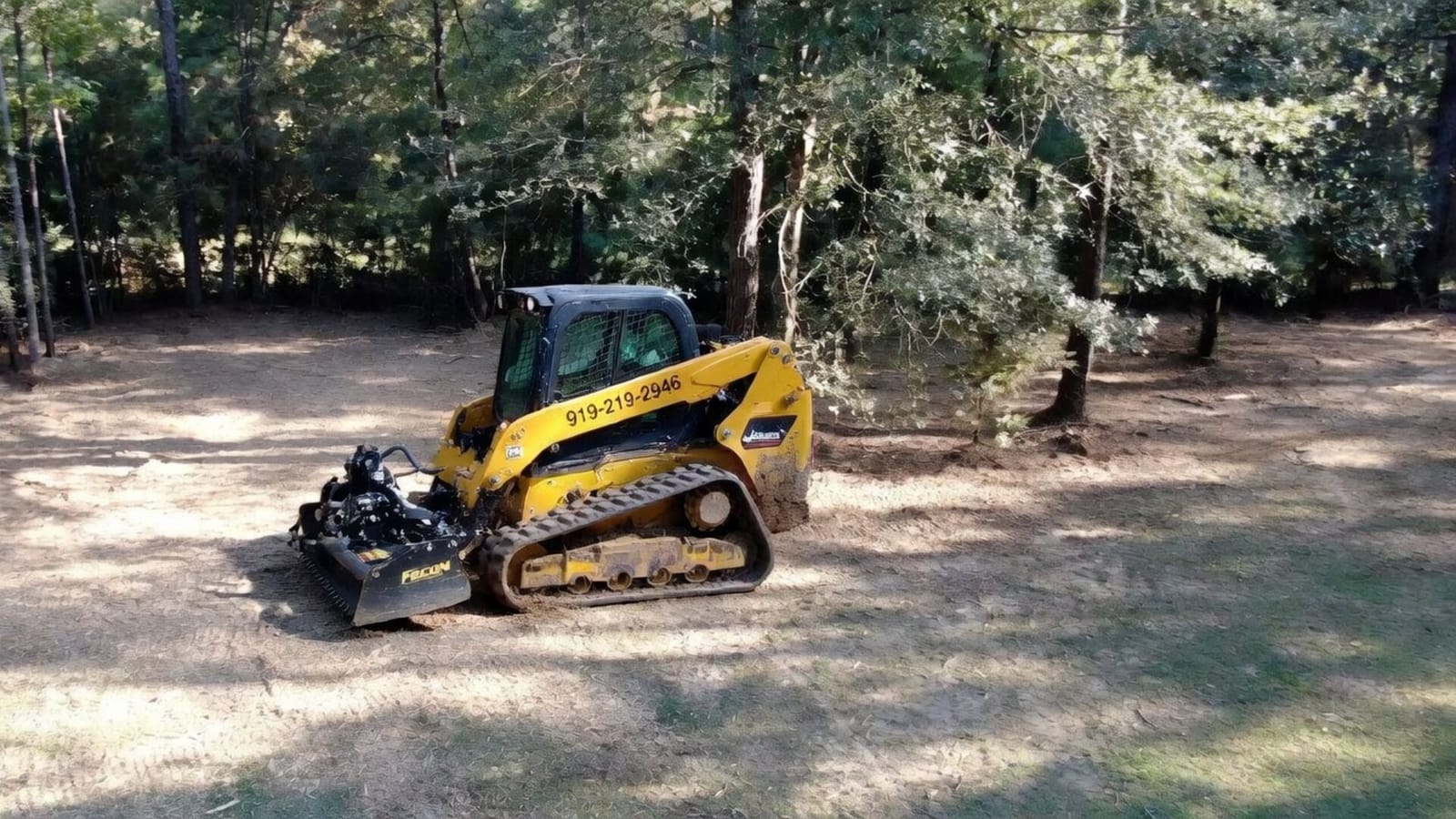 Cost Guide
Land Clearing Cost Per Acre in Maine (2026 Guide)
Land clearing in Maine: $1,500 to $4,500 an acre. Brush, trees and lot prep, with stumps left flush, around Sabattus. Request a free quote for your land today.
Cost Guide Land Clearing and Grading Cost in Maine (2026 Guide)
Clearing a Maine house lot runs $1,500 to $4,500 an acre before the excavator grades it. See who does each phase and when the 1-acre stormwater permit applies.
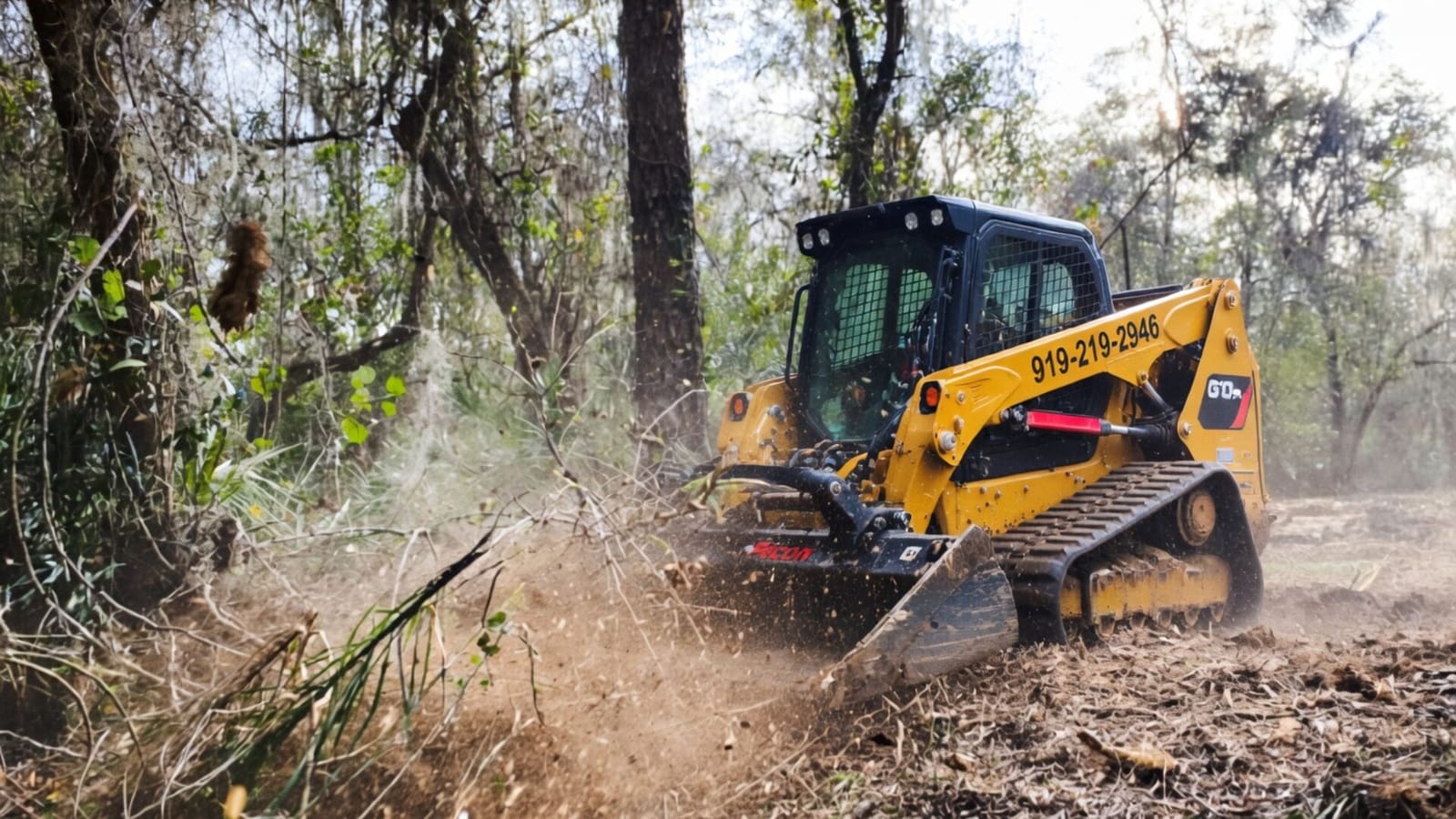 Cost Guide
Underbrush Removal Cost in Maine (2026 Guide)
Underbrush removal in Maine runs $1,500 to $2,500 an acre under trees you keep. See what buckthorn, barberry and the shoreland buffer change before you book.
Comparing states? See land clearing costs by state.
Let's Get Started on Your Land
Request a free quote. We'll contact you to discuss your property, access, and the clearing you need.
Get a Free QuoteOr call us directly: (919) 525-3950
 Quick answers from Cut Brush