

Invasive Species Removal in Central North Carolina – Kudzu, Privet, Poison Ivy & More
Kudzu, poison ivy, English ivy, wisteria, and privet cleared with single-pass forestry mulching. Mechanical-only removal, no burning, with optional return cuts for deep-tap-root species.
Why Choose Us
Invasive Species Removal: Before & After
Real results from recent projects across Central North Carolina.
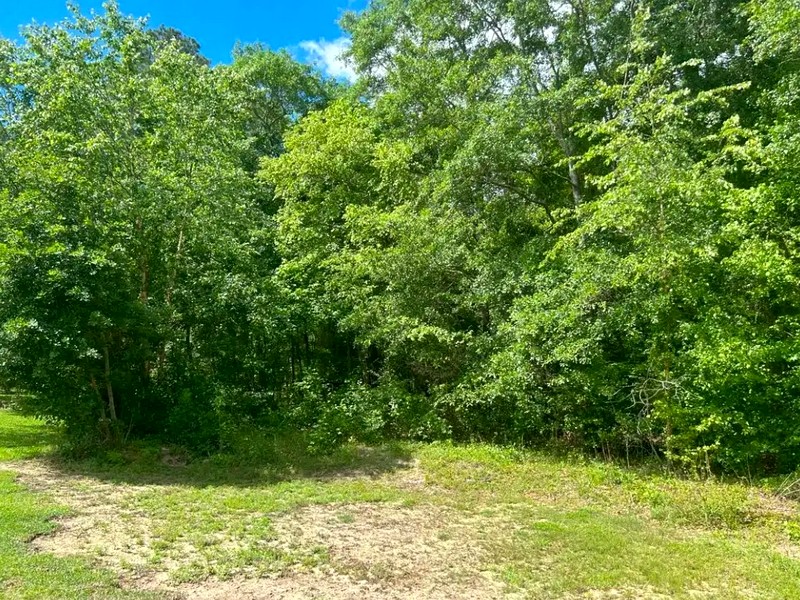
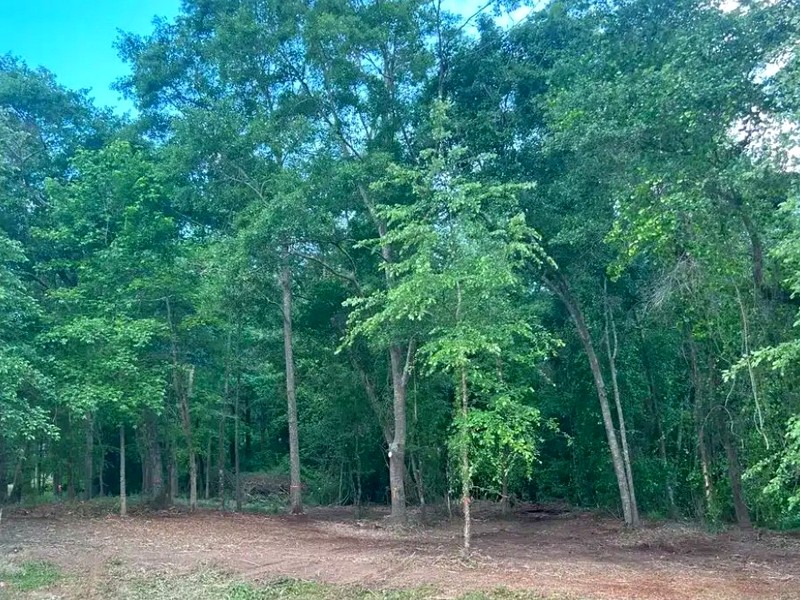
Kudzu and privet cleared from a residential lot in Raleigh
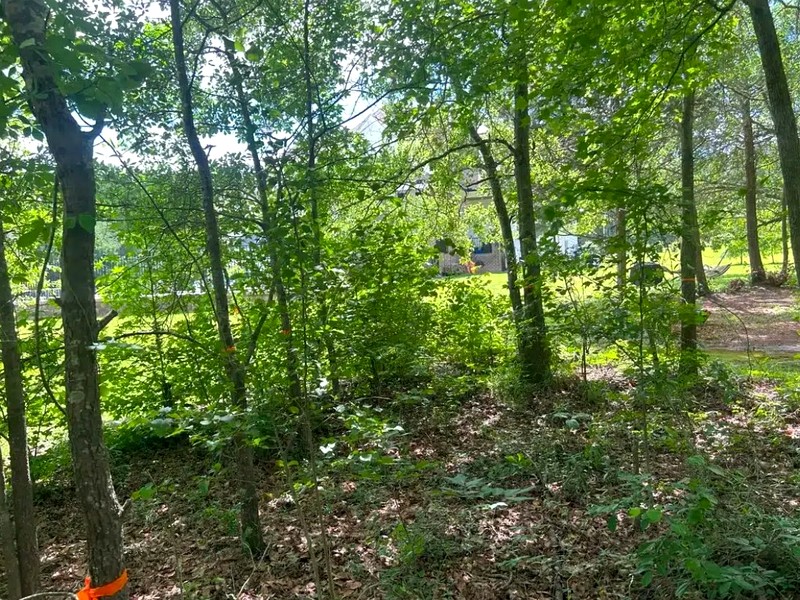
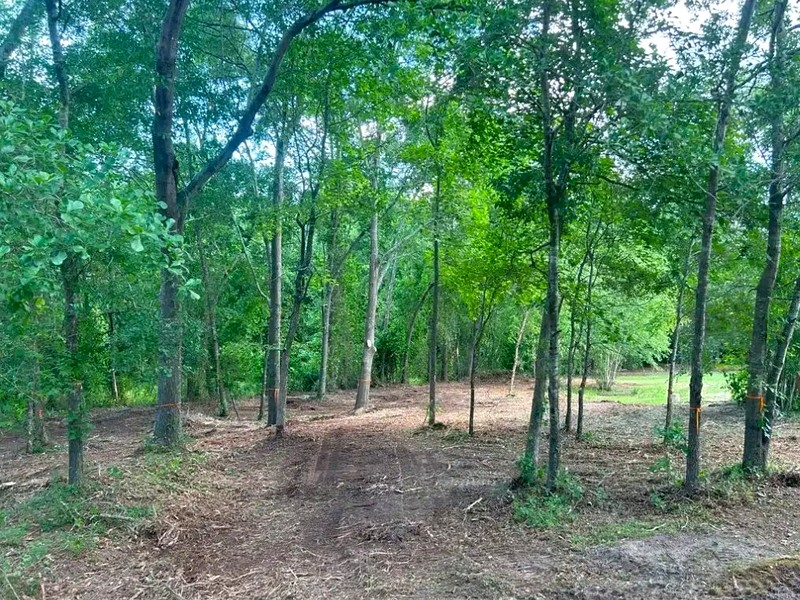
Chinese privet thicket removed from a wooded lot in Apex
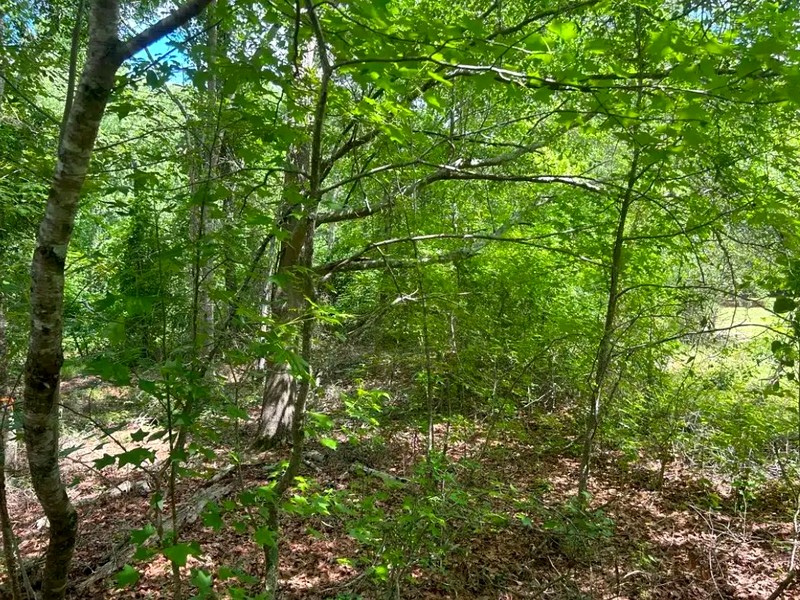
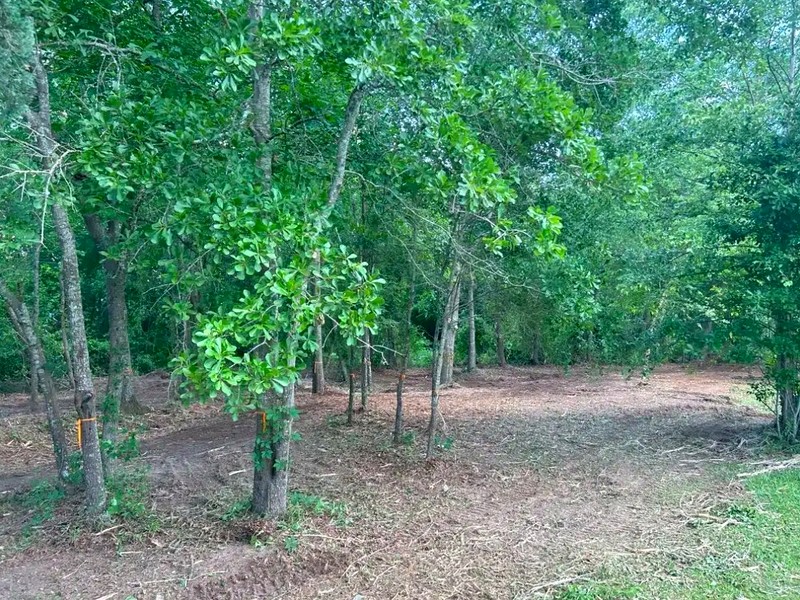
Honeysuckle cleared from a fence line and tree canopy in Cary
Invasive Plants Are Taking Over Properties Across Central North Carolina
You walk your property line and barely recognize it. Kudzu has swallowed the back fence and is climbing into the tree canopy. Chinese privet has formed a wall so thick you can't see the creek behind it. Japanese honeysuckle blankets everything in between, pulling down branches and smothering anything that tries to grow underneath. If you own land in Central North Carolina, invasive species removal isn't optional – it's the only way to stop these plants from destroying your property and spreading to your neighbors.
Invasive species don't behave like normal vegetation. They grow faster, spread more aggressively, and outcompete every native plant around them. A single kudzu vine can grow a foot per day in a North Carolina summer. Chinese privet produces thousands of berries that birds carry to every corner of your lot. Left alone for even one season, a manageable problem becomes a full-blown infestation that costs twice as much to remove. Homeowners across Raleigh, Cary, and Wake Forest deal with this every year.
NC's humid subtropical climate is the underlying problem. Mild winters that don't kill back invasive vines, long humid summers that drive aggressive growth, and the riparian corridors along Falls Lake, the Neuse River, Crabtree Creek, and Swift Creek that carry seed and runners across property lines whether the landowner participates or not. None of NC's native dogwoods, native viburnums, or native hardwood seedlings can establish under English ivy or Japanese stiltgrass. The longer the property goes untreated, the more native diversity disappears – and the more damage these plants do to your soil, your trees, and your property value.
The Cut Brush Approach: Why Mulching Beats Spraying Alone
Cut Brush is a mechanical removal service. We do not spray glyphosate, triclopyr, or any other herbicide as a follow-up to our work. Some companies offer that combination; we don't. We're explaining the chemistry here so you can make an informed call about what your specific infestation actually needs.
For surface-rhizome species – English ivy, Japanese honeysuckle, Japanese stiltgrass – mulching to ground level cuts the energy supply to the root mat and the plant rarely comes back at full strength. The mulch layer left behind suppresses regrowth from any surviving fragments. One pass typically does it.
For deep-tap-root species – kudzu, wisteria – the story is different. The visible vine is mostly disposable; the energy is stored in a tap root that can extend 8 to 12 feet underground. Mulching the visible growth opens the canopy back up and stops the plant from photosynthesizing, but the root will push new growth from any segment that survives. We schedule a return visit at three to six months to mulch the regrowth, and another at twelve months if needed. Spray treatment by a separate licensed applicator can speed this up by killing the root chemistry between cuts; that's a service from a separate company, and we'll tell you whether your specific kudzu infestation is dense enough to be worth the chemical follow-up.
Spray-only approaches have their own problem: they kill the plant in place but leave the dead biomass standing. Dead kudzu vines and dead privet thickets take years to break down, and the dead structure provides cover for tick and copperhead populations to expand. Mulching plus optional spray follow-up is what actually clears the property; spray-only treatments leave you with a different problem.
Kudzu (Pueraria montana)
The signature invasive of the Southeast. Compound three-leaflet leaves, twining vines, climbs trees and structures, can grow a foot per day in a NC summer. Originally planted across the South in the 1930s by the Soil Conservation Service for erosion control – then turned out to be uncontrolled across the entire region. Today, kudzu covers an estimated 7.4 million acres in the US, most of it in the Southeast.
Kudzu kills mature hardwoods within two to three growing seasons. It blankets the canopy, blocks sunlight, and the host tree starves. It also has a tap root that can reach 12 feet underground and store enormous energy reserves – which is why incomplete mechanical removal almost always fails. A kudzu vine cut at ground level will push new growth from the crown within weeks if conditions are warm.
Our removal approach: full mechanical clearing of the visible vine and the surface root crown, mulch the residue, schedule a return cut at three to six months to handle the inevitable regrowth, and another at twelve months if any segments survived. For dense infestations covering more than a quarter acre, we'll tell you whether chemical follow-up by a separate applicator is worth the spend. Most homeowners we work with are surprised at how aggressive kudzu's regrowth is the first season after the initial cut – it's expected, and the maintenance plan handles it.
Poison Ivy (Toxicodendron radicans)
The leaves-of-three rule is right but incomplete. NC poison ivy has variable leaf morphology – some specimens have entire-margin leaves, some lobed, some serrated. The reliable identifiers are the alternate leaf arrangement, the reddish stem at the leaflet junction, the white waxy berries in late summer, and the hairy aerial rootlets that appear on climbing vines.
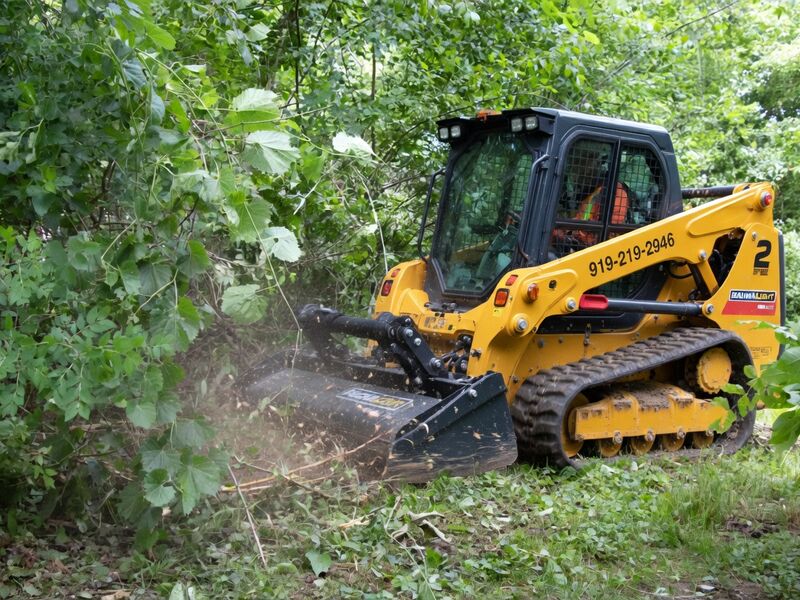
The active compound is urushiol – an oil that persists on skin, clothing, equipment, leashes, gloves, pet fur, and especially on burning smoke. Burning poison ivy is dangerous: urushiol-laden smoke causes severe respiratory reactions and can require emergency treatment. We do not burn poison ivy under any circumstances. Forestry mulching disposes of it without combustion, and we wash equipment between properties when a poison-ivy-heavy job is completed.
DIY removal is genuinely risky on dense infestations. Even short exposure to broken stems releases urushiol; pulling vines without full PPE almost guarantees a reaction. Mulching breaks the plant down without direct contact. The mulch layer left behind is not safe to handle barehanded for several weeks – urushiol persists on the residue – so we mark the mulched zone and recommend two to three months before barehand contact.
English Ivy (Hedera helix)
Waxy lobed leaves, dark green, rootlets that grip bark and brick. English ivy is everywhere in established Triangle neighborhoods – Cary's Lochmere and MacGregor Downs, Raleigh's Five Points and Oakwood, the older mature-canopy lots in Chapel Hill and Durham. It was planted as a "carefree" ground cover for decades; the carefree part turned out to mean unmanageable.
The tree-killing mechanism is mechanical, not nutritional. English ivy wraps the trunk, blocks bark photosynthesis on smooth-bark species (sweetgum, beech, young oak), and adds 50 to 200 pounds of evergreen wind-sail to the canopy that fails the host tree in storms. We see this every storm season – mature trees that came down weren't sick, they were ivy-loaded.
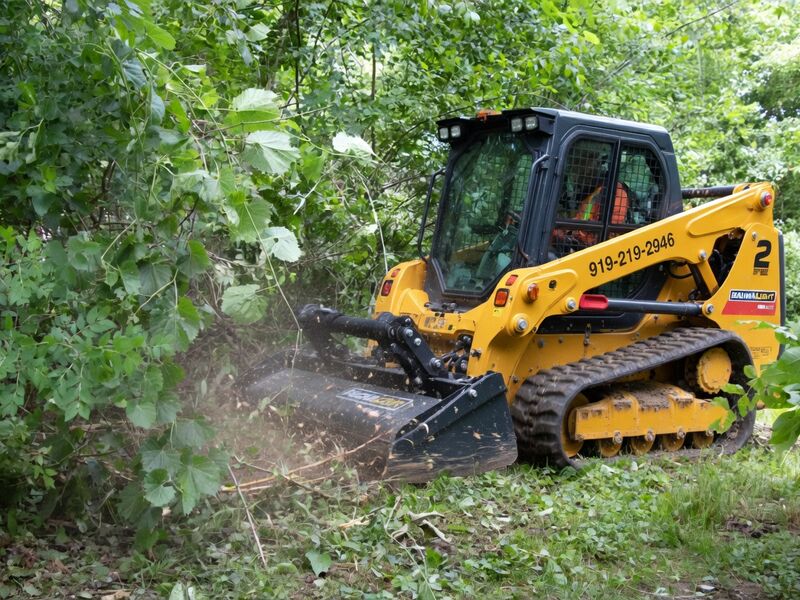
Removal sequence: cut the climbing vines at chest height first, which kills the climbing portion immediately by separating it from the root. Wait six to eight weeks for the upper vines to brown and lose grip. Then mulch the ground layer around the host tree to remove the source. Return visit to brush off the dead bark-clinging dry vines once they're brittle. The trees recover faster than most homeowners expect once the mechanical load is gone.
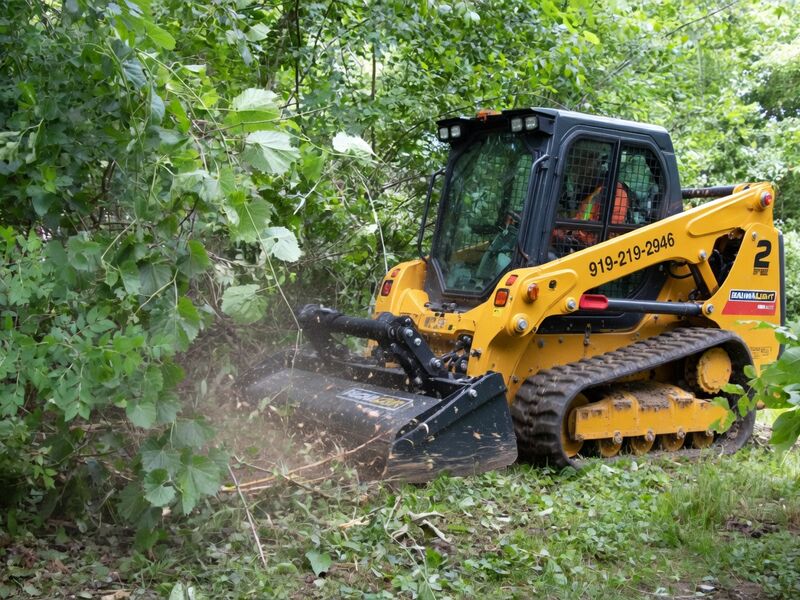
Wisteria (Wisteria sinensis or W. floribunda)
Two non-native wisterias dominate NC: Chinese (Wisteria sinensis) and Japanese (W. floribunda). Both are invasive. There's a native species – American wisteria (W. frutescens) – that's not invasive, but it's much less common in the wild and most of what you find on a residential property is a non-native. The non-natives twist clockwise around their hosts; the native counter-clockwise.
Wisteria behaves like kudzu: deep tap root, aggressive vine growth, climbs and chokes structural hosts. The flowers are beautiful and the planting was usually intentional decades ago. The problem is what happens after the original homeowner moves – the plant outgrows its trellis, climbs into the tree canopy, and starts pulling down branches.
Removal is similar to kudzu: mulch the visible growth, schedule a return cut at three to six months for regrowth, and another at twelve months. Wisteria's tap root is shallower than kudzu's but more concentrated, which means the regrowth is more localized but more vigorous. Spray follow-up by a separate licensed applicator helps on dense infestations.
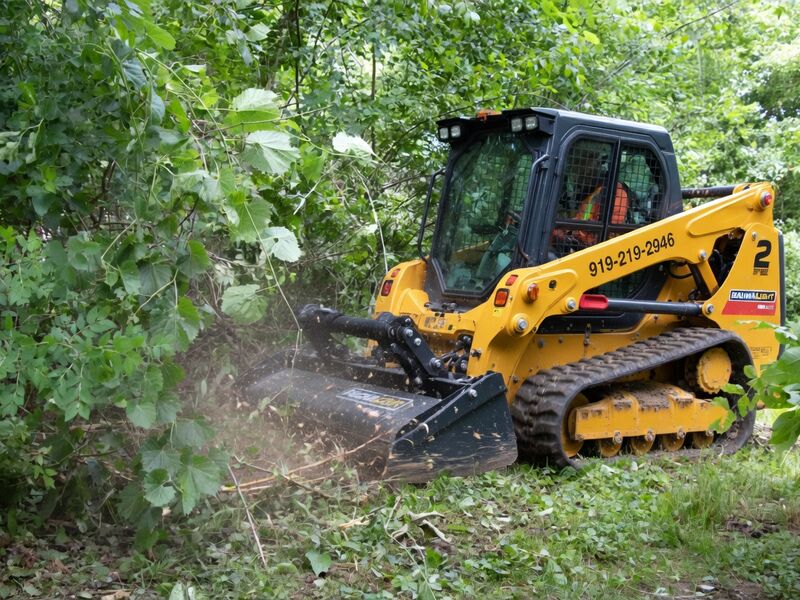
Privet, Honeysuckle, Multiflora Rose, Stiltgrass, and Bradford Pear
The "ubiquity in NC fence lines" cluster. Five species that show up on almost every Central NC property at some level.
Chinese privet (Ligustrum sinense) is the worst. Forms dense walls along every fence line in the Triangle, produces thousands of berries per plant that birds carry across property lines. Mulching one property only buys you a season if the neighbor's privet is untreated. Not your fault, but worth knowing.
Japanese honeysuckle (Lonicera japonica) drapes over fences and pulls down small saplings. Stays evergreen through NC winters, which gives it a year-round head start over native plants that go dormant. The most widespread invasive in NC residential neighborhoods.
Multiflora rose (Rosa multiflora) is the briar invader of pasture edges and rural-residential fence lines. Thumb-tearing thorns, dense thickets, hides ticks and rodents inside. Common across rural Wake, Johnston, Franklin, and Harnett counties.
Japanese stiltgrass (Microstegium vimineum) is the woodland-floor mat that chokes out native seedlings. Spreads horizontally across forest floors. Common in shaded under-canopy areas in Chapel Hill, Hillsborough, and the older wooded neighborhoods of Raleigh and Cary.
Callery / Bradford pear (Pyrus calleryana) escaped ornamental that now produces thorny suckers in fence rows. Brittle wood that fails in the first storm. NC State Extension and the NC Forest Service have actively recommended removal of mature Bradford pears for several years.
The mulcher handles all five in a single pass. We talk about which species you have and where during the walk-through, and we sequence the cut to prioritize the highest-impact removals.
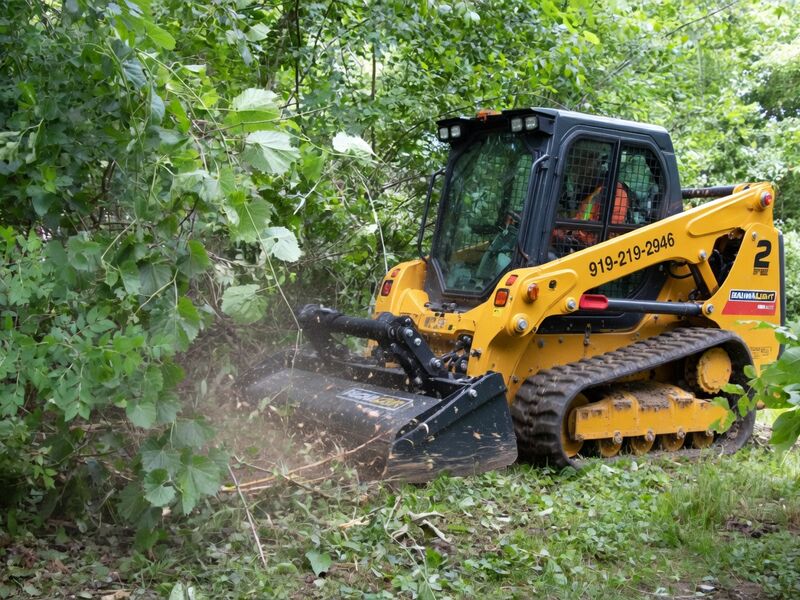
If you're dealing with overgrown brush alongside invasives, our brush clearing services handle both in the same visit. For a breakdown of what clearing projects typically cost, see our guide to land clearing costs in NC. Call 919-525-3950 or request a free quote – we respond inside 24 hours.
Timing matters. The best window for invasive removal in Central North Carolina is late fall through early spring, when plants are dormant and the root systems are most vulnerable. Summer removal works for active infestations that can't wait, but follow-up treatment is more critical. Either way, the longer you wait, the more it costs – and the more damage these plants do to your native trees, soil, and property value.
How Invasive Species Removal Works
We keep the process simple so you can focus on enjoying your land.
Inspection & Species ID
We walk your property, identify exactly which invasive species are present, map the extent of the infestation, and provide a clear, written quote – usually within 24 hours.
Targeted Removal
Our crew brings in forestry mulching equipment sized for your property and removes invasive growth species by species. Kudzu vines, privet thickets, honeysuckle walls – cleared in a single pass. Most residential invasive removal jobs in Central North Carolina take 1-3 days.
Walk Your Land
When we're done, you walk the property. Invasive growth is gone, native trees are freed, and natural mulch stays in place to suppress regrowth. We'll discuss follow-up timing to catch any resprouting before it takes hold.
Why Property Owners Choose Cut Brush
Professional equipment, local expertise, and results you can walk on the same day.
Save Your Native Trees
Kudzu and privet kill mature oaks, maples, and pines by blocking sunlight and strangling trunks. Removing invasives before they reach the canopy saves trees that took decades to grow.
Stop the Spread to Neighboring Properties
Invasive species don't respect property lines. Chinese privet berries and honeysuckle runners spread to adjacent lots within a single season. Removing the source protects your neighbors – and prevents complaints.
Protect the Falls Lake Watershed
Properties near Falls Lake and its tributaries face stricter environmental standards. Invasive removal reduces erosion and runoff that degrades water quality – keeping your property compliant and the watershed healthy.
Lower Long-Term Maintenance Costs
Invasive species grow back faster and more aggressively than native vegetation. Professional removal that targets root systems costs less over time than repeated DIY clearing every season.
Reclaim Usable Land
Kudzu-covered lots and privet thickets aren't just ugly – they're unusable. Clearing invasives gives you back land for yards, gardens, pasture, or future building. Most Central North Carolina homeowners regain significant usable acreage.
Species-Specific Approach
Generic clearing treats all vegetation the same. We identify each invasive species on your property and target removal methods accordingly – because what works on kudzu doesn't work on Bradford pear, and vice versa.
Get a Free Invasive Species Removal Quote
Tell us about your project and get a custom quote – no obligation, no pressure. Curious how pricing works? See our land clearing pricing guide.
Request a Free QuoteRelated Services
Need something beyond invasive species removal? We handle a full range of land clearing work across Central North Carolina.

Brush Clearing
Remove overgrown brush, shrubs, and small trees to reclaim your land.

Forestry Mulching
Single-pass land clearing that mulches trees and brush in place.

Land Clearing
Full site preparation for residential and commercial projects.

Fence Line Clearing
Precise clearing along fence rows and property boundaries.

Property Maintenance
Keep your cleared land maintained season after season.
Invasive Species Removal Across Central North Carolina
We provide invasive species removal services in these towns and surrounding areas.
Invasive Species Removal Guides
- Multiflora Rose Removal in NC: Reclaim Thorny Pasture
- Kudzu Removal in NC: How Long It Takes and When to Cut
- How to Get Rid of Invasive Honeysuckle in NC
- Wisteria Removal in NC: How to Kill It and Save Your Trees
- Chinese Privet Removal in NC: Regrowth, Plan and Cost
- Bamboo Removal in NC: Timeline, Buffers and Neighbors
Invasive Species Removal FAQ
Ready to Take Back Your Land?
Get a free, no-obligation quote for invasive species removal in Central North Carolina.
Get Your Free Invasive Species Removal QuoteOr call us directly: (919) 525-3950