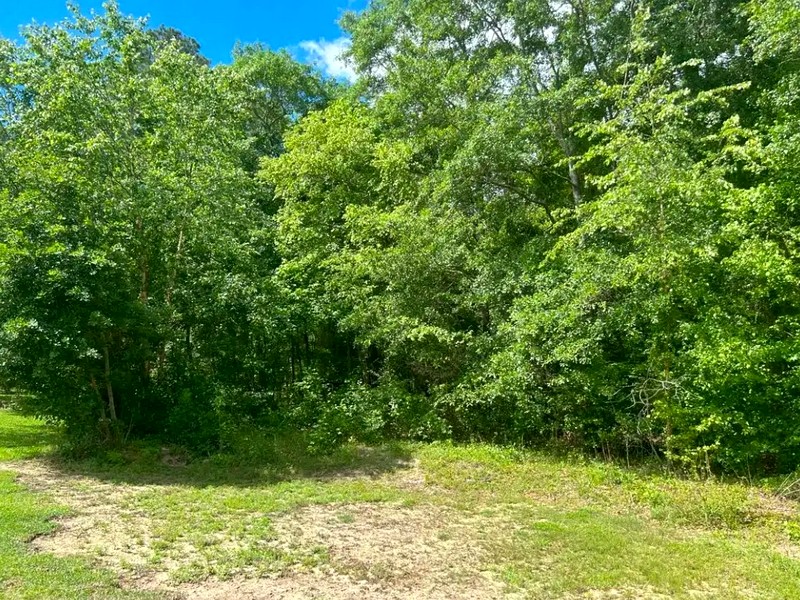
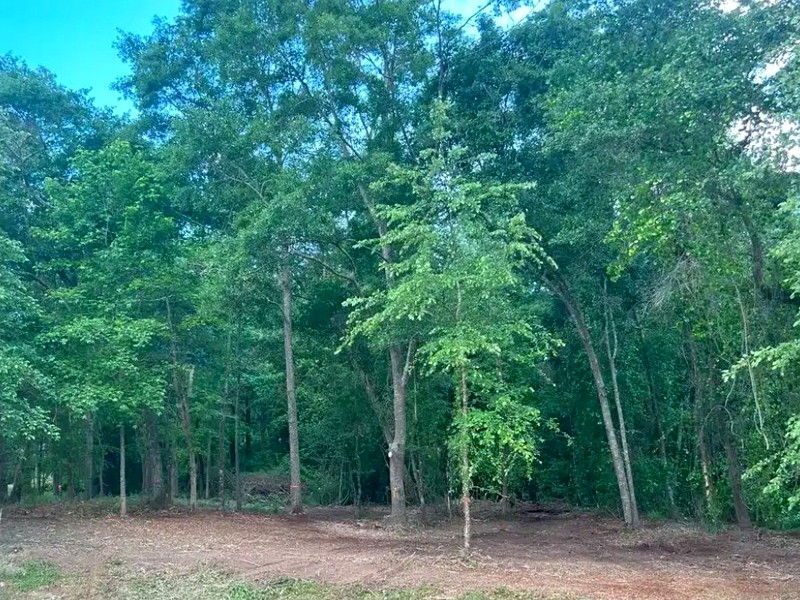
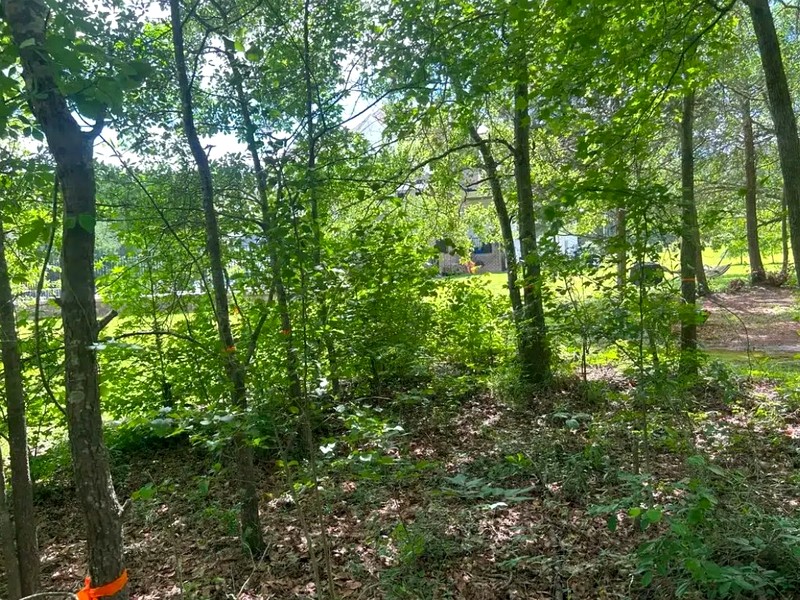
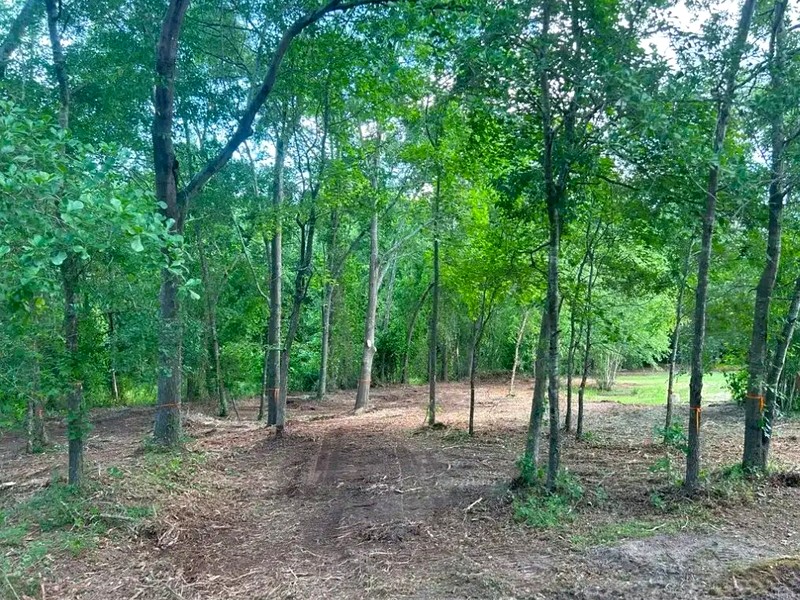
If you own property in Wake Forest, there's a good chance you're staring at a wooded lot that needs clearing before you can build, a backyard that's been overtaken by privet and honeysuckle, or a fence line buried under years of unchecked growth. Wake Forest sits in northern Wake County where the terrain is more wooded and rolling than anywhere else in the Triangle – and that means land clearing in Wake Forest NC is something most property owners deal with sooner or later. Whether you're prepping a lot in Holding Village for new construction, reclaiming yard space in Heritage, or managing vegetation on acreage near Falls Lake, Cut Brush handles the heavy clearing so you can actually use your land.
Why Wake Forest Properties Need Land Clearing
Wake Forest has grown to over 64,000 residents and adds roughly seven new people per day. That growth is pushing development into wooded land that hasn't been touched in decades. The Holding Village expansion – with 208 single-family lots and 156 townhouse lots in the North Lake phases alone – is carving new neighborhoods out of dense forest along South Franklin Street. Wake Forest Exchange, a 30-acre commercial development on Star Road, is clearing former woodland for 166,000 square feet of retail and office space. Every one of these projects starts the same way: somebody has to clear the trees and brush first.
But it's not just new construction driving demand for brush removal in Wake Forest NC. Established neighborhoods generate just as much work. Heritage – the dominant community with over 3,000 homes built around a golf course – has mature lots where loblolly pine, sweetgum, and red maple create thick canopy with aggressive understory growth beneath it. Hasentree's luxury wooded lots along the Tom Fazio course deal with the same problem on a larger scale. Homeowners in Traditions, Wakefield Estates, St. Ives, and Bowling Green all face fence lines and property boundaries that disappear under Chinese privet and Japanese honeysuckle every growing season. The Stonewalls, known for its heavily wooded lots and stone-and-brick homes, requires regular clearing to keep vegetation from overtaking the natural character of the properties.
Falls Lake Vegetation and Lot Clearing Challenges
Wake Forest's proximity to Falls Lake State Recreation Area creates unique clearing challenges you won't find in other Wake County towns. Properties north and east of town near the 12,410-acre lake have steep grades covered in dense lakeside vegetation – mature oaks, longleaf pine, and thick riparian growth along tributaries like Smith Creek, Sanford Creek, and Austin Creek. The understory beneath this mature hardwood canopy is some of the densest we clear anywhere in the county. Kudzu takes hold fast on neglected properties near the Neuse River corridor, and once it's established, it smothers everything in its path.
The terrain in Wake Forest is more rolling than southern Wake County towns like Garner or Fuquay-Varina. Red clay soil is standard throughout, and lot sizes of one acre or more are common in subdivisions like Waterfall Plantation, La Ventana, Creedmoor Manor, and Prescott Manor. These larger lots mean more vegetation to manage – and more ground for invasive species to spread across when left unattended.
Permits and Regulations for Clearing in Wake Forest
The Town of Wake Forest runs its own erosion control program and requires a land disturbance permit for 0.5 acre (21,780 square feet) or more of disturbance, including individual homes. If your property is near Falls Lake, watershed protection rules may apply – these limit impervious surface coverage and land disturbance to protect water quality flowing into the lake. Wake Forest's Unified Development Ordinance covers zoning, subdivision, and stormwater management, and the town is currently rewriting the UDO, which could change requirements. For Wake County's full permit fees, Neuse buffer rules, and the subdivision exception that can trigger a permit even under an acre, see our guide on land clearing permits in Wake County NC. Most importantly, HOA rules in Wake Forest are often stricter than town regulations. Heritage, Hasentree, and Traditions all require approval before any tree removal or exterior clearing work. Heritage Wake Forest Two, for example, prohibits tree removal for fence installation – so homeowners need to check their community's CC&Rs before scheduling any work.