
South Carolina Land Disturbance Permits: The Acreage Tiers Explained
Cut Brush Team · September 3, 2026 · 5 min read

The first question most Midlands landowners ask about clearing is whether they need a permit. The honest answer is that it depends almost entirely on one number: how many acres the work will disturb.
South Carolina gates land disturbance in tiers, and the first tier starts below one acre. That is lower than most people expect, and there is a further rule that catches subdivision lots regardless of their size.
Here is how the tiers actually work.
One note on names first. The program is administered by the South Carolina Department of Environmental Services (SCDES), which took over the environmental functions previously handled by DHEC. Plenty of people still say DHEC, and the forms are the same ones.
Before we start: Cut Brush clears land. We are not the permitting authority and cannot make a determination for your parcel. What follows is what commonly applies, with sources.
Tier 1: Less Than One Acre
In a non-coastal county, for construction activities disturbing less than one acre, you submit a Notification Form for Sites Disturbing Less Than 1 Acre (SCDES Form 2628) for review. Once it is determined that NPDES coverage is not required, a letter of exemption is issued to the applicant.
So even the smallest tier is not “do nothing.” It is “file the form and get the letter.”
There is also a step that catches town lots: if the project under one acre is inside an MS4 or Urbanized Area, you must first contact that MS4 or urbanized area to identify applicable project requirements and receive approval where they deem it appropriate. Columbia and the towns around it include such areas, so which side of a boundary a parcel sits on genuinely changes the answer.
Source: SCDES, less than 1 acre of land disturbance.
Tier 2: One to Two Acres
This is where it becomes a real permit.
Anyone engaged in clearing, grading, or excavating activities disturbing between 1.0 and 2.0 acres must obtain coverage under the state’s Construction General Permit before beginning any land disturbing activities.
Read that timing clause carefully. Coverage has to be in hand before work begins, not applied for while a machine is running. This is the single most common way a Midlands clearing project gets stopped.
Projects in this tier submit a simplified stormwater management and sediment control plan, and a Stormwater Pollution Prevention Plan (SWPPP) is required, based on the 1-2 Acre SWPPP template.
Source: SCDES, 1 to 2 acres.
Tier 3: More Than Two Acres
Larger projects have their own track, documented by SCDES here. The state’s NPDES general permit for stormwater discharges from construction activity, SCR160000, is published in full if you want the underlying document.
The Rule That Catches Subdivision Lots
This is the one people miss, and it does not care how small your piece is.
Construction activities that are part of a Larger Common Plan (LCP) for development or sale are required to submit the standard application for Stormwater NPDES Coverage, Notice of Intent (SCDES Form 2617), regardless of the amount of disturbance.
In plain terms: a half-acre lot inside a subdivision is not treated like a standalone half acre. If the ground you are clearing belongs to a larger development or sale plan, the full notice of intent applies even though your own disturbance is small.
If your parcel is part of something bigger, say so at the start. It changes which track you are on entirely.
Why the Timing Matters More Than the Cost
None of this changes what clearing costs per acre. What it changes is when the work can legally begin, and a project held up waiting for coverage has a real cost of its own.
The practical sequence:
- Measure the disturbance, not the parcel. You may own five acres and disturb one.
- Ask whether the parcel is part of a larger common plan. If yes, jump straight to the notice of intent.
- Check whether you are inside an MS4 or urbanized area if the project is under an acre.
- File before scheduling, because coverage precedes land disturbing activity at one acre and up.
- Call SCDES rather than relying on any summary, including this one.
What This Looks Like on a Real Midlands Tract
Columbia sits on the Fall Line, where the Piedmont hands off to the Coastal Plain, and the Sandhills belt running through it is ancient coastal dunes now stranded far inland. Soils are sandy, drawn from coarse Cretaceous and Tertiary marine sediments, with mostly pine forest and hardwood confined to the narrow floodplains along the streams.
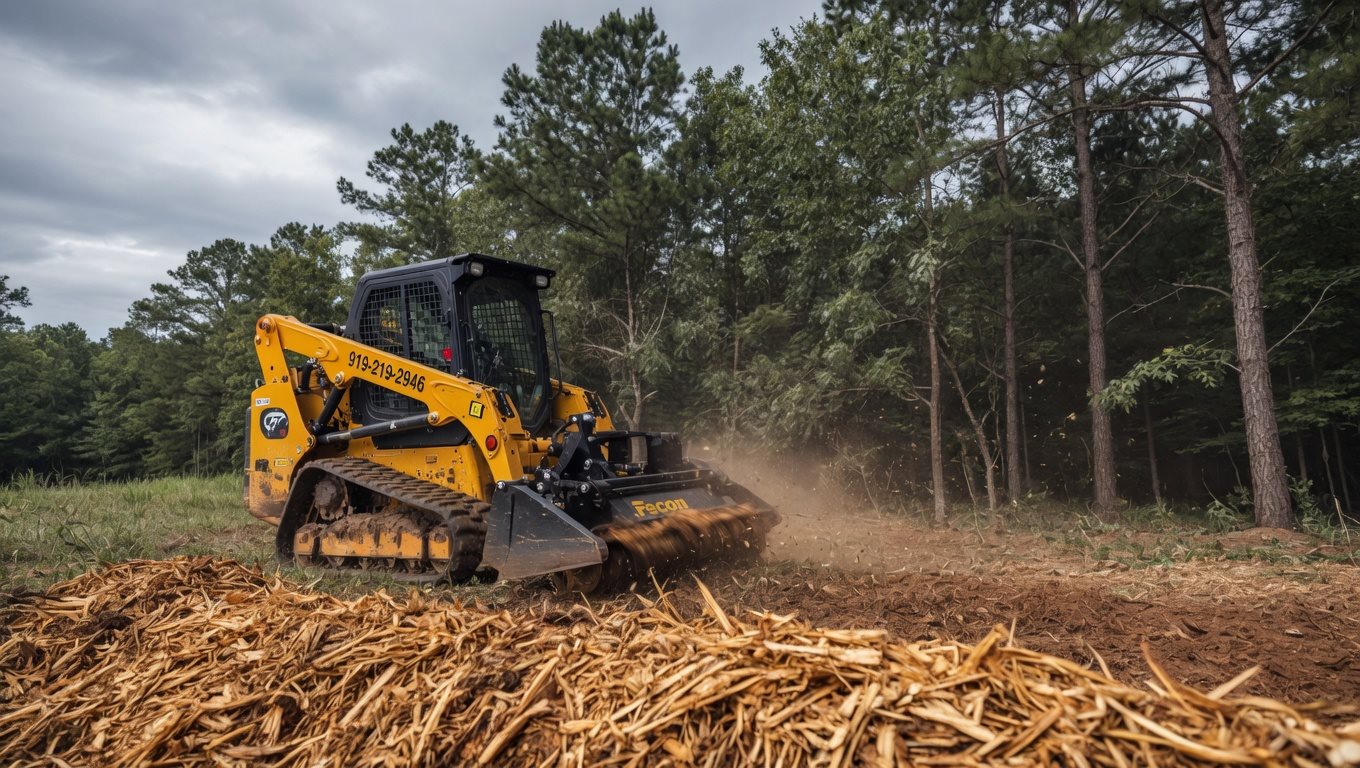
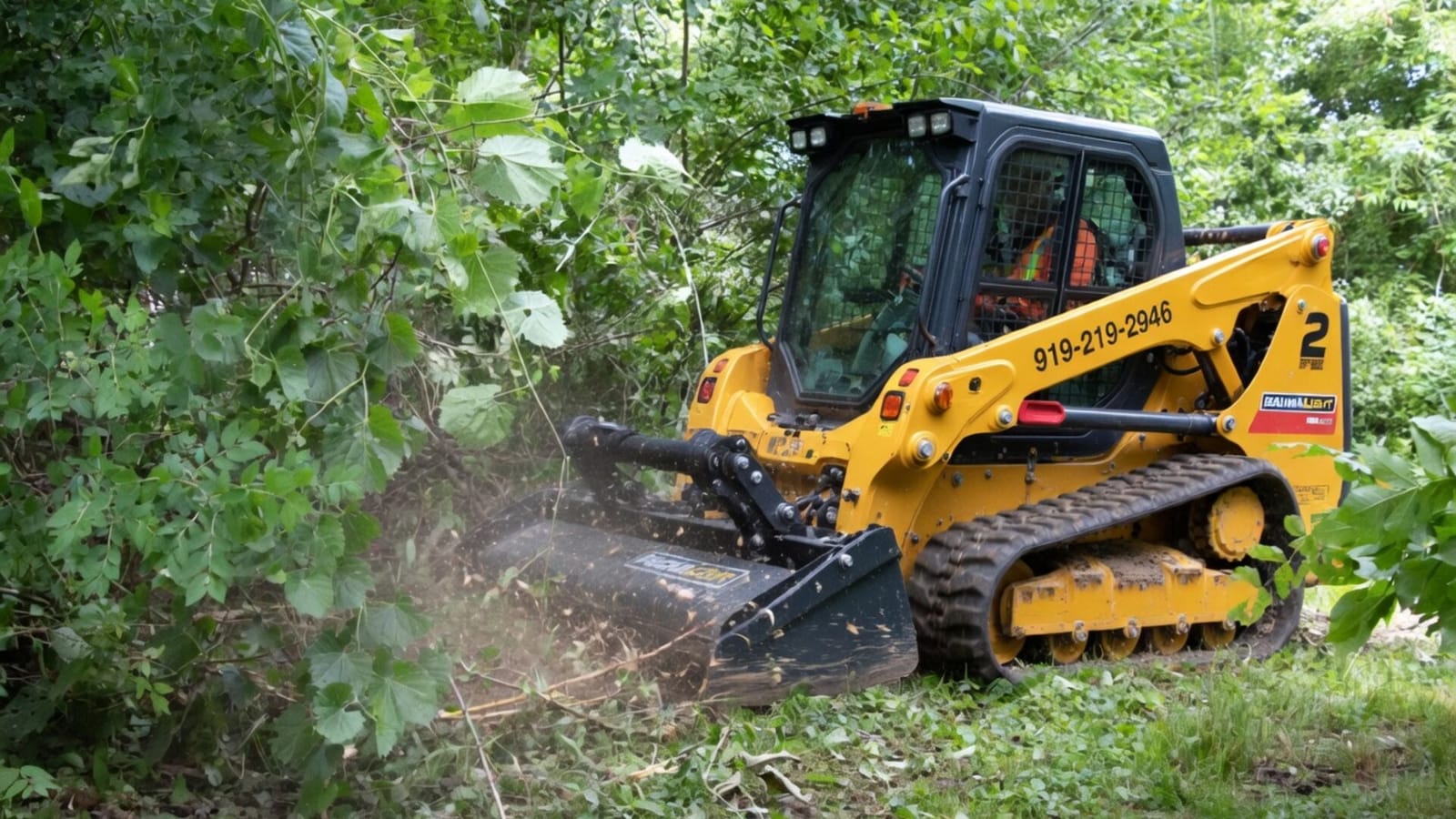
A typical job here is understory removal beneath a pine stand rather than clearing to bare ground. That distinction matters for the paperwork as well as the price, because disturbance is what the tiers count. A forestry mulching pass that opens the floor beneath standing timber is a different footprint from stripping a tract to grade.
It also removes the disposal question entirely. Material stays on the ground as cover rather than becoming a pile to move, which on sandy Sandhills soil is where you want it anyway.
Budgeting Around It
Most clearing around Columbia runs $1,500 to $4,500 per acre, with understory and pine thinning near the bottom of the band and heavy stands or a grade-ready finish near the top. Our Columbia pricing guide lays out every range and the conditions that move it.
If you want someone to walk the tract, work out which tier your project lands in, and put a written number on the work, the walk-through is free.
Related Services
Learn more about the services mentioned in this article.


More from the Cut Brush Blog
Keep reading for more tips and guides on land clearing.
 Cost Guide
 Land Clearing Cost Per Acre in South Carolina (2026 Guide)
Land clearing cost per acre in South Carolina runs $1,500 to $4,500. What sandhill ground, pine stands and the state's acreage permit tiers do to a quote.
 Guide
Guide Bamboo Removal in Columbia, SC: Stop Running Bamboo
Bamboo removal in Columbia, SC fails when only the canes come down. Learn how rhizomes spread, the order of work that stops a grove, and what it costs.
Guide Kudzu Removal in South Carolina: Cost and Control Plan
Kudzu removal in South Carolina needs a plan, not one mowing. See how the vine regrows, the multi-visit plan that kills the crowns, and the cost per acre.
Let's Get Started on Your Land
Request a free quote. We'll contact you to discuss your property, access, and the clearing you need.
Get a Free QuoteOr call us directly: (919) 525-3950