
Land Clearing Permits in Beaumont & Jefferson County, TX
Cut Brush Team · October 1, 2026 · 6 min read
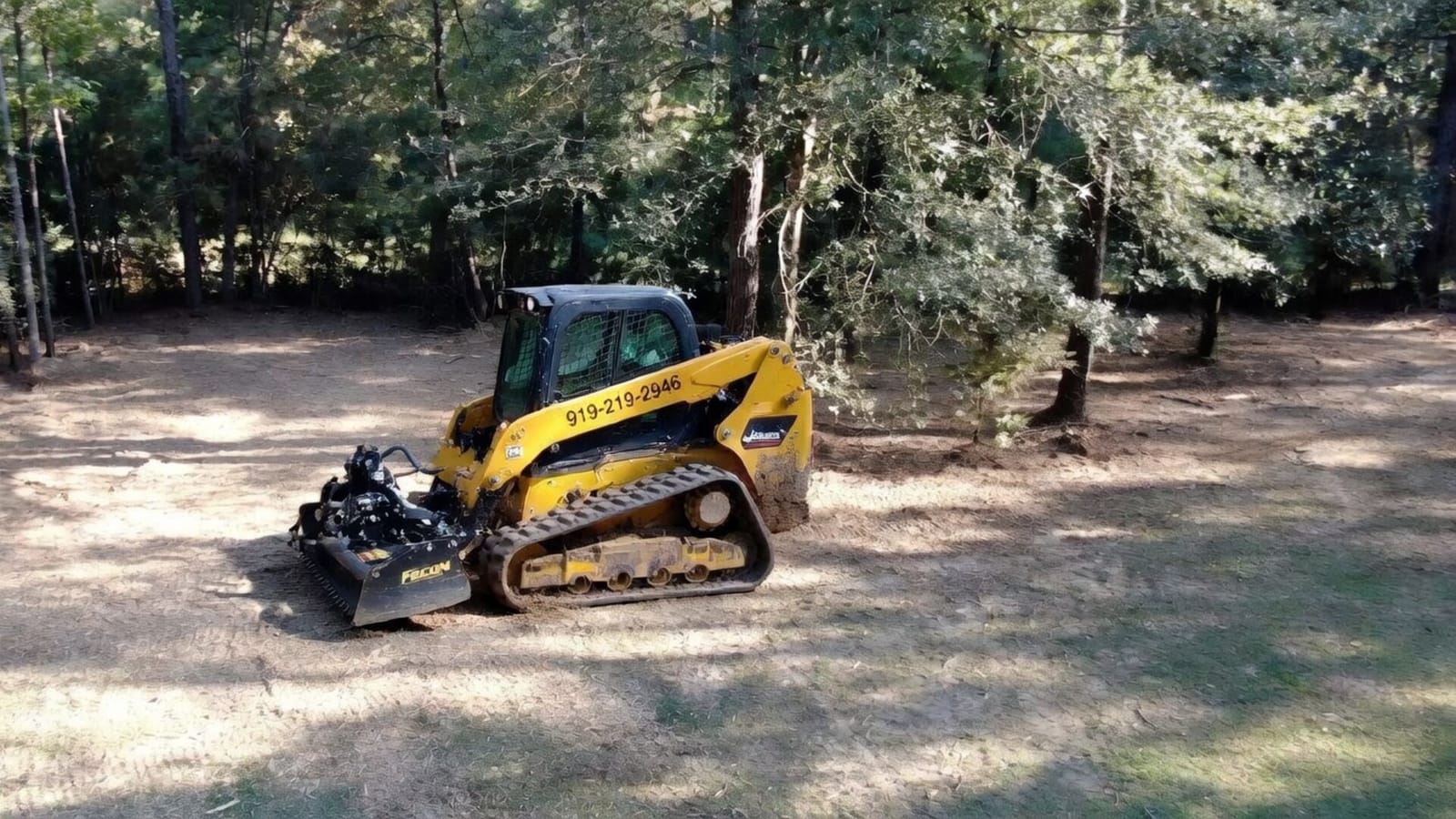
Around Beaumont, what triggers a permit is usually moving soil in a flood-prone place, not cutting brush. Inside the city, a development permit applies in mapped special flood hazard areas, and the city counts filling, grading and excavation as development. In unincorporated Jefferson County, Environmental Control asks owners to contact it before any development to land. Subdivisions and larger developments also go through Drainage District No. 6, and burning brush runs into state rules and county bans.
Each rule below names its source. Requirements vary by parcel, scope and jurisdiction, and the governing authority makes the determination.
Inside the City: Beaumont’s Development Permit
The City of Beaumont’s flood rules sit in Article 24.05 of its Code of Ordinances, Flood Damage Prevention, last amended by Ordinance 24-011 on 19 March 2024 (City of Beaumont Code, Article 24.05).
Where it applies. Section 24.05.006 applies the article “to all areas of special flood hazard within the jurisdiction of the city.” Section 24.05.007 adopts FEMA’s Flood Insurance Study for the City of Beaumont, dated 6 August 2002, with its maps and any revisions.
What needs a permit. Section 24.05.008 is one sentence: “A development permit shall be required to ensure conformance with the provisions of this article.”
What counts as development. The definition is “any man-made change in improved and unimproved real estate,” including “dredging, filling, grading, paving, excavation or drilling operations, or storage of equipment or materials.” Among the article’s stated methods is to “control filling, grading, dredging, and other development which may increase flood damage.” Grinding brush to the ground without moving soil is a different act from grading. Pulling stumps, shaping a pad or bringing in fill on a mapped lot sits inside the definition. Which side your job falls on is the floodplain administrator’s call.
Floodways are stricter. Section 24.05.075 prohibits fill, new construction and other development in the regulatory floodway unless engineering analysis shows it would not raise flood levels during the base flood.
Penalties. Under section 24.05.076, a violation is a misdemeanor with a fine of up to $500 per violation, and each day it continues is a separate offense.
The code read for this guide shows no separate citywide clearing or tree permit. Ask the city before relying on that for your parcel.
In Unincorporated Jefferson County
Outside city limits, Jefferson County Environmental Control handles development permits (Jefferson County Environmental Control, Development Permits). Its page states:
- Contact comes first. “Environmental Control requires that you contact our office before beginning any development to land in unincorporated Jefferson County.”
- The same broad definition. Development means any man-made change to real estate, including “filling, grading, paving, excavation or drilling operations.”
- Timing. Permits are generally issued in 5 to 10 business days and stay active for one year.
- Flood zone. The office determines the flood zone when an application comes in, and an A zone property needs a finished Elevation Certificate.
- Houses. Under HB 2833, any building with living quarters needs three inspections: foundation, framing and mechanical, and completion.
- Where. 7933 Viterbo Road, Suite 4, Beaumont; (409) 719-5910.
So a pasture or woodlot clearing that moves no soil may need nothing, while a homesite on low ground should start with that phone call.
Drainage District No. 6
Jefferson County Drainage District No. 6 adopted its drainage regulations under Texas Water Code section 49.211, and its manual’s foreword explains that state law lets a drainage district review and approve drainage plans for proposed development once it has adopted a master drainage plan. The plan and the regulations were both updated on 8 July 2025 (DD6 Drainage Criteria Manual).
For a subdivision or development the manual requires a pre-submission conference. Within the district it applies a policy of no net increase in runoff to new development, redevelopment or site changes that add more than 0.25 acre of impervious surface, which the manual addresses through detention or retention facilities. It also notes that its requirements do not relieve an owner of the local jurisdiction’s own rules. Clearing a woodlot is not impervious cover, but the house, slab and drive that follow it may be. Whether a parcel sits inside DD6 or another Jefferson County district is on the district’s maps; DD6 can be reached at (409) 842-1818.
Wetlands and Federal Rules
Some low ground around Beaumont may be wetland in the federal sense. Section 404 of the Clean Water Act regulates “the discharge of dredged or fill material into waters of the United States, including wetlands,” and the U.S. Army Corps of Engineers makes the permit decisions, with certain farming and forestry activities exempt (EPA, Section 404 Permit Program). Whether a particular swale is jurisdictional, and whether a particular activity needs authorization, is the Corps’ determination through its Galveston District, not something a contractor or this guide can settle.
The State Stormwater Permit
TCEQ’s construction general permit, TXR150000, covers construction that disturbs one acre or more, or less where it is part of a larger common plan of development (TCEQ construction stormwater). Clearing for a building project is construction activity. An owner opening several acres for a subdivision or commercial site should expect erosion controls and, above the thresholds, a stormwater pollution prevention plan. Cut Brush does not provide engineering or permit filings, but can flag the threshold at the quote stage so it is planned rather than found later.
Burning the Brush, and Where It Cannot Go
State rules let brush from land clearing be burned on the property where it grew (30 TAC 111.209), then narrow it: outside city limits unless an ordinance allows it, downwind of or 300 feet from occupied neighbouring buildings unless the neighbours agree in writing, from an hour after sunrise to an hour before sunset, with wind between 6 and 23 mph, and attended (30 TAC 111.219).
A county burn ban overrides all of that. When the Texas A&M Forest Service burn ban list was checked on 1 October 2026, Jefferson, Orange, Hardin and Jasper counties had no ban posted, but bans come back with dry weather, so check the Forest Service map or the county before planning a fire. Pushing brush into a ditch is never the answer: the City of Beaumont’s flood handout calls dumping branches in creeks or ditches a violation of state law. Grinding the brush in place avoids all of it.
Frequently Asked Questions
Do I need a permit to mulch brush on my Jefferson County land?
Usually not, if no soil is moved and the land is outside a mapped flood hazard area. Grading or fill is what draws the permit.
Who issues permits outside Beaumont city limits?
Jefferson County Environmental Control, at 7933 Viterbo Road.
Does a house lot need drainage district approval?
DD6 requires a pre-submission conference for subdivisions and developments, and its runoff policy applies above 0.25 acre of new impervious surface. Ask the district about your plans.
Talk Through Your Beaumont Project
See what each kind of work costs on the Beaumont pricing guide, read about the ground on our Beaumont land clearing page, compare the Beaumont forestry mulching cost guide, then request a free quote. Cut Brush can flag what commonly applies and help identify the right office.
More from the Cut Brush Blog
Keep reading for more tips and guides on land clearing.
 Guide
Guide Clearing a Wet Wooded Lot Around Beaumont, TX
Why wooded lots around Beaumont stay wet, how ridge and swale ground changes a clearing plan, and how to handle ditches, storm-damaged trees and drainage rules.
 Cost Guide
 Forestry Mulching Cost in Beaumont, TX (2026)
Forestry mulching around Beaumont, TX runs $1,500 to $4,000 per acre. How ridge or swale ground, wet soil, storm-damaged trees and brush disposal move a quote.
Cost Guide Forestry Mulching Cost in Texas (2026 Per-Acre Guide)
Forestry mulching in Texas runs $1,500 to $4,000 an acre. See why cedar and rock, Blackland clay, yaupon and burn rules move a quote in each part of the state.
Ready to Get Started on Your Land?
Get a free, no-obligation estimate for property in Beaumont & the Golden Triangle.
Get Your Free QuoteOr call us directly: (919) 525-3950