
Brush Hogging Cost Per Acre in Indiana (2026 Guide)
Cut Brush Team · October 9, 2026 · 9 min read

The pasture you stopped cutting three summers ago is waist high and gone to seed, poison hemlock is crowding the ditch bank, and the first multiflora rose canes are reaching out from the fence. Brush hogging in Indiana runs $75 to $400 an acre with Cut Brush, and the number rises with every season the field has sat uncut; a small field carries a $250 to $500 minimum. We mow in central Indiana from our Indianapolis market and in Clark and Floyd counties from Louisville.
At a glance:
- Last mowed a year ago or less: $75 to $150 an acre. Left three years or longer: $200 to $400.
- The $250 to $500 minimum covers trailering the tractor out, so a two-acre lot behind the house often pays the minimum rather than the acre rate.
- Once saplings top 2 to 3 inches, a mower is the wrong tool, and we quote the field as understory work at $1,500 to $2,500 an acre.
- Quail nesting: the Indiana DNR asks landowners to hold off mowing nesting cover until after August 1.
- Poison hemlock needs cutting before it sets seed, and usually more than once.
Before we price, we walk the field and tell you plainly whether a rotary cutter will finish it. Around Indianapolis that covers Marion, Hamilton, Boone, Hendricks, Johnson and Hancock counties; on the river side it covers Jeffersonville, New Albany and the rest of Clark and Floyd.
How Much Does Brush Hogging Cost Per Acre in Indiana?
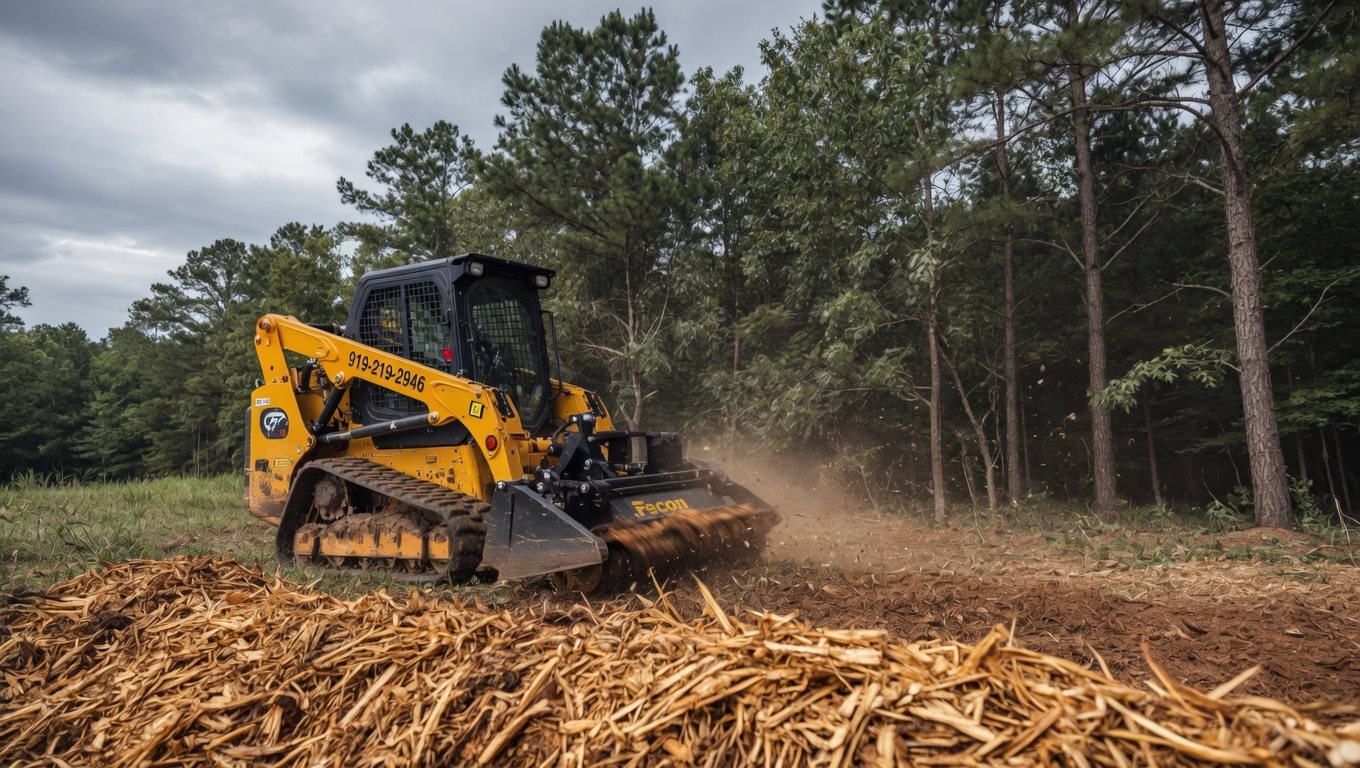
A brush hog is a heavy rotary cutter hung behind a tractor. It knocks down seeded-out grass, briars, weeds and saplings up to roughly two inches, and the cuttings lie where they fall. What we charge tracks the years of growth in front of the deck, since thicker growth means a slower gear and more passes.
| What is standing in your Indiana field | Our price per acre | What it looks like |
|---|---|---|
| Cut within the past year | $75 – $150 | Pasture or old CRP grass gone to seed, a few weeds, nothing woody |
| One or two seasons of growth | $125 – $250 | Waist-high grass, poison hemlock along the ditch, the first rose canes |
| Three or more years | $200 – $400 | Thick brush and saplings up to 2 inches across, sericea on old wildlife ground |
| Saplings past 2 to 3 inches | Not a brush hog job | Autumn olive or young tree-of-heaven over your head; priced as understory work at $1,500 – $2,500 an acre |
Where these numbers come from. Cut Brush uses one set of brush hogging rates wherever it mows, and the four rows above are those rates applied to Indiana ground, minimum included. Once a field has grown past a mower, our Indianapolis pricing page carries regrowth and understory work at $1,500 to $2,500 an acre and forestry mulching at $1,500 to $4,000. The Louisville pricing page that covers Clark and Floyd counties lists the same bands.
What Changes the Price of an Indiana Mowing Job
Poison hemlock on the edges. Purdue Extension notes that poison hemlock is on Indiana’s noxious weed list and its terrestrial invasive plant list, and that mowers and farm equipment are a common way its seed gets spread. Purdue’s advice is to mow before seed develops, warning that one cut may delay flowering without stopping it (Purdue Extension, poison hemlock). It also asks anyone mowing it to avoid skin contact with the sap and breathing it in. We cut hemlock strips early and on their own trip, and if the field is going for hay, the hemlock stays out of the bales.
Sericea lespedeza on old CRP and wildlife fields. Purdue calls sericea arguably one of the worst invaders of old fields managed for wildlife. One plant can set more than 1,000 seeds that stay viable for up to 20 years, and dormant-season fire tends to make it worse (Purdue Extension, sericea lespedeza). Mowing knocks it back for a season. The control Purdue lays out pairs herbicide with late-season fire, so we price the mowing as one piece of a longer plan rather than a cure.
Woody stems past the cutter. Multiflora rose, autumn olive and young tree-of-heaven are all on Indiana’s plant rule list, and once their stems pass 2 to 3 inches a rotary cutter splinters them instead of cutting. That ground becomes understory work, and if trees have moved in, the Indiana forestry mulching cost guide has the price.
Soft ground in spring. Across central Indiana the Miami soil holds water perched 2 to 3 feet down from December through April (USDA NRCS, Miami). A tractor on that ground in April leaves ruts the next mowing has to bounce over. A firm field in late summer mows faster, which lines up with the nesting advice as well.
Pro tip: Walk the field edges in late spring and flag any tall plants with hairless, hollow stems blotched purple. That is poison hemlock. Have those strips cut before the seed sets, then leave the rest of the field until after August 1, and one plan covers both the weed and the quail.
Brush Hogging Costs Across Indiana
The north: sand country and the lake plain. Around DeMotte in Jasper County the Morocco soil is sand on outwash and lake plains, rapidly permeable and often irrigated where it is cropped. The surface dries soon after rain, although the Morocco water table sits half a foot to two and a half feet down for part of the year. The catch is the low ground: Maumee soil near Kouts sits in depressions where water can stand two feet above the surface, and we leave those strips for late summer.
Central Indiana: the till plain around Indianapolis. Home ground for our Indianapolis crews, mostly level fields over glacial till. Miami slopes reach 60 percent where creeks cut down through the till, and those breaks are where the tractor slows. Tile outlets and regulated drains run through many old fields, and our Indianapolis permit guide explains the drain easements.
The southwest: loess hills and coal ground. The Hosmer soil, first described in Vanderburgh County and mapped near Frichton in Knox County, covers loess hills with a fragipan and water perched 1.5 to 2.5 feet down from December through April (USDA NRCS, Hosmer). The Indiana Geological and Water Survey names Vigo, Sullivan, Greene, Knox, Daviess, Pike, Gibson, Warrick, Posey and Vanderburgh among the counties with the most underground coal mines, and says subsidence can disrupt farm fields (IGWS). Point out any sunken patch before the tractor crosses it.
The south: ridges, knobs and Clark and Floyd counties. South of where the last glaciers stopped, the land turns to rugged uplands and deep valleys. The Wellston soil, silty loess over sandstone, siltstone or shale, runs on slopes up to 35 percent and is used for hay, pasture and woodland. A hillside pasture on that ground mows slower than flat hay ground up north. Our Louisville crews mow Clark and Floyd counties.
Mowing Season and Burning Rules in Indiana
Nesting. The Indiana DNR’s bobwhite fact sheet says quail typically start nesting in May, most eggs hatch by mid-July, and some birds are still on nests in early September. It calls mowing “extremely detrimental” to nesting cover and asks landowners to wait until after August 1, to mow no more than a third of an area in any year, and to leave at least 8 inches standing for winter cover. Where a noxious weed forces an earlier cut, it suggests raising the deck to take only the seed heads (Indiana DNR, bobwhite quail).
Burning. A rotary cutter leaves its material on the ground, but fence row cuttings often get piled. Maintenance burning of vegetation from a farm, or from agricultural land in an unincorporated area, is exempt from approval as long as the fire is attended until it is out and the weather is not windy or stagnant. Burning brush from land changing use is different and needs IDEM approval first.
Cost share. The DNR’s Wildlife Habitat Cost-Share Program covers landowners with 5 or more acres and pays back part of the cost of habitat work written into a management plan. If the mowing is part of managing a field for wildlife, talk to the DNR Division of Fish and Wildlife before we book it.
Frequently Asked Questions
How much does it cost to bush hog an acre in Indiana?
Our range is $75 to $400 an acre, set by how long the field has gone uncut. On a single acre the $250 to $500 minimum usually sets the price, because loading and hauling the tractor costs the same either way.
Why does a neighbor charge less than your quote?
Purdue’s 2025 Indiana Farm Custom Rates averaged $30.85 an acre for mowing pasture or CRP ground, from nine responses. Purdue notes much Indiana custom work is done by neighbors after their own field work, sometimes below what the machine costs to run. A field idle for years, or one carrying hemlock or sericea, takes longer per acre than that open pasture.
When is the best time to bush hog in Indiana?
For quail, after August 1, as the DNR advises. For poison hemlock, before it sets seed, with a second cut likely. Late summer also brings the firmest ground of the year on Indiana’s wetter soils.
Will mowing get rid of poison hemlock?
Not in one pass. Purdue notes a single mowing can delay it without stopping it, and the seed travels on mowers along roadsides and ditch banks. Several timed cuts, or herbicide on the first-year rosettes, are what Purdue recommends.
Can a brush hog take out autumn olive?
Young autumn olive under about 2 inches, yes. Older clumps with thick stems are past a rotary cutter, and we quote that ground as understory work at $1,500 to $2,500 an acre instead.
Get a Brush Hogging Quote in Indiana
Pick your nearest area below and request a free quote. Our crew will contact you to go over the field and the gate the tractor would come through: what is growing (grass, briars, hemlock, saplings), whether the field holds water in spring, and whether you want one cut or the field kept open every year.
Clearing under trees you are keeping is in our Indiana underbrush removal cost guide, and a field you plan to build on is in the Indiana land clearing and grading cost guide. Fields across the state line are covered in our Ohio and Kentucky brush hogging guides.
Sources
More from the Cut Brush Blog
Keep reading for more tips and guides on land clearing.
 Cost Guide
Forestry Mulching Cost in Indiana (2026 Guide)
Forestry mulching runs $1,500 to $4,000 an acre with Cut Brush in Indiana. What burn approval, sinkholes, honeysuckle and wet till do to your price.
 Cost Guide
Land Clearing Cost Per Acre in Indiana (2026 Guide)
Land clearing cost per acre in Indiana runs $1,500 to $4,500. What oak and hickory stands, wet till plain soils and three statewide rules do to a quote.
 Guide
Buckthorn Removal in Indiana: Cost and Plan
Buckthorn removal in Indiana: why one cutting fails, the state transport ban, a follow-up plan for fence rows and wet ground near Lowell, and what it costs.
Comparing states? See land clearing costs by state.
Let's Get Started on Your Land
Request a free quote. We'll contact you to discuss your property, access, and the clearing you need.
Get a Free QuoteOr call us directly: (919) 525-3950